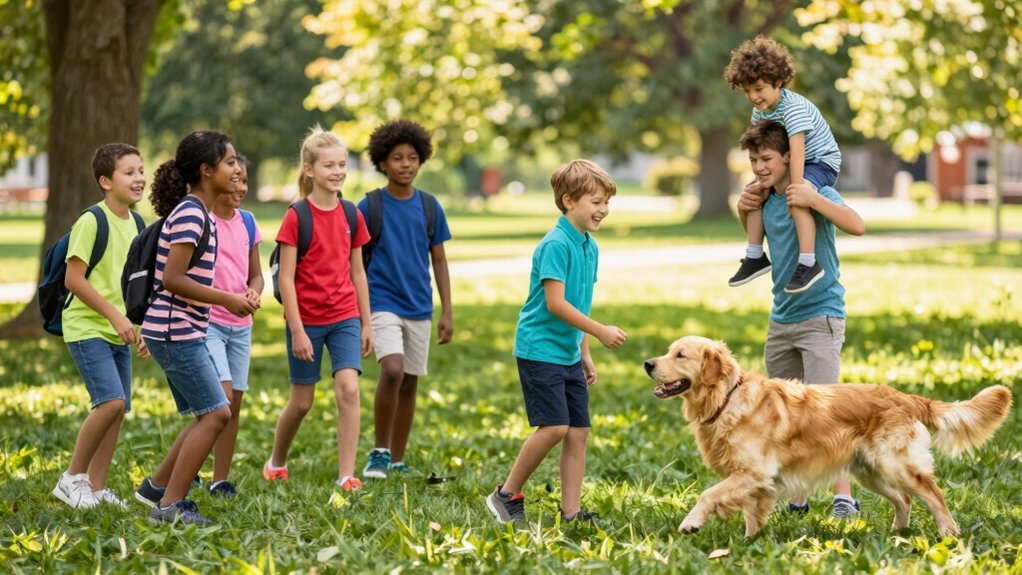
Your kids don’t just learn academics in mixed-age classrooms—they’re training for real life. They’ll navigate natural hierarchies, collaborate across experience levels, and develop genuine empathy through authentic mentorship. Older students gain real leadership authority while younger peers internalize advanced problem-solving by watching capable role models. Bullying drops dramatically when cross-age relationships foster genuine connection. You’re essentially giving your children a multigenerational workplace before they ever enter one. The benefits extend far deeper than you might initially expect.
What Mixed-Age Classrooms Actually Are
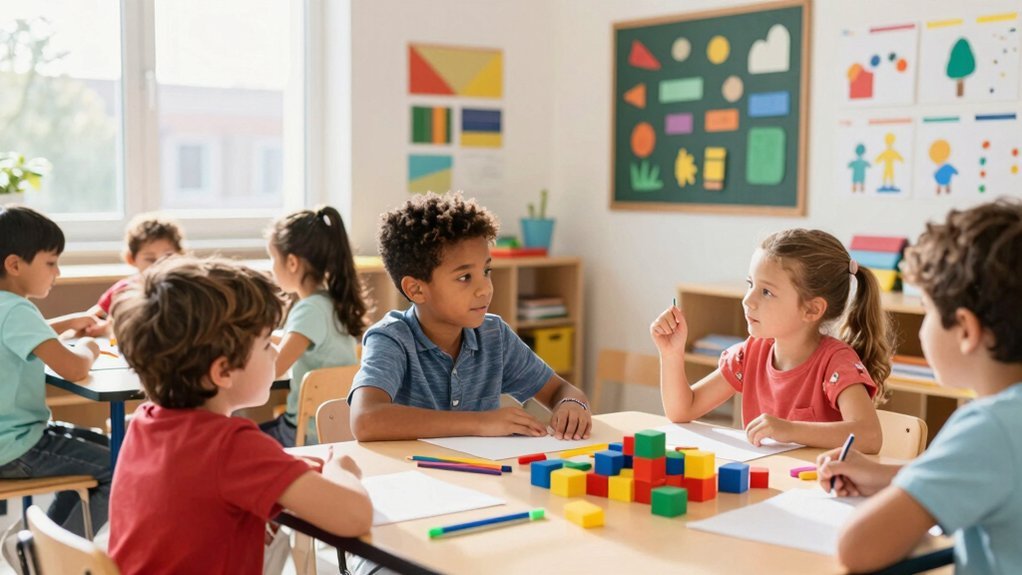
What exactly distinguishes a mixed-age classroom from the traditional single-grade setup you’re probably familiar with? Instead of grouping children by strict chronological age, you’ll find students spanning a three-year range—say, 3 to 6 years old—learning together in one environment. Rather than organizing by grade levels, educators group children by developmental stages and readiness levels.
This approach mirrors real-world family and community structures. You’ll see three-year cycles where the youngest children start their journey, middle-year students deepen their skills, and oldest children refine their abilities before transitioning. Materials are tiered to accommodate varying developmental levels, allowing every child to engage meaningfully regardless of when they were born. In this dynamic environment, constant peer learning naturally emerges as children of different ages teach and learn from one another daily.
How Teachers Structure Mixed-Age Learning Groups
You’ll find that teachers in mixed-age classrooms strategically form small groups based on readiness and interest rather than age alone, allowing students to rotate and experience different learning roles. By deliberately pairing younger learners with older peers, you create natural scaffolding where experienced students model skills while novices gain confidence through collaborative work. This deliberate balancing act—where grouping strategies shift to match individual needs—transforms your classroom into a dynamic space where every child moves from being a learner to becoming a teacher. Teachers provide real-time scaffolding during these interactions to support understanding and ensure each child’s personalized growth within the shared community.
Grouping Strategies For Balance
The architecture of mixed-age classrooms rests on intentional grouping strategies that balance individual learning needs with collaborative opportunities.
You’ll find that effective teachers combine multiple approaches rather than relying on a single method. They form skill-based groups when targeting specific competencies, then shift to interest-driven clusters when motivation matters most. You might implement looping—keeping students with the same teacher across years—to build sustained relationships and continuity. When students progress through autonomy levels rather than fixed grade-based advancement, they move at a pace aligned with demonstrated skills and work habits rather than age alone.
Montessori-inspired structures allow you to offer personalized instruction through playlists and flexible pacing. Throughout these arrangements, you remain flexible, regrouping based on ongoing observations of readiness and interests. This balanced approach ensures you’re neither isolating struggling learners nor holding back advanced ones, instead fostering peer support across ages.
Facilitating Peer Learning Roles
How do you transform mixed-age classrooms into engines of peer-driven learning? By deliberately structuring peer learning roles that leverage each student’s strengths.
You’ll assign older children as tutors, mentors, and buddies to younger classmates. This arrangement benefits everyone: younger students gain accessible models who ease imitation, while older peers reinforce their own skills through teaching. You facilitate collaboration on shared materials, enabling novices and experts to work together productively.
Structure large mixed groups strategically to build cross-age relationships. This reduces loneliness and aggression while evoking nurturance and genuine friendships. Your explicit lessons on responsibility transform peer interactions into powerful learning moments. When you recognize older students’ competencies and leadership contributions, you foster confidence while deterring bullying. These mentorship moments cultivate self-confidence and leadership skills among older children while providing younger peers with step-by-step guidance and modeling strategies. These intentional peer roles create dynamic, reciprocal learning communities.
Social Skills Develop Naturally Across Different Ages
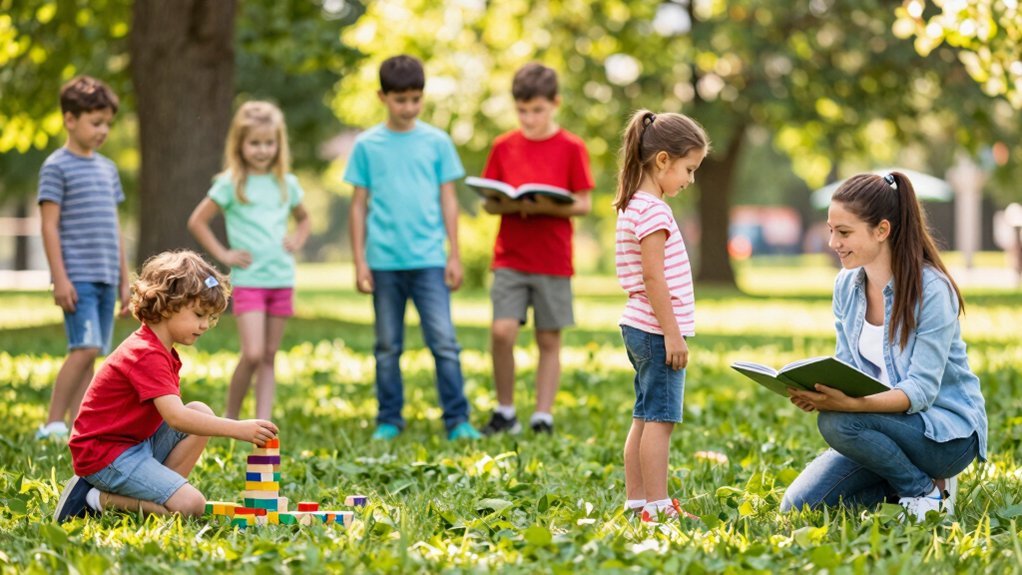
You’ll find that mixed-age classrooms naturally cultivate friendships across different developmental stages, breaking down the social barriers that typically keep age groups isolated.
When you expose children to peers of varying ages, you’re directly reducing bullying and fostering genuine connections that wouldn’t otherwise occur.
These diverse relationships create the perfect environment for modeling pro-social behavior, as older children develop leadership and empathy while younger children absorb and replicate those positive actions. Research demonstrates that social competence in early years predicts later academic and social success, making these formative cross-age interactions particularly valuable for long-term development.
Building Friendships Across Ages
Why do friendships flourish when kids interact across age groups? You’ll find that mixed-age settings naturally reduce competition and encourage meaningful role negotiation in play. This environment stretches kids’ abilities and fosters cross-age bonds that wouldn’t develop in same-age groupings.
When you bring kids together across developmental levels, you create space for:
- Strong, supportive friendships that buffer negative self-perceptions during vulnerable years
- Frequent interactions that drive social-cognitive growth beyond what non-friendships offer
- Authentic connections built through collaborative play and shared experiences
- Genuine empathy that emerges from understanding different perspectives and needs
These friendships aren’t superficial. They’re built on real collaboration, where kids negotiate differences, compromise, and genuinely care for one another. Research shows that indirect strategies like accessing shared objects and collaborative goals prove more effective than direct requests in sustaining these cross-age connections. You’re witnessing authentic relationship-building that prepares children for lifelong social competence.
Reducing Bullying Through Connection
When kids interact across different ages, bullying naturally diminishes. You’ll find that mixed-age environments foster genuine empathy through everyday peer connections rather than forced curricula. Research shows cooperative learning reduces bullying significantly in middle schoolers, particularly through affective empathy—the ability to feel what others experience.
Cross-age teaching zones create structured interactions that spark social skill development organically. Your child benefits from these age-mixed groups, which build natural bridges between different developmental stages. Teachers equipped with real-time intervention strategies further strengthen these dynamics, catching bullying early and responding effectively. Evidence-based coaching approaches like Classroom Check-Up have demonstrated that teachers trained to detect and respond to bullying show measurable improvements in identifying incidents and taking appropriate action.
You’re witnessing something powerful: when children collaborate across age boundaries, they develop deeper understanding of others’ perspectives. This connection-based approach succeeds where traditional programs falter, creating lasting behavioral change that extends well beyond elementary years.
Modeling Pro-Social Behavior
The connection-building that reduces bullying grows stronger through everyday modeling of prosocial behavior. When you place children of different ages together, you create a powerful learning environment where positive actions spread naturally.
Older children demonstrate what kindness looks like in action:
- Sharing resources without hesitation
- Helping younger peers solve problems independently
- Explaining classroom expectations through patient guidance
- Showing affection through simple, meaningful favors
Your younger children absorb these behaviors through observation, internalizing them as normal social practice. They watch how older peers handle conflict, communicate respectfully, and prioritize others’ needs. This natural mentorship reinforces prosocial skills more effectively than any lesson plan could. Research shows that peer interactions create the social and cognitive conditions necessary for this development to occur. You’ll notice aggression decreases while empathy flourishes—not through instruction, but through witnessing genuine care modeled consistently by respected older peers.
Older Kids Lead: And Learn Leadership in the Process
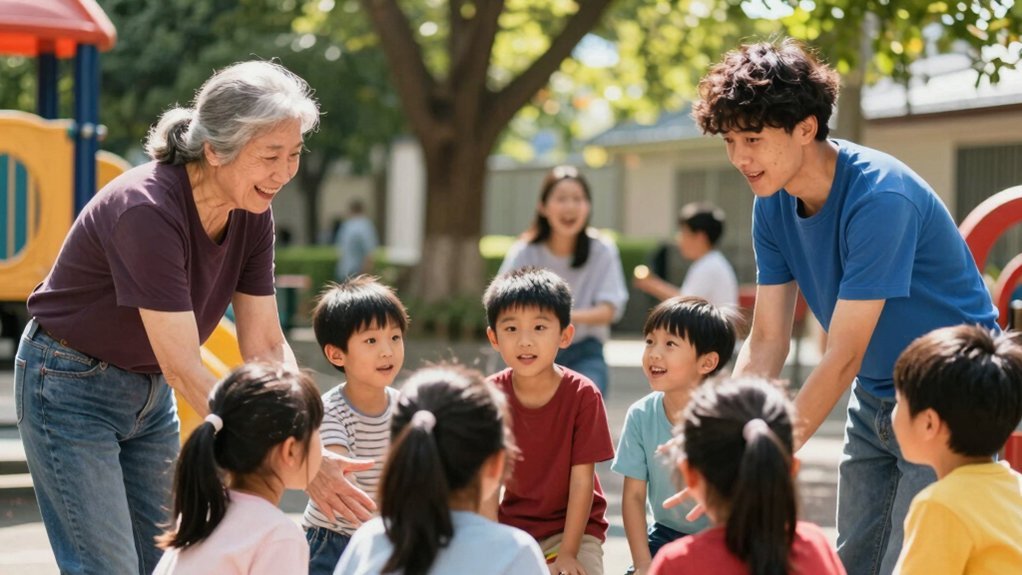
How do older children develop into confident leaders? Mixed-age settings create natural opportunities for you to step into expert roles, guiding younger peers through tasks they can’t manage independently. You’ll gain leadership experience through low-stakes mentoring that builds your confidence as you recognize your growing competencies. This mentorship fosters leadership while also developing empathy and caregiving skills that extend far beyond the classroom.
| Leadership Opportunity | Your Development | Outcome |
|---|---|---|
| Peer tutoring | Reinforce academic knowledge | Deeper mastery and confidence |
| Task guidance | Model appropriate behavior | Strengthen self-assurance |
| Collaborative mentoring | Practice nurturance skills | Boost interpersonal abilities |
Younger Students Thrive in Mixed-Age Peer Learning
Why do younger students flourish when they learn alongside older peers? You’ll notice remarkable transformations in their development across multiple dimensions.
Younger students experience remarkable developmental transformations when learning alongside older peers across multiple dimensions.
When you place younger children in mixed-age settings, they gain:
- Extended focus and goal-direction through observing and imitating older peers’ concentrated work
- Accelerated language and literacy growth by modeling sophisticated communication patterns
- Enhanced emotional security with reduced bullying, loneliness, and behavioral problems
- Cognitive leaps through participation in complex play and problem-solving they wouldn’t attempt alone
You’ll witness younger students engaging in increasingly sophisticated activities, developing empathy and patience through peer relationships, and building confidence from positive interactions. The older children’s scaffolding naturally draws younger learners into higher-level engagement, while peer tutoring produces particularly strong academic benefits for minoritized students. In observed mixed-age classrooms, younger and older students work pedagogically together within a single class period, enabling dual focuses and peer questioning. Mixed-age classrooms transform younger students’ educational trajectories through authentic peer learning opportunities.
How Competition Fades When Ages Mix

When you mix ages in a classroom, you’ll notice that cooperation naturally replaces the rivalry that thrives in same-age groups. By removing grade-level labels, you free students from constant peer comparisons and the pressure to outperform classmates. As kids work alongside peers of different ages, the competitive atmosphere fades, allowing them to focus on their own growth rather than how they stack up against others.
Cooperation Over Rivalry Emerges
What transforms competitive instincts into collaborative ones? When you place children of different ages together, you fundamentally shift their social dynamics from individual achievement to shared goals.
You’ll notice several key changes emerge:
- Mentoring replaces rivalry – Older children guide younger peers, building leadership while diminishing competitive tension
- Empathy becomes the norm – Caregiving experiences cultivate genuine concern for others’ success
- Play focuses on discovery – Imaginative games emphasize problem-solving over winning
- Diverse paces feel natural – Mixed abilities normalize different developmental speeds, eliminating judgment-based comparison
This cooperative environment isn’t coincidental. You’re creating conditions where children naturally prioritize supporting one another. Older toddlers develop enhanced self-esteem through caregiving roles, while younger children benefit from exposure to nurturing examples. Research confirms that multiage settings produce less aggression and loneliness. Your children develop stronger communication skills and genuine partnership abilities—preparing them for real-world collaboration where success depends on working together, not standing alone.
Removing Grade-Level Labels
The foundation for this cooperative shift rests on eliminating the very labels that fuel competition. When you remove “below grade level” and “above grade level” designations, you strip away the fixed identities that damage self-perception and motivation.
In mixed-age settings, you’ll notice children take pride in their personal abilities without being boxed into limiting categories. This wider acceptance of performance ranges prevents low-labeled children from mentally checking out, while simultaneously challenging high-labeled students to grow intrinsically rather than coasting on reputation. Older students naturally emerge as mentors and leaders, helping younger peers accomplish tasks while reinforcing their own sophisticated problem-solving approaches.
You’re essentially creating an environment where capability becomes fluid and contextual. Your child sees themselves as capable in some areas and developing in others—a realistic, healthier framework than the rigid hierarchies traditional classrooms enforce.
Peer Pressure Diminishes Naturally
How does competition lose its grip in mixed-age classrooms? When you mix ages, you fundamentally shift how children view success and growth. Rather than racing against same-age peers, you’re learning alongside people at different skill levels—some ahead, some behind. This naturally reduces the pressure to outperform classmates.
Consider what changes:
- You develop a growth mindset, understanding that skills come from effort, not fixed talent
- Peer support replaces rivalry as the classroom norm
- You collaborate with “experts” and “novices” instead of competing within your level
- Stress around grades and rankings diminishes significantly
When you’re not constantly measuring yourself against identical-age competitors, you focus on personal progress. Mixed-age settings encourage you to celebrate others’ achievements without threatening your own worth. This creates an environment where everyone wins through collaboration rather than competition.
Students Advance Without the Ceiling of Grade-Level Expectations
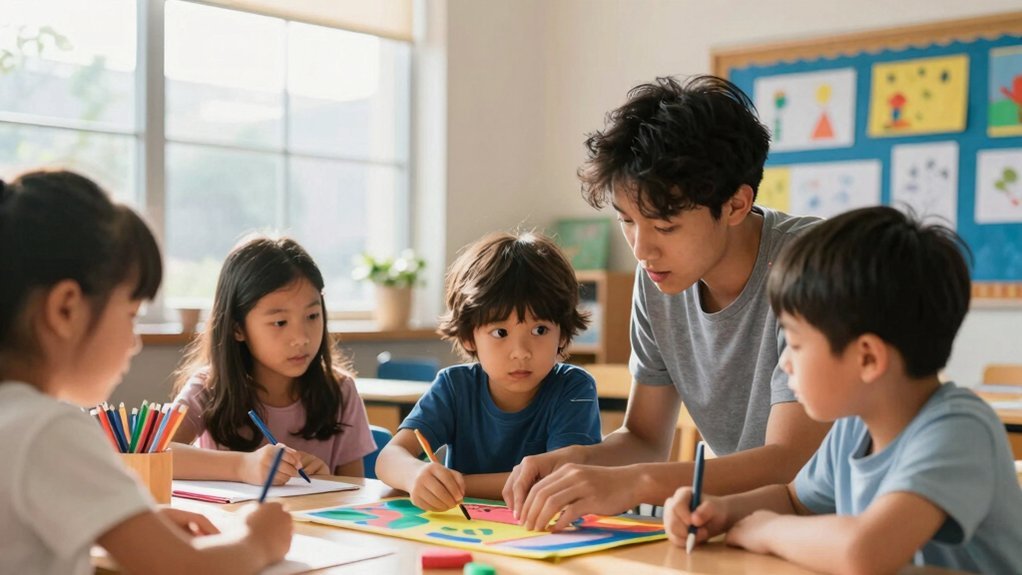
Why do some children languish in classrooms designed around age rather than ability? In mixed-age settings, you won’t face the arbitrary ceiling that grade-level expectations impose. Instead, you advance in math and reading when you’re genuinely ready, bypassing the frustrating wait for next-grade placement.
You move at your own pace without artificial constraints. Gifted students particularly benefit—they pursue complex projects beyond traditional grade ceilings, engaging in open-ended challenges that stretch creativity and problem-solving skills. Younger capable learners gain exposure to higher-grade material, enriching their understanding naturally. Teachers differentiate instruction to meet each student’s readiness level, ensuring no one is left waiting for advancement or pushed beyond their current mastery.
This flexibility removes limits on meaningful growth. You’re not held back by peers or restricted by predetermined grade standards. You progress based on your actual readiness, not your birth date.
Problem-Solving Gets Better Through Cross-Age Collaboration
Cognitive friction—that productive clash of different thinking styles—is what sparks genuine problem-solving growth in mixed-age classrooms. When you collaborate across age groups, you’re tapping into diverse perspectives that transform challenges into opportunities for innovation.
Your mixed-age team unlocks:
- Creative solutions that emerge from synergizing different cognitive approaches and experiences
- Efficient task completion as younger members learn shortcuts from older peers while contributing fresh insights
- Resilience through mentorship, where older children model conflict resolution and strategic thinking
- Shared accountability, fostering a community mindset that motivates collective success
You’re not just solving problems faster—you’re developing the adaptability and collaborative mindset essential for real-world complexity. Cross-age problem-solving builds capabilities that same-age grouping simply can’t replicate. Through internalization of new information, children resolve cognitive conflicts by reconciling different viewpoints, deepening their understanding and flexible reasoning skills.
Vocabulary and Communication Skills Expand Earlier
When younger children spend their days alongside older peers, they’re constantly exposed to more sophisticated vocabulary and complex communication patterns they wouldn’t encounter in same-age classrooms. You’ll notice them naturally adopting mature problem-solving strategies and advanced linguistic patterns through daily interaction. Their receptive vocabulary strengthens as they process complex play scenarios and diverse communication styles from multiple age groups. Meanwhile, you’ll observe older students modeling sophisticated expressive language—descriptions, extended conversations, and vocabulary use that younger children imitate and internalize.
Mixed-age settings increase peer-to-peer talk frequency, creating natural opportunities for language development. Research shows younger and older children achieve the largest vocabulary gains in these environments, particularly when skilled teachers manage behavior effectively and provide differentiated instruction.
Why Older Kids Naturally Start Caring for Younger Ones
How does maturity develop faster in children with younger siblings? When you’re an older sibling, you naturally step into a caretaker role that transforms you. You’re not just playing—you’re teaching, supervising, and modeling behavior. This responsibility reshapes who you become.
Being an older sibling naturally transforms you through teaching, supervising, and modeling—reshaping who you become.
Your caregiving instincts strengthen through:
- Perspective-taking: You learn to understand what your younger sibling needs, building empathy that extends beyond your family
- Self-reliance: You handle tasks independently, gaining confidence in your abilities and decision-making
- Advocacy skills: You become your sibling’s protector, developing courage to speak up for others
- Responsibility: You prioritize family needs, discovering that your actions directly impact those you love
These experiences don’t just happen—they’re woven into daily interactions. You’re becoming more mature simply by being needed. Through teaching and mediation, older siblings guide younger ones through tasks and conflicts, reinforcing their own social understanding and decision-making abilities.
Bullying Drops in Mixed-Age Environments
You’ll notice that mixed-age environments naturally dissolve the rigid social hierarchies that fuel bullying in single-grade classrooms. When older students take on mentorship roles, they’re less likely to engage in aggressive behavior themselves, and younger peers receive the protective influence of caring role models. This breakdown of social barriers creates a culture where intervention becomes peer-driven rather than adult-dependent, substantially reducing bullying incidents. Research on multi-level interventions demonstrates that comprehensive approaches combining school-wide, classroom, and individual-level strategies significantly decrease both bullying perpetration and victimization while increasing student willingness to help bullied peers.
Breaking Down Social Barriers
Why do bullying rates plummet when children of different ages learn together? When you mix ages in classrooms, you fundamentally shift how kids interact. Older students naturally assume protective roles, reducing their aggressive tendencies. Younger children benefit from this nurturing dynamic, creating environments where bullying simply doesn’t take root as readily.
You’ll notice several powerful changes:
- Older students exhibit less aggression toward peers when they’re caregivers
- Prosocial behavior flourishes across age groups through daily interaction
- Younger children gain confidence from mentorship and protection
- Bullying prevalence drops significantly compared to age-segregated settings
This isn’t coincidental. Mixed-age classrooms break down the dominance hierarchies that fuel bullying in single-grade environments. When you remove the rigid peer competition and introduce cross-age responsibility, children develop empathy instead of seeking dominance. Structured anti-bullying interventions with clear rules, classroom discussions, and parental involvement create the conditions where these developmental benefits take hold most effectively.
Mentorship Reduces Aggressive Behavior
When students engage in cooperative learning, they’re not just completing assignments together—they’re developing the emotional capacity to genuinely feel what others experience. This affective empathy becomes your strongest tool against aggression.
| Element | Impact | Mechanism |
|---|---|---|
| Mixed-age grouping | Reduces bullying | Natural mentorship roles |
| Affective empathy | Decreases aggression | Emotional connection strengthens |
| Peer relations | Prevents isolation | Support systems form |
| Collaborative skills | Builds prosocial behavior | Practice strengthens bonds |
| Group structures | Sustains effectiveness | Maintains adolescent engagement |
When older students mentor younger peers within cooperative structures, they model empathetic responses and prosocial interactions. You’ll notice aggressive behaviors decline as students practice genuine emotional understanding rather than intellectual perspective-taking alone. This mentorship dynamic creates accountability while fostering authentic peer connections that actively counteract bullying behavior.
Mentors Gain Authority; Mentees Gain Models
As older students step into guide roles, they’re reinforcing their own understanding while naturally developing leadership skills and self-confidence. You’ll notice mentors gain genuine authority as they teach younger peers, solidifying their own mastery through instruction.
Meanwhile, mentees observe sophisticated problem-solving approaches and internalize processes by watching capable role models in action. This dual benefit creates powerful learning dynamics:
- Older students recognize their expanding competencies, boosting self-esteem through expert positioning
- Younger children gain confidence by observing peers completing challenging tasks
- Mentors develop patience and empathy while guiding independent problem-solving
- Mentees reduce anxiety through familiarity with routines modeled by trusted older peers
You’re witnessing peer teaching that strengthens knowledge retention while building resilience across age groups. In mixed-age classrooms, these natural mentoring relationships develop organically as children of different developmental stages learn alongside one another, creating authentic opportunities for leadership and empathy to flourish.
These Classrooms Feel Like Extended Family
The mentoring dynamics you’ve observed create something deeper than academic benefit—they build an authentic family structure within classroom walls. You’ll notice children naturally assume roles as youngest or oldest, mirroring sibling relationships. This multi-age composition fosters genuine nurturing and commitment because kids aren’t competing against peers at identical developmental stages.
The classroom functions as an extended family where reduced rivalry emerges naturally. Younger children receive individualized attention while older students develop responsibility and leadership. You’ll see less peer competition and more collaborative support because expectations vary by development, not age. This environment creates mutual caring where everyone contributes meaningfully. Shared consistent teacher relationships spanning multiple years deepen the security and stability that children experience. The result? Children experience sustained relationships across multiple years, building the security and belonging typically found in families.
Mixed-Age Dynamics Mirror How the Adult Workplace Actually Works
Why do companies invest in mentorship programs and cross-functional teams? Because they work. Mixed-age classrooms mirror the multigenerational workforces you’ll navigate throughout your career.
Mixed-age classrooms mirror the multigenerational workforces you’ll navigate throughout your career, preparing you for actual workplace success.
When you learn alongside peers of different ages, you’re experiencing what actual workplaces demand:
- Skill transfer across experience levels—you absorb knowledge from those ahead while solidifying your own understanding
- Natural hierarchy navigation—you practice working with authority figures and supporting newer team members simultaneously
- Innovation through diverse perspectives—different ages bring varied approaches that spark creative problem-solving
- Long-term professional networks—relationships built over time create the workplace bonds that sustain careers
Unlike same-age classrooms that isolate you from reality, mixed-age settings prepare you for the collaborative, multigenerational environments where you’ll actually succeed professionally. However, research shows that instructional quality and teacher support matter significantly more than the mixed-age structure itself in determining whether students actually benefit from these arrangements.
Frequently Asked Questions
How Do Parents Know Their Child Is Progressing Without Traditional Grade-Level Benchmarks?
You’ll notice your child’s progress through observed skill development, increased confidence, curiosity, and emotional growth. You’ll track mastery of concepts they’re learning, their willingness to tackle challenges, and improved peer relationships—markers that transcend traditional grades.
What’s the Ideal Age Range Span Within a Single Mixed-Age Classroom Group?
You’ll find a 3-year age span works best in mixed-age classrooms. This range lets you observe younger children gaining skills from older peers while you’re supporting each child’s individual developmental pace without overwhelming anyone.
Does Mixed-Age Learning Work for All Subjects, Including Math and Literacy?
You’ll find mixed-age learning works well for literacy and math, though results vary by program. While you’ll see strong gains in reading and math through peer collaboration, you should note that individualized instruction approaches sometimes limit these benefits.
How Do Teachers Assess Individual Learning Needs Across Such Varied Developmental Stages?
You assess individual learning needs through continuous observation cycles, flexible small-group formations around skills, tiered materials, varied questioning, and embedded tools like GOLD that capture growth evidence tailored to each child’s developmental stage.
Are Mixed-Age Classrooms Equally Effective for Introverted Children Who Prefer Smaller Peer Groups?
You’ll find mixed-age classrooms particularly beneficial for introverted children. They’re not overwhelmed by same-age competition and can seek assistance from older peers, building meaningful one-on-one relationships that honor their preference for smaller, nurturing peer groups.
In Summary
You’ll find that mixed-age classrooms genuinely prepare you for real-world dynamics. You’re learning leadership alongside humility, gaining mentors while becoming one yourself. You’re developing authentic social skills that matter beyond school walls. These environments don’t isolate you by age—they mirror how you’ll actually work, collaborate, and grow throughout your career and life. You’re not just studying together; you’re building the resilience and adaptability you’ll need.



Leave a Reply