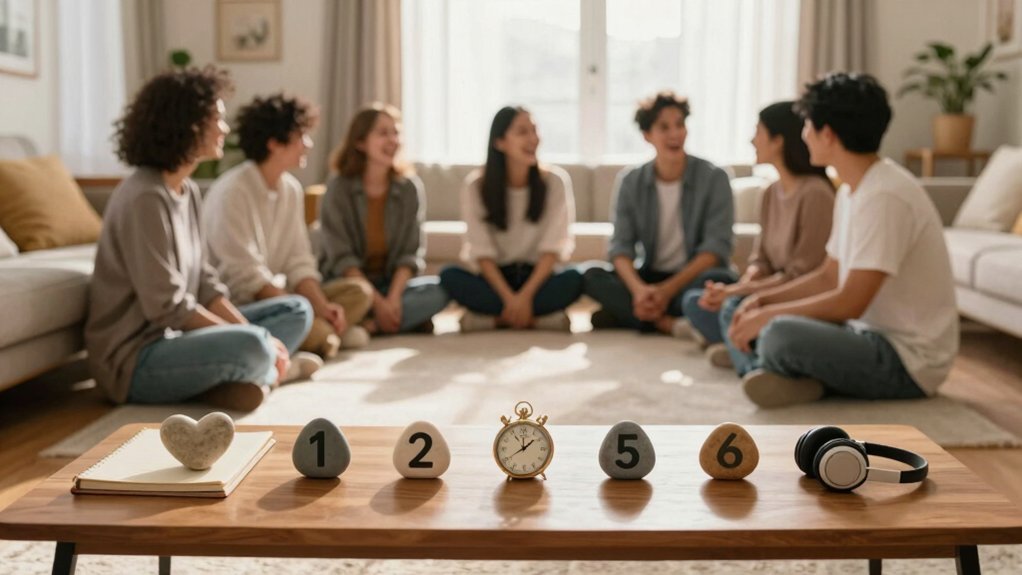
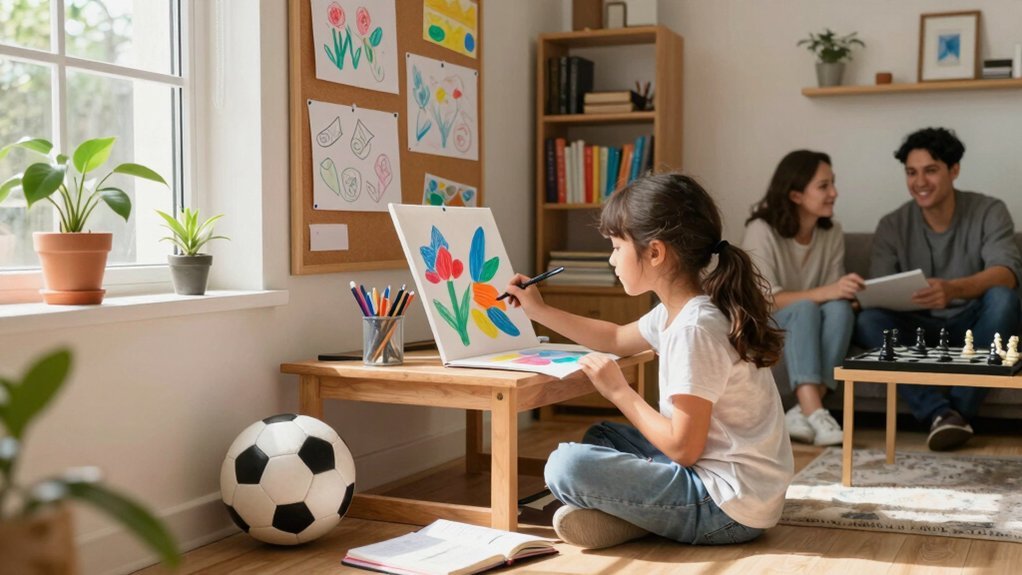
Give kids real choices so they feel autonomous, pair tasks with a clear one‑sentence “why” that links to a bigger purpose, and frame chores as mini‑stories that highlight skill growth. Let them set tiny mini‑goals, celebrate milestones with specific feedback, and use just‑right challenges that spark curiosity. Build collaborative projects that foster relatedness and replace stickers or candy with reflective questions that reinforce competence. Keep using these strategies, and you’ll discover even more ways to nurture lasting intrinsic motivation.
Explain Intrinsic Motivation for Kids and Why It Matters

Why do kids sometimes plunge into a puzzle just for the fun of it? You notice their eyes light up when they’re driven by intrinsic motivation—pure curiosity, enjoyment, and a desire for mastery. Self-Determination Theory tells you this spark fulfills three basic needs: autonomy, competence, and relatedness.
When a child feels they can choose how to tackle a challenge (autonomy) and believes they can succeed (competence), they experience intrinsic rewards that outshine stickers or candy. These internal rewards keep them focused, resilient, and less stressed by mistakes. Creating an environment that supports independence, such as providing a Montessori-friendly step stool, can further enhance autonomy and engagement in learning activities.
Give Children Real Choices to Boost Autonomy
When you let kids pick when and how they tackle a task, you’re giving them real autonomy—one of the three pillars of Self‑Determination Theory that fuels intrinsic motivation. Offer them a few genuine options instead of a single directive; this signals respect for their self‑determination and invites intrinsic rewards like pride and curiosity. Frame each option as a personal mission linked to future goals, so the choice feels meaningful. Use motivational‑interview prompts—“What excites you about this?”—to surface internal drives and align the activity with their values. Provide progress‑focused feedback rather than stickers or points, reinforcing competence and mastery. By minimizing external rewards and emphasizing effort, strategy, and personal satisfaction, you nurture lasting intrinsic motivation and deeper engagement. Additionally, using tools with quick response time can enhance hands-on learning experiences by maintaining engagement through timely feedback.
Craft a One‑Sentence “Why” That Guides Every Activity

Giving kids real choices already shows them they control their own learning; the next step is to give every activity a clear, one‑sentence “why” that ties the task to a larger purpose. When you craft a one‑sentence purpose, you embed intrinsic motivation directly into the work, turning each step into an internal reward. Ask yourself how the action supports a broader goal, then phrase it in a way that highlights autonomy and relevance. A concise why—like “I’m building this code to help patients track their health”—creates a mental shortcut that keeps focus sharp and effort meaningful. Regularly reviewing that sentence with reflective questions such as “Did I move closer to my goal today?” reinforces the link between daily effort and long‑term impact.
Turn Daily Tasks Into Mini‑Stories That Show Skill Growth
Ever wonder how a routine chore can feel like an adventure? You can turn a daily task into a mini‑story by framing it as a purposeful mission that mirrors your personal values and future impact. Label each step as a milestone—mastering a technique, boosting speed—to showcase skill growth and give you concrete competence feedback. Choose when and how to tackle the work, exercising autonomy that fuels intrinsic motivation. After you finish, ask yourself what you learned and how it advances your longer‑term goals. This reflective loop ties ordinary actions to meaningful outcomes, turning a simple chore into a narrative of progress that feels rewarding from within. Incorporating open-ended play strategies, similar to Montessori-inspired methods, can further enhance engagement and motivation during routine tasks.
Design Skill‑Building Activities Focused on Mastery, Not Checklists

You’ll design tasks that push you forward, not just tick boxes, by setting clear milestones that build on each success.
Each iteration lets you refine your approach, see real progress, and feel the satisfaction of mastering a skill.
When you control the pace and focus on strategy, the activity becomes a personal growth loop rather than a checklist.
Focus‑Driven Tasks
How can you turn a simple checklist into a mastery‑building journey? Start by framing each item as a focus‑driven task that emphasizes intrinsic motivation and self‑determination. Offer a clear purpose that ties the activity to meaningful purposes and personal values. Let learners choose when and how to tackle the step, reinforcing autonomy. Provide immediate, strategy‑focused feedback so they sense growing mastery rather than ticking boxes. Encourage collaboration to satisfy relatedness and deepen engagement.
| Task | Skill Focus | Feedback Type |
|---|---|---|
| Design a prototype | Creative problem‑solving | Strategy critique |
| Write a brief code module | Incremental coding | Live debugging notes |
| Conduct a user interview | Empathy & listening | Reflective summary |
| Create a visual storyboard | Narrative flow | Peer review |
| Present findings | Public speaking | Structured debrief |
Iterative Mastery Loops
Why settle for ticking boxes when you can turn each attempt into a measurable step toward mastery? You’ll replace external rewards with intrinsic motivation by building iterative mastery loops that align with self‑determination theory. Each cycle gives you rapid feedback, sparks a growth mindset, and lets you see real skill gains. The process feels autonomous, purposeful, and rewarding in itself.
- Set a micro‑goal that ties directly to a personal passion, not a checklist item.
- Attempt the task and record what you tried, focusing on effort over outcome.
- Receive immediate, specific feedback that highlights strengths and pinpoint adjustments.
- Reflect and refine, then repeat, watching competence climb and dopamine surge.
Incorporating tools designed with ergonomic handles can enhance comfort and encourage repeated practice during skill-building activities.
Replace Praise With Reflective Feedback That Highlights Progress
You’ll notice that when you point out the steps someone’s taken toward a goal, they feel more in control than when you just hand out a compliment. By highlighting the specific strategies and effort that led to improvement, you reinforce growth and self‑efficacy. Pair this with a quick self‑assessment so they can see the link between their actions and the progress they’ve made. This approach mirrors how reflective feedback in napkin folding enhances learning by emphasizing process over outcome.
Highlight Progress Over Rewards
When you swap generic praise for reflective feedback that pinpoints concrete progress—like a newly mastered technique or a milestone reached—you reinforce mastery and autonomy. This shift fuels intrinsic motivation because you see yourself improving rather than chasing external tokens. By framing each observation as progress‑focused feedback, you highlight deliberate practice and invite self‑directed learning. You become the architect of your growth, choosing challenges that align with your values and watching competence rise step by step.
- Ask, “What skill did you sharpen today?” to surface small wins.
- Document incremental improvements in a visible log.
- Connect each milestone to a larger personal goal.
- Encourage the learner to set the next deliberate practice step.
Selecting tools with adjustable features, such as height-adjustable Montessori towers, can help maintain engagement by matching the learner’s evolving abilities and environments.
Highlight Growth, Not Outcomes
Shift your focus from the final result to the steps you’re actually taking, and let reflective feedback spotlight the growth you’re building each day. When you notice yourself applying a new technique, comment on that specific action instead of the end score. This reinforces intrinsic motivation and nurtures a growth mindset. Use reflective feedback to map each effort to a measurable milestone, showing how you’re edging toward mastery. Pair those observations with self‑assessment prompts: “What worked? What’ll you tweak next?” By constantly evaluating progress, you maintain autonomy and keep the learning loop active. Over time, the habit of celebrating incremental gains replaces the need for external praise, turning every challenge into a stepping stone toward lasting competence.
Create Collaborative Projects That Strengthen Relatedness
By pairing individuals on a shared goal, collaborative projects naturally strengthen relatedness, fostering supportive relationships and a sense of belonging. You’ll notice intrinsic motivation rise as teamwork becomes a source of joy rather than obligation. Regular reflective check‑ins let each member see how their effort fuels the group’s mission, while storytelling frames the work as a meaningful adventure. Peer feedback builds trust, reduces social anxiety, and keeps engagement high. Autonomy shines when you let participants choose roles and methods, balancing personal ownership with collective purpose.
- Shared storytelling – co‑create a narrative that connects personal values to the project’s impact.
- Reflective check‑ins – pause together to discuss progress, feelings, and contributions.
- Peer feedback loops – give and receive constructive insights that reinforce trust.
- Role flexibility – let each person pick tasks that match strengths, preserving autonomy.
Let Kids Set Their Own Mini‑Goals and Celebrate Milestones
Ever wondered how kids can become the architects of their own learning? When you let them pick self‑directed goals, you give them autonomy that fuels intrinsic motivation. Start with tiny, achievable tasks—like reading a short chapter or building a LEGO structure—and let them name the goal. As they hit each milestone, pause to celebrate: a high‑five, a quick note, or a shared reflection on what they learned. This concrete feedback boosts self‑efficacy, showing them they can succeed through effort. Encourage regular check‑ins, where they track progress and adjust goals as needed. By linking mini‑goals to personal interests, you turn everyday activities into purposeful missions, keeping them engaged without external rewards. Using visual learning tools, such as charts and schedules, can further enhance their ability to self-monitor and stay motivated.
Add Playful, Just‑Right Challenges to Spark Curiosity
When kids start naming their own mini‑goals, the next step is to turn those goals into playful, just‑right challenges that ignite curiosity. You’ll notice intrinsic motivation soaring as they experience autonomy and see clear feedback on effort. By framing tasks as playful challenges, you keep them engaged without overwhelming them. The key is to balance difficulty so each step feels achievable yet stimulating, fostering a love of learning that outlasts any external reward.
- Offer a choice of materials so they steer the activity, reinforcing autonomy.
- Set a time‑boxed puzzle that’s just a bit harder than their current skill, sparking curiosity.
- Celebrate strategy tweaks, highlighting mastery over mere outcome.
- Relate the task to a personal interest, deepening intrinsic motivation.
End Each Day With Simple Self‑Reflection Questions
How can a quick, end‑of‑day check‑in boost your intrinsic drive? You pause, ask “Closer to my goals today?” and instantly gauge how daily actions align with larger purpose. This self‑reflection habit sharpens autonomy by turning vague effort into measurable progress. You notice competence spikes, celebrate small wins, and spot gaps that signal personal growth opportunities. By framing questions around intrinsic motivation, you surface core values and see how each task contributes to them. The routine reduces cognitive friction, converting experiences into clear insights for tomorrow’s planning. Over time, the habit reinforces a feedback loop that fuels mastery, relevance, and sustained enthusiasm without relying on external rewards.
Frequently Asked Questions
How Do Rewards Influence Intrinsic Motivation?
Rewards can boost your intrinsic motivation when they feel supportive and informational, but they’ll undermine it if they feel controlling or signal low competence, causing you to focus on external validation instead of personal satisfaction.
How Can Teachers Effectively Transition From External Rewards to Intrinsic Motivation?
You’ll shift focus to autonomy, mastery, purpose, and relatedness: give choices, set challenging yet achievable tasks, tie lessons to real‑world values, and nurture supportive, collaborative classroom relationships.
What Happens to Intrinsic Motivation When External Rewards Are Provided?
When you give external rewards, you often see your intrinsic motivation dip—especially if the reward feels controlling or focuses only on outcomes—because you start valuing the reward over the task itself.
How to Switch From External Motivation to Internal Motivation?
You shift by giving yourself autonomy, setting challenging yet doable goals, seeking feedback that shows progress, aligning tasks with personal values, and building supportive relationships that reinforce your inner drive.