
You’ll find play‑based activities that give controlled tactile, vestibular, proprioceptive, visual, and auditory input to help your child’s nervous system interpret sensations, regulate responses, and boost daily functional skills. Think finger‑painting with textured powders, swinging on a low‑height swing, hopping on a scooter board, exploring edible bins, or listening to calming music while moving. These tasks build neural pathways, improve balance and attention, and reduce meltdowns. Keep sessions short, safe, and fun, and you’ll discover even more strategies to support your child’s growth.
Define Sensory Integration and Its Benefits

When you hear “sensory integration,” think of play‑based occupational therapy that helps kids process touch, sound, movement, and other sensations so they can engage more smoothly in daily life.
Sensory integration is an OT therapy approach that structures activities to deliver controlled sensory input, training the nervous system to interpret and respond accurately.
By targeting sensory processing, the brain learns to regulate responses, reducing meltdowns and hypersensitivity.
Children practice tasks that blend tactile, auditory, and proprioceptive cues, which builds neural pathways for better coordination and attention.
Regular sessions, reinforced at home, promote functional participation in everyday routines.
The result is smoother regulation, improved focus, and a more confident, adaptable child ready to tackle school, play, and social interactions.
Many programs use calm-down corner kits with multi-activity tools to support self-regulation and emotional awareness during therapy and at home.
Understanding the Five Core Sensory Systems (Touch, Vestibular, Proprioceptive, Visual, Auditory)
Ever wonder how your child’s brain turns everyday sensations into coordinated action? You’re looking at five core sensory systems that shape sensory processing. Each system sends distinct signals, and together they guide movement, attention, and emotional regulation.
Ever wonder how your child’s brain turns everyday sensations into coordinated action?
- Tactile – skin‑level touch, from soft fabrics to textured toys, builds body awareness.
- Vestibular – balance and motion cues from swinging or rocking help orient space.
- Proprioceptive – deep pressure and joint movement teach the brain where limbs are.
- Visual & Auditory – tracking, rhythm, and sound patterns sharpen focus and cue response.
Kids may crave intense input (sensory seekers) or need gentle, structured stimulation (sensory avoiders). Understanding these systems lets you match activities to your child’s unique profile, fostering smoother integration and calmer behavior. Durable and safe sensory tools like child-safe whisks can support hands-on sensory experiences that engage multiple systems simultaneously.
How Sensory Integration Activities Support Child Development?
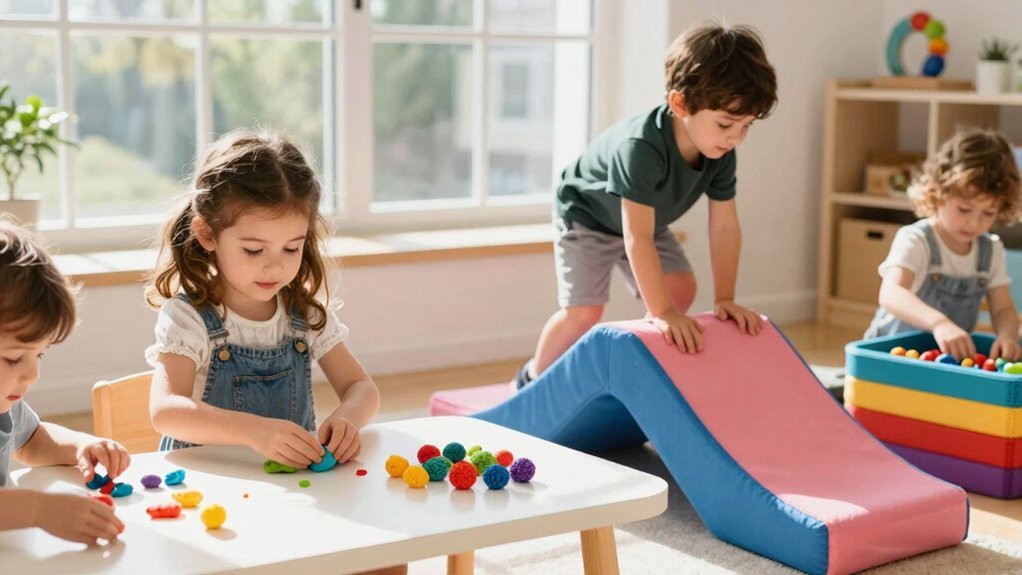
Understanding the five core sensory systems sets the stage for seeing how targeted activities can actually shape a child’s development. When you engage a child in multisensory activities, you’re training the brain to sort and integrate touch, sound, movement, and visual cues, which sharpens sensory processing and reduces meltdowns. An occupational therapist can design a sensory diet that weaves brief bursts of vestibular input, proprioceptive pressure, and tactile play into daily routines, keeping arousal levels balanced. Consistent practice builds coordination, improves balance, and heightens attention, so the child can tackle school tasks and social interactions with confidence. Because each child’s profile is unique, professional guidance ensures the diet is safe, developmentally appropriate, and truly supportive of long‑term growth. Incorporating fine motor skill building activities like spinning tops enhances hand-eye coordination and supports purposeful finger movements in sensory integration routines.
Select Age‑Appropriate Activities for Each Developmental Stage
Which activity fits your child’s developmental stage? You’ll want to match sensory processing needs to developmental stages, choosing age‑appropriate activities that boost motor skills without overwhelming them. Observe cues, adjust intensity, and keep supervision tight.
- Toddler (12‑36 mo) – Body‑sock rolls, crawling tunnels, gentle supervised jumps for vestibular input and core strength.
- Preschool (3‑5 yr) – Scooter‑board races, balloon tapping, structured jumping to sharpen endurance and visual‑motor coordination.
- Early school‑age (6‑8 yr) – Balance beams, fine‑motor sorting games, multi‑sensory storytelling to develop executive function and communication.
- Later school‑age (9‑12 yr) – Complex obstacle courses, timed coordination challenges, collaborative building projects that integrate proprioceptive and tactile feedback.
Tailor each activity’s duration and intensity to your child’s unique sensory profile, ensuring growth while preventing overstimulation. Using non-slip surface technology in activity areas can help maintain safety and stability during sensory integration exercises.
Sensory Integration Activities: Tactile Play Ideas (Finger‑Painting, Texture Bins, Edible Bins)
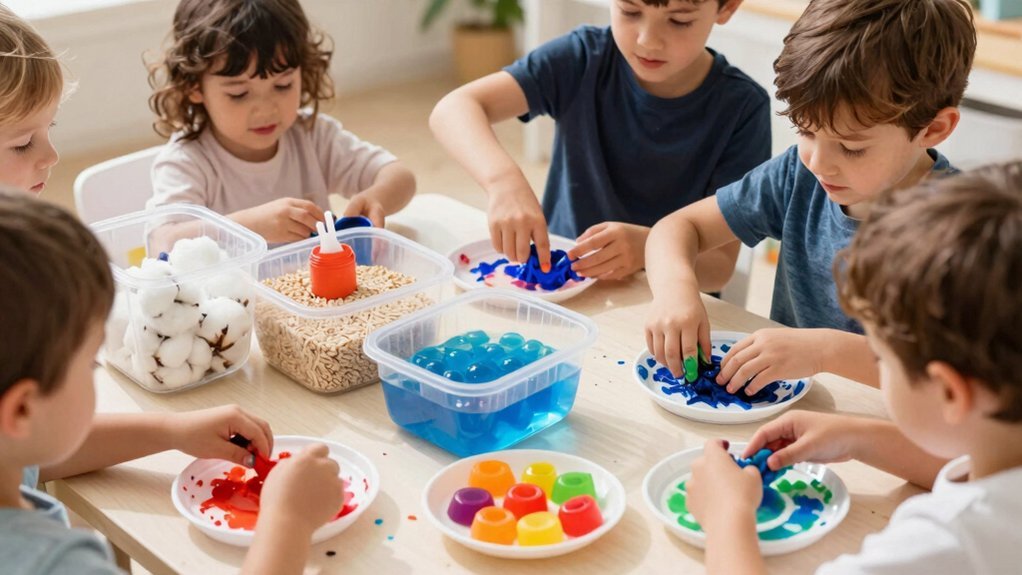
You’ll notice how exploring full textures with finger‑painting, like sand or pudding, sparks curiosity and fine‑motor growth.
Adding edible sensory bins—think mashed avocado or corn flakes—lets kids smear, taste, and talk about sensations safely.
Incorporating sensory bottles filled with glitter or pom poms can enhance visual stimulation and support emotional regulation during play.
Ful Textures Exploration
Exploring full textures through finger‑painting, texture bins, and edible bins gives kids a hands‑on way to feel, describe, and manipulate a variety of surfaces while building fine‑motor skills and language. You can set up a finger‑painting station with sand, rice, or pudding, prompting texture exploration with questions like “Is it gritty or smooth?” This tactile sensory play encourages descriptive dialogue and fine‑motor control.
Sensory bins filled with beans, water beads, or dried pasta let children scoop, pinch, and sort, reinforcing turn‑taking and vocabulary. Adding a simple story prompt—like “We’re digging for treasure”—turns the activity into a narrative adventure.
- Sand‑mixed finger painting
- Rice‑filled sensory bin
- Water‑bead texture bin
- Pudding‑based tactile exploration
For added safety and effective tactile interaction, tools designed with child-sized dimensions and roughened interiors enhance sensory engagement while supporting fine-motor skill development.
Edible Sensory Bins
One simple way to turn snack time into a sensory adventure is to set up an edible sensory bin using safe, bite‑size foods like mashed avocado, canned cranberry sauce, or cooked rice. Lay a washable tablecloth, dress your child in kid‑safe clothing, and place the foods in a shallow plastic bowl or roasting dish. Encourage them to dig, scoop, and smear, turning the textures into a tactile exploration that feels like finger painting without the mess of paint. The edible nature lets them taste and describe the sensations, reinforcing language and fine‑motor skills. Rotate ingredients—corn flakes, shredded coconut, or warm rice—to keep the experience fresh and to minimize choking risks while maintaining a fun, sensory‑rich play session. Incorporating hands-on materials with safe, non-toxic finishes can enhance the sensory experience while ensuring child safety.
Multi‑Sensory Painting Techniques
Ever wondered how a simple paint session can become a full‑body sensory adventure? You can turn finger painting into a tactile sensory playground by mixing sand, rice, or pudding into the palette, letting kids feel grainy, smooth, and cool textures while they create. Adding scented oils or edible puree extends the experience into multi‑sensory exploration, encouraging descriptive dialogue about rough, sweet, or cold sensations. These activities boost visual‑motor coordination and language as children label what they feel.
- Mix dry granules into paint for texture exploration.
- Use edible foods for safe, mouth‑friendly smearing.
- Add scented drops to engage smell.
- Prompt kids to describe each tactile sensation.
Sensory Integration Activities for Vestibular Development (Swing, Trampoline, Roller Boards)
When you incorporate swinging, trampolining, or roller‑board play into a child’s routine, you give the inner ear the rhythmic motion it needs to sharpen balance, spatial orientation, and coordination. Vestibular input from gentle swinging calms nervous systems while encouraging proprioceptive integration as the child feels weight shift. A low‑height swing lets you start slow, then gradually increase speed as confidence builds.
Trampoline sessions add dynamic vestibular challenges; keep handles within reach, limit jumps to a safe height, and watch for flips.
Roller boards create continuous forward‑backward motion, reinforcing spatial awareness and core stability. Rotate these tools daily, supervise closely, and combine them with other sensory tasks for a balanced sensory diet.
Sensory Integration Activities for Proprioceptive Input (Body Sock, Scooter Board, Exercise Ball)
If you want to boost a child’s body awareness, core strength, and focus, incorporate proprioceptive tools like a body sock, scooter board, and exercise ball into their daily routine. These items deliver deep pressure and movement cues that help the brain organize sensory data, improve balance, and support heavy‑work needs.
- Body sock – wrap the child, then gently stretch or push to provide calming pressure that sharpens regulatory skills.
- Scooter board – let them glide on their belly, knees, or back, creating obstacle courses for dynamic proprioceptive feedback.
- Exercise ball – encourage seated or lying positions, rolling and bouncing under supervision to enhance core stability.
- Combined routine – rotate each tool for 5‑10 minutes, tailoring intensity to the child’s tolerance and safety guidelines.
Using these proprioceptive input activities regularly can boost focus and confidence.
Multi‑Sensory Projects: Combining Touch, Sight, and Sound
After exploring proprioceptive tools that build body awareness, you can deepen sensory engagement by pairing touch, sight, and sound in a single project. Multi‑sensory activities boost sensory processing while encouraging tactile exploration and lively sensory play. Try finger‑painting with sand, rice, or pudding while playing soft music; describe colors, textures, and sounds to weave language into the experience. Keep edible items handy for safety and dress in old clothes to contain mess.
| Element | Example | Benefit |
|---|---|---|
| Touch | Textured paint (sand, rice) | Refines tactile perception |
| Sight | Bright color mixing | Enhances visual‑motor coordination |
| Sound | Background rhythm or chimes | Supports auditory discrimination |
| Language | Naming sensations | Builds expressive vocabulary |
| Safety | Edible, non‑toxic materials | Prevents accidental ingestion |
Step‑by‑Step Guide to Setting Up Multi‑Sensory Projects at Home
You’ll start by gathering a mix of textures, sounds, and movement tools that spark curiosity.
Then follow the step‑by‑step setup, arranging each element so the child can explore at their own pace.
Keep the space organized and flexible, adjusting difficulty as you watch their responses.
Gather‑Sensory Materials
A sensory‑ready station transforms everyday items into a tactile playground, letting you quickly set up multi‑sensory projects at home. Start by gathering sensory materials that spark curiosity: sand, water beads, textured fabrics, and shakers. Choose a theme, then sort items into labeled bins for a clean multi‑sensory setup. Use child‑friendly tools like tongs, scoops, and small lids to encourage fine motor development while they explore. Keep surfaces protected with a washable tablecloth and plan a simple cleanup routine. As they play, describe textures and sounds to boost language and cognition.
- Pick a theme
- Label containers
- Add tactile, visual, auditory, proprioceptive elements
- Include fine‑motor tools
Step‑by‑Step Setup
Where do you want to begin? First, set a clear, observable goal for your sensory integration session—maybe improving tactile tolerance or balance. Choose multi‑sensory activities that match that goal, then create a dedicated, easy‑to‑clean workspace with plastic bins or trays for sand, rice, water beads, and other materials. Mark safety boundaries to keep mess contained. Follow a step‑by‑step setup: start with simple tactile tasks like finger painting, then progress to movement‑based challenges such as crawling through a tunnel or balloon tapping. Provide adult guidance—model actions, describe sensations, and use prompt fading to boost participation. Finally, apply supervision guidelines: use soft landing surfaces, avoid choking hazards, and watch for signs of overstimulation, pausing or adjusting as needed.
Adapting Activities for Children With Sensory Processing Challenges
How can you tailor sensory activities so they truly support a child’s unique processing needs? You start by observing the child’s sensory processing profile, then adjust intensity, timing, and type of input. Use occupational therapy guidance to keep adaptations safe and effective. Remember, you’re not forcing participation; you’re inviting engagement at a comfortable level.
- Identify triggers and preferences; note over‑sensitivity or seeking patterns.
- Choose sensory integration activities that match the child’s needs—deep‑pressure for avoiders, heavy work for seekers.
- Modify the environment: dim lights, reduce noise, or add calming textures as needed.
- Gradually increase exposure, checking responses and consulting an OT to refine the plan.
Design a Daily Sensory Routine That Works for Your Family
You’ll start the day with a quick sensory warm‑up that gets your child moving and focused, then sprinkle in mid‑day movement breaks to reset energy levels, and finish with an evening calm‑down routine that eases the transition to bedtime. Each segment should blend vestibular, proprioceptive, tactile, and oral‑motor activities tailored to your child’s preferences. Keep the schedule consistent, use a dedicated sensory space, and adjust as needed with professional guidance.
Morning Sensory Warm‑Up
Ever wonder how a brief, predictable routine each morning can set the tone for a child’s focus and calm? A 5‑15‑minute morning sensory warm‑up blends vestibular, proprioceptive, and tactile inputs to prime attention without overwhelming. Use a visual cue card so the child knows what’s next, and stay flexible—adjust intensity if they’re already alert or still sleepy. Safety comes first; supervise each step and keep activities within tolerance.
- Rocking or gentle swinging – vestibular calm, 2‑3 minutes.
- Heavy work – push a loaded cart or carry a small backpack, proprioceptive boost, 2‑3 minutes.
- Texture brushing or washcloth massage – tactile soothing, 1‑2 minutes.
- Transition cue – visual schedule check, deep breath, 30 seconds.
This concise routine grounds the child, smooths progression, and sets a focused, calm start for the day.
Midday Movement Breaks
Ever notice how a quick, structured movement break can reset a child’s focus and mood before lunch? Midday movement breaks give you a predictable pause to re‑regulate sensory processing. Start with 2–3 minutes of vestibular input—like a gentle swing, a hop‑scotch line, or a quick spin—then transition to proprioceptive activities such as pushing a small cart, carrying a weighted backpack, or doing wall‑push‑ups. Alternate the high‑energy phase with a calm stretch or deep‑breathing to keep the system balanced. Tailor each task to your child’s preferences, safety needs, and gradually increase difficulty. Record noise level, engagement, and mood after each break; this data refines your routine and guides therapist recommendations. Consistent, short breaks prevent overstimulation and keep focus steady through the afternoon.
Evening Calm‑Down Routine
A gentle, predictable wind‑down signals the brain to shift from daytime activity to nighttime calm, so start the routine about 30 minutes before bedtime with dimmed lights, soft music, and a brief parent‑led narration that outlines each step. You’ll weave sensory integration cues that support regulation while keeping the atmosphere soothing.
- Deep‑pressure hug – wrap a weighted blanket or give a gentle, firm squeeze for 2‑3 minutes.
- Slow rocking – sit in a rocking chair or sway on a soft cushion while humming.
- Quiet story – narrate a short, calm tale using a slow, soothing tone.
- Gentle transition – dim lights further, switch to a lullaby, and encourage a breath‑counting exercise.
Adjust each element based on your child’s response, keeping the evening calm‑down routine consistent and predictable.
Tools That Enhance Sensory Integration Activities (Swing, Exercise Ball, Scooter Board, Jump Rope)
Looking for tools that turn ordinary play into powerful sensory experiences? Sensory integration tools such as swings, exercise balls, scooter boards, and jump ropes deliver rich vestibular input and proprioceptive input while boosting gross motor development. A swing offers rhythmic motion that calms and refines balance, spatial orientation, and body awareness; compression swings add deep‑pressure relief. Exercise balls challenge core stability, encouraging safe, varied movements under supervision. Scooter boards let kids glide on belly, knee, or back, creating indoor obstacle courses that stimulate vestibular and proprioceptive systems. Jump rope games—side‑to‑side, zigzag, bunny hops—build endurance and coordination, and if needed, a hula hoop can substitute. Rotate these tools to keep sessions fresh, supporting regulation, motor planning, and overall confidence.
Frequently Asked Questions
What Are Some Sensory Integration Activities?
You can try deep‑pressure massages during bath time, kneading dough while cooking, pushing a weighted cart at the store, crawling obstacle courses, using a weighted lap blanket, or rolling in a sensory “sandwich” game.
What Are the 7 Sensory Needs?
You need vestibular, proprioceptive, tactile, auditory, visual, oral‑motor, and kinesthetic/movement inputs; each domain supports balance, body awareness, texture tolerance, sound and sight processing, chewing/sucking, and coordinated motion.
What Is Sensory-Based Dyspraxia?
You have sensory‑based dyspraxia when your brain can’t efficiently turn sensory input into coordinated movements, causing clumsy actions and difficulty with fine‑motor tasks like handwriting or dressing.
What Are Some Sensory Activities for Children?
You can try swinging, bouncing, heavy‑work tasks like carrying a weighted backpack, tactile bins with rice or slime, deep‑pressure hugs, rhythm clapping games, and visual‑tracking toys to engage multiple senses.