
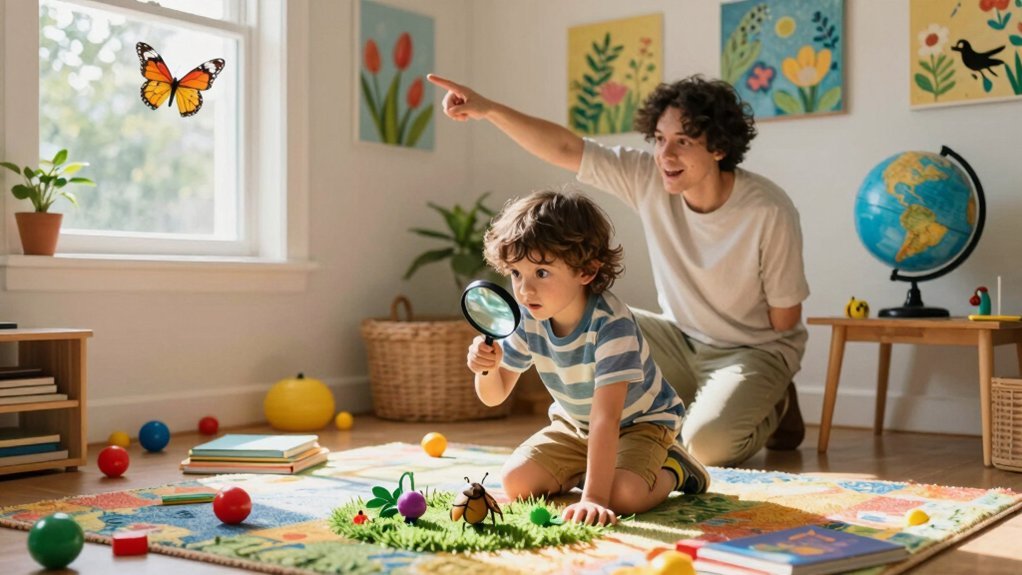
You can transform your child’s natural curiosity into a powerful learning engine by designing safe, accessible spaces that invite exploration. Ask open-ended questions that spark thinking rather than hunt for right answers. Model your own wonder about everyday occurrences. Follow their fascinations instead of forcing curriculum. Build unstructured play into weekly routines. Spot curiosity moments during daily activities like baking or gardening. When you understand how curiosity actually rewires your child’s brain for better retention and academic performance, you’ll discover strategies that work even better.
Design Safe Spaces for Curiosity to Flourish
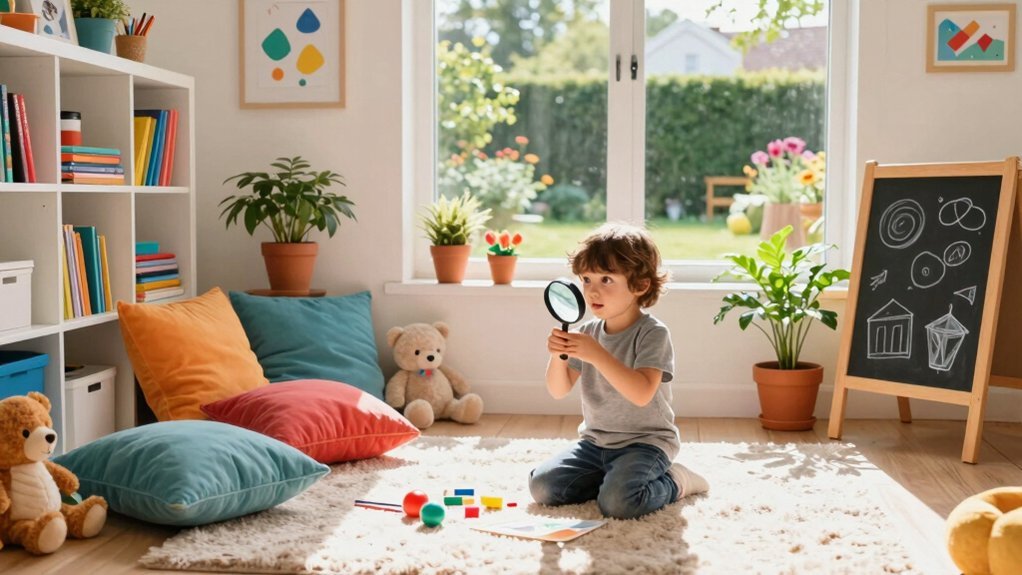
How do you create an environment where your child’s natural curiosity can truly thrive? You’ll want to design spaces that feel both physically and intellectually safe.
Start by organizing your home into clear activity zones with distinct boundaries—this guides your child toward purposeful exploration without overwhelming them. Use child-scaled furniture and keep materials accessible at their level, reducing frustration and encouraging independent choices. Balance sensory-rich areas like sand and water tables with quieter zones for focused thinking. Ensure smooth traffic flow and clear sight-lines to minimize chaos. Stock zones with open-ended materials that invite multiple solutions rather than one correct answer. Most importantly, create intellectual safety where mistakes become learning opportunities, not failures. When children feel supported and secure in their environment, they develop the confidence needed to explore the world around them and engage in meaningful experiences.
Ask Questions That Spark Deeper Thinking, Not Right Answers
When you ask your child open-ended questions instead of seeking right answers, you’re inviting them to think critically and explore multiple possibilities.
Questions like “What do you think happens if…?” or “How might we solve this?” encourage curiosity-driven inquiry that goes far beyond memorized facts.
This shift from correctness to exploration builds their confidence in their own thinking and deepens their understanding of the world around them. After posing these questions, it’s important to wait for their response, giving them time to develop thoughtful and elaborate answers that show you genuinely value their ideas.
Open-Ended Questions Foster Critical Thinking
Why do children who encounter questions without predetermined answers develop sharper minds? When you ask open-ended questions, you’re inviting your child to analyze, evaluate, and synthesize information rather than simply recall facts. This approach stimulates complex thinking that goes far beyond memorization.
Open-ended questions prompt your child to articulate their reasoning and explore multiple perspectives. They’ll construct knowledge through explanation, deepening their understanding of concepts. You’ll notice richer, more detailed responses that reveal their genuine thinking processes and emotions. Research demonstrates that open-ended assessment instruments have been validated as reliable tools for measuring critical-thinking development across diverse learning materials and cognitive stages.
Curiosity-Driven Inquiry Over Correct Answers
Instead of drilling your child on factual recall, ask questions that don’t have predetermined answers—ones that invite exploration and deeper thinking. When you shift focus from correctness to curiosity, you create space for genuine inquiry. Ask “Why do you think that happened?” rather than “What’s the right answer?” This approach activates their metacognitive skills and encourages them to grapple with complex ideas. Research shows that curious learners retain more information, even details unrelated to their original question, making curiosity-driven exploration a powerful foundation for long-term understanding.
Model Your Own Curiosity to Inspire Theirs
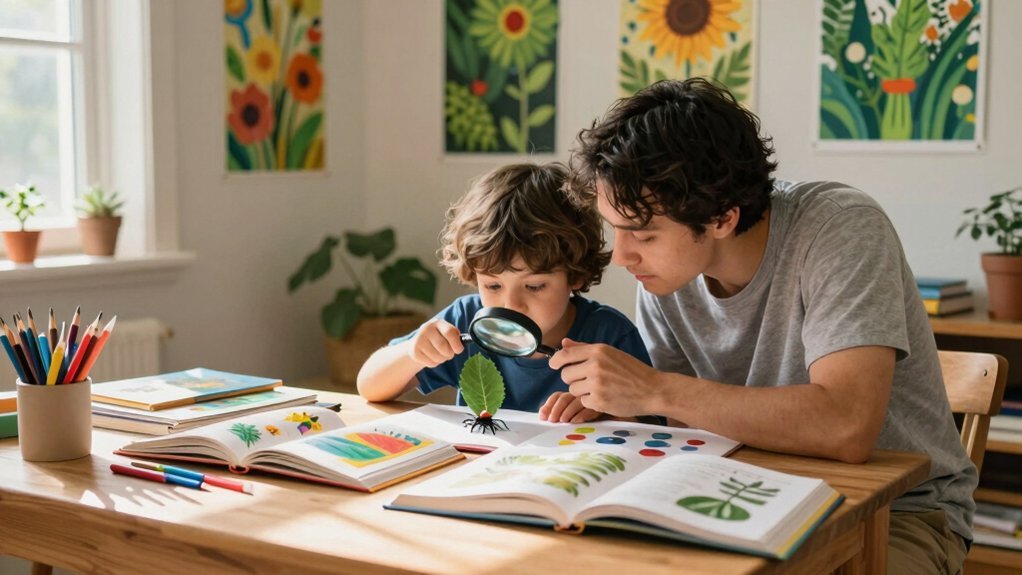
How does your child know what curiosity looks like? They learn by watching you. When you wonder aloud about everyday occurrences, you’re demonstrating an inquisitive mindset that becomes contagious. Practice the 5 W’s of wondering together—who, what, when, where, why—and show your child that asking questions matters more than having instant answers.
Point out changes and patterns in your surroundings. Notice differences, like why toast feels crispy while bread stays soft. This deliberate observation sparks their desire to understand mechanisms and relationships. Research shows that permissive and authoritative parenting styles positively support curiosity development in children who observe these exploratory behaviors modeled by their parents.
Your modeling of exploration directly reduces the negative effects of psychological control on your child’s curiosity. When they see you genuinely interested in discovering answers, they internalize that curiosity is valued and worth pursuing.
Follow Their Fascinations Instead of Forcing the Curriculum
When your child’s eyes light up talking about dinosaurs or outer space, you’ve spotted a powerful learning opportunity. Rather than rigidly adhering to predetermined curricula, you’ll find that integrating your child’s natural interests into learning produces deeper retention and engagement.
Research shows children express significantly more curiosity about topics outside formal schooling structures. School environments often fail to stimulate the inquiry skills children naturally possess. By aligning math lessons with their fascination for space or weaving science around their favorite subjects, you’re tapping into intrinsic motivation. Studies from randomized trials demonstrate that when teachers employ pedagogical approaches focused on holding students’ undivided attention before introducing new concepts, knowledge retention improves substantially even years later.
This approach respects your child’s preferences while inspiring continued knowledge acquisition. When learning connects to genuine interests, your child doesn’t just memorize—they develop critical thinking and problem-solving skills that extend far beyond any single lesson.
Build Unstructured Play Time Into Every Week
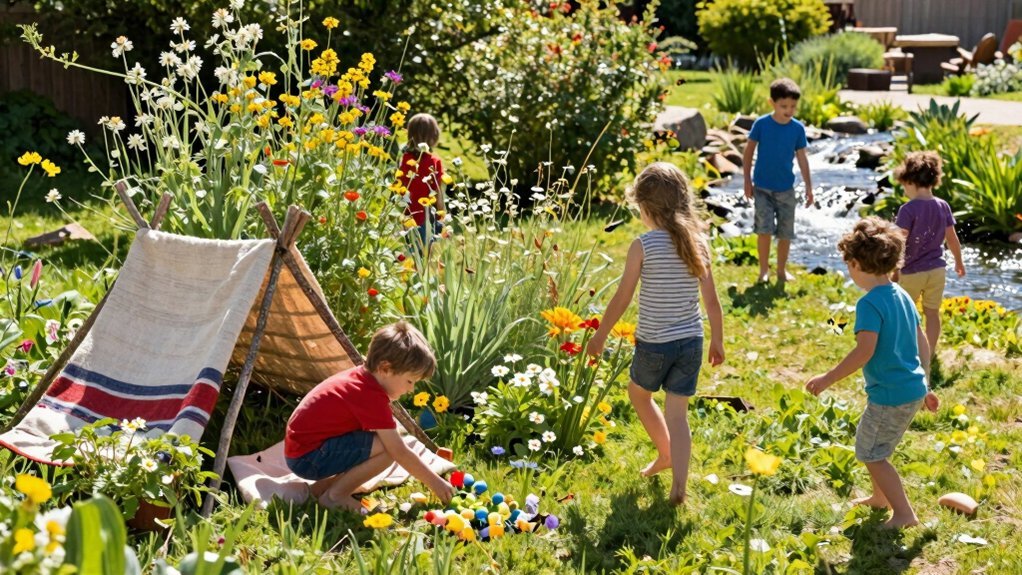
While structured activities have their place, unstructured play is where your child’s brain truly flourishes. When you carve out time for free play, you’re giving your child space to problem-solve, plan, and organize—skills that directly strengthen their math and language abilities.
Unstructured play also builds emotional resilience. Your child learns to regulate emotions, cope with stress, and develop self-determination through independent challenges. They’ll gain confidence by testing their physical limits safely and discovering they can handle setbacks on their own. Open-ended activities encourage self-directed experimentation that naturally deepens their ability to learn from failure.
Beyond individual growth, unstructured play fosters critical social skills. Your child practices cooperation, empathy, negotiation, and conflict resolution with peers. They develop leadership abilities and learn consideration for others naturally.
Aim for several hours weekly. Your investment in unstructured play pays dividends across cognitive, emotional, social, and physical development.
Spot and Seize Curiosity Moments During Daily Routines
Did you know that your child’s greatest learning opportunities aren’t hidden in expensive programs or specialized curricula—they’re woven into the fabric of your everyday life? You can transform routine moments into curiosity catalysts by asking questions about ordinary observations. When you’re gardening, baking, or fixing something, invite your child to participate and wonder aloud about how things work. Point out shadows, animals, and seasonal changes during walks. Turn toothbrushing into a playful experience with songs or colorful tools. These everyday interactions build neural pathways while keeping your child engaged. By modeling curiosity through observation and questioning, you create a foundation for self-directed exploration that naturally sparks wonder in your child’s mind. Predictable routines provide a framework for making sense of the world, allowing your child to feel secure enough to ask questions and investigate new concepts.
See How Curiosity Boosts Real Academic Results
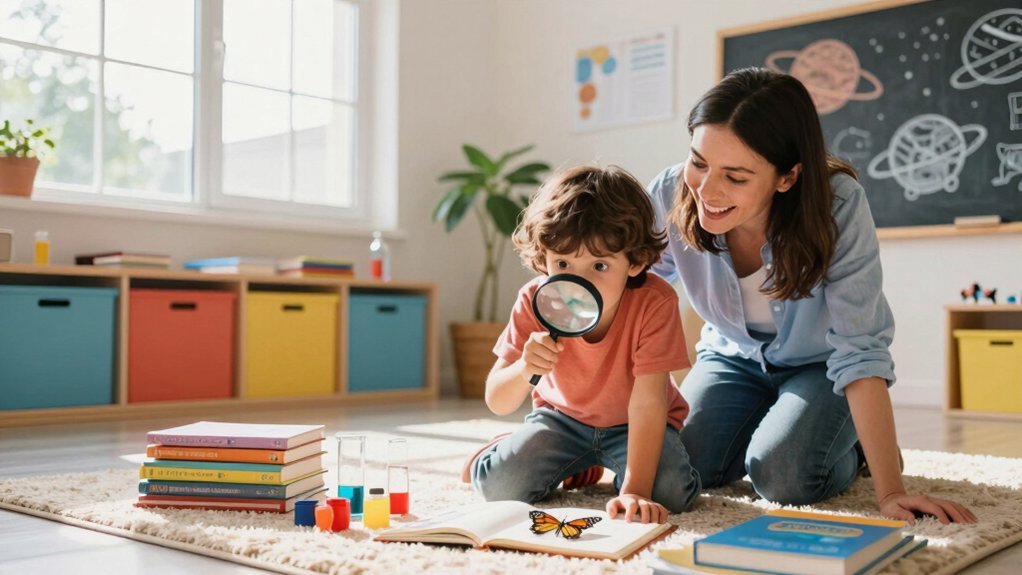
You’ll notice that curious learners retain information far longer than their peers, transforming passive memorization into active exploration. When your child’s curiosity drives engagement with material, they’re building neural pathways that stick—meaning better test performance and genuine understanding. This isn’t just about grades; you’re watching their brain lock in knowledge they’ll actually remember and apply. Research shows that curiosity rivals intelligence in predicting academic performance, making it one of the most powerful factors you can nurture in your child’s development.
Curiosity Drives Memory Retention
What makes some facts stick in your child’s mind while others fade away? Curiosity’s the answer. When your child feels curious, their brain activates reward centers that assign value to information itself, dramatically improving retention.
| Factor | Impact | Result |
|---|---|---|
| Partial Knowledge | Triggers Peak Curiosity | Strongest Memory Encoding |
| Direct Interest | Activates Brain Rewards | Longer Information Retention |
| Age Group | Developmental Advantage | Better Recall Rates |
The magic happens when your child encounters partial knowledge—that tantalizing gap between what they know and what they don’t. This state triggers the highest curiosity levels, boosting how well they remember answers. Younger children and adolescents show particularly strong memory for topics that spark their curiosity. Rather than forcing memorization through repetition, you’re leveraging your child’s natural learning mechanisms when you encourage curiosity-driven exploration. This dopaminergic circuit activation during states of curiosity doesn’t just feel rewarding in the moment—it fundamentally reshapes how information gets stored and accessed in their brain over time.
Engagement Improves Test Performance
your child’s curiosity matters just as much as their intelligence when it comes to test scores.
When your child engages deeply with material, they retain information better and perform higher on assessments. Curiosity transforms learning from passive memorization into active exploration, which strengthens both retention and critical thinking skills. Research shows that curiosity rivals intelligence in predicting academic performance, making it one of the most significant factors in how well students succeed.
Your child’s curious mindset drives meaningful engagement that directly impacts test performance:
- Active question-seeking fosters the critical skills needed to tackle complex problems
- Deep material engagement improves retention beyond rote memorization
- Joy of exploration propels reasoning abilities that transfer to test situations
Rather than pushing rote effort, inspire your child to ask questions and investigate topics that fascinate them. This curiosity-driven engagement creates stronger neural connections, resulting in better test performance and genuine understanding.
Frequently Asked Questions
How Can I Tell if My Child Is Genuinely Curious or Just Seeking Attention?
You’ll notice genuine curiosity when your child asks focused questions tied to learning, then explores independently. Attention-seeking involves frequent interruptions, exaggerated stories, and disruptive behavior that doesn’t connect to specific interests.
What Should I Do When My Child’s Curiosity Leads to Dangerous or Inappropriate Situations?
You should model safe curiosity by gently redirecting your child from hazards like hot stoves or forbidden objects. Facilitate risky play with loose parts while excluding dangerous areas near water or fire.
How Do I Balance Curiosity With Necessary Structure and Discipline in Parenting?
You’ll balance curiosity with structure by setting firm boundaries while encouraging exploration within safe limits. Use authoritative parenting—combine clear rules with warmth. Praise effort, allow mistakes, and guide your child toward independent thinking.
At What Age Should Children Begin Developing Curiosity, and Is It Ever Too Late?
Your child’s curiosity emerges by eight months and remains developable throughout their life. Brain plasticity means you can stimulate exploratory behavior at any age, though early foundations matter most for ideal cognitive growth.
How Can I Encourage Curiosity if My Child Seems Uninterested in Learning New Things?
You can spark interest by presenting novel, surprising activities that match your child’s developmental level. Use open-ended exploration with toys, reading together, and drawing—methods parents find most effective for nurturing curiosity naturally.
In Summary
You’ve got the tools to nurture your child’s natural curiosity right now. By creating safe spaces, asking thoughtful questions, and modeling your own wonder, you’re building a foundation for lifelong learning. When you follow their interests and protect unstructured playtime, you’re not just entertaining them—you’re developing critical thinkers and engaged learners. Start today, and you’ll witness curiosity transform into genuine academic success.



Leave a Reply