
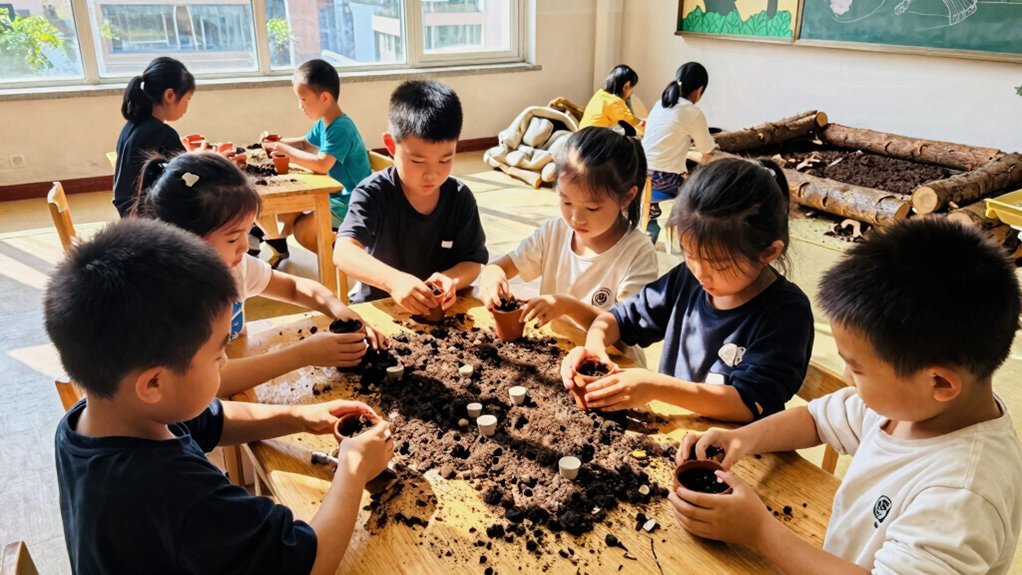
You’ll notice that a natural work rhythm gives kids predictable cycles of focused work, quiet reflection, and smooth transitions, which lowers cortisol and steadies their nervous system. The repeated patterns build security, freeing mental space for skill practice and boosting confidence. Seasonal cues and weather rhythms act as reliable metronomes, anchoring daily flow and supporting embodied learning. This rhythmic structure reduces stress spikes, enhances attention, and promotes emotional regulation, so you’ll discover even more benefits as you explore further.
What Is a Natural Work Rhythm for Kids?

Ever wondered how a day can feel both structured and effortless for kids? You’ll notice a gentle rhythm that weaves activities together, giving children a sense of predictability without rigid clock‑times. In early childhood development, this rhythm creates a daily flow where circle time, snack, and outdoor play repeat in familiar patterns, so transitions feel seamless. You guide them through hands‑on tasks—folding blankets, arranging placemats, simple crafts—within a consistent order, mirroring natural cycles like sunrise and seasons. The flexibility lets you adjust to each child’s energy while still maintaining the overall structure. By balancing active work with quiet moments, you nurture concentration, resilience, and calm throughout the day. Integrating materials like Montessori command cards with real object matching can further enhance hands-on learning within these natural rhythms.
Why a Natural Work Rhythm Calms the Nervous System?
When you set up a natural work rhythm, you’re actually syncing children’s activities with the ebb and flow of their nervous system. The rhythm mirrors breathing, alternating effort and pause, which steadies autonomic balance and lowers cortisol. Predictability in handwork or cleanup creates a safe template, so the child’s brain can anticipate what comes next, easing transition anxiety. Slow, nature‑based tasks extend processing time, allowing self‑regulation to deepen. Rest and work cycles become a built‑in reset, helping the child linger in focused engagement without overstimulation.
Natural work rhythms sync children’s activities with breathing, fostering predictability, self‑regulation, and reduced cortisol.
- Aligns effort with natural physiological expansion and contraction
- Provides predictable sequences that reduce cortisol spikes
- Uses nature‑inspired activities for extended processing time
- Embeds short breaks to support self‑regulation and resilience
- Minimizes transition‑triggered anxiety through smooth rest‑work cycles
Choosing tools like a Montessori step stool encourages independence and supports natural developmental rhythms by enabling children to participate safely and confidently in daily routines.
How Repetition Builds Security and Confidence?

You’ll notice that when routines repeat, children start to trust their environment because they know what to expect. Those familiar patterns free up mental space, letting kids practice skills and see their competence grow. As confidence builds, they become more resilient to changes and challenges.
Trust Through Repetition
Repetition builds a predictable rhythm that lets children know what comes next, easing anxiety and freeing mental space for new learning.
When you embed repetition into daily activities, you create predictable patterns that act as a security blanket. A consistent routine signals that you’re reliable, so children trust you and the environment. They learn that actions will follow the same order, which reduces fear and lets them focus on mastering skills. Over time, this trust transforms into a sense of safety, encouraging exploration and deeper social bonds.
- Use a simple morning circle to set the day’s tone.
- Keep snack time and outdoor play in the same order each day.
- Introduce a calm bedtime story ritual.
- Reinforce motor skills with repeated folding or mat‑laying tasks.
- Celebrate completion of each routine to strengthen confidence.
Confidence Grows With Practice
How does practicing the same task day after day turn uncertainty into confidence? When you guide a child through a simple rhythm—folding blankets, setting placemats, lighting a candle—you embed a routine that feels safe.
Each repetition creates a predictable pattern, giving the child a sense of security.
As they master the steps, they notice tangible progress, which fuels self‑efficacy.
Those small successes stack up, turning tentative attempts into confident actions.
Repeated rituals also smooth transitions, reducing emotional load and freeing mental bandwidth for imagination.
Over time, the child internalizes the rhythm of effort, recognizing that consistent practice leads to competence.
This confidence then spills over to new challenges, reinforcing a growth mindset rooted in reliable, repetitive experience.
Much like dryer balls reduce drying time by up to 40%, consistent practice helps streamline learning processes and builds efficiency through repetition and care for material quality standards.
How Seasonal Patterns Strengthen Daily Rhythm?
You’ll notice the year’s cycle shaping your child’s day‑to‑day flow, as weather shifts cue different activities and moods.
Seasonal rituals—like autumn leaf‑crafts or spring garden walks—anchor routines and reinforce a steady rhythm.
Using visual timers with Montessori-friendly designs can support these natural rhythms by promoting independence and smooth transitions throughout the year.
Seasonal Seasonal Cycle
Ever notice how the world’s seasonal shifts quietly shape your child’s daily routine? You’ll see seasonal rhythms syncing with the daily rhythm, turning each sunrise into a cue for nature walks and cozy indoor projects. When autumn drapes the yard in amber, you can guide your child toward quiet storytelling, letting the rhythm supports focus and imagination. Winter’s hush invites handwork and reflective play, reinforcing a predictable flow that eases overstimulation. Spring bursts with exploration, while summer’s long days expand outdoor learning, each cycle building resilience and a sense of belonging.
- Use nature walks to anchor sensory experiences each season.
- Celebrate festivals that mark growth, harvest, rest, and renewal.
- Pair slower indoor activities with cooler months for deeper focus.
- Encourage outdoor exploration in spring and summer for cognitive engagement.
- Highlight transitions so children anticipate change and feel secure.
Integrating hands-on tools like a natural wooden abacus during these seasonal learning times can further enhance math skills and fine motor development.
Rhythm Through Weather
What if the weather itself became a metronome for your child’s day? You can let sunrise, rain, and snow set a clear rhythm that anchors the daily routine. When winter brings shorter, quieter light, you shift indoor storytelling and music to match the slower pace, keeping focus steady. As spring warms, you move outdoor play to milder hours, preserving continuity despite seasonal changes. Summer heat cues early morning craft sessions, while autumn breezes invite nature walks that reinforce the same predictable flow. By aligning activities with weather patterns, you give your child a reliable scaffold, helping them anticipate transitions, adapt effortlessly, and thrive within a consistent, natural rhythm. Incorporating hands-on exploration with Montessori magnet kits can enhance this rhythm by engaging children in sensory and scientific learning aligned with their developmental stages.
Seasonal Rituals Reinforce Rhythm
- How can seasonal rituals sharpen your child’s daily rhythm? You’ll notice that aligning activities with winter’s slower pace or spring’s renewal gives your child a tangible sense of time. Predictable anchors—festivals, nature songs, and themed stories—feed memory and anticipation, strengthening the rhythm of their daily routine. When you weave hand‑crafts, outdoor play, and storytelling into each season, you embed embodied learning that supports early childhood development. Children feel belonging, regulate emotions, and stay engaged because the larger life cycles become familiar, purposeful cues.
- Celebrate a seasonal holiday with a simple craft that marks the month.
- Sing a nature‑themed song each morning to signal the day’s start.
- Schedule outdoor exploration that matches the weather’s mood.
- Use a seasonal calendar to transition between quiet and active periods.
- Reflect on the season’s changes during a calm closing circle.
- Incorporating breathing exercise cards into daily seasonal routines can enhance children’s emotional regulation and focus throughout the year.
Rhythm vs. Rigid Scheduling: Key Differences
Why does a child thrive when the day flows like a gentle river rather than ticking like a clock? You’ll notice that a rhythm respects a child’s innate sense of sequence, while a schedule imposes rigid clock times. Rhythm emerges from repeated, person‑centered activities, easing transitions and nurturing development. A schedule, though orderly, can feel foreign, demanding compliance with alarms instead of listening to cues. When you prioritize rhythm, you give the child space to anticipate what comes next, reducing anxiety and building resilience.
| Aspect | Rhythm (flexible) | Schedule (fixed) |
|---|---|---|
| Origin | Child‑centered | Calendar‑driven |
| Timing | Approximate, flow | Exact clock time |
| Transitions | Smooth, natural | Abrupt, forced |
| Impact on Development | Supports curiosity | Limits exploration |
How Predictable Rhythm Boosts Emotional Regulation?

You’ll notice that a steady rhythm anchors emotional safety, giving kids a reliable backdrop to feel secure.
When changes follow a predictable pattern, stress drops and children can shift between tasks without panic.
This consistency lets them practice self‑regulation, like deep breathing, in a safe, repeatable context.
Anchoring Emotional Safety
Ever notice how a steady routine makes you feel calmer when the day shifts? When you anchor a child’s day with a predictable rhythm, you create security that steadies their emotions. Consistent routines act like a map, letting them anticipate what comes next and recover quickly from stress. This sense of safety fuels self‑regulation, letting them move from one activity to another without anxiety. By aligning daily patterns with natural cycles—mealtimes, rest, movement—you reinforce trust and give them confidence to explore.
- Circle time signals the start of focused learning
- Snack breaks provide a predictable pause for nourishment
- Outdoor play follows a set cue, encouraging physical release
- Transition songs cue the shift to quiet time, easing wind‑down
- Flexible endings let kids finish tasks before moving on, preserving calm
Predictable Transitions Reduce Stress
When you pair a steady routine with clear cues, children learn to anticipate each shift, and that anticipation cuts down the stress spikes that usually accompany change. The rhythm of the day becomes a scaffold; predictable transition s—tidy‑up songs, snack signals, circle‑time bells—signal that a new activity is coming.
Because the child knows what to expect, cortisol levels stay lower and anxiety fades faster. You’ll notice fewer refusals and quicker focus as they move from play to work.
Consistent markers act as external anchors, triggering internal self‑regulation and reinforcing a calm pacing. Over time, this predictability builds resilience, turning each transition into a stress‑reduction opportunity rather than a disruption.
Impact of Rhythm on Language, Math, and Creativity
Why does rhythm matter for learning? You’ll notice that a steady daily rhythm eases transition stress, letting you focus longer on language, math, and creative tasks. Repetitive, meaningful routines—like circle time or counting objects—strengthen early numeracy while weaving language development through sounds, patterns, and sequencing. Seasonal, nature‑based activities let you describe observations, expanding vocabulary and storytelling skills. Predictable classroom sequences make math concepts safe to explore, linking new ideas to familiar routines. Free movement and reflective moments within a rhythmic day spark imagination, supporting problem‑solving alongside language and numeracy.
- Rhythm reduces stress, boosting attention
- Routine builds early numeracy through repeated counting
- Language development thrives on patterned speech and storytelling
- Predictable sequences anchor new math ideas
- Creative thinking blossoms during movement and reflection
Step‑by‑Step: Create Uninterrupted Work Cycles at Home
If you set a clear, consistent cue—like a soft chime or a favorite timer—your child will know exactly when focused work begins and ends, turning the transition into a predictable, low‑stress signal. Use that cue to launch a rhythm of uninterrupted work cycles: start with 10‑minute blocks, then add 5‑minute increments weekly. Prepare a quiet workspace and all materials ahead of time, so the only decision is to begin. Include a brief warm‑up, the work and a short reflection afterward; that creates a predictable flow and reinforces focus benefits.
| Stage | Action | Time |
|---|---|---|
| 1 | Cue & Warm‑up | 2 min |
| 2 | Core work | 10‑20 min |
| 3 | Reflection | 2 min |
| 4 | Mini‑break | 3 min |
| 5 | Reset cue | 1 min |
Integrating Rhythmic Transitions in a Montessori Classroom
How can you turn every classroom shift into a smooth, confidence‑building rhythm? In a Montessori setting, you design rhythmic transitions that weave predictability into each movement. You cue children with a soft verbal prompt, a hand gesture, or a visual card, then guide them through a one‑song countdown to gather materials, return to the rug, and start the next activity. This consistent pattern lets kids anticipate changes, easing anxiety and fostering independence. As they rehearse the sequence, self‑regulation strengthens, and attention remains sustained across practical life, sensorial, and academic work.
- Use a single, calm song to signal the start and end of each transition.
- Display a simple visual card that outlines the step‑by‑step routine.
- Pair verbal cues with consistent hand gestures for clarity.
- Keep the countdown to exactly one minute to respect processing time.
- Review the sequence daily to embed predictability and boost independence.
Simple Family Rituals That Reinforce Rhythm
After mastering rhythmic classroom shifts, you can bring that same predictability home with simple family rituals. Start each morning with a short song or candle lighting; the cue marks a smooth transition into the day’s activities and sets a steady rhythm. Use clear markers like “tidy up” before snack time to create repeatable routines that calm anxiety and sharpen focus. Celebrate seasonal rhythms—leaf‑collecting in autumn or flower‑watching in spring—to tie daily life to nature and foster belonging. Share meals together, perhaps ending with a gratitude phrase or a soft light, reinforcing connection and calm. Consistently practiced family rituals become stable anchors, weaving rhythm into everyday life for both parents and children.
Measuring the Benefits of a Natural Work Rhythm
When you track children’s focus, stress levels, and skill mastery across a natural work rhythm, the data reveal clear gains: fewer transition meltdowns, longer periods of sustained attention, and faster acquisition of hands‑on tasks.
You’ll notice that rhythm creates a predictable flow, which steadies emotions and boosts engagement. By logging observations daily, you can quantify self‑regulation improvements and link them to seasonal or weekly patterns.
Simple charts of attention span, transition frequency, and task completion rates let you see the impact of predictability and adjust routines for optimal growth.
- Record attention duration per activity.
- Count transition meltdowns before and after rhythm changes.
- Track skill mastery milestones weekly.
- Map stress indicators to predictable sequences.
- Correlate engagement scores with self‑regulation moments.
Frequently Asked Questions
Why Is It Good for Children to Play With Natural Resources?
You benefit because playing with natural resources sharpens your fine motor skills, sparks curiosity, builds resilience through hands‑on problem solving, deepens sensory awareness, and nurtures ecological understanding while boosting mood and focus.
Why Is Rhythm Important in Everyday Life?
You feel steadier when rhythm structures your day, because predictable patterns lower stress, boost focus, and let you flow naturally between tasks, making life smoother and more enjoyable.
How to Fix a Child’s Circadian Rhythm?
Start by setting a consistent wake‑time and bedtime, even on weekends. Dim lights and limit screens an hour before sleep, expose them to bright morning light, and shift bedtime 15‑30 minutes earlier each few days.
Why Play Is Important in Early Childhood Learning a Holistic Approach?
You’ll see play fuels early learning because it blends movement, imagination, and social interaction, letting you explore concepts naturally, build confidence, and develop cognitive, emotional, and language skills—all through joyful, hands‑on experiences.