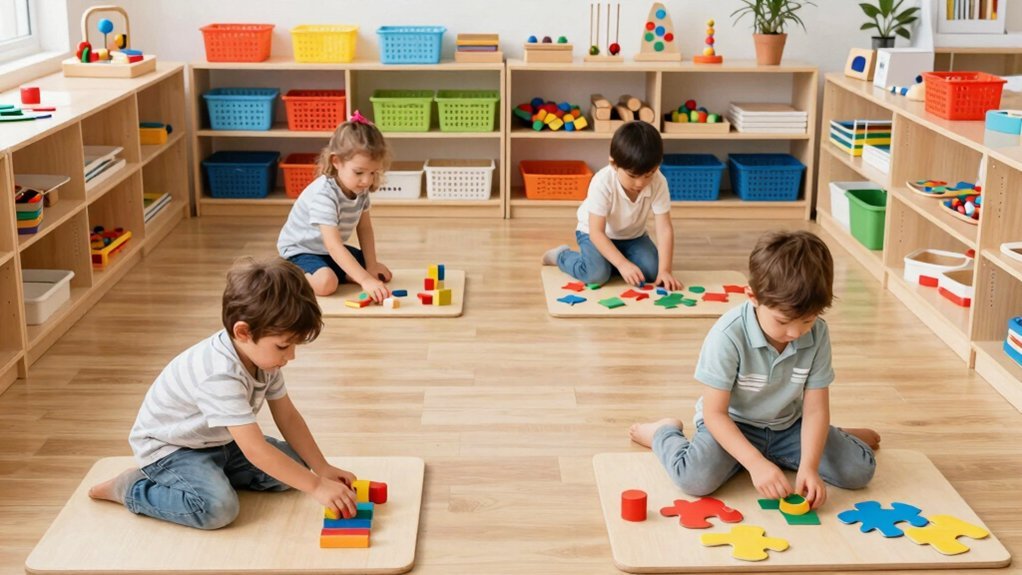
When you give kids a tidy, visually labeled space, you cut down the mental effort needed to find or put away items, so they can focus on planning and sequencing instead of guessing. Clear zones and simple routines turn everyday actions into practice for self‑regulation and executive function, while visual cues act like shortcuts that reinforce independence. By consistently using these cues, children learn to anticipate steps, manage time, and take responsibility—so if you keep exploring, you’ll discover even more strategies to deepen these skills.
Define an Ordered Space for Kids

How can you turn a chaotic classroom into a calm, focused learning hub? By creating an ordered space that supports environmental education and child autonomy. You arrange zones—reading, science, art, outdoors—into a predictable layout, so kids know where each activity lives. Labeled shelves, color‑coded bins, and posted schedules act as visual cues, guiding self‑management of belongings. Consistent routines let children transition smoothly, reducing cognitive load and boosting focus. When the environment is organized, they can locate materials quickly, return items correctly, and reflect on their work. This structure encourages independence: they initiate tasks, follow steps, and adjust actions without constant adult prompting. The result is a safe, efficient space where learning thrives. Using low step-in toy storage solutions designed for accessibility and safety further enhances children’s ability to manage their environment independently.
Label Stations and Set Simple Routines in the Ordered Space
You’ll notice that clear labels turn each area into a predictable learning zone, so kids know exactly where to go and what to grab.
By setting simple routines—like a quick clean‑up cue or a return‑to‑station step—you give them a repeatable process that builds independent organization skills.
Consistency in both labeling and routines creates a smooth flow, reducing downtime and boosting focus.
Incorporating tools like the Comfy Cubs Kids Step Stool Montessori Tower can further support children’s independence and environmental order by helping them access learning areas safely.
Label Stations and Routines
Where do you start when you want children to move confidently through a classroom? Begin with clear station labels that use simple, purpose‑based names and visual cues like age‑appropriate icons. These cues support emergent literacy and let kids pick activities independently. Pair each label with a short, consistent routine—check‑in, work time, clean‑up—so the day follows a predictable flow. Place storage bins and tools right next to their stations; this proximity cuts searching time and builds organization habits. Model the expectations by reviewing the station labels and routines at the start of every period, reinforcing the pattern. Over time, children internalize the structure, transition smoothly, and develop lasting organizational skills. Incorporating Montessori-inspired design elements in classroom tools can further enhance children’s ability to focus and organize through tactile learning experiences.
Create Predictable Learning Zones
Clear, purpose‑driven labels on each learning station, paired with a brief routine posted at the entrance, give children a predictable map of the day.
When you arrange the space into predictable zones, you turn abstract classroom routines into concrete, visual guides.
Label each learning station—science, literacy, math—and store supplies in matching containers, so kids locate tools without hesitation.
Post a simple schedule and visual order at the doorway; the sequence reinforces environmental education principles and supports early childhood education goals.
Timed activities, like a five‑minute clean‑up followed by a ten‑minute exploration, embed self‑regulation while maintaining smooth flow.
Consistent organization reduces interruptions, builds confidence, and lets children transition effortlessly between zones.
Using versatile and stackable storage solutions with expandable design features can further support maintaining an organized learning environment.
Encourage Independent Organization Skills
Ever wonder how a simple label can turn a chaotic corner into a confident learning hub? When you set up environmental order with clear labeling stations, you give children a visual shortcut that tells them exactly where each item lives. Pair those cues with short, predictable routines, and you create a rhythm that smooths classroom flow. Kids learn to retrieve, return, and organize without prompting, building independent organization skills that translate into self‑management. Consistent shelves and picture cues let them anticipate the next step, so transitions shrink and focus expands. Over time, this practice reinforces memory, boosts task engagement, and equips them with the sequencing and planning habits they’ll need for later academic challenges. Using modular storage cubes can further enhance this environment by adapting to changing needs and encouraging responsibility in maintaining order.
Apply Natural Cycles Within an Ordered Space to Strengthen Sequencing
You’ll notice that arranging a seed’s germination steps alongside a butterfly’s life stages turns abstract cycles into concrete sequencing practice.
By mapping habitats—like a garden plot or a pond board—into tidy, ordered zones, you give children clear visual anchors for each phase.
This structured approach ties natural timing to everyday organization, sharpening their ability to predict and record sequential events.
Including Montessori-inspired learning tools such as natural wooden blocks enhances children’s engagement with these sequences by encouraging hands-on exploration and spatial reasoning.
Cycle Sequencing
A cycle‑sequencing activity lets you place each stage of a natural process—like a butterfly’s metamorphosis or the water cycle—into a clear, ordered space, reinforcing logical progression and predictability. You’ll hand children labeled cards depicting evaporation, condensation, precipitation, and collection, then ask them to arrange the steps. This tactile exercise links observation to sequence, making abstract cycles concrete.
By repeating the routine daily—perhaps pairing a weather‑check chart with a planting decision—you embed organization into their habits. Visual flowcharts and outdoor stations serve as permanent references, so children see how timing, duration, and dependencies matter.
In environmental education, such structured play sharpens reasoning, builds reliable routines, and cultivates a habit of orderly thinking. Incorporating tools like age-appropriate designs can further enhance a child’s engagement and understanding by matching activities to their developmental stage.
Structured Habitat Mapping
Structured habitat mapping lets you arrange natural features—soil patches, water sources, plant clusters—into a clear, ordered layout, turning seasonal cycles into a visual sequence you can track and predict. You’ll label each zone, note when leaves unfurl, log animal visits, and compare moisture levels week by week. This hands‑on routine builds organization, sharpens observation, and reinforces sequencing in environmental education. By documenting changes, you create a reference that lets you predict future patterns and see cause‑and‑effect in action.
- A shaded corner for saplings, marked with planting dates.
- A rain garden, annotated with water depth after each storm.
- A meadow strip, logged for insect species each month.
- A compost pile, tracked for temperature and decomposition stages.
Sort Messy Materials in an Ordered Space Using Simple Games

Sorting messy materials into an ordered space with simple games gives kids a hands‑on way to practice categorization, turning chaos into clear mental schemas of size, color, or function. You’ll notice that sorting blocks by color or shape instantly boosts organization skills while sharpening executive function. A timed clean‑up race, for example, forces children to plan, sustain attention, and switch strategies, which translates into smoother classroom management. Pair each bin with visual supports—pictures or labels—so learners can see where items belong without prompting. These concrete goals reinforce early childhood education goals, turning repetitive play into lasting habits. Over time, the classroom becomes tidier, tasks flow faster, and children gain confidence in their ability to keep spaces ordered.
Connect a Tidy Ordered Space to Responsibility and Self‑Regulation
Ever notice how a neat, organized space instantly steadies your child’s attention? When you set up environmental order, you lower cognitive load, letting self‑regulation surface naturally. Kids see labeled bins, clear shelves, and predictable routines, so they know exactly where things belong. That visual clarity sparks responsibility: they choose, place, and retrieve items without prompting. The habit of tidying after each activity reinforces executive functions—planning, sequencing, and goal‑directed behavior—while reinforcing the link between actions and the surrounding order.
- A labeled art corner invites independent clean‑up.
- A color‑coded bookshelf teaches sorting and accountability.
- A daily “reset” routine builds habit and reduces disruptions.
- A shared cleaning chart visualizes responsibility and progress.
Step‑by‑Step Guide to Creating an Ordered Space at Home and Outdoors

Ever wonder how a simple, labeled zone can turn chaos into calm for both you and your child? Start by mapping storage zones inside and outside, then assign clear labeling to each bin. Use step‑by‑step routines: a daily tidy‑up chart, a weekly rotation of toys, and a picture schedule that shows independent cleanup tasks. Integrate environmental education by marking recycling, compost, and waste containers, reinforcing eco‑friendly habits while sharpening organization skills.
| Area | Action |
|---|---|
| Indoor toys | Label bins, schedule daily tidy‑up |
| Outdoor gear | Use weather‑proof crates, weekly rotation |
| Recycling | Color‑code, teach sorting |
| Compost | Simple bin, daily check‑in |
Frequently Asked Questions
Why Is It Important to Teach Children About the Environment?
You should teach kids about the environment because it sparks curiosity, builds critical thinking, and shows how actions affect nature, empowering them to make responsible choices, collaborate, and protect resources for future generations.
What Is the Purpose of the Environmental Organization?
You aim to protect ecosystems, promote sustainable practices, and inspire community action; by organizing resources, advocacy, and education, you enable collective stewardship, reduce waste, and foster resilient, healthier environments for everyone.
Why Is the Environment Important for Children’s Learning?
You’ll find the environment fuels curiosity, giving you real‑world examples that spark questions, deepen concepts, and link subjects together, so you stay engaged, think critically, and retain knowledge longer.
Why Is the Organization Environment Important?
You need an organized environment because it cuts distractions, streamlines routines, and lets you focus on tasks; it builds predictability, boosts efficiency, and reinforces the habits that keep you productive and calm.