
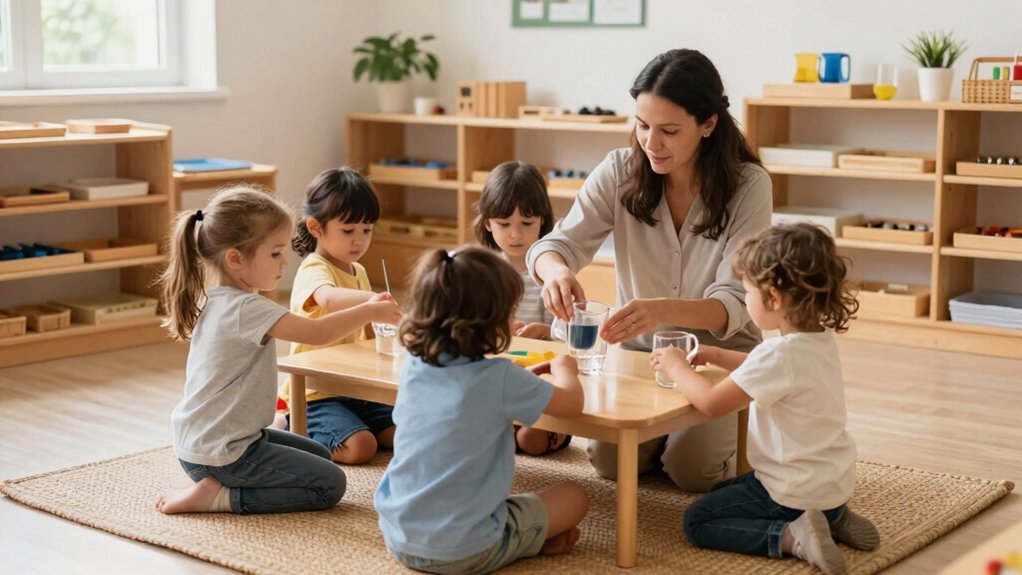
You can teach respect by modeling kindness, greeting each child calmly, and using please and thank you. Show courtesy when correcting mistakes, pause before responding, and use role‑playing to rehearse polite replies. Create a daily greeting ritual with eye contact, smiles, and a friendly “good morning.” Set clear personal‑space and shared‑material rules, and reinforce courteous language with praise. Build a helping corner for cooperative tasks, and practice “salted kindness” at home. Keep these habits consistent, and you’ll discover even more strategies.
Grace Lessons for Respect: Modeling Kindness in the Classroom

How can you turn everyday classroom moments into lessons on respect? You model Grace by greeting each student calmly, using please and thank you, and showing how to share space politely. When you pause before correcting a mistake, you demonstrate courtesy and self‑control, giving kids a clear template to copy.
Role‑playing scenarios lets them rehearse courteous responses, turning abstract ideas into concrete actions. You reinforce each gracious gesture with praise, highlighting helpful or and respectful exchanges.
Observational learning kicks in as students watch you handle conflicts with empathy, internalizing the same behavior. By consistently weaving Grace and courtesy into daily routines, you embed respect as a natural, shared norm throughout the classroom. Using tools with safety features like Montessori step stools can also encourage independence and respect for shared spaces.
Why Every Child Deserves Respect and Dignity
Why should we insist that every child be treated with respect and dignity? You recognize that each child bears God’s image, so their worth isn’t earned by belief or performance. When you denigrate a child, you betray the Creator and commit a sin against both the child and God, as James 3:9 warns. You’re called to defend your hope with gentleness and respect, echoing 1 Peter 3:15‑16, which teaches civility rather than coercion. True respect flows from inner humility and mercy, not from power.
Showing Courage While Staying Civil in Disagreements

You can stand firm in your convictions while keeping your tone calm and courteous.
When conflict rises, choose respectful replies that show both bravery and humility.
This graceful disagreement models courage without slipping into hostility.
Graceful Disagreement
Ever wondered how you can stand firm in a disagreement without turning the conversation into a shouting match? You can do it by pairing Grace with Respect, speaking calmly while defending your view. Speak gently, echoing 1 Peter 3:15‑16, and let your confidence rest on clear, thoughtful words, not volume. Listen first, then articulate your point with humility, showing mercy and a willingness to learn. Frame your stance as an invitation to dialogue, not a battle, so the other person feels safe to respond. This approach models Christ‑like love, preserves relational trust, and keeps the discussion constructive. By choosing respectful language, you demonstrate true courage and uphold the gospel’s call for graceful disagreement.
Civility Amid Conflict
How can you stay firm in your convictions while keeping the conversation calm and respectful? You ground your stance in grace and courtesy, letting the truth speak without raising your voice. When tension rises, remember that civil courage isn’t about shouting louder than your opponent; it’s about staying patient, listening fully, and responding thoughtfully. Cite 1 Peter 3:15‑16 as a model: defend your beliefs gently, ready to explain hope, not to dominate. Follow Jesus’ example of a gracious heart—salt‑seasoned, not salty. Choose constructive language, ask clarifying questions, and seek solutions rather than win‑lose outcomes. By doing so, you demonstrate confidence without aggression, turning conflict into a respectful exchange.
Courageous Respectful Dialogue
When tension rises in a disagreement, courage isn’t about raising your voice but about holding steady, listening fully, and replying with gentle conviction; by grounding your words in humility and the example of 1 Peter 3:15‑16, you can defend your beliefs while honoring the other person’s dignity, turning a potential clash into a respectful exchange.
You approach each point with a respectful‑dialogue mindset, anticipating counter‑arguments and staying composed.
Let the gospel shape your tone, replacing attacks with grace‑filled‑teaching that points to truth without shaming.
Practice active listening, pause before you answer, then speak clearly, kindly, and confidently.
This inner humility and mercy turn heated moments into opportunities for mutual growth and lasting respect.
Graceful Communication: How to Speak With Salted Kindness

What does it mean to speak with “salted kindness”? It’s practicing graceful communication that blends warmth with a dash of honest, constructive edge. You aim to uplift while gently correcting, letting your words soothe rather than sting. Think of each exchange as a chance to honor the listener’s feelings and perspective, using tone, timing, and word choice to defuse tension. When you master salted kindness, respect flows naturally from a heart‑centered approach, not just polite veneer.
- Pause before responding, letting empathy settle.
- Choose words that affirm and guide, avoiding harsh absolutes.
- Match your tone to the listener’s mood, softening when needed.
- Offer constructive feedback wrapped in genuine care.
Reinforcing Respect at Home: Consistent Praise and Practice
You’ll notice that praising your child every time they show courtesy builds confidence and reinforces the habit.
By consistently modeling respect yourself—saying “please,” listening attentively, and sharing responsibilities—you set a clear example they can follow.
Weaving these moments into daily routines, like mealtime or bedtime, makes grace a natural part of family life.
Praise Consistently, Model Respect
Consistently praising gracious actions—like a heartfelt thank‑you card—helps children link respectful behavior to real social rewards. You’ll notice them thriving when you name the exact act, saying, “Your card is so sweet and will be loved.” This concrete feedback ties grace to tangible praise, building self‑esteem and a habit of respect.
- Spot the behavior fast and comment right away.
- Use specific language that names the action.
- Repeat the praise in different settings—home, school, outings.
- Model the same courteous demeanor you’re applauding.
Incorporating tools that develop fine motor skills can further reinforce respectful and focused behavior in children.
Integrate Grace Into Routine
When you weave graceful habits into everyday routines—like greeting family members with a smile, making eye contact, or saying “please” and “thank you”—children start to see respect as a natural part of daily life. You can reinforce this by praising specific gracious behavior the they hand a plate, tidy a room, or offer a kind word. A simple “I love how you asked politely” links the act to positive feedback, making the habit stick. Keep the routine consistent: set a cue, model the courteous action, then acknowledge it. Over time, children internalize these patterns, and respect becomes an automatic response rather than an afterthought. This steady loop of modeling, practice, and praise builds lasting social confidence. Creating organized routines with adjustable hooks can also support children’s independence and respect by providing accessible spaces to manage their belongings.
Connecting Montessori Practices With Family Life
How can you bring the calm, respectful atmosphere of a Montessori classroom into your home? You can weave Grace and Courtesy into daily family interactions by mirroring the classroom’s mixed‑age, freedom‑within‑community model. When you model polite greetings, respect personal space, and celebrate small acts of helping, you reinforce the same social skills children practice at school. Consistency between home and school deepens character development and nurtures a warm, welcoming environment.
- Start each day with a shared greeting ritual that acknowledges each person’s presence.
- Design a “helping corner” where kids choose tasks that support the family, encouraging cooperation.
- Use positive reinforcement to celebrate courteous language and graceful actions.
- Set clear, consistent expectations for personal space and shared materials, mirroring classroom norms.
Putting It All Together: A Simple Daily Routine for Parents
Ever wonder how a few mindful habits can weave Montessori’s grace lessons into your family’s rhythm? Start mornings with a brief greeting circle: each person makes eye contact, smiles, and says “good morning” with a polite tone. This simple ritual builds respect and a sense of belonging.
Mindful habits weave Montessori’s grace into daily family rhythm, fostering respect and belonging.
After breakfast, walk together around the living‑room mat, reminding kids to stay within personal space and notice others’ activities.
When chores arise, model offering help using “please,” “thank you,” and “excuse me,” turning routine tasks into graceful interactions.
Mid‑day, pause for a short conflict‑resolution practice: breathe, name feelings, and suggest a calm solution.
End the day with a gratitude round, where everyone shares one kind act they observed, reinforcing grace and respect before bedtime.
Frequently Asked Questions
What Are 5 Ways to Show Respect?
You show respect by listening attentively, using polite language, maintaining eye contact, offering help when needed, and apologizing sincerely if you make a mistake.
What Are the 7 Ways of Respect?
You show respect by listening attentively, speaking kindly, maintaining eye contact, honoring personal space, offering sincere apologies, forgiving others, and consistently modeling calm, courteous behavior in everyday interactions.
What Are the Three Rules of Respect?
You follow three respect rules: treat everyone kindly, listen attentively, and speak calmly with constructive language during disagreements. These habits shape positive interactions and reinforce courteous behavior in any setting.
What Does the Bible Teach Us About Respect?
You learn respect from the Bible by honoring God, loving neighbors, and valuing every person’s dignity. It commands humility, listening, and treating others as you’d want to be treated.