
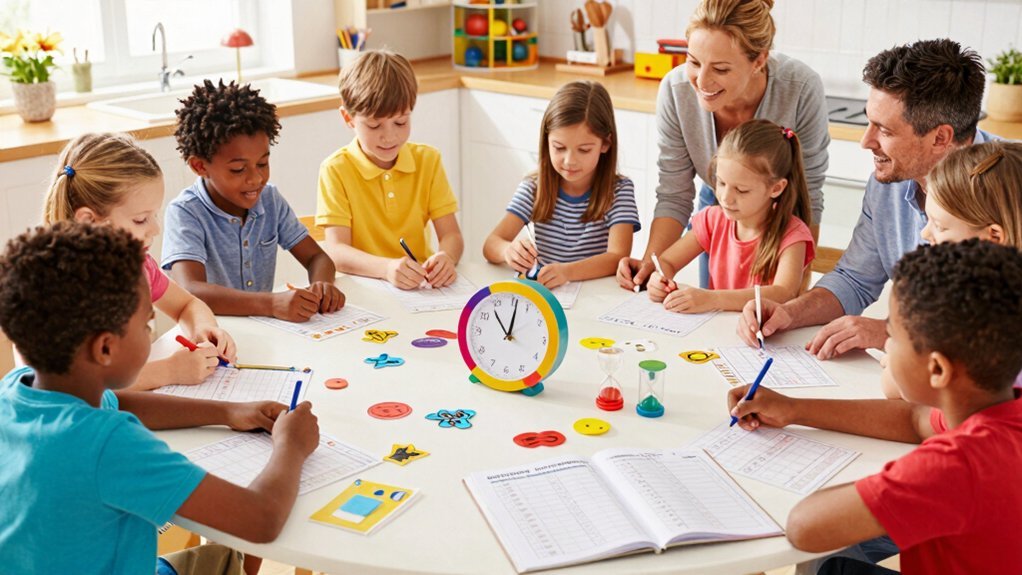
You can teach kids time management by creating visual morning and bedtime charts with picture cues and When‑Then steps, using simple visual timers that shrink or sand‑drop to signal transitions, breaking chores into picture checklists with stickers for each completed item, practicing waiting games and delayed‑gratification activities, introducing a weekly Rock‑Pebble‑Water planning jar to prioritize tasks, having them fill out daily reflection sheets that compare planned versus actual time, and rewarding progress with stars, stickers, and choice‑time privileges, which you’ll discover in more detail if you keep going.
Create a Kids Time‑Management Morning and Bedtime Chart

One effective way to boost your child’s time‑management skills is to create a visual morning‑and‑bedtime chart. Design a simple visual chart that lists each step of the morning routine and bedtime routine, then pairing every item with clear cues and icons. Use a “When‑Then” format—When pajamas are on, then teeth brushing—to make sequencing obvious. Include a checklist so your child can mark completed tasks, fostering ownership and a sense of accomplishment. Assign a short, time‑bound goal for each activity, such as five minutes for brushing teeth, to teach pacing and reinforce time awareness. Review the chart weekly, adjusting steps that consistently run long, and keep consistency and pacing at the forefront. Using Montessori-friendly tools like a step stool helper can encourage independence and timely transitions in daily routines.
Use a Simple Visual Timer for Kids Time‑Management
How can a simple visual timer turn the abstract concept of time into something kids can see and feel? You set a timer that shows a shrinking bar or bubbling sand, letting kids watch each second disappear. This concrete cue makes time management tangible, so they stay focused during chores or homework.
Pair the timer with When‑Then routines—when the timer ends, you transition to reading or snack—so transitions become predictable and resistance drops. Start with short intervals and gradually lengthen them; the incremental increase builds endurance and self‑pacing.
Mix digital timers on a smartboard with a physical hourglass to match learning styles and accessibility needs. Kids then see how long activities take, fostering accountability and better planning for future tasks.
Incorporating practical life activities like napkin ring making can enhance focus and fine motor skills while reinforcing time management concepts.
Break Kids Tasks Into Small Steps With Picture Checklists

You can turn a big chore into a series of visual cues, letting your child see each step as a picture on a checklist. Adding a simple sticker for every completed item gives instant feedback and a sense of progress. When you repeat this routine daily, the child learns to anticipate what comes next and gains confidence in managing time.
Visual Cues for Steps
Ever wonder why a simple picture checklist can turn a chaotic morning into a smooth routine? Visual cues turn abstract tasks into concrete steps, letting kids see exactly what to do next. When you attach a picture to each step, the checklist becomes a visual map that guides them through routines without constant prompting. The images act as reminders, cutting forgetfulness and anxiety while building independence. As they complete each picture‑based step, they experience progress and confidence, which reinforces the habit of breaking larger jobs into manageable chunks.
Keep the pictures current and reorder them as needed; this flexibility teaches adaptable planning and keeps the routine relevant as responsibilities evolve. Incorporating developmental skills focus like fine motor and concentration tasks linked to Montessori methods can further support children’s ability to manage time effectively.
Simple Sticker Progression
A simple sticker progression turns a picture checklist into a step‑by‑step roadmap, letting kids see each mini‑task, earn a sticker, and instantly feel they’ve moved forward. You can attach visual cues to every task, then break the routine into bite‑size steps. As children complete a step, they place a sticker, reinforcing independent planning and a clear tasks breakdown. The tangible reward fuels motivation, while the checklist makes time management concrete and repeatable.
Many classrooms use colorful cushions to create engaging, organized reading corners that help kids focus during tasks.
| Step | Sticker Earned |
|---|---|
| 1. Brush teeth | ★ |
| 2. Put on shoes | ★ |
| 3. Pack backpack | ★ |
| 4. Check off list | ★ |
Use this routine daily, and kids will internalize sequencing, gain confidence, and develop lasting time‑management habits.
Daily Routine Reinforcement
Picture checklists turn everyday routines into clear, bite‑size steps, letting kids see exactly what comes next and track their progress with visual cues. When you break a morning ritual into picture checklists—like “grab pajamas,” “brush teeth,” “choose shoes”—each task step becomes a concrete visual cue. Kids can flip a card, see the next action, and move forward without adult prompting, fostering independent initiation. Keep the cards at eye level and update them as habits evolve; consistency reinforces daily routines and builds confidence. Pair each completed step with a small reward, such as a sticker or extra story time, to cement the habit. Over weeks, the visual system will guide them smoothly through any routine, reducing hesitation and boosting time‑management skills. Using Montessori-friendly timers alongside picture checklists can further enhance children’s understanding of time and task transitions.
How to Teach Kids Waiting and Delayed Gratification?

How can you help kids learn to wait and enjoy delayed gratification? Start with visual timers and clear routines so children see exactly how long waiting will be. Set a simple age‑appropriate delay—finish a chore before choosing a snack—to build self‑control. Use picture schedules to mark each step, letting them track progress and anticipate the reward. Talk about upcoming events days in advance, encouraging them to rehearse the waiting period mentally. When they complete the task before the deadline, give specific feedback and a reward, reinforcing the link between effort, time, and positive outcomes. Over time, these consistent cues turn waiting into a manageable skill, strengthening delayed gratification and overall time‑management abilities.
Introduce a Weekly ‘Rock‑Pebble‑Water’ Planning Jar
Ever wonder how a simple jar can turn a chaotic week into a clear, balanced schedule? You can introduce a weekly rock‑pebble‑water jar to teach time management and prioritization. Start each week by listing essential tasks—your rocks—on a sheet, then place them in the jar. Next, add medium‑priority pebbles for school projects or chores, and finally pour in water to represent optional play or downtime. Assign specific days for rocks, fit pebbles around them, and use water for flexible moments. Midweek, reassess the jar; if pebbles overflow, adjust the plan. This tactile visual helps children in concrete planning, celebrates completed rocks, and reinforces balanced weekly planning in children education. Integrating tools that promote cognitive and motor skills development can further enhance the effectiveness of time management exercises for children.
Use a Daily Reflection Sheet for Planned vs. Actual Time
You’ll start with a Planned Activities column that lists what you intend to do, then fill in the Actual Activities column to see where you really spent time. After comparing the two, you write a brief Reflection Insights Summary that captures any surprises or patterns. This simple routine lets you spot where estimates miss the mark and adjust future plans accordingly.
Planned Activities Column
Curious about a simple daily reflection sheet can sharpen a child’s schedule? In the Planned Activities Column, you have your child list each task they intend to tackle that day. This act of writing planned activities forces them to think ahead, clarifying priorities and time estimates. Afterward, you sit together for reflection, discussing why certain slots might need tweaking. That collaborative moment builds accountability; the child sees you’re invested in their success. You both review past entries, spotting patterns like soccer practice overrunning, and use those insights for iterative improvement. By repeatedly adjusting scheduling based on real‑world outcomes, the child learns to fine‑tune their plan, turning vague intentions into concrete, manageable steps.
Actual Activities Column
How can you turn a child’s daily schedule into a clear learning tool? Use a daily reflection sheet that adds an actual activities column beside the planned column. First, the child writes the expected task and duration. After the day ends, you both fill in the actual time spent, noting any gaps or overruns. This side‑by‑side view of planned vs actual time creates a vivid time‑management reflection. Discuss the differences during collaborative planning, encouraging the child to suggest why a soccer practice ran longer or a reading session ended early. Those notes fuel adaptive scheduling, helping the child tweak activity planning for better focus. Regularly updating the sheet builds habit and sharpens self‑regulation.
Reflection Insights Summary
Why does comparing what you planned with what actually happened matter? It forces you to confront gaps, sharpen self‑assessment, and grow scheduling skills. A daily reflection sheet makes this process concrete. You note the activity, the intended duration, and the real time spent, then ask why the difference occurred. Over weeks you spot patterns—perhaps you over‑estimate reading time or underestimate soccer fatigue—and adjust future time planning accordingly. This habit turns vague guesses into data‑driven decisions, boosting confidence and efficiency.
- Write the planned time for each task.
- Record the actual time after completion.
- Identify reasons for any discrepancy.
- Revise next day’s schedule based on insights.
Using tools with reliable standards, such as NSF certification, can help ensure accuracy when tracking time in practical activities.
Celebrate Progress With Stars, Stickers, and Choice‑Time Rewards
Celebrating progress with stars, stickers, and Choice‑Time rewards turns timely task completion into a tangible, motivating experience. You can weave these tools into daily routines, using visual praise to link specific actions—like finishing math in 15 minutes—to time management skills. Start with small, immediate rewards for short tasks, then tier them as consistency builds, extending to longer activities. Keep a simple chart for progress tracking; each star or sticker marks a deadline met, reinforcing motivation and giving you clear evidence of growth. Pair each reward with a brief reflection: ask what helped them stay on schedule and how they felt. This blend of praise, rewards, and tracking turns abstract concepts into concrete habits that stick.
Frequently Asked Questions
How Can I Teach Time Management to Children With Learning Disabilities?
You should break tasks into short, visual steps, use timers or alarms, give consistent routines, provide frequent feedback, and celebrate small successes so they see progress and stay motivated.
What Age Is Appropriate to Start Using a Visual Timer?
You can start using a visual timer around ages three to four, when kids grasp basic sequences. Begin with short intervals, like five minutes, and gradually extend as they become comfortable with the cue.
How Do I Handle Frequent Interruptions During Scheduled Tasks?
You should set clear boundaries, politely tell interruptions it’s a “no‑disturb” period, and use a visual cue like a colored flag. When they respect it, reward them; if not, gently repeat the rule.
Can I Incorporate Digital Apps Alongside Physical Charts?
Yes, you can blend apps with charts—use the app for real‑time alerts and data, then transfer the results onto the chart for visual reinforcement, keeping both tools synchronized daily.
What Signs Indicate a Child Is Overwhelmed by Too Many Tasks?
You notice frequent sighs, irritability, missed deadlines, and avoidance of new tasks. Their sleep may suffer, they might complain about “too much,” and their focus drifts, all signaling they’re overwhelmed.