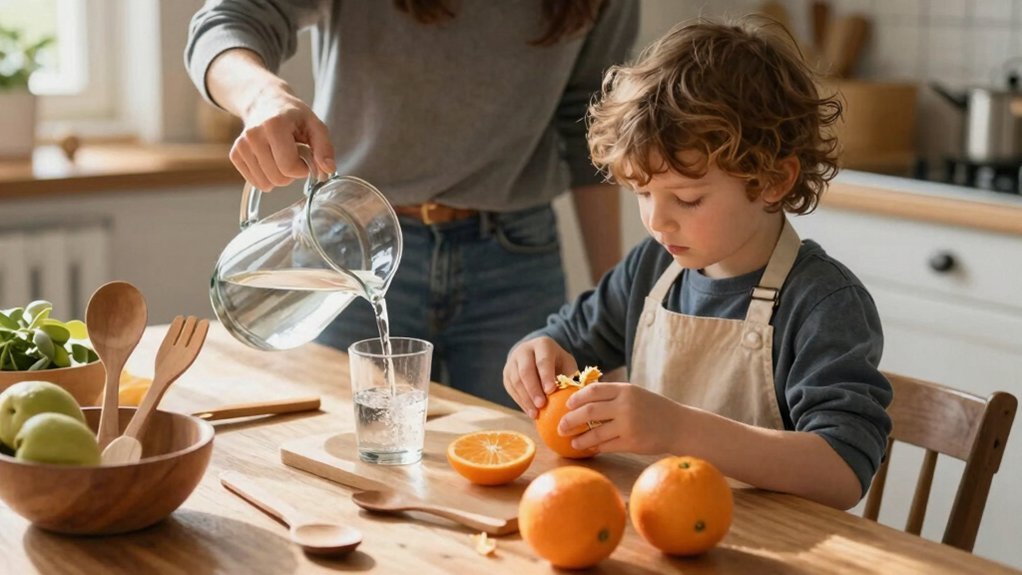
You’ll see your homeschoolers gain real independence, sharper fine‑motor skills, and deeper concentration when you embed practical‑life tasks—like pouring, folding, and simple cooking—into daily routines. These hands‑on chores turn everyday actions into purposeful learning, building autonomy, problem‑solving, and self‑regulation. The activities also connect naturally to math, language, and science, reinforcing academic concepts while fostering social‑emotional growth. Keep exploring to discover how to weave these tasks seamlessly into your homeschooling schedule.
What Are Practical Life Activities and Why They Matter for Homeschoolers?
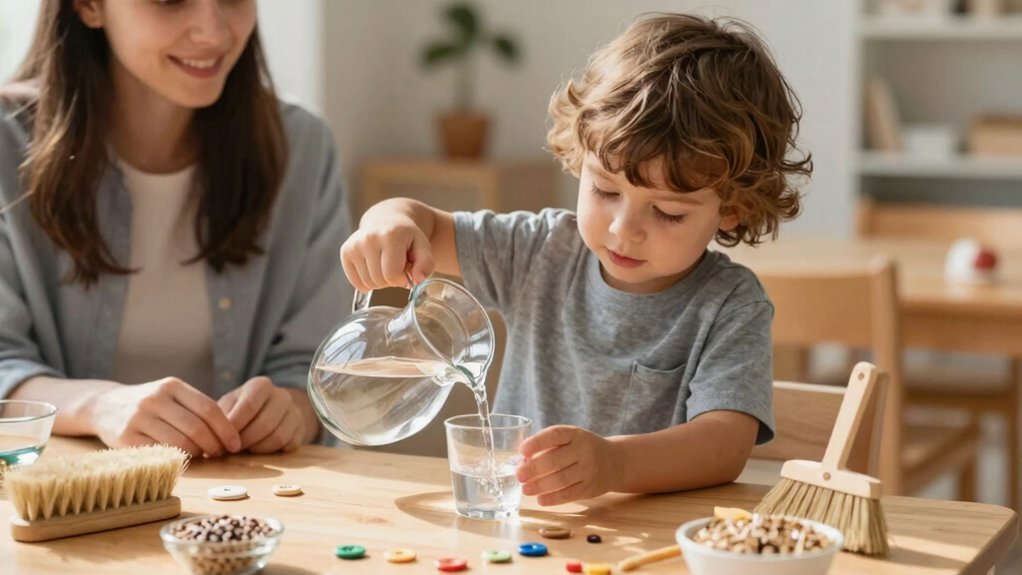
What’re practical life activities, and why do they matter for homeschoolers? You’ll find they’re real‑world tasks that value the doing over the outcome, building independence and concentration through repetition. They span four categories—Elementary Exercises, Personal Care, Grace and Courtesy, and Care of the Environment—sharpening fine motor skills and hand‑eye coordination. In your homeschool, you can move beyond shelf‑based lessons, letting kids safely explore everyday chores that foster autonomy and practical problem‑solving. The “Help me to do it alone” mindset lets them observe, slow down, and practice independently, so they master self‑care, gain academic readiness, and improve social‑emotional regulation. These routines become the backbone of lifelong learning, turning ordinary moments into powerful educational experiences. Incorporating items like napkin folding materials in practical life activities helps develop fine motor precision and organizational skills through hands-on engagement.
How to Choose Age‑Appropriate Practical Life Tasks for Every Developmental Stage
After exploring why practical‑life activities matter, the next step is picking tasks that fit your child’s developmental stage. You’ll start with safety‑checked basics, then layer complexity as attention spans grow. Use Montessori’s four Practical Life categories—Elementary Exercises, Personal Care, Grace and Courtesy, Care of the Environment—to guide choices. Observe interests, keep durations realistic, and shift from concrete actions to planning‑heavy sequences when readiness appears.
- Toddler (2‑3 y): Pour water between two small pitchers, emphasizing grip and control.
- Preschool (4‑5 y): Fold washcloths or napkins, linking to daily routines.
- Early Reader (6‑7 y): Wash dishes with supervision, adding steps like drying.
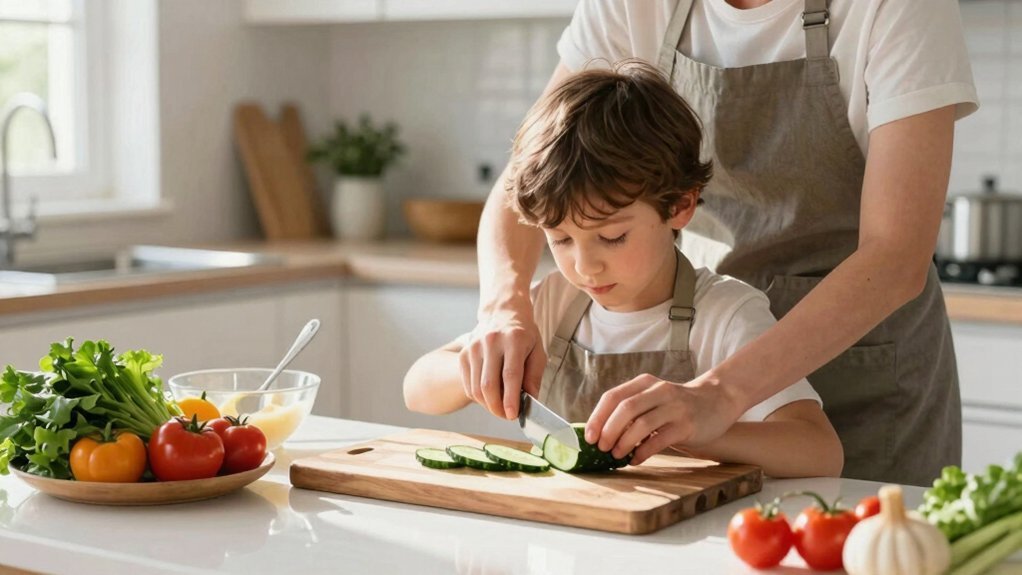
- Older Child (8‑9 y): Prepare a simple snack, requiring sequencing, timing, and clean‑up.
Incorporating tools like a Montessori step stool can enhance independence during practical life tasks by providing safe, age-appropriate support.
How to Create a Kid‑Friendly Home Space for Independent Work
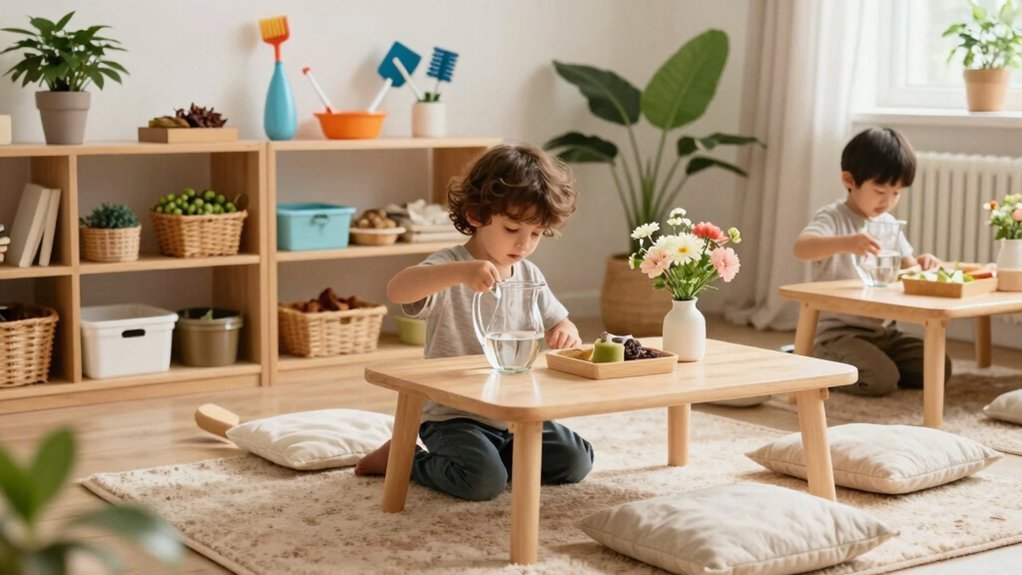
Set up accessible‑sized workstations so you can reach everything without stretching, and keep materials clear and simple so you know exactly what to use.
Use consistent routine cues—like a labeled basket for supplies or a visual timer—to signal when it’s time to start and finish.
This layout lets you focus on the process, build confidence, and stay independent.
Consider incorporating adjustable-height tools like a Montessori kitchen helper tower to support your child’s growth and independence in practical life activities.
Accessible‑Sized Workstations
A well‑designed, child‑height workstation instantly invites your homeschooler to work independently, because everything they need is within easy reach and clearly organized. When you set up an accessible‑sized space, you’re giving Practical Life skills a concrete stage: kids can pour, button, and sort without stretching, which sharpens hand‑eye coordination and builds confidence. Low‑clutter shelves, labeled containers, and a consistent layout let them start tasks on their own, stay focused, and tidy up afterward—key habits for lifelong learning. Choosing low step-in storage solutions enhances safety and accessibility, making it easier for children to manage their materials independently.
- Position tools at child height for easy access.
- Use clear, labeled storage to reduce visual clutter.
- Keep a routine of arranging and returning materials.
- Rotate age‑appropriate activities to sustain challenge.
Clear, Simple Materials
When the workstation is already child‑height and organized, the next step is to strip it down to the basics that let your homeschooler focus on the task, not the setup. Use clear, simple materials: a child‑sized pitcher, a small basin, and a soft cloth sit all labeled with short, concrete words.
Keep only one or two Practical Life tools on the tray, and store the rest on low, labeled shelves within arm’s reach. A single mat or tray defines the work zone, reducing visual clutter and signalling focus. Incorporating sensory learning objectives enhances fine motor skills and concentration during independent tasks.
Consistent Routine Cues
Ever wonder how a simple cue can turn a chaotic corner into a focused workspace? You can shape a Life‑rich environment by pairing visual signals with consistent routines. When a bell rings or a colored mat is placed, your child knows it’s time for independent work. Keep the space tidy with reachable cleaning supplies, labeled shelves, and child‑sized tools. Model each step slowly, using minimal words so they imitate the sequence naturally. Give them uninterrupted blocks, letting concentration grow without over‑guiding. Align tasks with their interests, gradually raising the challenge while emphasizing process over product. This routine cue system turns everyday chores into purposeful Life practice.
- Visual cue – a mat or card signals start.
- Accessible tools – low shelves, labeled containers.
- Modeling – slow, deliberate demonstration.
- Uninterrupted time – set periods for focused work.
Modeling Practical Life: Slow, Deliberate Demonstrations That Build Confidence
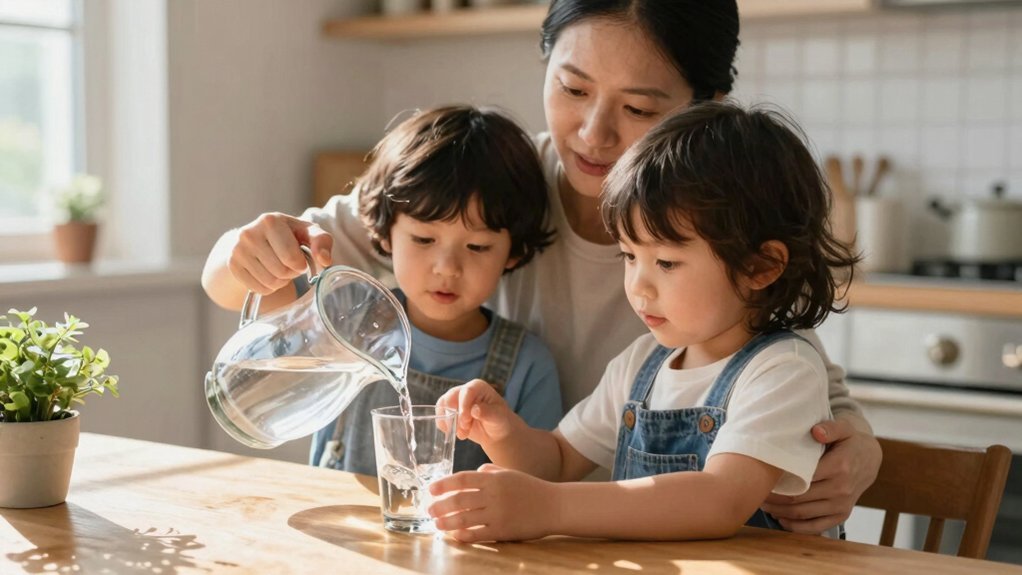
You’ll notice that moving slowly while you model a task builds trust, because children see every detail and feel safe to try it themselves.
Your deliberate pace gives them the space to absorb each step, turning a simple demonstration into a mastery‑boosting rehearsal.
When they succeed, confidence spikes, and the cycle of independent skill‑growth keeps rolling.
Organizing learning materials with 3 Tier Shoe Rack solutions helps maintain an orderly environment that supports sustained focus.
Slow Modeling Builds Trust
Ever wondered how a simple, unhurried demonstration can turn a hesitant child into a confident learner? In Montessori education, slow modeling gives you a chance to pause, breathe, and let the child absorb each motion. When you demonstrate folding a towel or pouring water deliberately, the child watches the whole sequence, registers each grip and wrist turn, then feels safe to try alone. This measured pace reduces cognitive overload, builds a predictable rhythm, and signals that you trust their ability to succeed. Over time, the child’s concentration deepens, self‑regulation strengthens, and the learner‑teacher bond solidifies. Using natural, screen-free toys like wooden spinning tops further supports fine motor development and focused attention during practical life activities.
- Pause before each step
- Highlight hand positioning
- Invite independent repetition
- Celebrate completed attempts
Deliberate Pace Encourages Mastery
How does a measured tempo turn a simple task into a lasting skill? When you model a Practical Life activity with a deliberate pace, you give children the chance to see each motion, hear the language that names it, and internalize the order before they try it. The slow, thoughtful demonstration builds attention, confidence, and a mental map they can reproduce at their own speed. Repeated practice under this tempo reduces errors, reinforces technique, and nurtures autonomy. You’ll notice children self‑assessing, correcting, and moving forward with pride.
| Benefit | Result |
|---|---|
| Clear observation | Accurate replication |
| Repeated exposure | Confidence growth |
| Language‑movement link | Better memory |
8 Proven Tips for Seamlessly Integrating Practical Life Into Daily Routines
Ever wondered how a few simple adjustments can turn everyday chores into powerful learning moments? You can weave Practical Life into your day by setting up reachable supplies, modeling tasks slowly, and letting kids take the lead. Keep instructions brief, watch them imitate, and let concentration build as they master each step. Tailor activities to their interests and skill level, and celebrate the process more than the product.
- Place kid‑friendly tools on low shelves for easy access.
- Demonstrate a task with deliberate, slow movements, then step back.
- Offer a set amount of time for independent practice without intervening.
- Choose chores that match the child’s current curiosity and ability.
Kitchen‑Based Practical Life Examples That Teach Math, Science, and Language
You’ll see how measuring ingredients turns everyday cooking into a hands‑on lesson in fractions and volume. As you follow a recipe’s steps, you’ll pick up cooking vocabulary and practice clear, sequential instructions. And when you adjust quantities or budget for a meal, you’ll naturally apply arithmetic and proportion while reinforcing language skills.
Measuring Ingredients for Fractions
A handful of everyday kitchen tasks can turn abstract fractions into concrete, tasty lessons. You’ll see how measuring ingredients sharpens arithmetic, language, and scientific observation. When you halve a cake batter, you practice reading scales, converting cups to teaspoons, and comparing portions. Recording each step builds precise vocabulary and reading comprehension, while watching how liquids blend reveals solubility and state changes. Planning a meal’s budget with measured servings shows fractions’ real‑world relevance and reinforces transfer to other subjects.
- Halve a recipe to practice equal parts.
- Convert ¾ cup to teaspoons for scaling.
- Record ratios of dry to wet ingredients.
- Budget servings using fractioned portions.
Cooking Vocabulary Through Instructions
Measuring ingredients already showed how fractions become tangible, now let’s turn those same kitchen steps into a language lesson. You’ll notice that each recipe sentence carries a verb, a noun, and a connector that maps directly onto a Practical Life skill. When a recipe says “stir gently for two minutes,” you practice the adverb “gently” and the preposition “for,” reinforcing sequencing language. Reading “add the flour, then the sugar” sharpens your comprehension of order words and cause‑effect phrasing. You’ll also hear “pour slowly” and “mix until smooth,” which embed measurement terminology and safety cues. By vocalizing each step, you turn cooking into a vocabulary drill that blends math, science, and language, all within a real‑world context.
Building Concentration and Fine Motor Skills Through Repetition and Grace
How does repeating practical‑life tasks sharpen your child’s focus? When you guide them through pouring, folding, or buttoning, each deliberate step demands attention, turning a simple activity into a concentration workout. The process‑oriented rhythm forces them to stay present, building inner discipline that later fuels academic tasks. Repetition also refines fine motor control; small‑motor actions become smoother, paving the way for steadier handwriting and precise pencil work. Consistent practice during sensitive developmental windows creates automaticity, boosting confidence and intrinsic motivation to tackle tougher challenges.
- Set clear, achievable steps
- Encourage slow, deliberate movements
- Provide immediate, gentle feedback
- Gradually increase task complexity
Grace and Courtesy at Home: Polite Interactions as Practical Life
One simple way to weave grace and courtesy into everyday life is to turn routine chores into polite interaction drills. You can have your child greet you with a smile and a “good morning” before setting the table, then model eye contact and waiting for a turn while passing dishes. While washing dishes, ask them to say “please” when they need a towel and “thank you” when they hand one to you. Role‑model slow, deliberate movements and calm language, showing how to pause before responding in a disagreement. Structure mealtimes and transitions with predictable, kind responses, and let them practice asking for help politely. These simple habits build social etiquette, reinforce independence, and nurture cooperative family dynamics.
Caring for the Environment: Cleaning, Gardening, and Organizing as Daily Practice
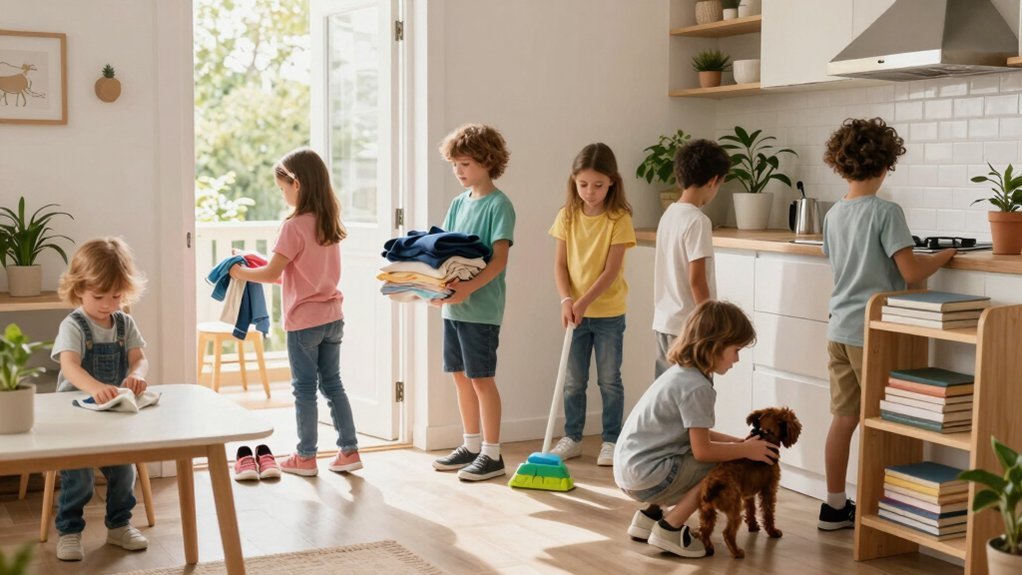
Ever wonder how simple daily chores can teach kids respect for the world around them? In Practical life you turn cleaning, gardening, and organizing into purposeful routines that build responsibility, fine‑motor skill, and ecological awareness. When children sweep a floor, they learn concentration and order; when they water a plant, they practice sequencing and see the results of consistent care. Tidying a shelf reinforces inner discipline and prepares them for academic focus. These habits link self‑care to community contribution, nurturing social‑emotional growth through shared, meaningful work.
- Sweep and mop together after meals.
- Plant seeds, water, and record growth.
- Sort toys or supplies into labeled bins.
- Rotate garden tools and clean workspaces.
How to Observe and Record Your Child’s Practical Life Progress
Observation becomes a living snapshot when you watch your child in the moment of a practical‑life task, letting you capture each micro‑action—pouring with control, folding, hand‑washing technique—rather than relying on vague recollections later. Slow the activity down just enough to notice focus, independence, and problem‑solving strategies. Jot down exact actions and the transitions between steps: “poured water without spillage,” “folded towel in three smooth motions,” “rinsed hands using circular strokes.” Record duration of concentration and any self‑initiated adjustments. After each session, write a brief reflection noting improvements in fine‑motor control, sequencing, and task initiation. This ongoing log of practical life skills gives you concrete data to celebrate progress, spot patterns, and choose next challenges.
Overcoming Mess, Time, and Frustration Challenges
When you finish noting each micro‑action, the next step is tackling the practical hurdles that often make families hesitate to use a practical‑life curriculum—mess, time, and frustration. You’ll find that practical life activities teach kids to clean up immediately, turning chaos into order. By timing each task, they learn realistic pacing, which trims wasted minutes. Scaling steps to a child’s ability keeps frustration low and confidence high. The result is greater independence, sharper focus, and smoother daily flow.
- Set a tidy‑up routine after every activity.
- Use a simple timer to gauge task length.
- Break tasks into bite‑size, achievable steps.
- Celebrate completed cycles to reinforce perseverance.
Expanding Practical Life: Linking to Academic Projects & Community Service
How can you turn everyday chores into powerful learning bridges? By weaving montessori practical life tasks into academic projects, you let budgeting for a science kit or planning a class meal reinforce math, science, and language skills. Pouring, measuring, sorting, and organizing become the backbone of experiments, history timelines, and math problems, sharpening concentration and fine‑motor precision.
When you pair these activities with community service—like volunteering at a local garden or helping a neighborhood library—you boost social‑emotional growth and give real‑world context to responsibility and civic engagement. Authentic assessment follows each project; you reflect on process improvements and problem‑solving strategies. Collaboration with local organizations supplies mentorship and feedback, linking schoolwork to community needs and keeping motivation high.
Frequently Asked Questions
What Are the Benefits of Practical Life Activities?
You’ll gain independence, sharper concentration, refined fine‑motor skills, and stronger self‑discipline; plus you’ll develop responsibility, confidence, and real‑world readiness through repetitive, purposeful tasks.
Did Mark Zuckerberg Attend Montessori?
You won’t find any credible source saying he attended Montessori; he went to Ardsley High, Phillips Exeter, then Harvard. So, no, he didn’t study at a Montessori school.
What Is the Downside of the Montessori Method?
You’ll find Montessori costly and uneven—materials, training, and prepared spaces strain budgets; self‑directed pacing can create gaps in core subjects, and lacking standardized benchmarks makes progress hard to measure.
What Are the Benefits of Teaching Practical Life Skills?
You’ll boost confidence, concentration, and fine‑motor control; foster independence, responsibility, and self‑discipline; improve social‑emotional skills; and create a solid, hands‑on foundation that supports academic learning across all subjects.

Leave a Reply