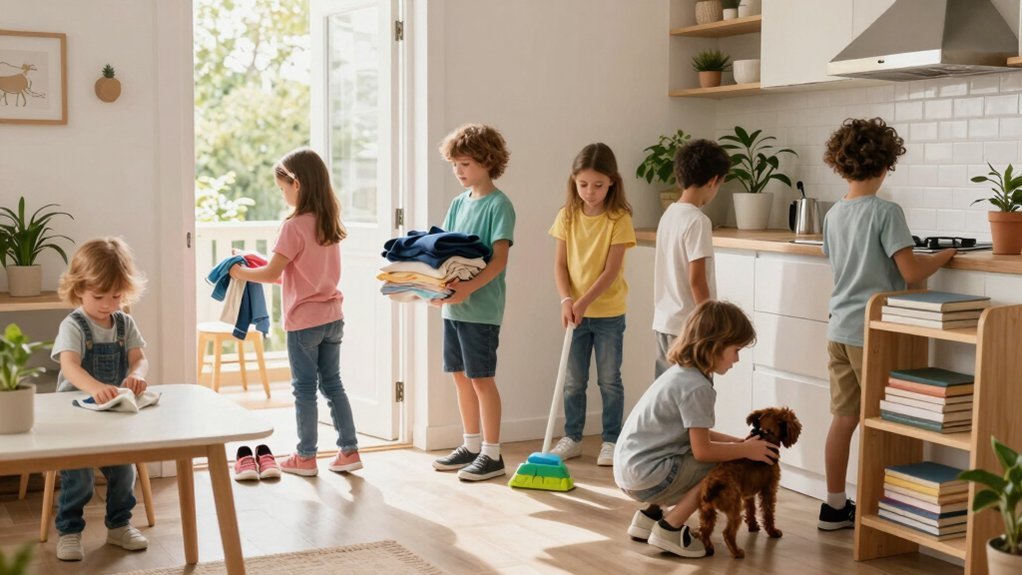
You can start with a toddler’s toy‑pick‑up, then move to feeding a pet at age 4‑5, setting the table at 5‑6, sorting laundry at 6‑9, and preparing simple snacks at 8‑12. Add chores like wiping counters, sweeping floors, and organizing shoes to round out the list. Each task builds confidence, self‑efficacy, and real‑world skills. Keep a visual chart, give quick praise, and watch independence grow as you explore more ideas.
Why Age‑Appropriate Chores Matter
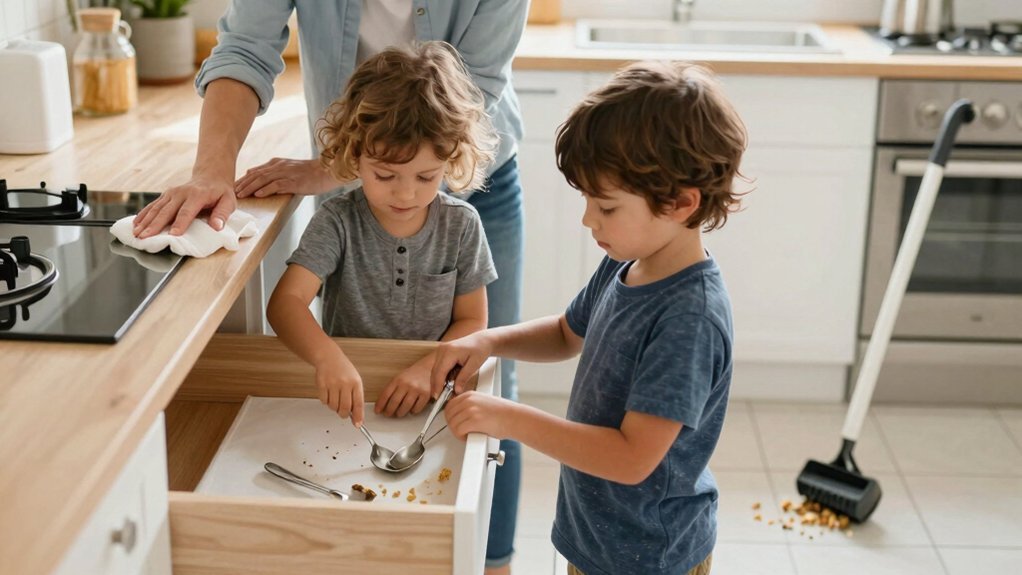
Why do age‑appropriate chores matter? You’re giving your child tasks that match their development, so they actually succeed. When chores are tailored, kids experience tiny wins that boost self‑efficacy, reinforcing the belief they can finish a job. These early victories nurture independence, turning simple actions into confidence for bigger responsibilities later. Clear, age‑appropriate tasks reduce frustration and conflict, while visual aids like charts keep progress visible. As they master small duties, patience and delayed gratification grow, laying a foundation for higher self‑esteem. Praise each effort, and the child feels needed, contributing to family life. Gradually increasing complexity builds motor, cognitive, and social skills, preparing them for adolescence’s challenges. Using tools like a Montessori kitchen step stool can empower children to safely participate in household chores at their own height level.
Let Your Toddler Tidy Up Toys – First Step to Simple Cleaning (Ages 2‑3)
Praise them immediately with a high‑five or a cheerful “great job” so they associate the task with positive feedback.
This simple routine builds confidence and makes tidying feel like a fun habit.
Using child-sized tools like a mini broom and dustpan set helps toddlers physically engage with cleaning and develop motor skills.
Toy Clean‑Up Songs
A few catchy cleanup songs can turn a chaotic toy dump into a quick, fun routine for a 2‑ to‑3‑year‑old. Music engagement transforms toy cleanup into a game, reinforcing routines that nurture toddler independence. When you sing a simple chant and point to the bin, your child mirrors adult habits, and the repetitive beat helps memory. Praise each successful note and the habit sticks, making tidying feel like play rather than chores.
- Choose a short, upbeat melody (e.g., “If You’re Happy and You Know It”) and replace the lyrics with “Put the blocks in the bin.”
- Set a timer for 30 seconds, turning the song into a friendly race that boosts music engagement.
- Celebrate the finish with a high‑five, linking the song to positive reinforcement and stronger routines.
Simple Step‑By‑Step Instructions
When you start the cleanup routine, keep it tiny: ask your 2‑year‑old to pick up one type of toy—like blocks—and place them in the nearby bin while you hum the clean‑up song. Then, guide them to a second step: gather stuffed animals and drop them into the basket. Keep each instruction short, using a gentle cue such as “grab” or “move.” Celebrate the finish by clapping, reinforcing that chores are fun and build independence.
After the toys are sorted, invite your toddler to carry a damp cloth to wipe a small spill, showing how a simple task fits into daily routines. Repeating these clear, bite‑size steps daily helps toddlers internalize responsibility and grow confident in their ability to help.
Immediate Positive Reinforcement
If you pair a quick clean‑up song with a simple “toy‑to‑bin” cue, your 2‑ to‑year‑old will feel the task is a game, not a chore. The moment the bin fills, give enthusiastic praise and a high‑five; the instant reward cements the link between effort and approval, boosting self‑efficacy. Keep supervision light but present, so your toddler knows you’re watching without micromanaging. This balance lets them own the activity while you reinforce positive behavior.
- Celebrate each completed bin with a specific compliment (“Great job putting the blocks away!”).
- Use a timer to turn clean‑up into a short race, then applaud the finish.
- Follow every tidy‑up with a brief, encouraging note on a chore chart, reinforcing the habit.
Integrating toys with Montessori-inspired features can further promote independence and engagement during these early chores.
Help Your Kid Feed the Family Pet (Ages 2‑5)
Even a tiny helper can learn to feed the family pet, turning a simple routine into a lesson in responsibility. You’ll start with toddlers watching you pour kibble, then let them hold a small scoop. Show them how many scoops equal a full bowl and let them count aloud; the counting reinforces the feeding routine and builds confidence. Keep instructions short: “Scoop this, pour it, close the lid.” Stay close, correct gently if they spill, and hand them a bowl of water to pour. Celebrate each successful attempt with enthusiastic praise—“Great job! You fed Buddy!”—so the task feels rewarding. Introducing toys like bendable wooden animal figurines can also enhance dexterity and coordination during these activities, making learning both fun and effective with natural wooden animal toys.
Teach Kids to Set and Clear the Table (Ages 4‑6)
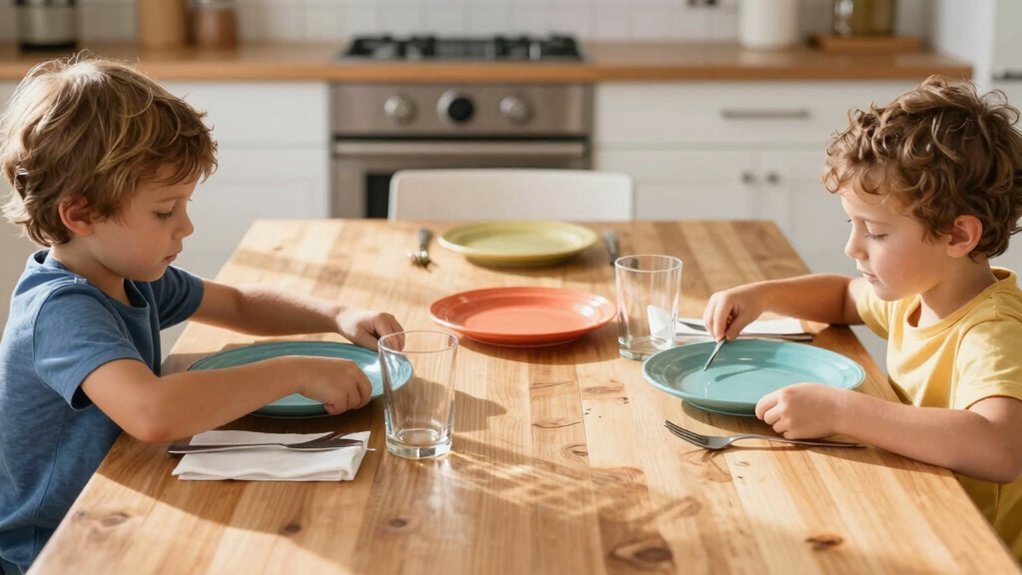
Feeding the pet teaches kids to follow a routine, and the next step is letting them handle the whole meal setup. You’ll notice that setting the table becomes a natural extension of that habit, and with age‑appropriate chores they’ll build confidence quickly. Keep the steps simple: place a napkin, then a fork, spoon, and finally a plate in front of their seat. Use visual chore charts to show where each item belongs and to track progress. Praise specific actions—“You put the fork right where it should be”—to reinforce independence. As hand‑eye coordination improves, add a glass or a small bowl, always avoiding breakables. Consistent, positive reinforcement turns a routine task into a proud achievement.
- Napkin, fork, spoon, plate placement
- Visual chore chart reference
- Positive, and feedback
Show Kids How to Sort, Fold & Put Away Laundry (Ages 6‑9)
Ever wondered how to turn a pile of clothes into a confidence‑boosting routine for 6‑ to 9‑year‑olds? Start by showing them how to sort laundry by color and type, then let them place each bundle into a labeled bin. Keep the process simple: a quick “check the label” cue builds organization skills and reinforces independence.
Next, demonstrate basic folding techniques—t‑shirts into rectangles, socks together, pants in thirds—so they can see a tidy stack form.
Finally, guide them to put away each item in its proper spot, using a chore chart or stickers to mark completion. This step‑by‑step routine turns everyday laundry into a manageable, rewarding chore that boosts self‑efficacy and prepares them for bigger responsibilities. Using low bookcases with front-facing display designs can further enhance independence by encouraging easy access and organization in their personal spaces.
Guide Kids in Preparing Easy Snacks (Ages 8‑12)
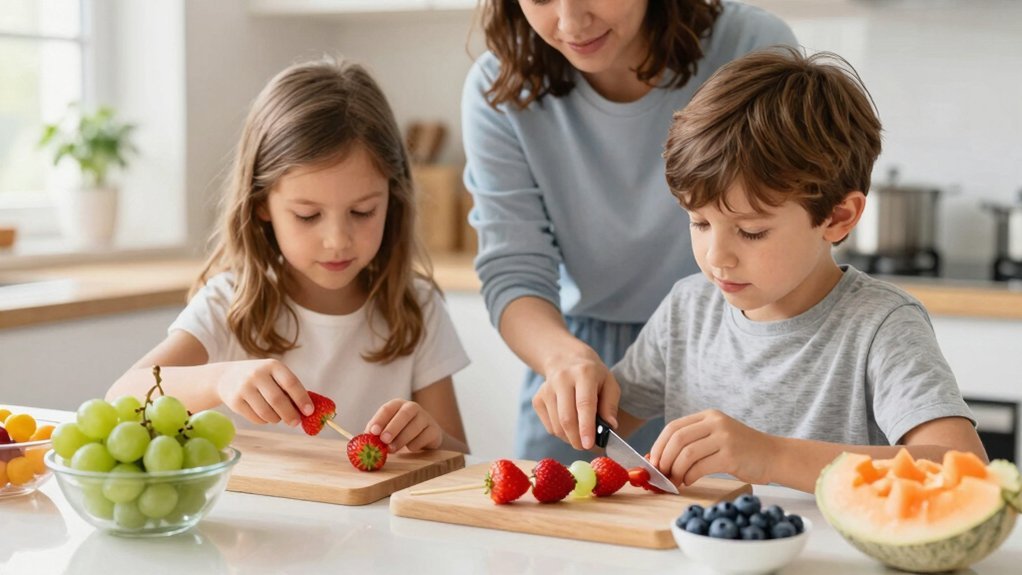
You’ll start with simple snack basics like assembling a fruit plate or a PB&J, then move to safety‑first tips such as washing hands and using child‑safe tools.
After the snack is ready, follow a quick clean‑up routine: wipe surfaces, put away utensils, and check the visual checklist.
This three‑step flow builds independence while keeping the kitchen safe and tidy.
For easy cleanup, consider using a compact dustpan and brush set designed for countertops and tables to quickly manage crumbs and spills.
Simple Snack Basics
Independence when you let kids take charge of simple snacks, turning a quick fruit‑and‑yogurt parfait or a microwaved cheese toast into a mini‑chore that teaches multitasking, step‑by‑step instructions, and kitchen safety. You can frame snack prep as a confidence‑building activity that reinforces independence while you model safety and hygiene. A visual checklist on a chore chart lets them see each stage, from washing hands to cleaning up, turning routine work into measurable progress.
- Gather ingredients – let them locate fruit, yogurt, cheese, and bread, checking the list on the chart.
- Assemble – guide them to layer fruit and yogurt or top toast with cheese, emphasizing clean surfaces.
- Finish up – have them wipe the counter and put leftovers away, cementing responsibility.
Introducing age-appropriate tools, such as child-size cutting boards with safety features, can further enhance their skills and confidence in the kitchen.
Safety First Tips
After kids master the snack‑making routine, the next step is to keep them safe while they work. Emphasize safety by tying back long hair, wiping hands dry, and clearing the countertop of water or crumbs. Supervision is essential when they use the microwave—stand nearby, set the timer together, and never let them handle hot dishes alone. Teach kitchen safety basics: keep knives out of reach, use plastic or child‑friendly utensils, and never leave the stove unattended. Set clear boundaries: no oven use without an adult, and heavy items must be lifted with a buddy. Reinforce each rule with quick praise, and remind them that following these steps protects both them and the snack they’re creating.
Clean‑Up Routine
When the snack is done, the clean‑up routine becomes the perfect chance to reinforce kitchen habits and boost confidence. You’ll see how a simple chore routine turns a mess into a lesson in organization and independence. By breaking the work into multi‑step tasks, you give kids a clear roadmap and a sense of achievement.
- Gather supplies – hand them a trash bag, a damp cloth, and a dish rack; show where each belongs and let them place items in the right spot.
- Wipe surfaces – guide them to spray, wipe, and check for crumbs, emphasizing the importance of a clean work area.
- Store leftovers – have them cover fruit, label containers, and put them in the fridge, reinforcing proper storage and a tidy kitchen.
Track progress with stickers so they see growth and stay motivated.
Putting It All Together: Building a Family Chore Routine (All Ages)
How can you turn chores into a seamless family rhythm that respects each child’s developmental stage? Start by mapping a family chore routine that aligns age‑appropriate chores with daily flow. Assign young children chores like toy pickup, then add preschool steps such as setting the table, and finally let school‑age kids vacuum or sort laundry. Use a visual chart: break each task into three clear steps, and post it where everyone sees it. Offer stickers or small rewards for toddlers, then shift toward praise and autonomy as kids grow. Keep the schedule consistent, but stay flexible for school and activities. Over time, the routine builds independence, reduces your workload, and reinforces shared responsibility.
Frequently Asked Questions
How Do Chores Teach Independence?
You learn independence when chores let you practice planning, solving problems, and completing tasks on your own, building confidence that you can handle responsibilities without constant supervision.
What Chores Are Age-Appropriate for Kids?
You should assign toddlers simple tasks like putting toys away, preschoolers setting tables, early elementary kids making beds, preteens handling laundry, and high schoolers deep‑cleaning kitchens—all age‑appropriate chores.
What Should My 8 Year Old Be Doing Independently?
You should let them vacuum, sweep, fold laundry, take out trash, wipe kitchen surfaces, and help with simple meal prep. Use a chore chart or stickers to track progress and keep them motivated.
At What Age Do Children Develop Independence?
You’ll see independence emerging around age 4, where kids start following short instructions, then it strengthens steadily—by age 6‑8 they handle simple chores, and by early teens they manage more complex responsibilities on their own.

Leave a Reply