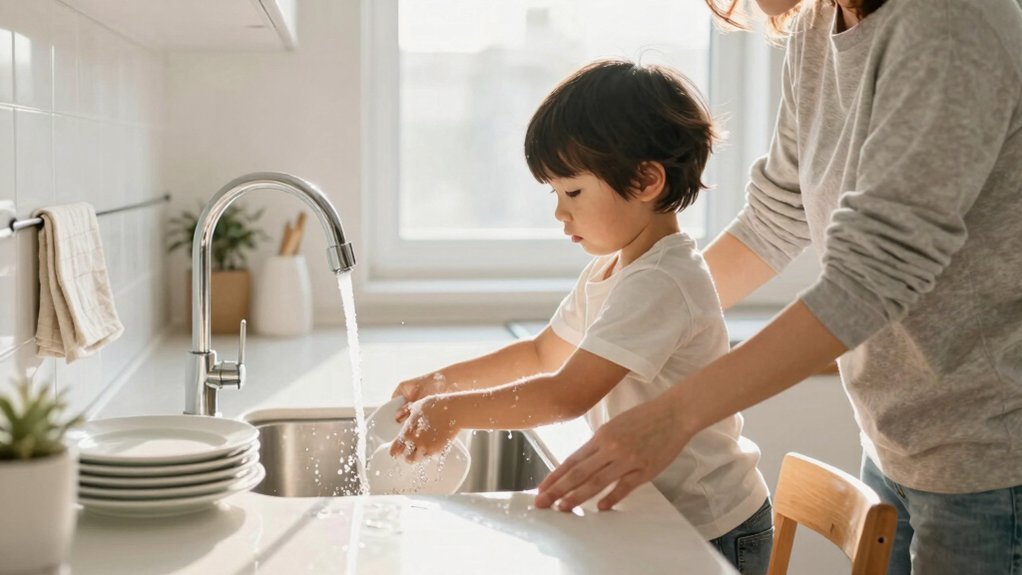
When kids do practical chores, they see a clear cause‑and‑effect: they act, the task gets done, and the result shows up. This concrete loop turns the abstract idea of responsibility into something they can touch, repeat, and master. Age‑appropriate chores match their skill level, so they’re challenged but not overwhelmed, building confidence and habit. Immediate praise and simple rewards reinforce the behavior, making them want to keep doing it. Keep going to discover how to scale these tasks for lasting growth.
How Practical Chores Build a Foundation of Responsibility

Ever wondered why a simple task like putting clothes in a hamper can shape a child’s sense of ownership? When you let kids sort laundry or pick up toys, you’re giving them a concrete way to see cause and effect: their effort yields a tidier space, praise, or a token reward. That immediate feedback builds responsibility, because they link actions to outcomes. Start with age‑appropriate chores—toy cleanup for toddlers, bed‑making for early elementary, grocery help for pre‑teens—so the work matches their capacity and avoids frustration. Use visual tools like chore charts or token systems to track progress, reinforcing consistent behavior. As they contribute to family routines, they feel part of the team, ownership over their belongings, and a lasting sense of responsibility. Incorporating tools like a Montessori-friendly step stool can further empower children to participate independently in daily chores, boosting confidence and responsibility.
Why Age‑Appropriate Chores Boost Development More Than Free Time
When kids move from simple tidy‑up tasks to chores that match their developmental stage, they gain more than a clean room—they start building skills that free time can’t provide.
Age‑appropriate chores keep tasks challenging but doable, preventing frustration and underachievement. You’ll see confidence grow as each new responsibility feels achievable, and regular practice turns effort into tangible results. Balancing chores with the right support keeps motivation high, so free time stays restorative instead of a distraction.
- 2‑5: toy cleanup teaches cause‑and‑effect.
- 5‑8: setting the table builds routine and independence.
- 9‑12: laundry sorting develops organization and self‑efficacy.
- 11‑13: grocery list creation strengthens planning and responsibility.
Teach Responsibility Skills Before Expecting Them: A Step‑by‑Step Guide
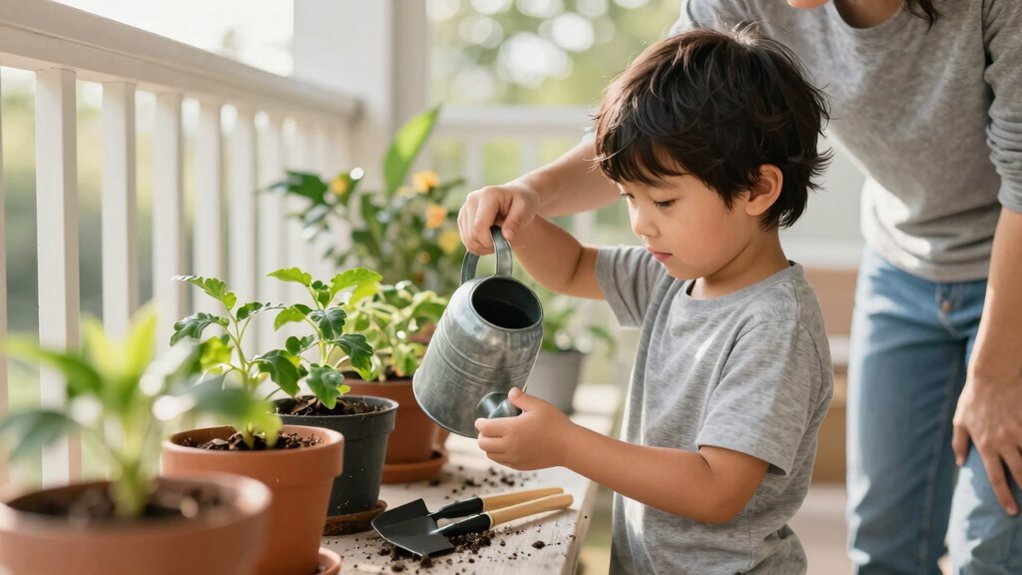
How can you set a child up for success before expecting them to handle a full‑time chore? Start by choosing an age‑appropriate task—making the bed, sorting laundry, or putting away toys. Break the chore into three clear steps, demonstrate each step, then let the child try while you watch. Offer gentle reminders, like a sticky note or a timer, to keep them on track without overwhelming them. Praise effort, not just the finished product, and give a small reward for consistent practice. As confidence grows, add a tiny element of responsibility, such as checking off a checklist. Keep instructions simple, repeat them often, and adjust supports for neurodivergent needs. This structured, step‑by‑step approach builds competence and responsibility before you increase expectations. Introducing age-appropriate tools for practical tasks can further enhance a child’s sense of responsibility and skill development.
Scale Chores Gradually: From Simple Routines to Complex Projects
You’ll start with a tiny, doable chore and then expand it as your child’s skills grow.
Match each new task to their current ability, review how they handle it, and adjust the difficulty when needed.
Celebrate every success, and keep the cycle moving toward more complex projects.
Choosing storage solutions with age-appropriate considerations can also help children engage responsibly with their chores.
Start Small, Expand
Ever wondered how a child can go from tossing toys in a pile to mastering a full dinner prep? You start with tiny, observable routines—like putting clothes in a hamper—so responsibility feels achievable. Each success fuels confidence, letting you expand the chore list gradually. By the time your kid can make the bed, you’re ready for the next step: simple cooking or laundry. Small increments keep the learning curve gentle, while clear instructions and quick praise reinforce effort. This steady expansion builds planning skills and shows tangible results, turning chores into a growth mindset.
- Put toys away after playtime
- Sort dirty laundry into colors
- Set the table, then pack lunches
- Help stir a simple sauce, then measure ingredients
- Introducing child-safe tools like silicone mini tongs can enhance fine motor skills while making kitchen tasks more engaging and manageable.
Match Tasks to Ability
What’s the secret to keeping chores from feeling overwhelming? Start with age‑appropriate tasks that match a child’s current abilities, then raise the bar just enough to spark growth. Simple routines—like tossing socks into a hamper—build confidence, while later projects—such as planning a family snack or escorting a sibling to a store—expand responsibility. Keep expectations aligned with developmental stages, and check progress regularly. When a child masters a step, give concrete feedback and a brief training session before adding a new layer. This steady climb keeps motivation high, prevents frustration, and shows children that responsibility grows with skill. Using Montessori-inspired toys can help develop the fine motor skills and sequencing abilities that support task completion in young children.
| Stage | Simple Task | Next‑Level Task |
|---|---|---|
| 1 | Put clothes in hamper | Sort laundry by color |
| 2 | Clear table after meals | Prepare a simple snack |
| 3 | Feed a pet | Plan a family grocery list |
Review, Adjust, Celebrate
How can you keep a child’s enthusiasm while the chores become more challenging? You review progress weekly, adjust expectations, and celebrate each win. Start with a simple checklist, add age‑appropriate reminders, and watch confidence grow. When a task feels too easy, introduce a short, multi‑step project; when it feels overwhelming, scale back and revisit the basics. Positive feedback and small rewards reinforce effort, while a visible chart shows tangible progress.
- Use visual reminders and a daily checklist to track chores.
- Add a new step only after the child masters the current one.
- Hold a quick review talk each week to gauge capacity.
- Celebrate milestones with specific praise and a fun reward.
Including child-sized practical tools like the Mini Avocado Masher can enhance engagement and responsibility during food prep chores.
Consistency, Feedback, and Reinforcement for Responsibility Chores
You’ll set a steady chore schedule so kids know exactly when tasks happen, then give quick praise or a small reward each time they finish correctly. Use a simple chart or token system so they can see their progress and understand what “success” looks like.
When they slip up, offer a brief, constructive reminder instead of punishment, keeping the focus on learning and accountability. Using activities like threading and beading, which support fine motor skills development, can also reinforce responsibility through hands-on learning.
Consistent Routine Scheduling
Typically, a predictable daily chore schedule turns responsibility into a habit, because children learn what to expect and when. When you set clear routines, you give kids a roadmap that reduces anxiety and boosts self‑regulation. Visual reminders—like a chart on the fridge or a simple app—keep tasks top‑of‑mind and cut forgetfulness. Consistency lets you gradually raise task difficulty, building skill while keeping the framework stable. Praise and tiny rewards reinforce the link between effort and positive outcomes, making the schedule feel rewarding rather than burdensome.
- Post a colorful chore chart at eye level.
- Use smartphone alerts as gentle reminders.
- Celebrate completed tasks with a quick high‑five.
- Add a slightly tougher chore each week to grow competence.
Timely Positive Reinforcement
A steady chore schedule sets the stage, but the real driver of lasting responsibility is timely positive reinforcement. When you give praise right after a child finishes a task, you link effort to a feeling of accomplishment, not just the end result. Pair that with immediate rewards—like a token, a sticker, or a few extra minutes of screen time—to cement the connection between action and outcome. Consistency matters; if you praise and reward every time, the child learns that responsibility reliably brings positive feedback.
Gradually increase chore complexity while keeping feedback prompt, so competence builds alongside motivation. This approach teaches patience, because rewards are earned and not withdrawn, reinforcing persistence and a growth mindset.
Clear Progress Tracking
Ever wonder how a simple chart can turn chores into a habit‑forming routine? When you set up chore charts and use progress tracking, you give kids a visual cue that their effort adds up. Consistency builds habit; each repeated task reinforces the expected behavior. Clear feedback—like “You folded laundry neatly and put everything away”—links action to outcome, while immediate praise cements the connection. Reinforcement follows naturally: a sticker earned today becomes a token for tomorrow’s reward, keeping motivation high without punitive setbacks.
- Use a weekly chore chart with color‑coded slots.
- Mark completed tasks with stickers for instant visual feedback.
- Celebrate milestones with specific praise and a small reward.
- Adjust task difficulty gradually to match developmental growth.
Link Daily Chore Success to Ongoing Responsibility Skills
How can a simple daily chore become the foundation for lasting responsibility? You start by teaching the steps before expecting results, so the child knows exactly how to make the bed or load the dishwasher. Then you add reminders—post‑its on the fridge or a gentle phone alert—to keep the task top‑of‑mind. Each completed chore becomes a tiny success that builds a habit of responsibility. As competence grows, you raise the difficulty, moving from tidying toys to folding laundry, matching the child’s developmental stage. Praise, stickers, or a small allowance reward the effort, reinforcing the link between everyday work and long‑term ownership. Seeing a clean room or a fresh‑laundered shirt gives concrete proof that their actions matter, cementing a lasting sense of responsibility.
Frequently Asked Questions
Why Is It Important to Teach Kids Responsibility?
You should teach kids responsibility because it builds self‑confidence, motivates them to meet goals, strengthens family bonds, prepares them for real‑world challenges, and lays the foundation for lifelong independence and success.
What Is the 3 3 3 Rule for Kids?
You follow the 3‑3‑3 rule by assigning three simple chores, repeating them three times daily, and giving three gentle reminders; this structure builds consistency, accountability, and confidence in your child.
What Is the 7 7 7 Rule for Parenting?
You follow the 7‑7‑7 rule by assigning age‑appropriate duties at ages 7, 14, and 21, gradually increasing complexity, keeping tasks clear, checking progress regularly, and matching challenges to each developmental stage.
How Do Chores Teach Children Responsibility?
You learn responsibility when chores give you clear outcomes, matching tasks to your age, building consistency, letting you decide how to do them, and rewarding effort, so you see effort directly creates results.


Leave a Reply