
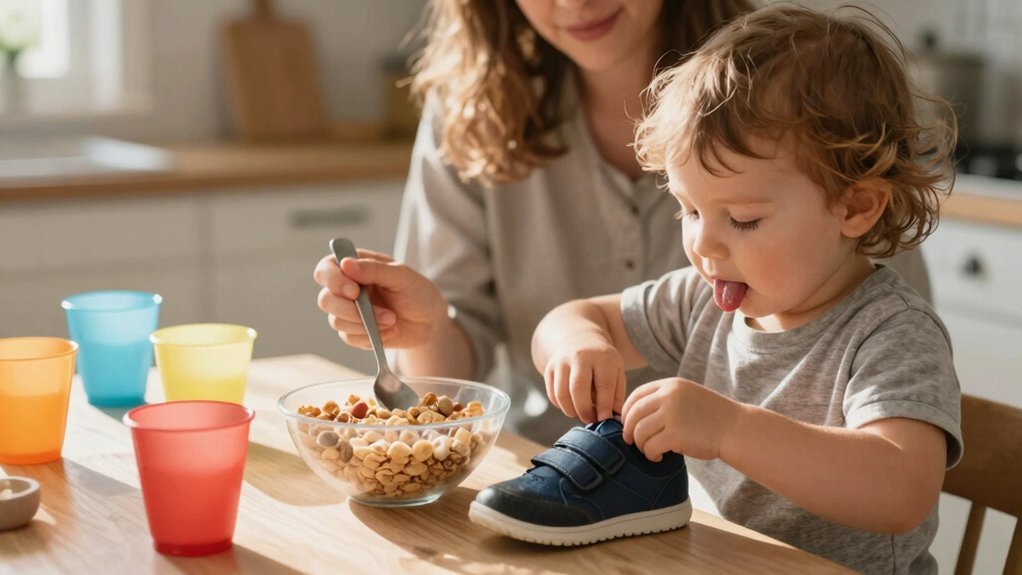
When your child masters self‑care tasks like feeding, dressing, and hygiene, they gain a sense of accomplishment that fuels confidence and independence. Fine‑motor practice builds coordination, while sequencing the develops executive function and emotional regulation. These skills reduce caregiver strain, ease school transition s, and lay a lifelong foundation for autonomy. By using simple tools—elastic shoes, picture‑step guides, and weighted utensils—you can boost motivation and resilience. Keep going, and you’ll discover deeper strategies and when professional help may be needed.
Why Early Self‑Care for Children Boosts Confidence & Independence
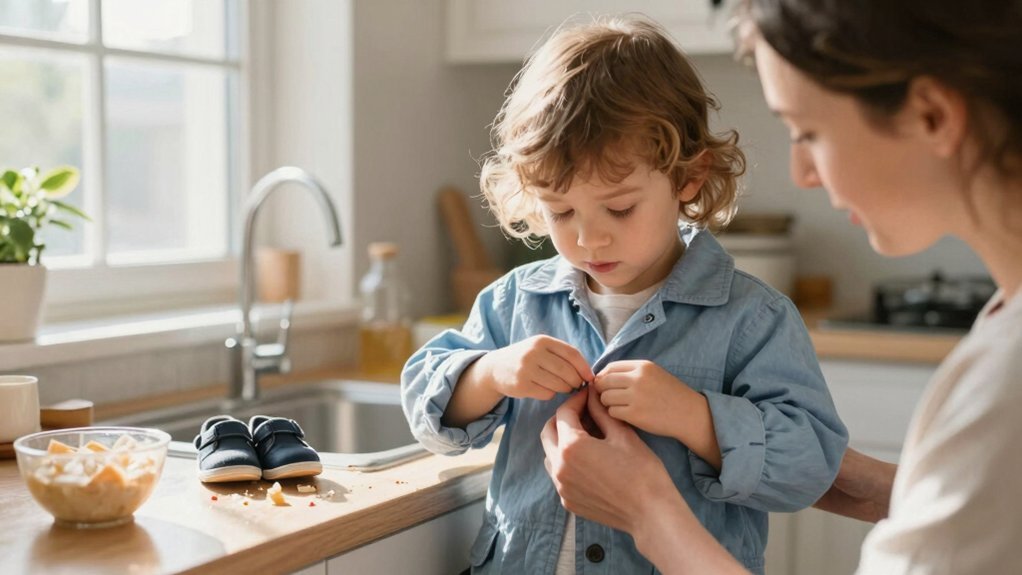
Ever wondered how a simple routine can empower a child? You’ll see that self‑care skills, practiced daily, spark confidence and independence. Early intervention—often guided by occupational therapy—targets fine motor skills needed for dressing, grooming, and feeding. When a child masters a daily task, the sense of accomplishment fuels motivation, reducing frustration and building emotional stability. Consistent daily routines reinforce sequencing and problem‑solving, turning chores into confidence opportunities. As self‑care independence grows, caregiver burden eases, easing transitions to school and social settings. This foundation supports broader children development, making future academic participation smoother. By embedding these habits now, you lay the groundwork for lifelong independence and social confidence. Using tools like a Montessori step stool can further encourage children to participate actively and safely in their daily routines.
How Motor, Cognitive & Emotional Development Supports Children’s Self‑Care
Building on the confidence boost from early self‑care routines, you’ll notice that motor, cognitive, and emotional growth all converge to make those tasks doable. As motor development refines fine motor control and bilateral coordination, you can button shirts, tie laces, and manipulate zippers with increasing precision.
Cognitive advances, especially executive function, let you plan and sequence steps, so you initiate a daily routine, remember the order of actions, and adjust when something goes wrong.
Emotional regulation gives you the persistence to stay on task despite frustration, turning a challenging self‑care activity into a manageable problem. Together, these gains foster independence, turning routine self‑care tasks into confident, self‑directed actions.
Introducing child-sized tools with roughened interior surfaces supports fine motor skill practice through sensory exploration and effective handling.
Practical Parenting Strategies for Children’s Feeding, Dressing & Hygiene
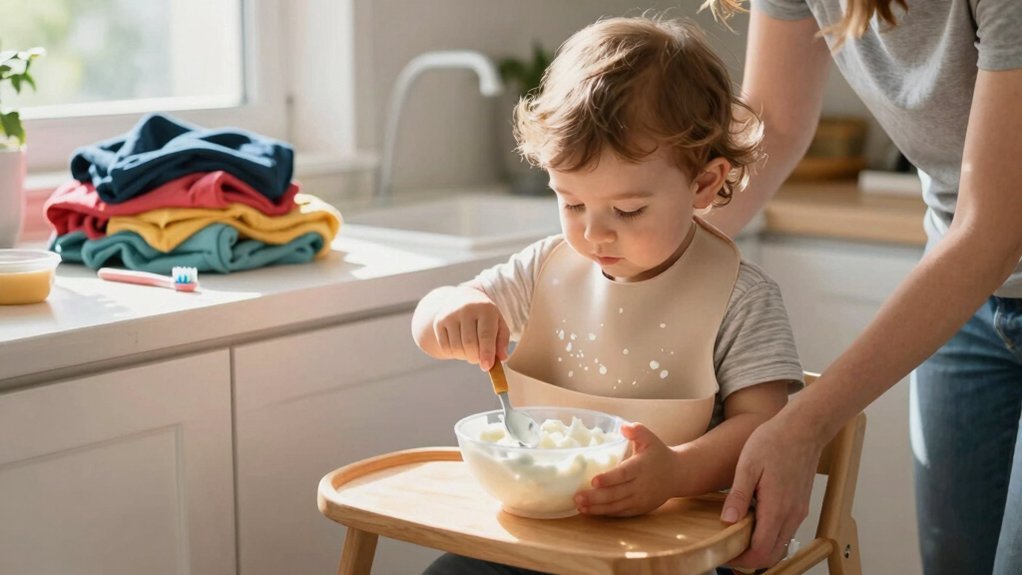
Have you tried turning everyday routines into simple, visual guides? You can boost self‑care independence by using curved or weighted utensils, high‑sided plates, and spill‑proof cups for feeding, then pairing them with picture cards that show each step.
For dressing, choose elastic shoes, large fasteners, and sock aids; let your child sit while you model button‑through‑hooks or zip‑up sequences.
Hygiene routines become smoother with checklists for hand‑washing, brushing, and toileting, reinforced by occupational‑therapy‑inspired visual supports.
Offer choices, keep tasks short, and sprinkle positive reinforcement when they succeed.
Consistent, clear cues nurture early childhood autonomy, turning feeding, dressing, and hygiene into confident, repeatable routines.
Using child‑size tools like small brooms and dustpans can also foster responsibility and fine motor skills through everyday household chores.
When to Seek Occupational Therapy for Children’s Self‑Care Challenges
If your child’s basic self‑care tasks—dressing, feeding, toileting, or grooming—are noticeably lagging behind peers, it’s time to contemplate occupational therapy. You’ll notice frustration or withdrawal even after consistent practice and coaching at home. Look for fine motor or dyspraxia signs that widen the gap between daily living skills and school expectations. An assessment can pinpoint delays, and targeted coaching will bridge the divide.
| Sign | Why it matters |
|---|---|
| Persistent dressing delays | Indicates fine motor issues needing OT |
| Heightened frustration during meals | Signals dyspraxia or skill gaps |
| Inability to meet school self‑care standards | Calls for assessment and coaching |
When to seek occupational therapy is clear: any of these red flags appear, act promptly to support your child’s self‑care development. Using appropriate training chopsticks can help build fine motor skills critical for self-feeding independence.
Frequently Asked Questions
Why Is Self-Care Important for Children?
You’ll see children gain confidence, independence, and problem‑solving skills when they master self‑care, and they’ll handle daily tasks, emotions, and school transition more smoothly.
What Is the 3-3-3 Rule for Children?
You follow the 3‑3‑3 rule by scheduling three meals, three snacks, and three sleep‑ready periods each day, keeping intervals consistent so your child gets balanced energy, steady mood, and predictable routine.
Why Is It Important for Children to Learn Self-Help Skills?
You’ll boost their independence, confidence, and resilience, making daily routines smoother, easing caregiver strain, and preparing them for school, social interactions, and lifelong self‑reliance.
What Is the 7 7 7 Rule for Raising Children?
You follow the 7‑7‑7 rule by giving your child seven minutes of focused interaction, seven minutes of structured activity, and seven minutes of calm‑down or rest each session, fostering balanced engagement.