
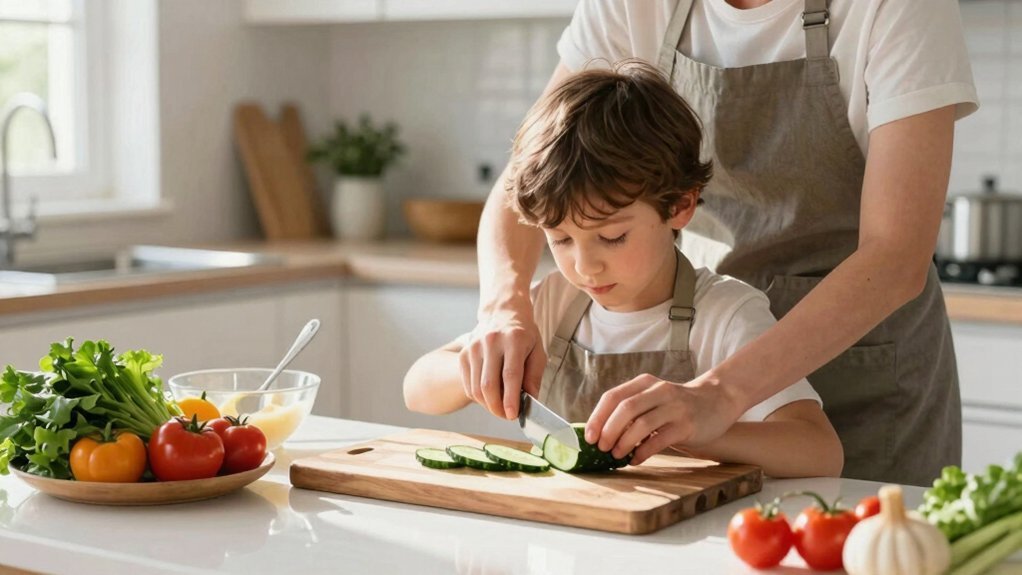
You’ll give kids the confidence to help in the kitchen while keeping everyone safe. Good hand‑washing, surface cleaning, and proper food‑storage habits prevent illness and cross‑contamination. Age‑appropriate tasks—like washing produce, measuring ingredients, or stirring—build fine motor skills and teach math, science, and nutrition concepts. Supervised knife use and temperature checks avoid accidents, and teamwork creates a positive family rhythm that reduces picky eating. Keep exploring to discover more ways to turn cooking into a fun, educational experience.
Start With the Four Core Kitchen Hygiene Rules
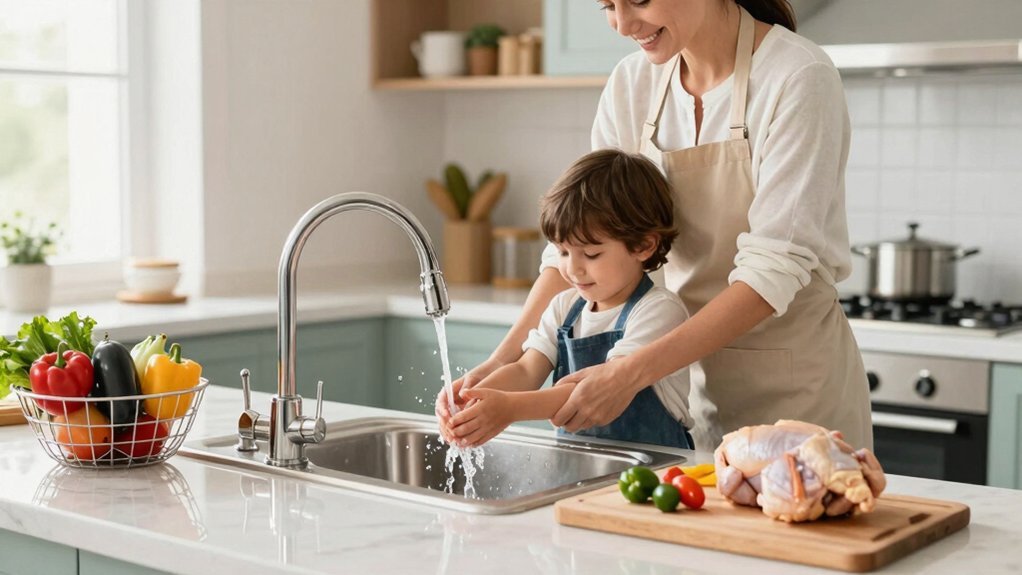
Ever wondered how a simple routine can keep your kitchen safe for kids? Start with handwashing; scrub with soap and water before you touch anything, because clean hands are the first line of defense for food safety.
Handwashing before handling food is the first line of defense for kitchen safety.
Next, practice kitchen hygiene by wiping down surfaces and utensils after each use, preventing cross‑contamination.
Keep raw meat separate from ready‑to‑eat items, using distinct cutting boards and containers to avoid bacterial transfer.
Cook foods to proper temperatures, checking with a thermometer to ensure pathogens are destroyed.
Finally, follow refrigeration safety: chill leftovers and perishable items promptly to 40°F or lower, slowing bacterial growth.
Creating safe and engaging environments is key, just as versatile cushion shapes enhance comfort and organization in learning spaces.
Age‑Appropriate Kitchen Tasks for Kids’ Kitchen Safety
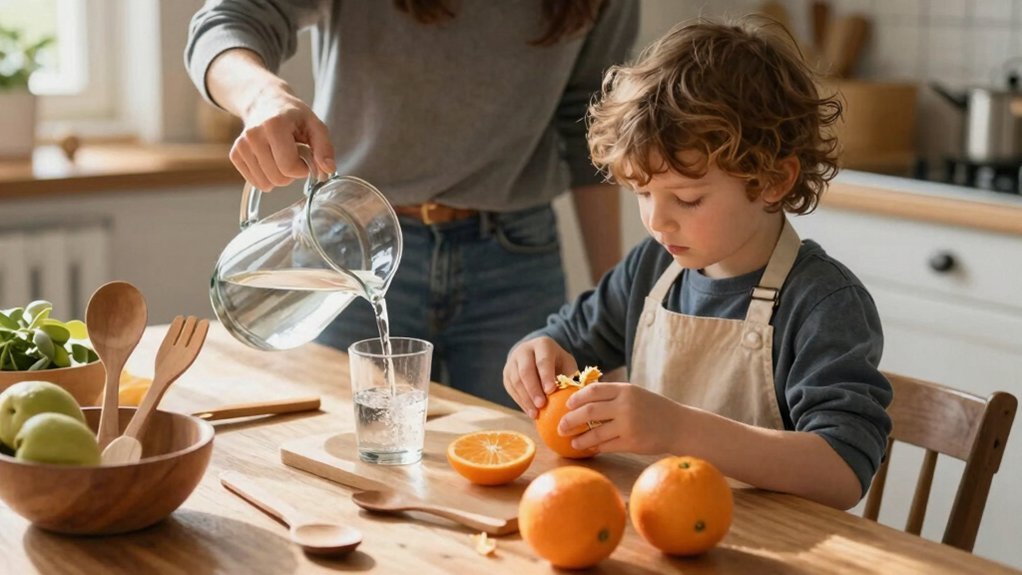
How can you turn everyday chores into a stepping‑stone for kitchen safety? You start with simple, age‑appropriate tasks that build confidence and good habits. For toddlers, let kids in the kitchen wash produce, wipe tabletops, or snap green beans while you model food safety. As they grow, 3‑5‑year‑olds can mix ingredients, brush oil on bread, crack eggs, and mash potatoes, always under close supervision. By 5‑7, they can scoop avocados, load the dishwasher, shuck corn, and use blunt shears, learning separate cutting boards for raw vs. ready‑to‑eat foods.
- Supervise safe knife use and teach proper food handling.
- Reinforce kitchen safety rules at each step.
- Gradually increase responsibility as age‑appropriate tasks expand.
- Using child-safe knives with serrated edges and blunt tips helps ensure safety while building real cutting skills.
Cooking as a Fun Lab for Math, Science & Nutrition
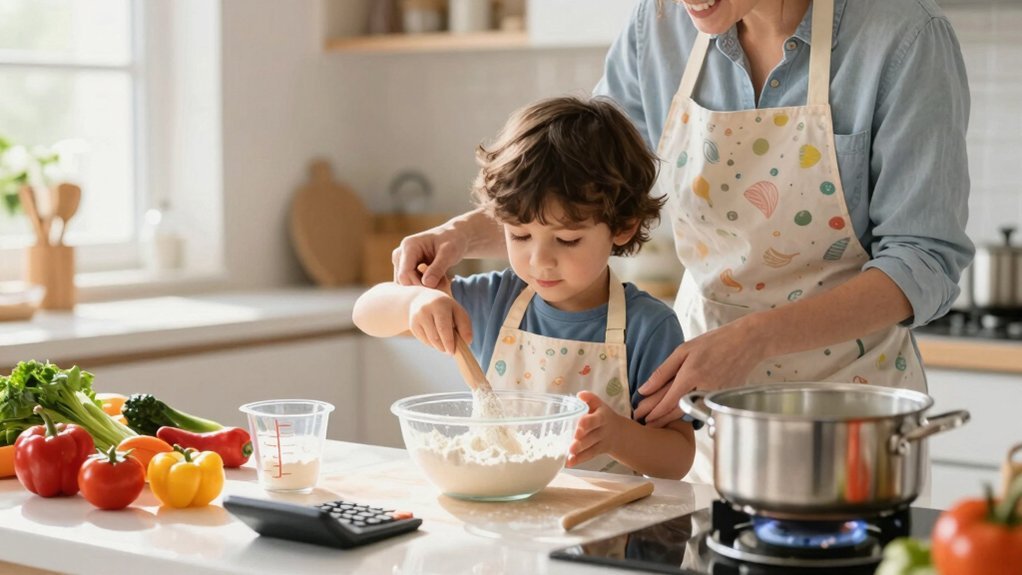
You’ll see how measuring ingredients turns into a hands‑on math lesson, where counting scoops and converting fractions become second nature.
When you let kids taste‑test their creations, they practice scientific observation, noting texture, flavor, and temperature changes.
At the same time, reading labels and choosing balanced components we nutrition into the everyday cooking experience.
Using age-appropriate kitchen utensils ensures children develop fine motor skills while engaging safely in cooking activities.
Measuring Ingredients, Exploring Fractions
What if the kitchen became a math lab where every cup, spoon, and pinch turned into a hands‑on lesson? You’ll see kids cooking turn ordinary tasks into measurable science. When you hand them a ½‑cup, they instantly grasp fractions—halves, quarters, thirds—while visualizing portions. The act of measuring ingredients ties directly to nutrition education, showing how a single spoonful can change a recipe’s balance. Supervision keeps the process safe, reinforcing kitchen safety as they handle tools and follow steps. This hands‑on learning builds confidence, sharpens math skills, and nurtures healthy decision‑making. Incorporating Montessori-inspired play kitchens with realistic features enhances this learning by promoting authentic pretend play under safe conditions.
- Use clear, labeled measuring cups to illustrate fractions.
- Encourage kids to compare half‑ and quarter‑measurements.
- Keep a supervising adult nearby for safety and guidance.
Taste Tests Teach Scientific Observation
Often, a simple taste test turns the kitchen into a mini‑science lab where kids actively compare flavors, textures, and aromas, learning to notice subtle differences. You’ll see them record observations, note changes when heating or chilling, and talk about why a carrot tastes sweeter after roasting. This hands‑on approach blends cooking with kids, measurement, and nutrition concepts while reinforcing data‑minded thinking and kitchen safety. Using materials that align with quality standards in cooking tools can further enhance their learning experience.
| Step | Observation | Insight |
|---|---|---|
| 1 | Sample raw pepper | Identify spice intensity |
| 2 | Sample roasted pepper | Notice flavor development |
| 3 | Compare texture | Discuss moisture loss |
| 4 | Record preferences | Link taste to nutrition benefits |
Safe Kitchen Activities That Reduce Picky Eating
When kids help prepare a meal, they become curious about the ingredients they touch, smell, and taste, which naturally lowers resistance to trying new foods. You can turn that curiosity into a habit by setting clear kitchen rules and pairing kid involvement with cooking safety. Offer age-appropriate tasks—hand‑washing, measuring, mixing, and supervised knife work—so they feel ownership without feeling pressured. This hands‑on cooking builds confidence, reduces picky eating, and makes family cooking activities a regular, enjoyable routine.
- Let them pick a vegetable, wash it, and arrange it on a plate.
- Assign simple measuring duties for sauces or dressings.
- Teach safe knife handling under supervision before moving to chopping.
- Incorporating age-appropriate safety standards into kitchen tasks ensures children learn responsibility while minimizing risks.
How Safe Cooking Strengthens Family Bonds
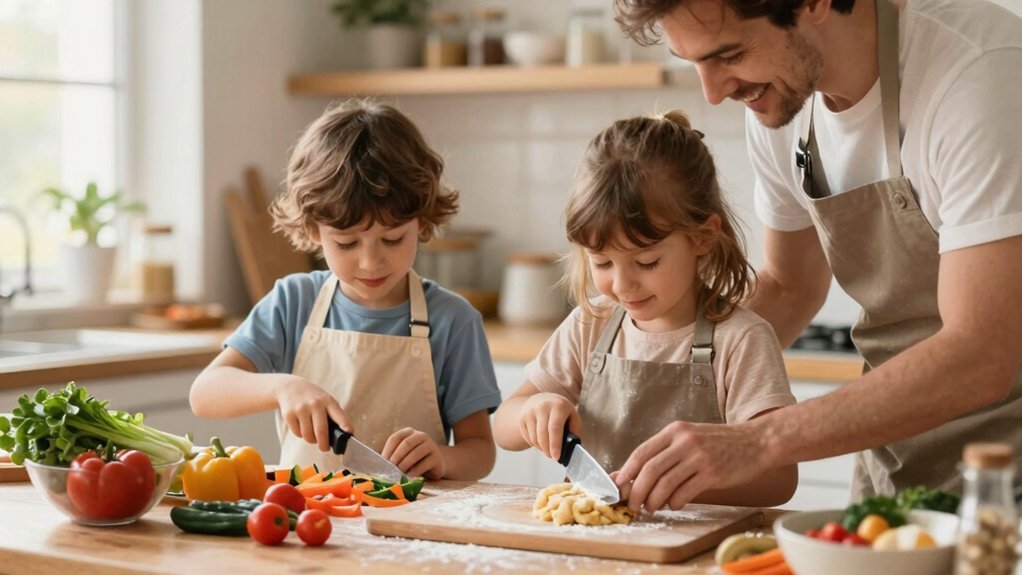
When you cook together, you create shared experiences that turn routine meals into lasting memories. Planning the menu as a team lets each family member contribute ideas, reinforcing cooperation and pride.
Those moments of learning safety and teamwork build stronger bonds that linger long after the plates are cleared. Just like Montessori puzzles foster hands-on learning, cooking provides an interactive way to develop essential life skills together.
Shared Cooking Experiences
Why not turn the kitchen into a family workshop where safety and togetherness go hand in hand? When you invite kids involved in cooking, you create shared cooking experiences that weave safety rules into everyday fun.
Hands‑on learning lets them see nutrition education in action, turning abstract ideas into tasty, visual lessons.
As you chop, stir, and plate together, family bonding deepens; each step reinforces kitchen safety while preserving treasured recipes.
The rhythm of cooperation builds confidence, and the pride of creating a meal fuels a lifelong appreciation for healthy choices.
- Teach safety rules through real‑time demonstrations.
- Use each ingredient as a springboard for nutrition education.
- Celebrate successes to strengthen family bonding and confidence.
Shared Meal Planning
Turning the kitchen into a family workshop naturally leads to shared meal planning, where safety and togetherness become the backbone of every menu decision. When you invite kids to suggest dishes, you spark shared planning that blends their ideas with your nutrition goals. Family involvement turns a simple grocery list into a collaborative project, teaching safety skills as you discuss knife handling, hot‑plate awareness, and proper storage. As you map out meal preparation, each person claims a task—washing, chopping, measuring—building teamwork and ownership. This structure encourages healthy choices because everyone sees how their input shapes the plate, reducing waste and reinforcing the habit of thoughtful, balanced eating. The result is a tighter bond and a kitchen that feels like a shared adventure.
Shared Learning Moments
A kitchen becomes a classroom the moment you invite your kids to help, turning safety lessons into shared learning moments that tighten family bonds. You’ll notice how collaborative meal planning sparks conversation, while hands‑on practice lets children in the kitchen see safety rules in action. Each step—from measuring ingredients to cleaning surfaces—becomes a hygiene practice lesson that reinforces trust. You model calm confidence, and kids mirror your approach, building a shared rhythm that lasts beyond the stove. The laughter, the occasional spill, and the proud grin when a dish turns out right all cement a feeling of togetherness.
- Joint recipe selection deepens communication.
- Real‑time safety rule reminders teach responsibility.
- Shared cleanup reinforces hygiene practice and teamwork.
Creating a Safe, Collaborative Kitchen Environment for Everyone
Often the kitchen feels like a bustling classroom when you let kids join in, and that collaborative vibe is the foundation for safety. You start with handwashing—20 seconds each—and clear cleaning protocols that wipe down countertops before any prep. By separating raw meats from ready‑to‑eat foods, you prevent cross‑contamination, teaching kids why those rules matter.
Assign age‑appropriate tasks: 2‑3‑year‑olds wash produce or wipe tabletops, while 9‑12‑year‑olds boil pasta or follow recipes under supervision. Post safety rules at eye level and review them together, reinforcing expectations. Consistent supervision lets you step in when needed yet lets children gain confidence. A positive, collaborative kitchen atmosphere tolerates mistakes, turning them into learning moments that cement safe cooking habits.
Frequently Asked Questions
Why Is It Important to Learn About Kitchen Safety?
You learn kitchen safety to protect yourself from burns, cuts, and foodborne illness, ensuring you can cook confidently, avoid accidents, and develop lifelong habits that keep you and others healthy.
Why Should Kids Help in the Kitchen?
You should let kids help in the kitchen because it builds confidence, teaches independence, sparks curiosity about food, improves their willingness to try new dishes, and creates shared family moments that reinforce healthy eating habits.
What Are the Five Reasons for Maintaining Safety in the Kitchen?
You keep accidents down, prevent illness, build confidence, teach responsibility, and ensure emergencies stay under control—each reason protecting kids and the whole household while they learn to cook safely.
What Are 5 Safety Rules in the Kitchen for Kids?
You should always wash hands first, keep raw and cooked foods separate, use kid‑friendly tools, stay away from hot surfaces, and clean spills immediately to prevent burns and cross‑contamination.


Leave a Reply