
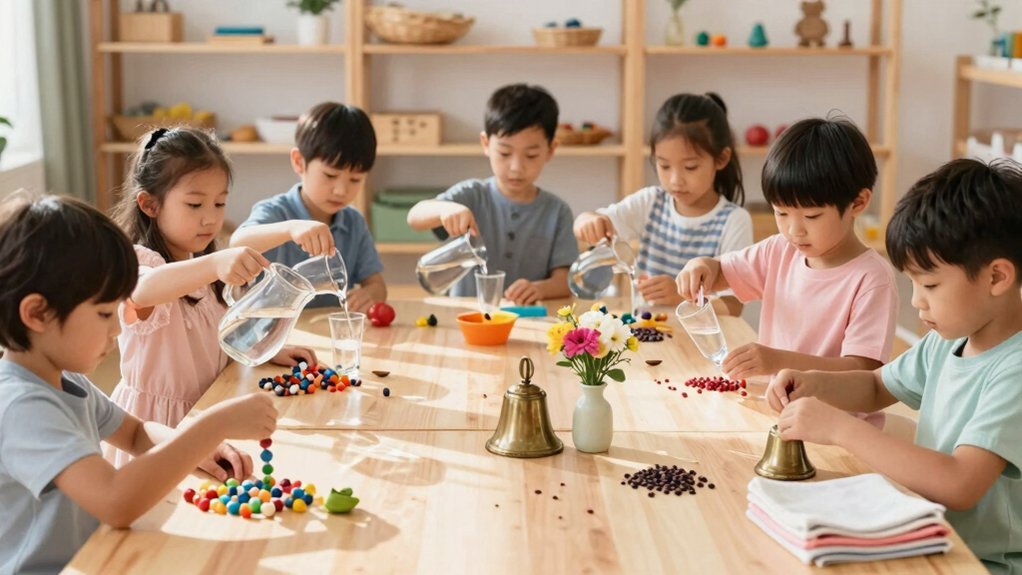
You can boost a child’s concentration with seven focused practical‑life activities: pour water to train hand‑eye coordination, fold and organize cloths for fine‑motor precision, sweep the floor using left‑to‑right motions, prepare a snack mindfully, clean up the snack to reinforce responsibility, water and prune plants for calm, deliberate care, and play the Silence Game to develop self‑regulation. Each task builds mindfulness, independence, and focus, and the next steps will show you how to weave them into daily routines.
Practical Life: Pour Water to Boost Focus

How does pouring water sharpen your focus? You grasp a pitcher, lift it, and guide the stream into a cup, feeling every tilt and pause. In Practical Life, this simple Pour Water exercise trains hand‑eye coordination and rhythm, turning a mundane motion into a concentration drill. Montessori classrooms use real, functional materials so you respect the tools while sustaining attention. You start with a small pour, then graduate to larger volumes, each step demanding more control and deliberate sequencing. The activity builds independence; you complete the sequence from start to finish, reinforcing self‑control. Over time, the repeated, purposeful motion stretches your concentration span, turning a basic task into a powerful focus‑building habit. This approach aligns with Montessori principles emphasizing hands-on learning engagement, which supports sustained attention and skill development.
Practical Life: Fold & Organize Cloths for Attention
When you guide a child to fold and organize cloths, you turn a simple chore into a fine‑focused handling exercise that sharpens their tactile awareness. The sensory‑rich routine of folding each piece teaches them to notice texture, weight, and shape, keeping their mind anchored to the task. Using high-quality tools like horsehair brushes enhances precision and sensory engagement in practical life activities.
Fine‑Focused Cloth Handling
Ever notice how a simple piece of cloth can become a focused task? In Practical Life you’ll see concentration rise as you guide a child through precise folding steps. The child grabs a small cloth, aligns edges, and folds it with care, noticing texture, color, and size. Each repeatable sequence builds mastery, encouraging self‑control and the ability to finish without adult help. By using child‑sized tools, the activity feels manageable, turning ordinary cloths into a purposeful work. Observation sharpens attention to detail, while systematic sorting reinforces orderly routines. Integrating this fine‑focused handling into daily schedules nurtures purposeful work, extends time‑on‑task, and aligns with Montessori principles, making concentration a natural by‑product. Introducing child-safe real tongs into related transfer activities further enhances fine motor skills and hand-eye coordination.
Sensory‑Rich Folding Routine
Ever notice how a soft, patterned cloth can become a miniature training ground for focus? In a Practical Life setting, you’ll start by modeling a simple folding sequence, then hand the child a child‑sized towel or shirt. The tactile texture invites careful hand movements, while the clear steps—fold in half, then thirds, then tuck—create a rhythm that sharpens concentration.
As they repeat the routine, they gain independence, adjusting speed and pressure without constant prompts. You’ll see confidence grow as each piece folds neatly, reinforcing self‑control and intrinsic motivation.
Gradually increase difficulty by adding layers, different fabrics, or tighter folds, and the skill transfers to other tasks, sustaining long‑term focus and autonomy.
Using tools like the Comfy Cubs Kids Step Stool Montessori Tower can further support these activities by promoting independence and safe access to workspace.
Mindful Organization Practice
A soft, patterned cloth already trained your child’s hands to notice detail, so the next step is to turn that tactile awareness into a full‑scale organization routine. You set up a low shelf, line up three bins, and color‑code each for tops, bottoms, and socks. Demonstrate the sequence: pick, fold, place, then move left to right. Let your child repeat the steps with minimal prompts, watching them sort and stack deliberately. This Practical Life exercise sharpens concentration because each decision—size, color, placement—requires focus. As they master the mindful organization, they gain independence, handling real chores without adult hand‑holding. Consistent practice builds self‑control, a sense of mastery, and a calm, orderly environment that supports deeper attention. Using child-size aprons with adjustable straps during activities like folding can encourage sustained engagement and protect clothing, further promoting focus and responsibility.
Practical Life: Sweep & Dust the Floor for Concentration
Why does sweeping feel so calming? Because Practical Life tasks turn ordinary chores into focused practice. When you pick up a child‑sized broom, you engage your hands, eyes, and breath, channeling concentration into each deliberate stroke. The left‑to‑right motion mirrors classroom order, reinforcing a sense of independence as you master the rhythm. Minimal verbal cues let you stay in the flow, while repetition builds motor coordination and self‑confidence. Color‑coded tools guide you, making the activity feel purposeful rather than perfunctory.
Over time, the repeated, purposeful sweeping becomes a meditation on movement, extending your attention span and nurturing an inner calm that carries over to other tasks. This simple routine proves that everyday chores can be powerful concentration boosters. Incorporating Montessori materials like color tablets can further enhance concentration and visual discrimination skills during practical activities.
Practical Life: Prepare a Snack for Mindful Presence
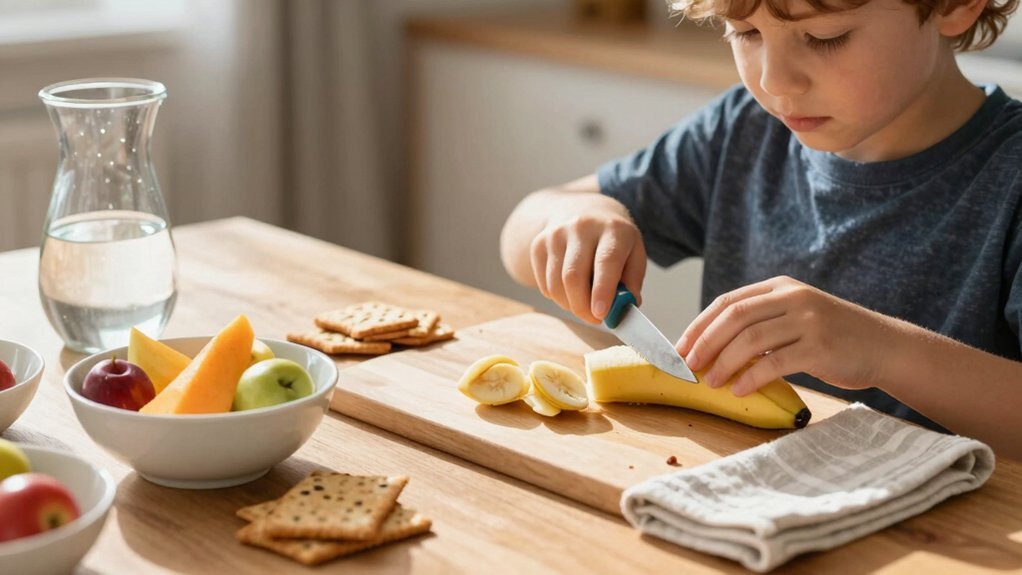
How does preparing a snack become a moment of mindful presence? In Practical Life you start by washing hands, feeling the water, and breathing slowly. You gather child‑sized tools, then measure fruit, scoop yogurt, and arrange crackers, each step demanding concentration. The deliberate actions slow your rhythm, turning snack prep into a focused meditation. You notice the weight of a spoon, the sound of a lid snapping, the bright colors of ingredients. By following a clear sequence you reinforce order, building independence and self‑regulation. The shared kitchen task invites social interaction, yet you stay anchored in the present moment. This simple ritual nurtures mindful presence while sharpening concentration for everyday tasks. Integrating low step-in storage solutions can help maintain an organized environment that supports focused, independent activities.
Practical Life: Involve the Child in Snack Clean‑Up to Reinforce Responsibility
The crumpled napkin, the half‑eaten apple, and the sticky spoon all sit on the table, waiting for the child’s careful clean‑up. When you invite a child to handle snack cleanup, you turn a mess into a Practical Life lesson that sharpens concentration and builds independence. Use child‑sized sponges, cloths, and a small brush so the task feels doable yet challenging. Keep the steps consistent—clear the table, wipe surfaces, and sort trash—so the child learns a reliable sequence and gains confidence.
Snack cleanup transforms mess into a Practical Life lesson, sharpening concentration, fostering independence, and building confidence.
- Provide age‑appropriate tools for fine‑motor practice.
- Model the routine once, then let the child repeat with minimal prompts.
- Celebrate completion to reinforce responsibility and focus.
This routine embeds Practical Life values, turning everyday chores into concentration‑boosting, independence‑cultivating moments.
Practical Life: Water & Prune Plants for Focus
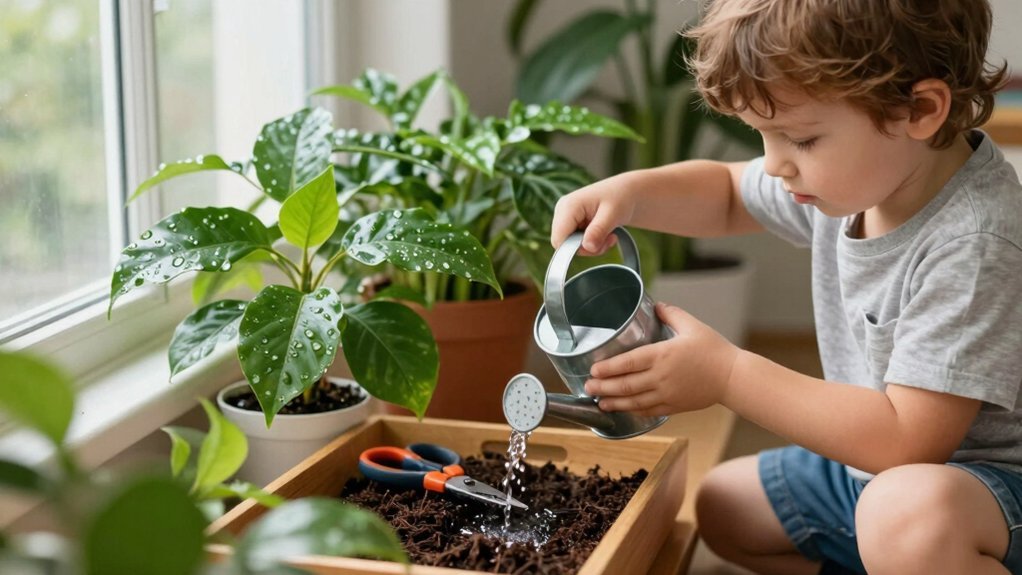
Ever notice how a simple watering routine can turn a restless child into a focused learner? When you let a child water plants, you’re giving them a Practical Life task that demands gentle precision. Child‑sized tools make the act of water plants feel doable, and the repetitive motion builds order and self‑discipline. As they pour, they notice the soil’s moisture, the plant’s thirst, and the calm that follows each careful splash.
Adding pruning plants to the routine sharpens fine‑motor control; snipping a leaf requires deliberate, measured movements that reinforce concentration. Together, these activities weave independence, coordination, and environmental care into daily life, turning ordinary chores into powerful focus‑building exercises.
Practical Life: Play the Silence Game as a Grace‑and‑Courtesy Exercise
Watering and pruning teach children to notice subtle changes, but the next step in building focus is learning to quiet both body and mind. The Silence Game, a Practical Life activity, asks you to sit still, breathe, and listen for a set time. While you hold the silence, you practice self‑regulation, noticing tremors in your hands and the urge to speak. The shared stillness builds classroom coordination, because each child respects the collective pause and waits for their turn to speak. Use a timer, start with a minute, then extend as confidence grows. You’ll see patience blossom, motor control sharpen, and mindful purpose become a habit.
Silence nurtures focus, self‑regulation, and coordinated mindfulness through shared stillness and breath.
- Set clear time limits
- Model calm posture and breathing
- Rotate leadership to reinforce coordination
Frequently Asked Questions
What Activities Improve Concentration?
You’ll boost concentration by washing hands, sweeping floors, polishing shoes, pouring water, threading beads, planting seeds, sorting objects, folding laundry, and preparing simple snacks, each requiring focused, repetitive steps.
What Are the Practical Life Activities in Montessori?
You’ll find sweeping, dusting, polishing, food prep, pouring, buttoning, dressing, washing dishes, folding laundry, sweeping floors, setting tables, polishing shoes, caring for plants, and cleaning mirrors—all designed to nurture independence and concentration.
What Are the 13 Based Exercises That Offer the Best Brain Boosting Benefits?
You’ll find thirteen core exercises—pouring, spooning, folding, sweeping, polishing, buttoning, zipping, lacing, threading, cutting, planting, washing, and setting tables—that sharpen focus, coordination, and mental stamina.
How to Increase Concentration in Life?
You boost concentration by setting clear goals, breaking tasks into bite‑size steps, eliminating distractions, scheduling regular breaks, practicing mindfulness, staying hydrated, exercising daily, and keeping a consistent sleep routine.



Leave a Reply