
You start by unpacking the glass thermic bottles onto a soft mat, arranging hot, warm, tepid, and cold pairs left‑to‑right. Let the child feel a bottle with the dominant hand, then use the other hand to locate its matching temperature, keeping a three‑finger grip as they slide bottles across the mat. After each match, place the coolest pair on the left and the hottest on the right, then switch roles so the child leads the next round. This simple game builds tactile discrimination, fine‑motor control, and confidence, and the next steps will show you how to expand the activity.
What Are Thermic Bottles?
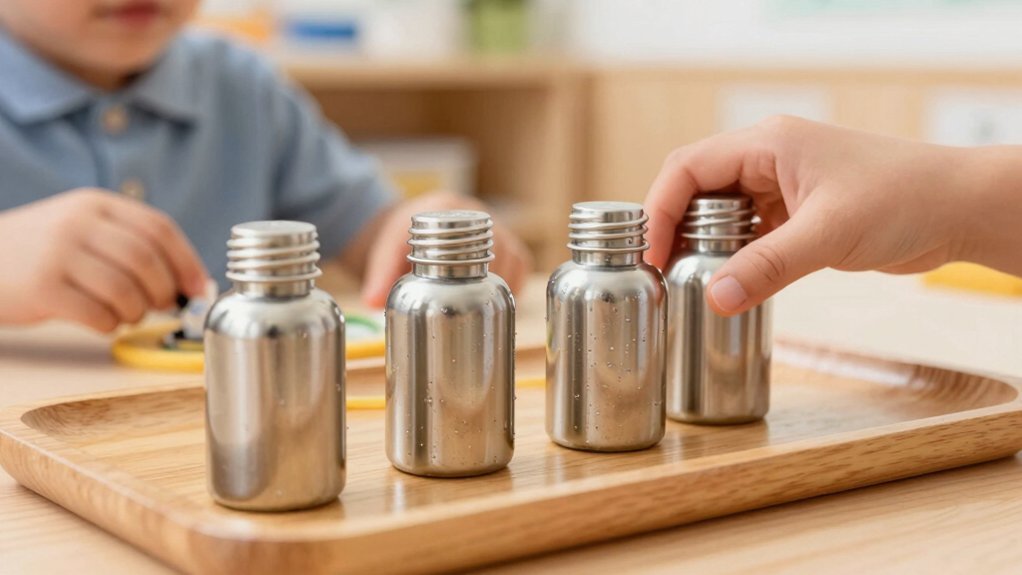
Thermic bottles are small glass containers filled with water at distinct temperatures—hot, warm, tepid, and cold—used in Montessori classrooms for sensory‑matching activities. You’ll notice each temperature appears as a paired set, so you can practice temperature discrimination by touching and comparing. The clear glass lets you see the level, while the varied warmth trains your light‑touch sensitivity and builds sensory memory. In this setting, you engage in sensory learning that sharpens your toddler fine motor skills as you grasp, lift, and match each bottle. The activity also introduces environmental temperature familiarity, reinforcing how heat and cold feel against your skin. By handling the bottles, you develop confidence in sensory play and lay a foundation for deeper cognitive and motor growth. This tactile experience complements activities like threading and beading, which similarly promote fine motor skills development through hands-on engagement.
Unpack and Arrange Thermic Bottles for the First Lesson
How do you set the stage for a tactile adventure? You begin by letting the child sensitize their fingers on varied textures, then you unpack the first set of thermic bottles from the box.
Lay the bottles on a soft mat, introducing the temperature contrast: warm and cold as extremes, tepid and warm as middle points. Arrange each temperature category in pairs, positioning them left‑to‑right for a clear matching activity.
Guide the child to hold one bottle with the dominant hand while the other hand searches for its partner, reinforcing the sensory learning loop. Keep the sequence steady until all bottles are matched, sharpening memory and tactile discrimination through deliberate temperature contrast exploration.
Using tools designed with Montessori safety features can enhance the overall sensory learning environment.
Guide Children Through Thermic Bottle Matching
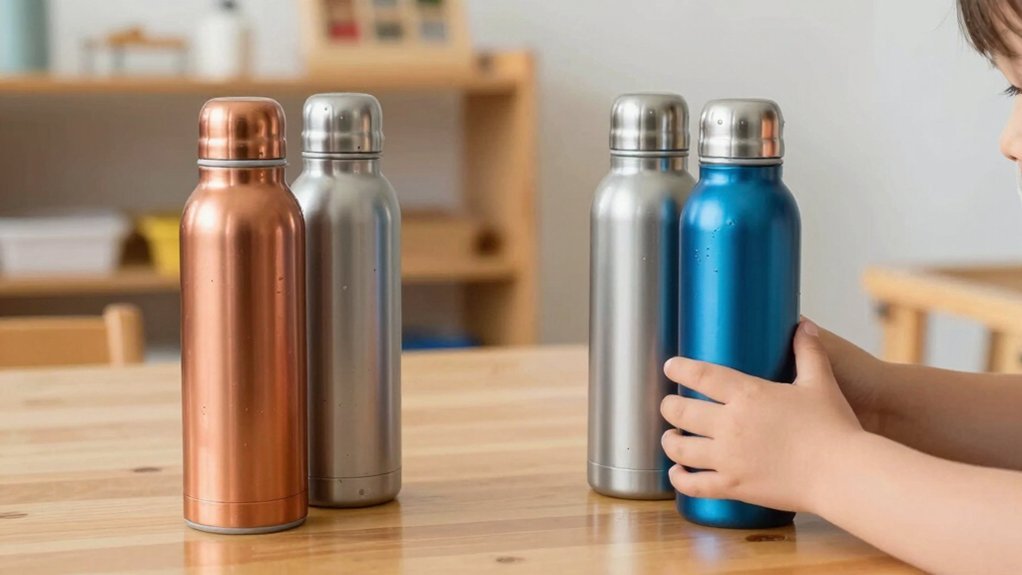
After the bottles are laid out in temperature pairs, invite the child to pick one with their dominant hand and feel its warmth while the other hand searches for its matching partner. You’ll guide them to keep the three‑finger grip, slide the bottle across the mat, and compare hot, warm, tepid, and cold sensations. This tactile exploration sharpens fine motor skills and deepens sensory learning.
- Confirm each match – let the child verify temperature discrimination by touching both bottles.
- Arrange the line – place the coolest pair on the left, the hottest on the right, and the middle pair between them.
- Switch roles – hand the turn to the child once the sequence is complete, reinforcing memory and confidence.
The matching activity builds confidence, encourages focused attention, and makes temperature discrimination a fun, repeatable game. Incorporating toys with fine motor skill development amplifies tactile engagement and supports coordinated hand movements.
Thermic Bottle Activity: Skills Children Develop
A child’s hands glide over the cool‑to‑warm gradient of the bottles, and each deliberate grip hones fine motor control while the brain registers subtle temperature shifts.
You’ll notice that thermic bottles become tools for sensory learning, sharpening temperature discrimination as kids feel hot, warm, tepid, and cold. The matching activity reinforces memory and concentration; you guide them to pair each bottle with its partner in a consistent sequence.
Their three‑finger grip and precise placement on a mat boost fine motor skills. As you raise the challenge—blindfolds, extra pairs, ordering from coolest to hottest—you deepen the thermic sense. Observing, reasoning, and re‑checking by feel turn play into focused cognitive practice.
Using tools with a compact design emphasis enhances the portability and ease of integrating sensory learning activities.
Frequently Asked Questions
What Is the Purpose of Thermic Bottles in Montessori?
You use thermic bottles to sharpen a child’s temperature discrimination, building tactile awareness, memory, and concentration as they explore hot, warm, cool, and cold sensations through safe, hands‑on matching.
What Is the Best Liquid to Use for a Sensory Bottle?
You should use clear water mixed with a splash of glycerin or baby oil; this thickened base slows motion, holds glitter or beads, and creates vivid, long‑lasting sensory swirls.
How to Use Sensory Bottles?
You fill the bottle, seal it tightly, then shake, tilt, or roll it to watch glitter swirl, listen to sounds, and explore textures, using the visual and auditory cues to focus, calm, and learn.
Are Sensory Bottles Good for ADHD?
Yes, sensory bottles work well for ADHD. You’ll find them calming, engaging, and self‑contained, letting you focus while manipulating the bottle. They reduce distractibility, support self‑regulation, and improve fine motor skills.