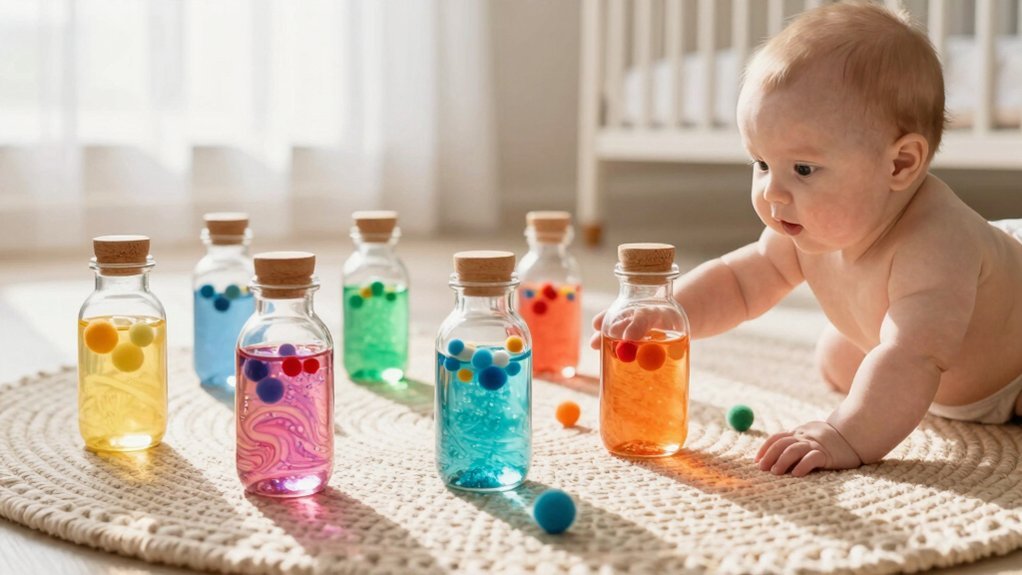
You’ll find sensory bottles are clear, sealable containers filled with glitter, beads, water, or oil that you shake or tilt to give your baby visual, auditory, and tactile cues. They spark focus, help self‑regulation, and teach cause‑and‑effect as the particles swirl and settle. High‑contrast colors and moving objects boost visual tracking, while grasping the bottle builds fine motor skills. If you keep exploring, you’ll discover how to pick age‑appropriate bottles, DIY safe recipes, and weave them into daily routines.
Define Sensory Bottles for Baby Development

Sensory bottles are clear, sealable containers filled with glitter, water, beads, or tiny objects that you shake or tilt to create swirling visuals and gentle sounds, delivering multisensory stimulation that helps babies focus, self‑regulate, and explore cause‑and‑effect.
Sensory bottles provide glittering visuals, soothing sounds, and tactile feedback, fostering babies’ focus, self‑regulation, and cause‑and‑effect learning.
When you hand a baby a bottle, the high‑contrast colors and moving particles grab attention, strengthening visual tracking and encouraging the child to follow motion with their eyes.
The act of shaking or tilting builds fine motor skills, as tiny hands grasp the bottle and coordinate movement.
Because the bottle offers visual, tactile, and auditory cues, it becomes a hub for multisensory play, supporting self‑regulation during overstimulating moments and fostering early baby development through cause‑and‑effect exploration.
Using tools like a Montessori step stool with safety features can also enhance exploration by allowing toddlers to safely reach and interact with sensory play materials.
Explain How Sensory Bottles Support Early Development
Curiosity sparks when a baby watches glitter swirl inside a clear bottle, turning a simple visual cue into a lesson in cause‑and‑effect. You’ll notice the infant’s eyes lock onto moving colors, sharpening visual tracking and eye coordination. Shaking the bottle builds fine motor skills as tiny hands grasp and release, while the cause and effect you observe fuels early development. Placing the bottle nearby during tummy time adds a high‑contrast focus that keeps the baby engaged and encourages reaching. Incorporating toys that promote fine motor skills development, like wooden arches and tunnels, can further enhance sensory learning and physical coordination.
| Benefit | How It Helps | When To Use |
|---|---|---|
| Visual tracking | Moves attract gaze | Any time |
| Fine motor skills | Grasp & shake | During play |
| Cause and effect | Swirl → settle | Throughout day |
| Tummy time aid | Focused stimulus | Daily routine |
Gather Essential Materials and Follow DIY Recipes

Wondering what you need to craft a safe, engaging sensory bottle? You’ll start with clear bottles, water, glycerin or baby oil, and eye‑catching fillers like glitter, beads, or foam shapes. Choose high‑contrast visuals for baby development and wrap caps with 2‑3 layers of tape to make calming objects truly safe. Follow these quick DIY recipes:
- Classic swirl – Fill ¾ full with water, add glycerin or oil, drop in glitter, seal tightly.
- Foamy bubbles – Mix water with dish soap, shake, add food coloring or glitter, then cap.
- Sound‑rich – Insert small metal items (paper clips, keys), seal, and test the gentle clink.
These materials let you create sensory play tools that spark curiosity, soothe, and support early development. For enhanced effectiveness, incorporating tools designed to develop fine motor skills can further support developmental milestones during sensory play.
Pick the Right Sensory Bottle for Your Child’s Age
After gathering the bottles and fillers, match the design to your child’s developmental stage. For infants, choose a clear bottle filled with water and a few high‑contrast visuals; keep it within arm’s reach during tummy time so they can focus on the simple colors and movement.
As they grow, swap in a bottle with richer textures—glitter, beads, or oil‑based fillers—so the contents swirl and create varied visual patterns. Let them practice shaking and tilting; the motor effort of grasping the bottle builds fine‑motor control while the slow drift of water sustains attention.
Start with brief sessions, then extend the time as their focus lengthens. Selecting the right bottle for each age maximizes sensory engagement and promotes developmental milestones. Integrating toys like Montessori color tablets can further support color perception and fine motor development alongside sensory bottles.
Add Sensory Bottles to Daily Routines Safely

How can you weave sensory bottles into everyday moments without risking spills or overstimulation? You can slip a sealed sensory bottle into short tummy‑time sessions, letting high‑contrast visuals capture your infant’s focus. Keep the cap tight and wrap it with two to three layers of clear tape for safety. Use the bottle as a calming bridge during storytime or bath, offering just a few minutes to nurture self‑regulation.
- Seal it tight – check the lid and tape before each use.
- Choose high‑contrast content – black‑and‑white or bold colors draw the eye.
- Limit exposure – a few minutes per routine prevents overstimulation.
For added safety during use, selecting items made from non-porous materials can reduce contamination risks and ensure easy cleaning.
Frequently Asked Questions
What Do Babies Learn From Sensory Bottles?
You’ll notice babies learn visual tracking, hand‑eye coordination, fine‑motor strength, cause‑and‑effect reasoning, and self‑regulation skills as they watch, shake, and explore the moving contents inside sensory bottles.
What to Put in a Sensory Bottle for a Baby?
Fill a clear bottle with water or oil, add glitter, tiny beads, high‑contrast beads, or colored foam, then seal tightly. Include a few floating objects for visual interest and gentle sound.
What Liquid Do You Put in a Sensory Bottle?
You’ll fill it with water mixed with a bit of glycerin or baby oil, plus a splash of food‑coloring or glitter if you like; this creates slow, mesmerizing motion for the baby’s eyes.
How Long Do Sensory Bottles Last?
You’ll find they last weeks to months, depending on how often you clean them and whether the caps stay sealed; with proper care, a sturdy bottle can endure countless play sessions.