Pick natural, non‑toxic textures like bark, pine cones, stones, and seasonal leaves, and add a subtle pine scent for calm. Use Montessori‑friendly tools—wooden coins, baskets, and water‑based paints—to keep play safe and hands‑on. Pair each item with a learning zone: math, science, or fine‑motor centers, and rotate them weekly to match the season and keep interest high. Inspect daily, store in labeled containers, and clean bi‑weekly; follow these steps and you’ll discover even more practical tips.
Select Natural Sensory Textures and Scents

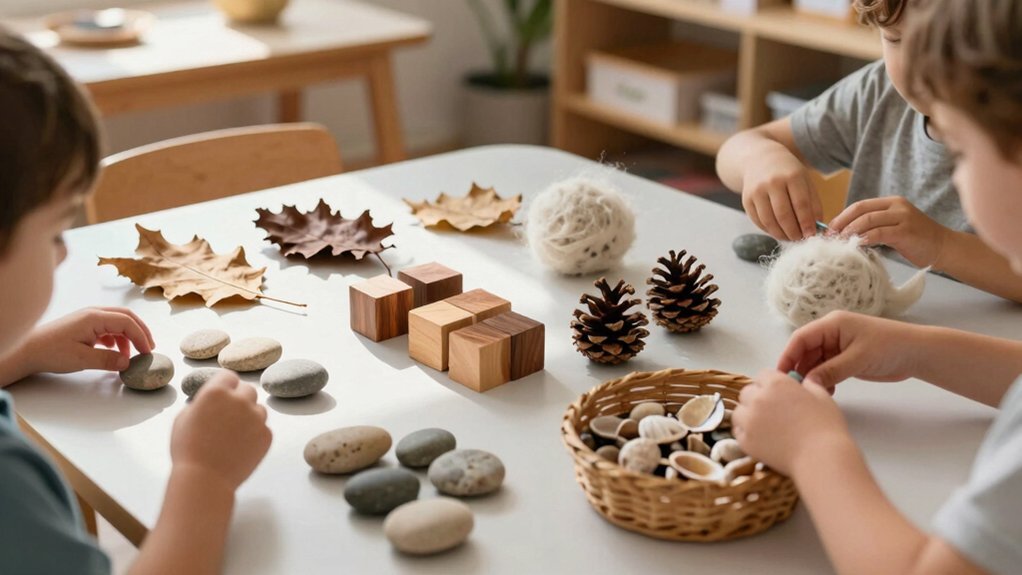
How can you turn a classroom into a sensory‑rich environment with just a few natural elements? Start by gathering natural textures like bark, stones, pine cones, and seasonal materials such as fall leaves or spring petals. Lay them out as sensory materials on tables, giving each child tactile options that invite exploration. The rough bark and smooth stones stimulate fine motor skills while the pine scent adds a subtle, calming aroma. Rotate the collection weekly to keep interest high, and label each item with a simple word or picture. Labeling reinforces language development and environmental literacy, letting kids connect the texture, scent, and name. This approach creates an engaging, multisensory space that supports both cognition and creativity. Incorporating Montessori-friendly tools like natural materials can further enhance children’s independent learning experiences.
Match Natural Sensory Materials to Learning Goals and Zones
After you’ve laid out the textures and scents, the next step is to align each natural element with a specific learning goal and place it in the appropriate classroom zone. In a nature‑inspired classroom, you’ll match pinecones, shells, and bark to math or science learning centers, then position them on a sensory table or in a dramatic‑play corner. Rotate items seasonally so leaves appear in fall and seashells in summer, keeping relevance high and assessment prompts fresh. Use tactile textures to sharpen fine motor skills and support curriculum objectives. Including sorting and stacking play with natural wooden coins can enhance fine motor development and color recognition skills in young learners.
- Learning goals → natural materials: pair items with targeted outcomes.
- Zones → sensory table / learning centers: locate materials where they reinforce the activity.
- Seasonal rotation → assessment prompts: swap items and update prompts to track progress.
Source Safe, Affordable Natural Sensory Supplies

Looking for safe, affordable natural sensory supplies? Choose natural sensory materials that are source safe and eco‑friendly, like wood blocks, pinecones, stones, and shells. Look for non‑toxic labels and avoid treated finishes; certifications confirm the items are allergy‑safe and meet child‑safety standards. Second‑hand baskets, crates, and vases keep costs down while providing sturdy, easy‑to‑clean containers. Opt for larger, manipulable pieces—pebbles, acorns, leaves—to reduce choking hazards and eliminate mystery powders. Verify that each item originates from plant or mineral sources with minimal processing, ensuring you’re offering genuine, affordable supplies that support sensory exploration without synthetic additives. This approach lets you stock a versatile, budget‑conscious sensory station that’s safe for every student. Montessori-inspired materials, such as natural wood with water-based paint, offer both safety and durability ideal for classroom use.
Care for and Rotate Natural Sensory Tools in Daily Lessons
Because sensory tools can wear out or become contaminated, you should inspect them each day, discarding cracked wood, splintered pieces, or anything moldy. A quick safety inspection keeps classroom learning safe and preserves texture variety for early childhood education. Store natural materials in labeled baskets so kids practice independent retrieval and tidy cleanup. Rotate items on a simple schedule to sustain curiosity and prevent overuse.
- Weekly rotation – swap pinecones, bark, shells, and rocks every seven days.
- Bi‑weekly deep clean – sanitize baskets and replace any worn pieces.
- Engagement tracking – note which textures spark the most interaction and adjust the rotation schedule accordingly.
Consistent maintenance, a rotation schedule, and engagement tracking ensure sensory tools stay fresh, safe, and educational. For classroom tasks involving water or small food items, using child-size strainers can help manage cleanups and keep activities organized.
Frequently Asked Questions
What Is the 70 30 Rule in Teaching?
You follow the 70/30 rule by spending roughly seventy percent of class time on teacher‑led, structured instruction and the remaining thirty percent on student‑directed, exploratory activities, balancing guidance and independence.
What Are 5 Examples of Natural Materials?
You can use pinecones, bark pieces, sticks, chestnuts, and shells. Those five natural items give tactile variety, spark curiosity, and let kids explore textures, shapes, and scents during sensory play.
What Are the 5 P’s of Classroom Behavior?
You’ll find the 5 P’s are Purpose, Preparation, Presence, Participation, and Progress—each guiding you to set clear goals, arrange materials, stay attentive, engage actively, and track improvement over time.
How to Make Classrooms More Sensory Friendly?
You’ll create sensory‑friendly classrooms by using muted, natural colors, soft lighting, low‑noise zones, tactile natural materials, calming scents, and flexible seating that lets kids move and explore comfortably.