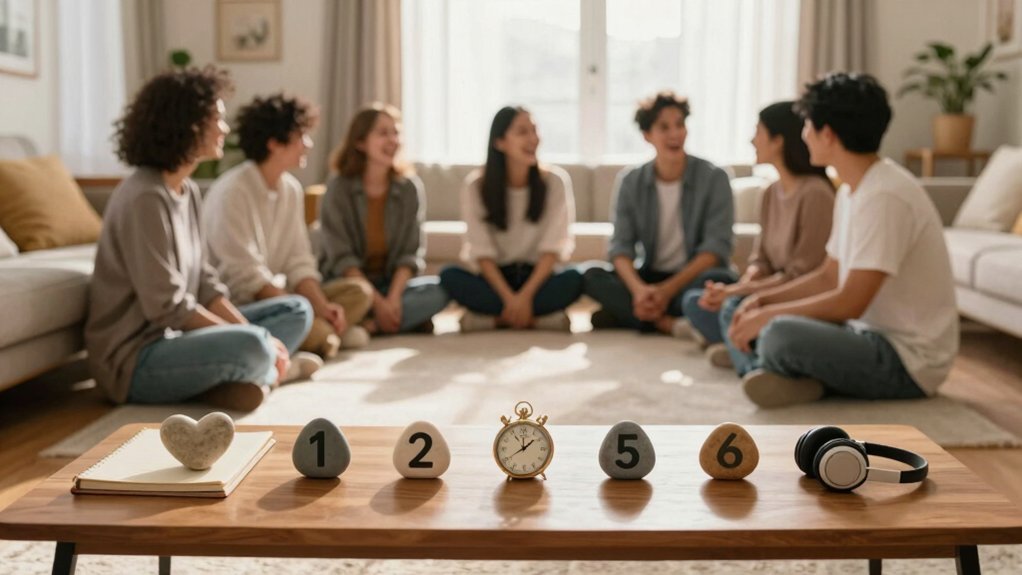

You can turn any room into a sensory‑rich learning hub by setting up low, open shelves with clear bins of tactile toys, soft lighting, and a calm corner for regulation. Keep furniture minimal and safe, rotate art supplies and sensory bins regularly, and add discreet tools like sensory bottles and visual schedules. Use balance boards or swings for vestibular input, and weave language prompts and counting into play. Keep going for deeper tips on nurturing curiosity and early literacy.
What Makes a Home Environment Stimulating for Kids?

What makes a home environment truly stimulating for kids? You create a sensory‑rich space where open space, textures, and sounds invite exploration. Arrange an open space with soft lighting and a calm corner, so children can shift between energetic play and quiet regulation.
Stock low shelves with sensory bins and tactile activities, keeping everything visible and reachable for independent learning. Rotate art materials, Play‑Doh, and fingerpaint to spark sensory integration and reinforce early literacy and math concepts.
Keep furniture minimal and safe, allowing free movement without clutter. By tweaking layout and adding discreet sensory tools, you nurture curiosity, creativity, and foundational cognitive skills—all while supporting self‑directed, stimulating play. Incorporating low step-in toy storage helps maintain organization while providing easy access for young children.
How to Build a Stimulating Home for Cognitive Growth
Why settle for a static living room when you can turn every corner into a cognitive playground? You’ll notice that arranging sensory bins and tactile tools within an open play area makes exploration effortless. Keep accessible materials on low shelves so kids can grab them during self‑regulated,. Establish routines with visual schedules and calming environment lighting, then schedule short sensory breaks to reset focus. Personalize the space with favorite colors and textures to boost engagement and reinforce home learning.
- Use clear bins for themed sensory play (water, sand, beads).
- Designate a calming environment corner with soft lighting and a cozy rug.
- Place tactile tools (foam blocks, textured boards) at child‑height.
- Implement visual routines and scheduled sensory breaks for self‑regulation.
Incorporating large beads in sensory bins can support fine motor skill development while ensuring safety for toddlers.
Sensory‑Rich Activities That Boost Brain Development

A well‑chosen sensory activity can spark neural pathways while keeping the experience fun and low‑maintenance. You can set up a sensory bin with rice, beans, or kinetic sand to engage tactile processing and fine motor skills, then add textured books or word cards for early learning. Pair movement‑based play—like a balance board or swing—with vestibular input and proprioception to create a calm environment that regulates attention. Keep materials easy to clean so home‑based play stays sustainable, and rotate items to keep the brain development experience fresh and challenging. Sensory tools such as calming sensory bottles can further support emotional regulation and mindfulness in sensory-rich learning environments.
| Activity | Primary Benefit |
|---|---|
| Sensory bins with varied textures | Tactile processing, fine motor skills |
| Balance board or swing | Vestibular input, proprioception |
| Textured books & word cards | Early learning, brain development |
How to Encourage Curiosity and Early Literacy Through Play?
Ever wonder how a simple game can turn a child’s curiosity into early literacy skills? You can weave sensory play into everyday home learning, turning a calm learning space into a hub of non‑screen exploration. Offer sensory bins filled with textured objects and invite your child to describe what they feel, fostering language development and curiosity. Rotate the play environment regularly, and keep a small library nearby for reading aloud sessions that reinforce early literacy. Ask open‑ended questions about their choices, and weave counting games into interactive play to link math and reading. Incorporating role play costume sets enhances imaginative play and supports language as children enact different characters.
Frequently Asked Questions
How Can I Involve Grandparents in Sensory Learning Activities?
Invite grandparents to co‑create scent‑stations, texture bins, and music playlists; let them share stories while kids explore smells, fabrics, and rhythms, turning each activity into a collaborative, multi‑sensory adventure.
What Budget‑Friendly Sensory Materials Can I DIY at Home?
You can DIY budget‑friendly sensory materials by repurposing rice, pasta, dried beans, shredded paper, scented oils, colored water, and homemade playdough using flour, salt, water, and food coloring.
How Do I Adapt Sensory Play for Children With Sensory Processing Challenges?
You’ll tailor sensory play by first observing each child’s triggers, then offering low‑intensity, adjustable activities—like soft textures, muted sounds, or gentle lights—while providing clear choices and gradual exposure.
Can Outdoor Garden Elements Be Integrated Into Indoor Sensory Stations?
Yes, you can blend garden elements indoors by placing potted herbs, textured stones, and scent‑filled burlap bags on sensory tables, letting kids explore smells, textures, and natural colors while staying inside.
What Signs Indicate a Child Is Overwhelmed by Sensory Input?
You’ll notice they’re covering eyes, clenching fists, or withdrawing from activities; they might whine, become irritable, or show rapid breathing. These signs tell you the sensory input’s overwhelming them.