
Create a kid‑sized, prepared work area with low shelves, petite tables, and child‑friendly tools so the child feels safe and can reach everything. Offer practical‑life tasks like pouring water, polishing a tray, washing the table, or sweeping with lightweight brooms, using child‑sized, non‑toxic equipment. Give three simple choices—snack, mat, or storybook—to nurture decision‑making. Observe quietly, stepping in only for safety or to model a skill, and you’ll discover more ways to spark independence.
Set Up a Kid‑Sized Work Area for Montessori Independence
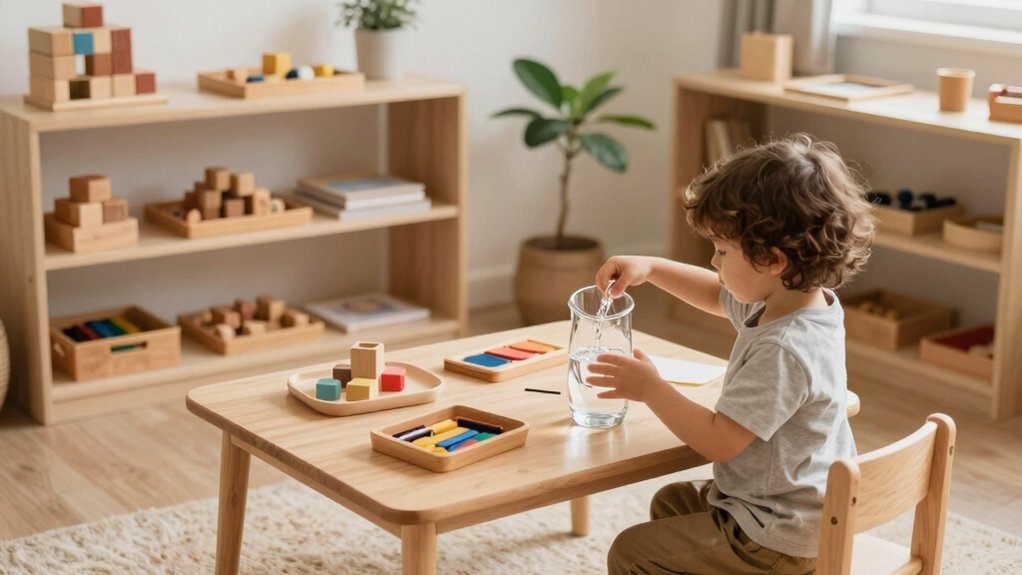
How can you turn a corner of your home into a space where a child truly leads their own learning? First, create a prepared environment that feels inviting and safe. Choose low shelves, petite tables, and child-sized chairs so the kid‑sized work area matches the child’s reach.
Arrange Montessori materials—practical life tools, sensorial objects, language sets—within easy sight but not cluttered. Keep the layout child‑centered, allowing freedom within boundaries for the child to select tasks that spark interest.
This design nurtures self‑directed learning, fostering independence and autonomy. By scaling everything to their size, you support early childhood education goals, encouraging concentration, repetition, and a sense of ownership over each activity. Including child-friendly tools like a Montessori step stool(Group 4: Kitchen Step Stool for Kids with Safety Rail) can further empower children to explore their environment confidently.
Select Independence‑Building Practical Life Tasks
Choosing practical‑life tasks that promote independence is the first step toward giving your child real agency in daily routines. In a Montessori prepared environment, you’ll find child‑sized tools that let them practice self‑care and organization while nurturing autonomy. By breaking each activity into clear steps, you give them freedom within boundaries, encouraging self‑directed decision‑making and confidence.
Choosing practical‑life tasks fosters independence, autonomy, and confidence through clear, child‑sized steps.
- Pouring water from a small pitcher into a cup
- Polishing a metal tray with a soft cloth
- Washing and setting the table after a meal
- Sweeping the floor using a lightweight broom
These practical life tasks let your child experience mastery, develop impulse control, and build independence through everyday participation. Using child-safe tools designed with ergonomic handles and non-toxic materials supports safe and confident involvement.
Give Children 3 Simple Choices to Boost Decision‑Making
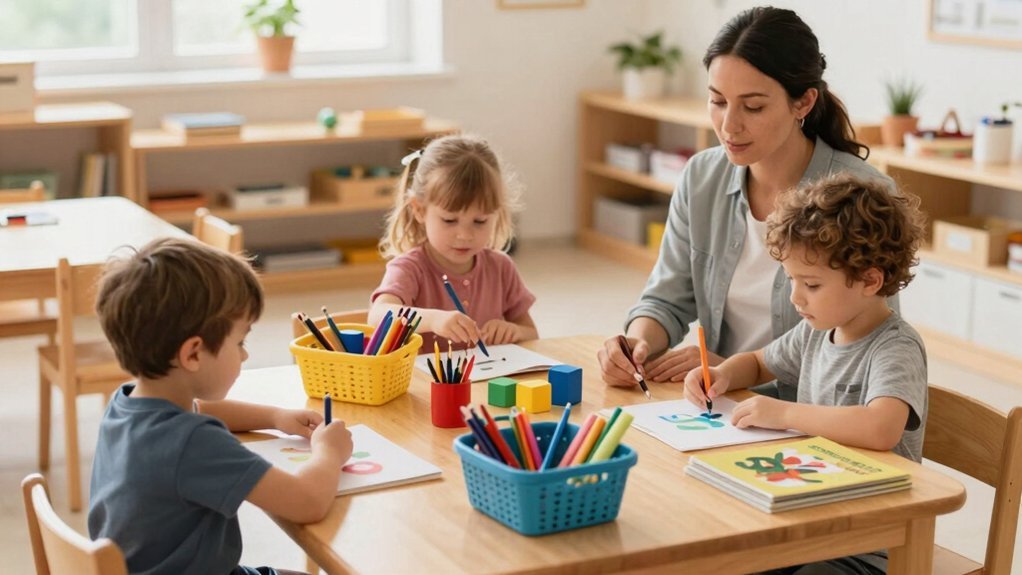
Ever wondered how a few well‑chosen options can turn everyday moments into confidence‑building lessons? In a Montessori prepared environment, you can give a child three simple choices—like picking a snack, selecting a work mat, or choosing a storybook. These limited options keep decision‑making manageable while promoting autonomy. Because the choices are clear and safe, the child engages in child‑led exploration within defined boundaries, reinforcing independence and self‑regulation. You’ll notice self‑driven learners testing ideas, comparing outcomes, and developing a sense of responsibility. By consistently offering three well‑defined choices, you balance guidance with freedom, helping the child build deliberate, responsible decision‑making skills that transfer to all areas of life.
Watch, Don’t Direct: Keep Kids’ Independence Spark Alive
Ever notice how a child’s eyes light up when you simply watch rather than intervene? You’re honoring independence and letting self‑directed learning flourish. By stepping back, you become an adult as guide, offering freedom within limits while the prepared environment invites child autonomy. Practical life tasks—pouring, polishing, table washing—become arenas for intrinsic motivation and self‑regulation, reinforcing Montessori principles without overt direction.
- Observe before you act, noting the child’s focus.
- Offer choices that align with the prepared environment.
- Intervene only to ensure safety or to model a skill.
- Celebrate the child’s problem‑solving as evidence of growing self‑directed learning.
Using child-safe tools like mini tongs for fine motor development within practical activities further supports autonomy and skill-building.
Frequently Asked Questions
How Can I Adapt Montessori Tools for Children With Physical Disabilities?
You can modify Montessori tools by adding adaptive grips, height‑adjustable tables, and tactile markers; replace heavy items with lightweight versions, use visual cues, and ensure materials are within easy reach for each child.
What Age Range Benefits Most From Practical‑Life Tasks?
You’ll see the biggest gains between ages three and eight, when children naturally crave independence, develop fine‑motor skills, and can grasp the purposeful routines that practical‑life tasks provide.
How Often Should I Rotate Materials to Maintain Engagement?
You should rotate materials every two to three weeks, mixing familiar items with fresh ones, so kids stay curious, avoid boredom, and keep exploring new challenges without feeling overwhelmed.
Can Digital Devices Be Incorporated Without Compromising Independence?
You can integrate digital devices, but keep them as tools, not crutches. Choose apps that guide exploration, set clear time limits, and let you decide when to switch off, preserving your autonomy.
What Signs Indicate a Child Is Ready for More Complex Choices?
You’ll notice they’re asking “why, showing patience, and handling simple tasks independently; they’ll linger on projects, express preferences clearly, and negotiate rules, indicating they’re ready for more complex choices.