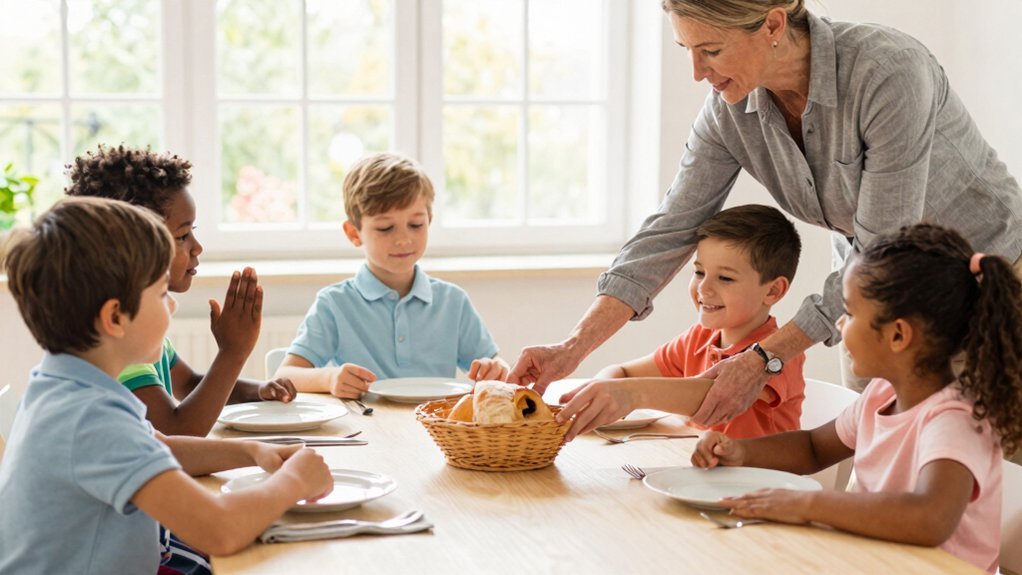
Grace lessons are everyday, Montessori‑inspired moments that teach you how to act politely—like entering a room quietly, using “please” and “thank you,” and showing respect through role‑play and modeling. You’ll turn simple actions into habits, build social skills, and create a calm classroom atmosphere. Consistent cues at school and home make manners feel natural, and positive reinforcement keeps you proud of your choices. Keep going to discover how to weave these practices into daily routines.
How to Explain Grace Lessons and Their Importance for Manners
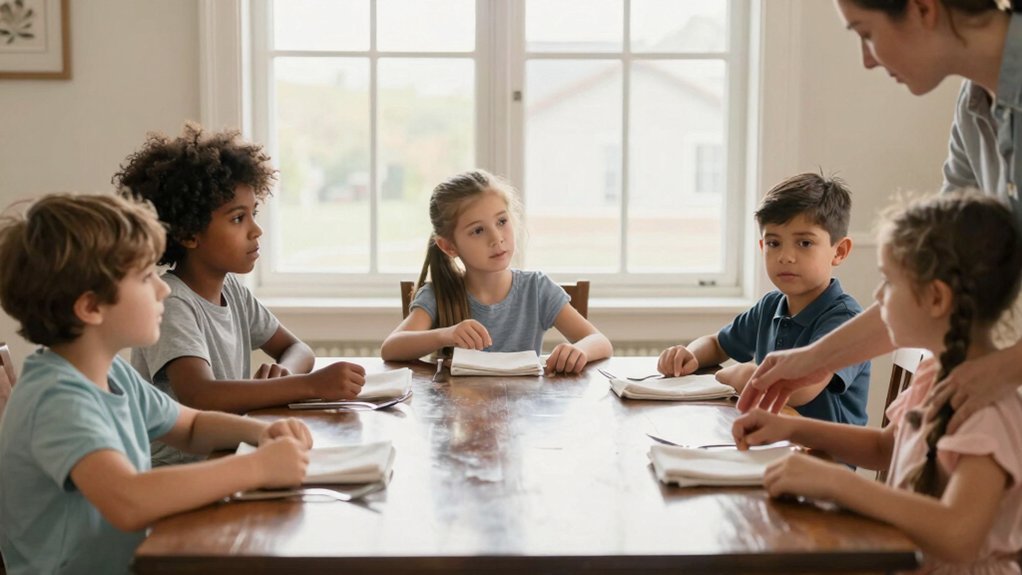
How can you make manners feel natural rather than forced? You start by explaining grace lessons as everyday practice, not a checklist. In Montessori, you show children calm behavior and respectful interactions through role‑playing and teacher modeling. Emphasize that these lessons build social skills and self‑discipline, turning simple acts—like entering a room quietly or asking permission—into habits. Use skits and classroom etiquette demonstrations, then discuss what each polite action signals. Reinforce success with positive reinforcement, so kids feel proud of their choices. Finally, stress home–school alignment: parents echo the same expectations, offering consistent cues and family‑specific etiquette. This coherence lets children internalize manners, making them effortless and genuine. Incorporating Montessori tools such as the Kitchen Step Stool for Kids with Safety Rail can further promote independence and respectful behavior during daily routines.
Daily Grace Lessons for Everyday Manners (Including Table‑Manner Practice)
Ever wonder how a simple snack break can become a powerful lesson in respect and self‑discipline? You can turn that moment into a grace lesson that weaves manners into daily routines. In a Montessori classroom, you model courteous behavior while children wash hands, sit properly, and pass plates. Quick, specific feedback—like praising the chef or noting a helpful action—reinforces practical life skills and builds home–school alignment.
A snack break becomes a graceful lesson, modeling courtesy, reinforcing manners, and uniting home and school.
- Encourage eye contact and a warm greeting before sharing food.
- Guide children to use “please” and “thank you” when serving themselves.
- Prompt reflection on how polite table manners support a calm, cooperative environment.
These steps embed grace lessons into everyday life, shaping lasting courtesy. Integrating age-appropriate considerations ensures that these manners lessons are accessible and safe for toddlers and early elementary children.
Reinforcing Grace Lessons at Home to Build Long‑Term Courtesy
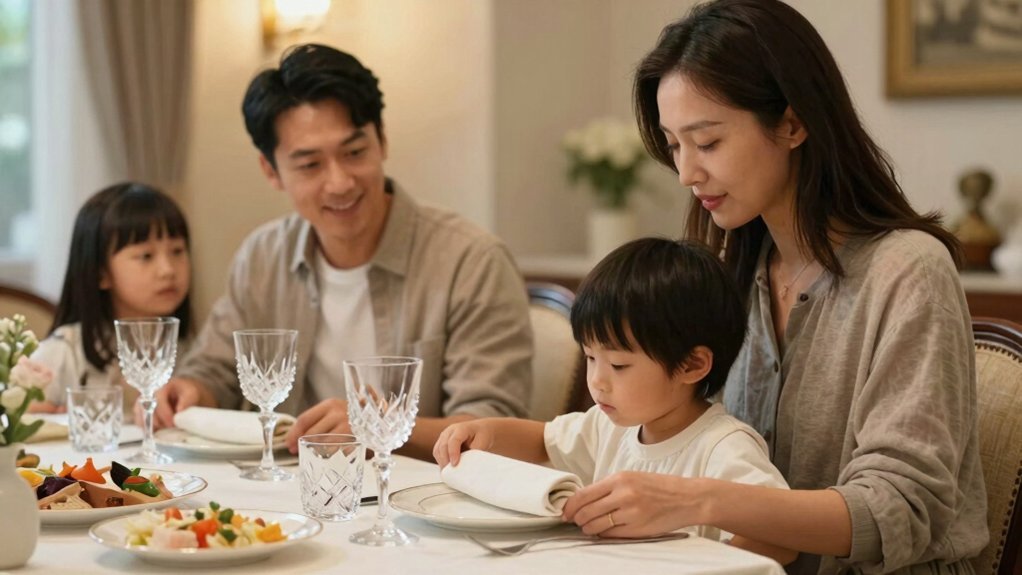
By weaving the same courteous routines you model at school into everyday home moments—like greeting visitors with a smile, saying “please” and “thank you,” or holding a door—you reinforce grace lessons and turn polite behavior into lasting habits.
At dinner, invite kids to practice saying please and thank you while passing dishes, and pause to acknowledge efforts when they hold the door for a sibling.
Use Montessori philosophy to set up role‑play stations where children rehearse social skills and kindness and manners.
Read a short story about sharing, then discuss how the characters showed grace and courtesy.
Consistent home reinforcement builds a bridge between classroom instruction and real‑world etiquette, ensuring children internalize respectful habits for life.
Frequently Asked Questions
What Are the 5 Points About Good Manners?
You practice greetings, listen attentively, use polite language, respect personal space, and express gratitude. These five habits build courtesy, foster respect, and make interactions smoother for everyone involved.
How to Teach Manners in a Fun Way?
You’ll turn manners into games by role‑playing polite scenarios, using fun skits, rewarding good behavior with specific praise, and embedding practice in daily routines like snack time and clean‑up.
What Are the Lessons of Grace and Courtesy?
You learn to enter rooms quietly, ask permission before joining, hold doors, say please and thank you, decline invitations gracefully, and model respectful behavior through daily routines, role‑playing, and consistent feedback.
What Are 5 Basic Etiquettes?
You practice entering rooms quietly, asking permission before joining, offering sincere apologies, using proper table manners, and showing gratitude. These five basics shape courteous, respectful behavior every day.