
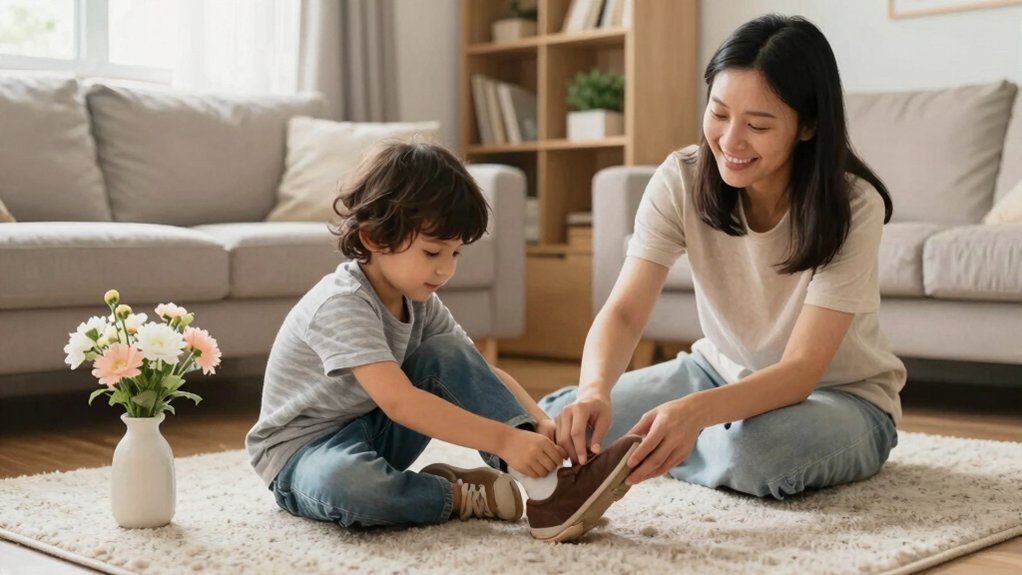
When you weave grace and courtesy into daily routines, you instantly create a calmer, more cooperative home where respect feels natural instead of occasional. Smiles, “please,” and “thank you” set a positive tone, while pausing before interrupting models polite communication. Narrating actions and using shared rituals build confidence, empathy, and self‑regulation. Consistent praise reinforces these habits, turning chores into teachable moments and fostering a peaceful family culture. Keep exploring to discover how these practices shape lasting social‑emotional growth.
Build a Calm Home Routine With Grace and Courtesy
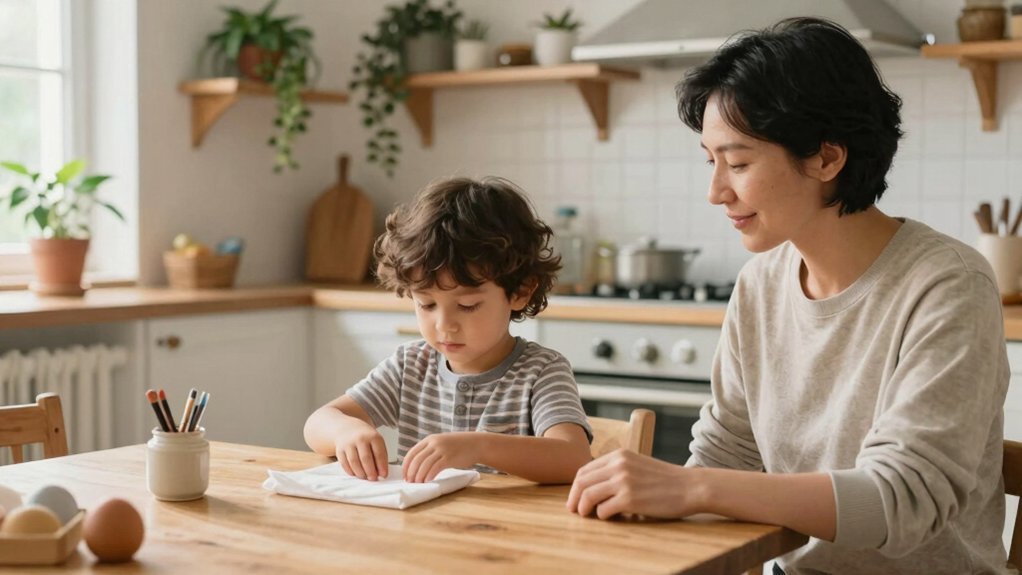
How can you turn everyday moments into a calm, predictable home where grace and courtesy thrive? Start by weaving graceful greetings into each morning routine; a simple “good morning” followed by a smile sets the tone. Pair that with courteous habits like asking, “May I help?” before you begin chores. Role‑play common scenarios—please, thank you, apologies—so children have scripts to imitate.
Keep your modeling consistent and calm; when you stay composed, kids mirror that steadiness.
Choose books about kindness and pause to acknowledge polite actions, reinforcing empathy. Integrating self-regulation tools such as breathing exercise cards during moments of tension helps children develop emotional control and maintain calm.
Model Respect for Self and Others at Home
When you model respect at home, you give children a living example of self‑care and courtesy that they can copy in everyday moments. You say “Excuse me, I’m going to walk past you” calmly, showing Grace and Self‑ respect in action. By setting boundaries and saying no when needed, you teach them that their feelings matter and that mistakes are okay. Your quiet confidence invites them to express themselves without fear, reinforcing their agency. Consistent, polite routines turn simple chores into real‑life lessons, so children imitate your courteous tone and gestures. This seamless alignment with school expectations creates a coherent environment where Self‑respect and graceful interaction become natural habits. Using Montessori tools like step stools with safety rails encourages independence while teaching respect and responsibility in everyday tasks.
Turn Everyday Household Tasks Into Graceful Practice

Modeling respect at home naturally leads to turning routine chores into graceful practice. When you narrate actions calmly—“I’m going to set the table now”—you embed grace and courtesy into everyday household tasks, shaping social development for your kids. Invite participation with gentle offers, like “You may help me fold towels if you’d like,” instead of issuing commands. After each task, use reflective phrases such as “Thank you for your help” to reinforce positive interaction. Pair routines with brief demonstrations of requesting turns, offering assistance, or apologizing, turning simple chores into teachable moments.
- Speak aloud the purpose of each task.
- Offer help as an invitation, not an order.
- End with appreciative or corrective feedback.
Grace and Courtesy: Use Narrative Language for Polite Family Talk
You can turn everyday conversations into a gentle narrative, sprinkling phrases like “Excuse me” and “I’ll pick that up” to model courtesy. By weaving polite storytelling techniques into routine dialogue, you give children a clear script for respectful interaction. This simple, consistent approach makes good manners a natural part of family life. Incorporating activities that develop fine motor skills and hand-eye coordination can further support children’s overall growth and social engagement.
Narrative Family Dialogue
How can you turn everyday moments into gentle lessons? You can weave grace and courtesy into your home by narrating actions like a story. When you say, “Excuse me, I’m walking past you,” you model polite language that mirrors the Montessori philosophy. Your children hear calm, clear phrases and learn to repeat them, turning routine greetings and help‑offering into narrative family dialogue that reinforces social norms.
- Describe actions aloud before they happen, creating a script children can follow.
- Use gentle commentary to acknowledge effort, such as “I notice you’re waiting patiently.”
- Connect home narratives to classroom expectations, ensuring consistency across settings.
This approach aligns with Montessori’s emphasis on independent discovery and self-direction by encouraging children to internalize social language patterns naturally.
Polite Storytelling Techniques
When you turn routine actions into short, vivid scenes, you give children a script for polite interaction. Polite storytelling lets you weave everyday moments—like sharing a snack or cleaning up—into narratives that model grace and courtesy. You might say, “Let’s take turns speaking so everyone is heard,” then pause for a brief discussion, linking the line to a real‑life family routine.
Highlight practical acts such as saying “please” and “thank you,” and acknowledge each child’s effort, reinforcing social‑emotional development. Choose kindness‑themed books, read aloud, and ask how the characters’ choices echo your home’s expectations. Consistent use of this technique extends the Montessori goal of peaceful, respectful classrooms into everyday family life, shaping courteous habits that last. Introducing simple tools like child-safe scissors during craft time can also reinforce gentle handling and sharing principles in a hands-on way.
Praise, Consistency, and Real‑World Feedback for Graceful Behaviors

While praise reinforces graceful behaviors, offering a quick “thank you” or “good job” after a polite greeting or a helping hand makes the action more likely to repeat. You’ll notice that simple, concrete phrases—“Excuse me,” “May I help you?”—signal the exact behavior you value. Pair that with consistency at home and at school, and children internalize the norm, repeating courteous acts without prompting. Real‑world feedback, like naming the specific act you observed, connects the behavior to positive social outcomes, strengthening self‑control and cooperation.
- Immediate praise – acknowledge the act within seconds.
- Steady expectations – apply the same standards across settings.
- Specific feedback – name the courteous behavior you saw.
Cultivate Confidence, Empathy, and a Peaceful Family Culture
You’ll notice your child’s self‑esteem rise as they master polite greetings and simple gestures of help.
By modeling kindness every day, you teach empathy that ripples through every interaction.
Shared rituals like saying “please” and “thank you” weave a calm, harmonious rhythm into your family life.
Incorporating Montessori-aligned activities can reinforce these lessons through hands-on learning and consistent practice.
Self‑Esteem Boost
Ever wonder how a few simple gestures can lift a child’s confidence? When you model Grace and Courtesy, you give your child concrete tools that turn everyday interactions into confidence‑building victories. These habits create a steady stream of positive feedback, reinforcing Self‑esteem and encouraging authentic self‑expression. A calm, respectful home environment lets them practice saying no, admitting mistakes, and offering help without fear. The result is a child who feels competent, empathetic, and ready to contribute.
- Teach greeting rituals that signal respect and invite connection.
- Practice turn‑taking games that nurture empathy and patience.
- Offer specific praise for independent tasks, cementing self‑trust.
Kindness Modeling Everyday
How can a single daily habit transform your family’s atmosphere? When you model kindness modeling, you turn ordinary moments into home life rituals that teach grace and courtesy. You greet each other with a smile, say “please” and “thank you,” and pause before interrupting. By narrating your actions—“Excuse me, I’m walking by”—you show children how to communicate respectfully. Consistent, calm demonstrations build their confidence, empathy, and self‑regulation. Positive reinforcement, like praising a sibling for sharing, reinforces a sense of belonging and responsibility. These simple, repeated gestures align the household with school expectations, creating a peaceful, cooperative culture where every member feels valued and heard.
Harmony Through Shared Rituals
When you turn everyday greetings into a shared ritual—like a warm “good morning” or a quick “please” before passing a snack—the whole family gains a predictable rhythm that boosts confidence and eases communication. These moments of grace and courtesy become the backbone of social‑emotional development, teaching kids that respect is a habit, not a one‑off act. By consistently modeling calm language and turn turns, you lower tension and nurture a peaceful culture where each member feels heard and valued. Acknowledging effort with praise reinforces the habit, encouraging prosocial contributions throughout the day.
- Morning greeting circle – sets a calm tone and builds confidence.
- Polite request routine – practices empathy and shared rituals.
- Evening reflection – reinforces grace and courtesy, deepening social‑emotional growth.
Frequently Asked Questions
Why Is Grace and Courtesy Important?
You need grace and courtesy because they teach you to listen, respect, and respond kindly, building trust and harmony at home while reducing conflicts and fostering lasting, positive relationships with family.
What Is the Importance of Grace and Courtesy Lessons in Montessori?
You’ll see children develop respect, empathy, and cooperation when you teach grace and courtesy; they’ll practice polite greetings, helpful gestures, and attentive listening, building confidence and harmonious relationships at home and beyond.
How Can You Incorporate Grace and Courtesy Lessons Into Daily Interactions?
You model greetings, help each other, listen fully, wait turns, and thank often; narrate your actions, invite cooperation, and mirror classroom routines, turning every moment into a graceful, courteous practice.
What Does Grace and Courtesy Mean?
Grace and courtesy mean you treat others politely, listen respectfully, say “please” and “thank you,” offer help, wait your turn, and show empathy, creating calm, considerate interactions at home.