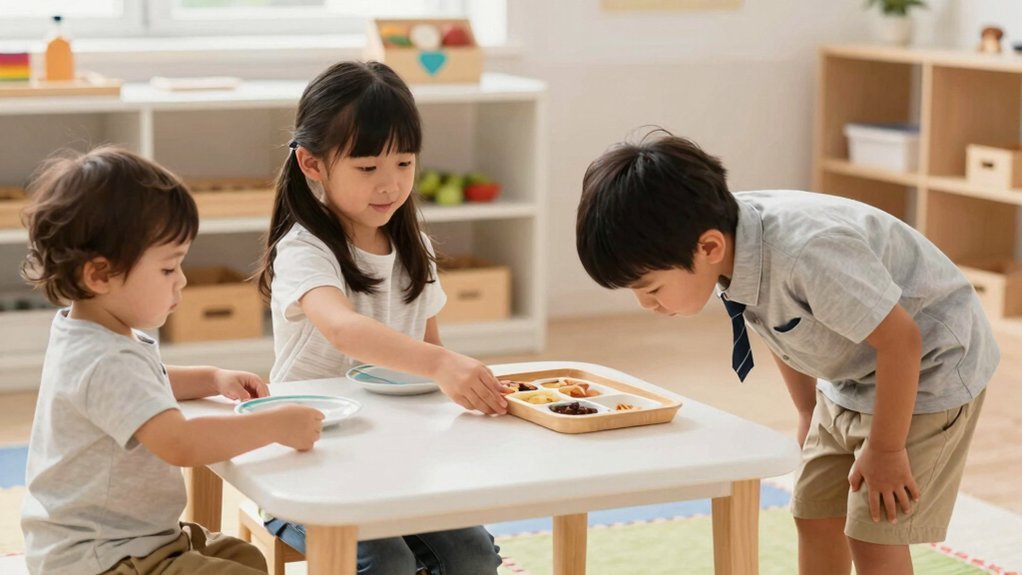
At 2‑3, let your toddler gently move a chair and say, “I’m moving the chair quietly,” then model soft hand‑washing with “Please turn the tap softly.” At 4‑5, weave “please” and “thank you” into snack time, use visual cues for quiet walking and gentle page‑turning, and role‑play sharing and turn‑taking. At 6‑7, create a welcome‑circle where kids greet peers, serve visitors, and reflect on why polite actions matter—continue for more ideas.
Our Recommended Product on Amazon

As an Amazon Associate we earn from qualifying purchases.
Playful Ways to Teach Toddlers Grace (Ages 2‑3)

Ever wondered how a simple “please” can become a toddler’s habit? You can weave grace and courtesy into everyday routines for toddlers age 2‑3 by modeling behavior during practical life tasks. In a Montessori‑style kitchen, quietly move a chair and say, “I’m moving the chair quietly,” then invite your child to help. Use gentle instruction when washing hands: “Please turn the tap softly.” Consistently demonstrate “thank you” after a snack, and redirect a noisy outburst with a calm, “Let’s whisper together.” By embedding polite phrases in mealtimes, tidy‑up, and play, you nurture social skills without forced correction. Simple, repeated moments shape lasting courtesy. Using child-safe tools like silicone mini tongs helps toddlers develop fine motor skills while practicing grace and precision.
Fun Courtesy Lessons for Preschoolers (Ages 4‑5)
How can you turn everyday moments into lively courtesy lessons for 4‑ and‑5‑year‑olds? You can weave Grace and Courtesy into snack time, clean‑up, and transition s. Show preschoolers (ages 4‑5) how to greet peers, say please and thank you, and invite friends to join activities. Use visual cues and social stories to model quiet walking, gentle page‑turning, and soft voices, reinforcing manners that sustain classroom harmony. Integrate Practical Life tasks—serving snacks, arranging materials—so children practice independence while learning social skills. Role‑play sharing, turn‑taking, and apologizing, then guide them to imitate the responses. These short, daily drills create positive interactions, build confidence, and turn routine moments into fun courtesy lessons. Incorporating Montessori-inspired features in classroom setups can further enhance children’s engagement and development of social skills.
Engaging Social Projects for Early Primary Kids (Ages 6‑7)
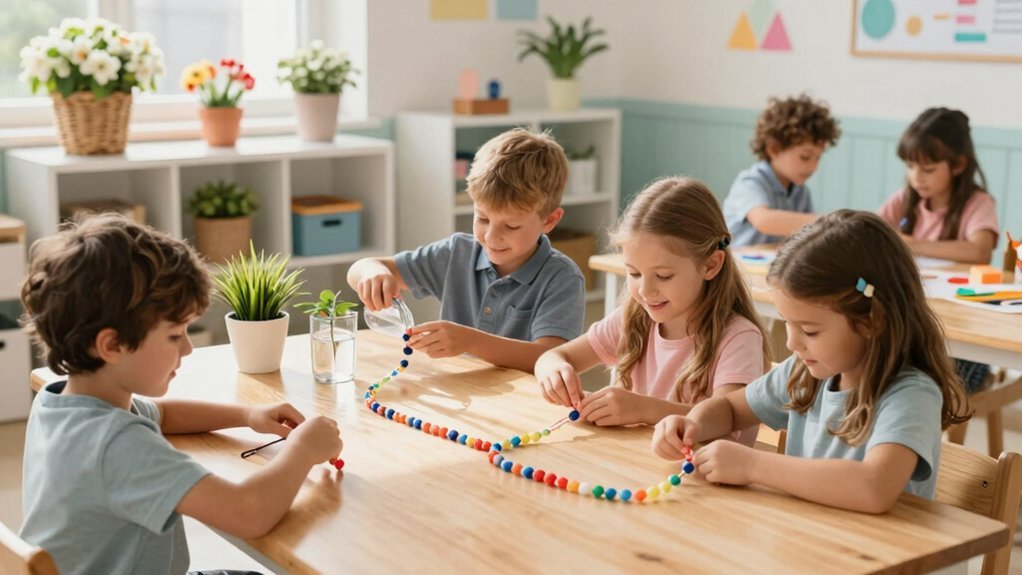
Why not turn everyday classroom moments into collaborative projects that let 6‑ and 7‑year‑olds practice grace and courtesy on their own? In a Montessori classroom you can co‑create classroom agreements that define collaborative norms, then let the kids enforce them.
Start with introductions: each child greets a peer, explains why polite greetings matter, and models turn‑taking during a “welcome circle.”
Next, design a visitor‑welcome project where early primary students greet guests, offer refreshments, and gracefully decline extra help.
Use visual reminders for social skills and ask students to reflect on the “why” behind each action.
Finally, extend the work home with permission‑asking charts and conflict‑resolution role‑plays, reinforcing courtesy beyond school walls.
Including practical tasks like safe vegetable peeling with Montessori kitchen tools can foster independence and responsibility in young learners.
Frequently Asked Questions
How Can I Adapt Activities for Children With Sensory Sensitivities?
You can simplify activities, lower noise, use soft lighting, offer tactile alternatives, give clear step‑by‑step instructions, and allow breaks. Provide sensory‑friendly materials, keep routines predictable, and let them choose comfortable participation levels.
What Signs Indicate a Child Is Ready for More Advanced Courtesy Lessons?
You’ll notice they’re listening longer, asking polite questions, handling small conflicts calmly, and showing genuine interest in others’ feelings—these signals mean they’re ready for more advanced courtesy lessons.
Can These Activities Be Integrated Into Remote or Hybrid Learning?
You can blend them into remote or hybrid classes by assigning interactive video demos, virtual role‑plays, and digital etiquette quizzes, letting students practice, share feedback, and track progress together online.
How Do I Measure Progress in Empathy and Social Awareness?
You measure empathy and social awareness by tracking changes in your listening, perspective‑taking, and supportive actions; use self‑reflections, peer feedback, and observable behavior checklists to quantify growth over time.
What Resources Support Parents in Reinforcing Grace at Home?
You can use books like “The Whole-Brain Child,” apps such as Calm Kids, role‑play scenarios, daily gratitude journals, and community workshops, plus consistent praise when you model courteous behavior.