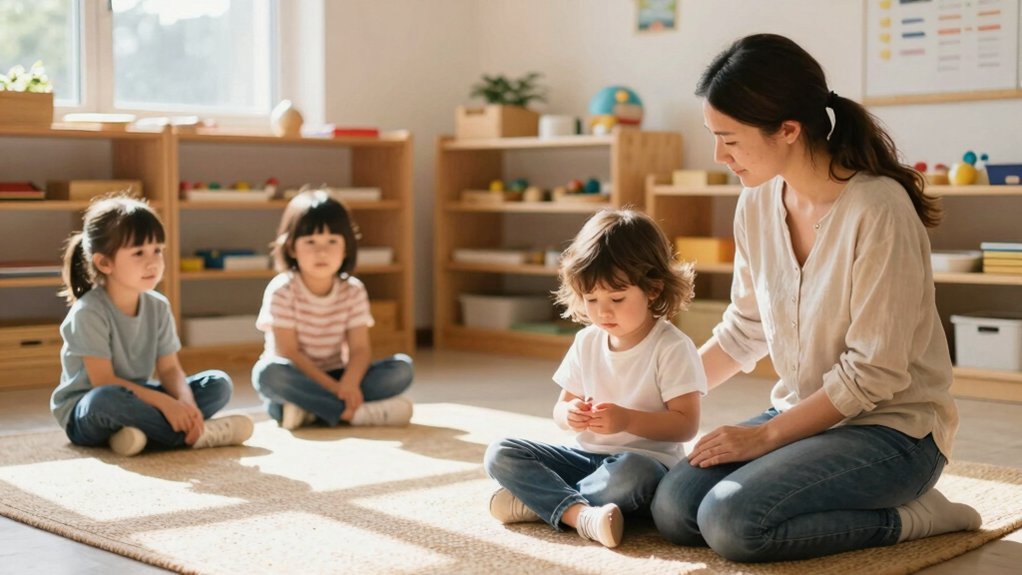
You can boost your shy Montessori child’s confidence with brief Grace and Courtesy lessons that model polite phrases, gentle eye contact, and simple turn‑taking cues. Keep demonstrations short (1‑3 minutes) and use I‑language like “Would you like to join us?” to invite participation without spotlight. Embed these cues into daily routines—greeting circles, hand‑raising signals, and “ask for help” prompts—so the child feels belonging and self‑advocacy. Continue to explore deeper strategies and troubleshooting tips.
What Is Grace and Courtesy for Shy Montessori Children?
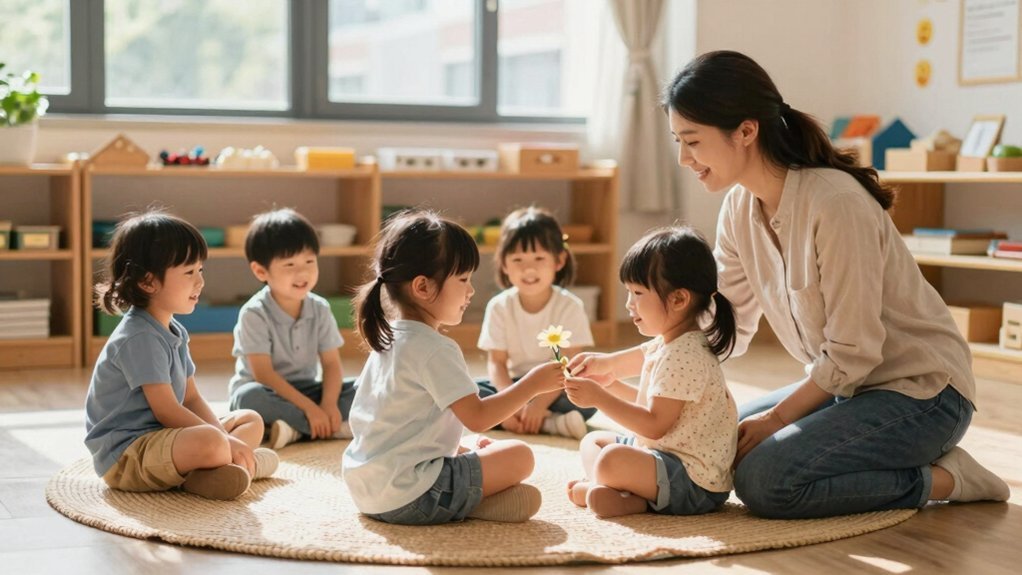
Why does grace and courtesy matter for shy Montessori children? You’ll see that Grace and Courtesy provides calm, brief demonstrations—usually one to three minutes—so shy children can watch gentle modeling without feeling spotlighted. You use I‑language and ready‑made phrases like “Would you like to join us?” to invite participation softly, then move into role‑play that lets them practice social skills in a low‑pressure setting. Classroom routines such as greeting circles or turn‑taking drills become predictable scaffolds, encouraging independent participation while peers support each other. By embedding these moments in everyday Montessori activities, you nurture self‑advocacy and belonging, letting shy children gradually engage without reliance on constant adult prompting. This approach builds confidence through consistent, culturally responsive cues. Incorporating ergonomic handles in classroom tools can also support fine motor development and ease participation for small hands.
Three Simple Classroom Routines to Build Confidence for Shy Montessori Kids
A gentle greeting ritual, a clear turn‑taking signal, and a dedicated “ask for help” cue give shy Montessori children low‑pressure moments to observe, imitate, and gradually join classroom life. You start each day with a brief greeting ritual: children say “Good morning” while making eye contact, then move to a turn‑taking signal, such as raising a hand or tapping a bell, before a group activity. When a child needs assistance, you cue the “ask for help” phrase, pairing the shy child with a supportive peer who models calm behavior. By keeping each practice routine to two minutes, you create predictable, low‑stakes opportunities for social participation. Repeating these steps in the Montessori classroom builds confidence, reinforces peer support, and nurtures lasting social skills. Incorporating Montessori progression with progressive skill-building steps can further enhance children’s independence and confidence.
Three At‑Home Activities for Polite Practice With Shy Montessori Children
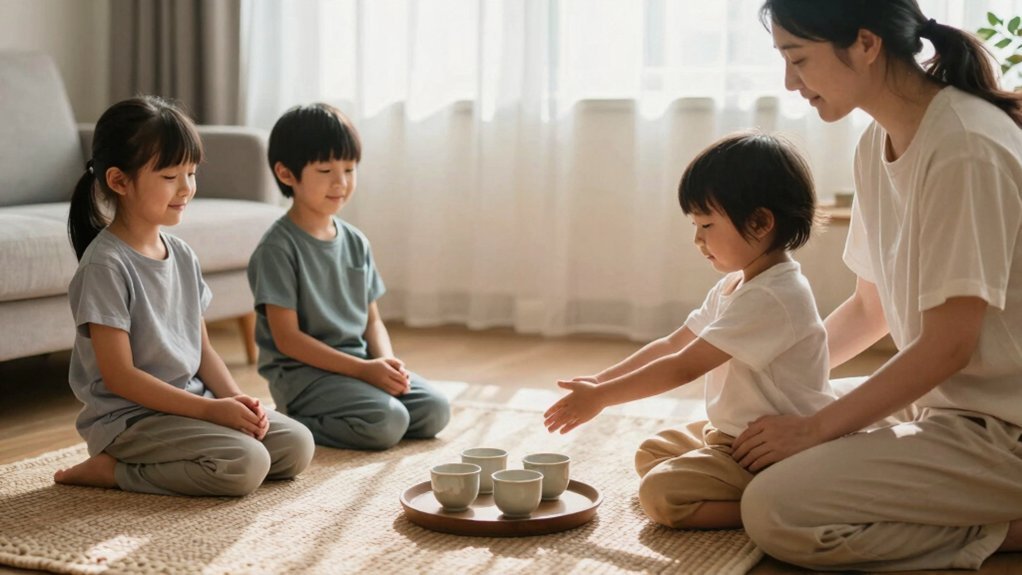
Ever wonder how you can turn everyday moments at home into gentle practice for polite greetings and farewells? You can weave grace and courtesy into calm periods by using ready‑made phrases and I‑language. Below are three at‑home activities that let shy children experience polite practice while you model gender‑inclusive empathy and family classroom cues.
| Activity | Key Elements |
|---|---|
| Greeting Circle | 1‑2 sentence hello/bye, I‑language, thank you |
| Pass‑by Narration | Calm voice, “I am going to walk past you…”, empathy |
| Help‑Invite Role‑Play | “Can you help me?” “Would you like to join?” |
Integrate these into Montessori at home routines, keep each under three minutes, and watch social interactions blossom. For added child independence in the kitchen or bathroom, consider incorporating a Montessori-friendly step stool to encourage safe exploration and confidence.
How to Troubleshoot Common Challenges and Keep Progress Steady
Facing interruptions or shy withdrawals during class can feel puzzling, but you can quickly troubleshoot these hurdles by leaning on structured class meetings and peer support. Use brief Grace and Courtesy lessons—one to three minutes—to rehearse joining conversations, asking for help, and offering help in neutral moments. Narrate actions calmly (“Excuse me, I’m going to walk past you”) and give ready‑made phrases so shy children expand their social skills vocabulary. Introduce gentle role‑playing and social stories for invitations, refusals, and conflict resolution, avoiding over‑censorship or rescue. Align home and school modeling, keeping classroom routines consistent while gradually increasing independence. Peer support reinforces confidence, and the Montessori method’s emphasis on self‑directed practice sustains steady progress. Creating a supportive environment with age-appropriate considerations can further enhance accessibility and encourage independence for shy children.
Frequently Asked Questions
How to Teach Grace and Courtesy in Montessori?
You teach grace and courtesy by modeling brief, calm demonstrations, then letting children role‑play the actions, using clear “I” statements, offering scripts, and reinforcing practice both in class and at home.
What Is the Importance of Grace and Courtesy Lessons in Montessori?
You’ll see shy children gain confidence, learn respectful interaction, and feel belonging. Grace and courtesy lessons teach them to express themselves clearly, navigate social situations calmly, and build lasting, positive peer relationships.
Did P. Diddy Go to a Montessori School?
You won’t find any credible evidence that P. Diddy attended a Montessori school; his public biographies list traditional schooling, and no reputable sources confirm a Montessori background.
What Are the 4 C’s of Montessori?
You’ll find the four C’s are Concentration, Coordination, Competence, and Confidence—each cultivated through purposeful materials, uninterrupted work cycles, skill mastery, and increasing independence in your Montessori environment.