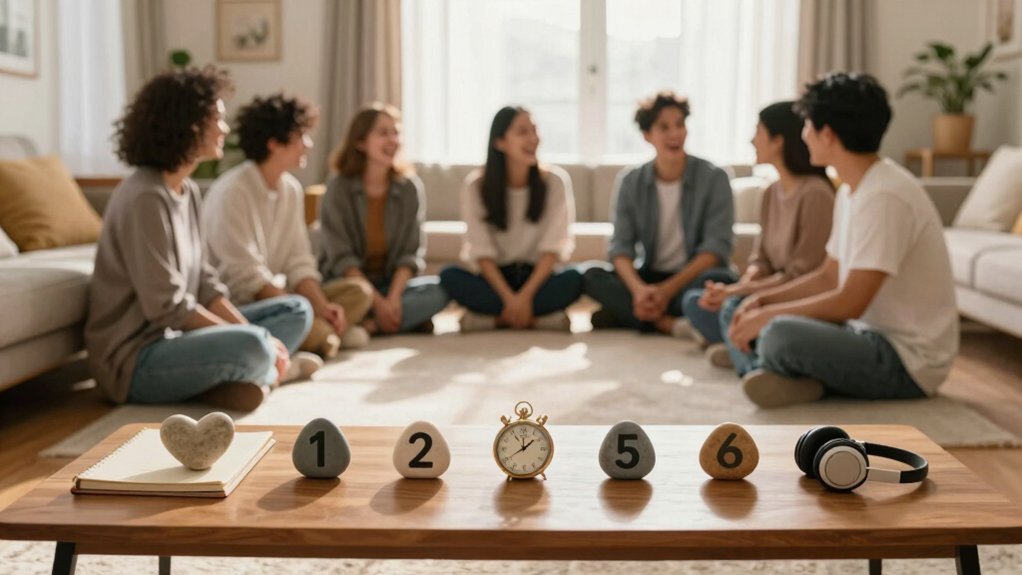

You can start peace circles where kids sit in a comfortable spot, share feelings, and listen respectfully. Use a peace wheel to label emotions, then a solution wheel to brainstorm options and pick the best one for everyone. Teach graceful greetings and courteous turn‑taking daily. Insert mindful breathing pauses during transition s and create a quiet reflection space. Role‑play diverse cultural stories to build empathy. Pair older children with younger peers for mentorship and model calm conflict resolution. The next steps will show how to bring these practices home.
How to Run Peace Circles for Collaborative Problem‑Solving
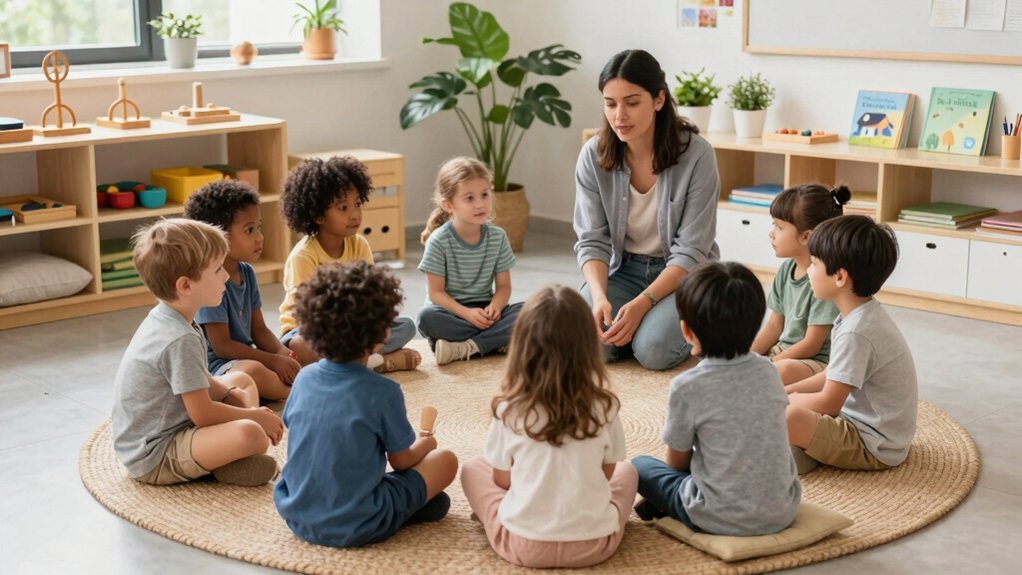
When you set up a peace circle, gather the children in a comfortable spot, explain the purpose, and lay out the steps so everyone knows how the discussion will flow. You model the circle, then invite each child to share feelings and perspectives while you ensure respectful listening. Use clear conflict‑resolution language, prompting them to name emotions and explore why an issue arose.
Guide them through collaborative problem‑solving by asking, “What options do we have?” and “Which solution benefits all?” Encourage the group to negotiate and reach a consensus, then summarize the agreed outcome.
Repeat this routine with role‑play scenarios before letting students lead in the peace corner, reinforcing confidence in expressing emotions and evaluating choices. Incorporating tools that emphasize durability and ergonomic design can further support hands-on activities and engagement during these problem-solving sessions.
Implement the Peace & Solution Wheels for Independent Conflict Resolution
If you introduce the Peace and Solution Wheels early in the semester, you’ll give each child a concrete, visual roadmap for handling disagreements on their own. Start by modeling the peace wheel on the board: label feelings, identify the problem, and show how the solution wheel generates options. Demonstrate each step aloud, then let the class practice in small groups, gradually fading your prompts. After a few guided cycles, invite students to pull the wheels from the peace corner and work independently, encouraging them to articulate emotions, listen, and list multiple solutions. Track progress with brief reflections, and increase repetition until the wheels become second nature. This routine builds confident, self‑directed conflict resolution while reinforcing peaceful problem‑solving. Providing a well-defined workspace setup can further enhance focus and reduce distractions during these activities.
Teach Grace & Courtesy Daily to Build Social Skills
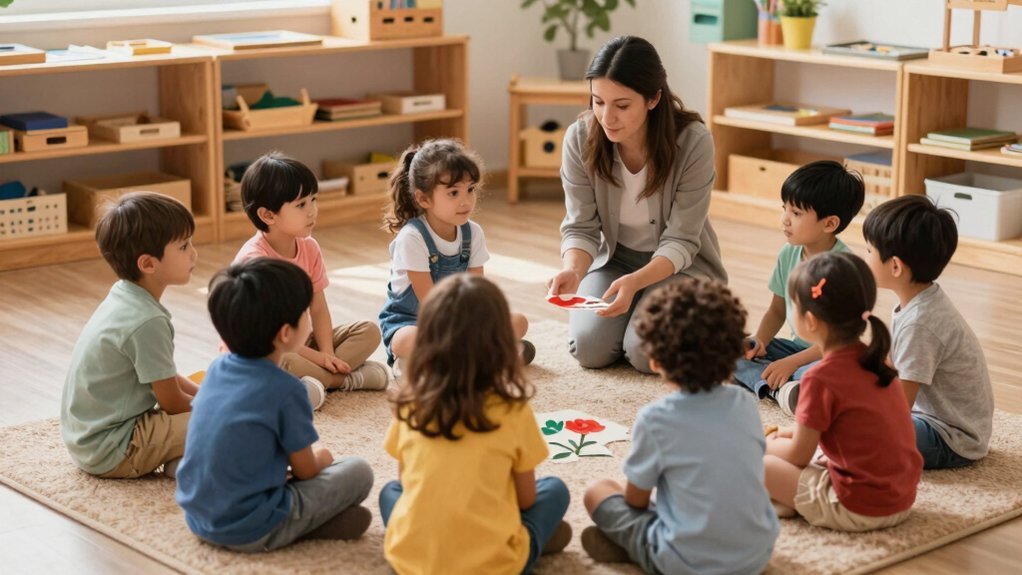
You’ll start each day with graceful greetings practice, so kids learn to say “hello” and “goodbye” calmly. Then you’ll guide them through courtesy role‑play activities that model waiting turns and polite requests. By repeating these routines, you build social skills that keep the classroom peaceful. Using tools like a Montessori step stool encourages independence and confidence in daily routines.
Graceful Greetings Practice
A graceful greeting sets the tone for respectful interaction, and in a Montessori classroom it becomes a daily lesson in politeness and connection. You’ll notice that graceful greetings aren’t just words; they’re eye contact, upright posture, and a warm tone that signal peace and partnership. By weaving grace and courtesy into each morning ritual, you reduce miscommunication and lay the groundwork for peaceful problem‑solving throughout the day.
- Model the greeting – stand at eye level, smile, and say, “Good morning, [name],” while offering a gentle handshake or wave.
- Guide participation – let each child practice the greeting in pairs, rotating partners to build confidence.
- Reinforce consistently – give immediate, specific feedback and celebrate successes so the habit becomes a natural part of classroom culture.
Courtesy Role‑Play Activities
When children step into a role‑play scenario, they instantly practice the grace and courtesy that turn everyday interactions into cooperative problem‑solving moments. You guide them through a greeting exchange, then ask them to request help or offer assistance using polite language. In each structured scenario they watch voice levels, body language, and turn‑taking, which builds muscle memory for peaceful problem‑solving. Older students model courteous behavior, showing younger peers how to listen and share without interrupting. By repeating these role‑play drills daily, you create a classroom rhythm where respect and empathy become second nature. The result is a calmer environment, fewer conflicts, and stronger collaborative learning for every child. Incorporating training mechanisms that support progressive learning can further enhance children’s social and fine motor development during such activities.
Use Mindful Moments to Calm Transitions and Reflect
You can start each shift with a simple breathing technique, inviting kids to inhale slowly and exhale fully before moving on.
Set up a quiet reflection space where they pause, notice their feelings, and choose an intention for the next activity.
Then guide them through a consistent transition routine that blends breathing, reflection, and a gentle cue to begin the new task.
Incorporating structured activities like Montessori tasting can also enhance focus and sensory awareness during transitions by engaging children in meaningful exploration of sensory development.
Ful Breathing Techniques
Ever wondered how a simple breath can turn a chaotic classroom shift into a calm, focused moment? You can use Ful Breathing Techniques to anchor children in mindful breathing, boost self‑regulation, and nurture peaceful problem‑solving. When you model slow, diaphragmatic inhales followed by extended exhales, their heart rates drop and the nervous system shifts into a calm state. This predictable routine lets kids pause before reacting, turning conflict into a teachable moment.
- Inhale for four counts – guide them to fill their belly, feeling expansion.
- Hold for two – create a brief pause that signals control.
- Exhale for six – encourage a slow release, visualizing tension leaving the body.
Practice these steps daily, and students will independently use the technique in the Peace Corner, fostering a self‑directed, peaceful learning environment. Introducing tools designed with Montessori principles can further support fine motor skills and focused engagement during calm activities.
Quiet Reflection Spaces
After mastering Ful Breathing Techniques, you can extend that calm into a dedicated Quiet Reflection Space—an inviting corner where soft lighting, comfy cushions, and simple visual cues invite children to pause, breathe, and gather their thoughts before moving on.
In this spot, you place age‑appropriate prompts that signal a moment of peaceful reflection, encouraging kids to notice feelings without judgment.
When a transition feels rushed, you guide them to the space for a brief mindful transition, letting tension dissolve before re‑engaging.
Regular use builds a habit of self‑regulation, so when conflicts arise, children draw on that inner steadiness to articulate needs and seek resolution.
Incorporating child-friendly storage solutions like the ECR4Kids Dress-Up Center can enhance the environment by supporting organization and independence.
Guided Transition Routines
When a class shifts from one activity to the next, a short, predictable routine can turn a potentially chaotic moment into a calm, focused pause. You’ll notice that guided transition routines use mindful moments to calm students, reinforcing self‑regulation and setting the stage for peaceful problem‑solving. By cueing a deep breath, waiting for silence, then inviting a brief reflection, you create a rhythm that signals change without disrupting work. Consistent visual, auditory, and verbal cues let children self‑initiate the next task, reducing teacher prompts and fostering independence. A reflective pause after each transition lets them articulate feelings and intentions, reinforcing peace and collaborative problem‑solving.
- Cue the change with a clear signal.
- Guide a deep‑breathing pause for self‑regulation.
- Invite a quick reflection on feelings and next steps.
Role‑Play Stories to Grow Empathy and Cultural Appreciation
One powerful way to nurture empathy and cultural appreciation in a Montessori classroom is through role‑play stories that let children step into diverse perspectives. You’ll guide them to adopt characters from different cultures, encouraging them to listen, ask questions, and solve problems together. By structuring each scenario with clear roles, you foster empathy and cultural appreciation, making abstract feelings concrete.
The narratives showcase traditions, daily routines, and values, expanding open‑mindedness and reducing bias. As you facilitate respectful communication and collaborative problem‑solving, children practice active listening and learn to celebrate differences. These inclusive stories invite every child to participate, reflect on multiple viewpoints, and build a community rooted in peace and understanding.
Peer‑Mentoring Strategies for Older Children to Model Peace
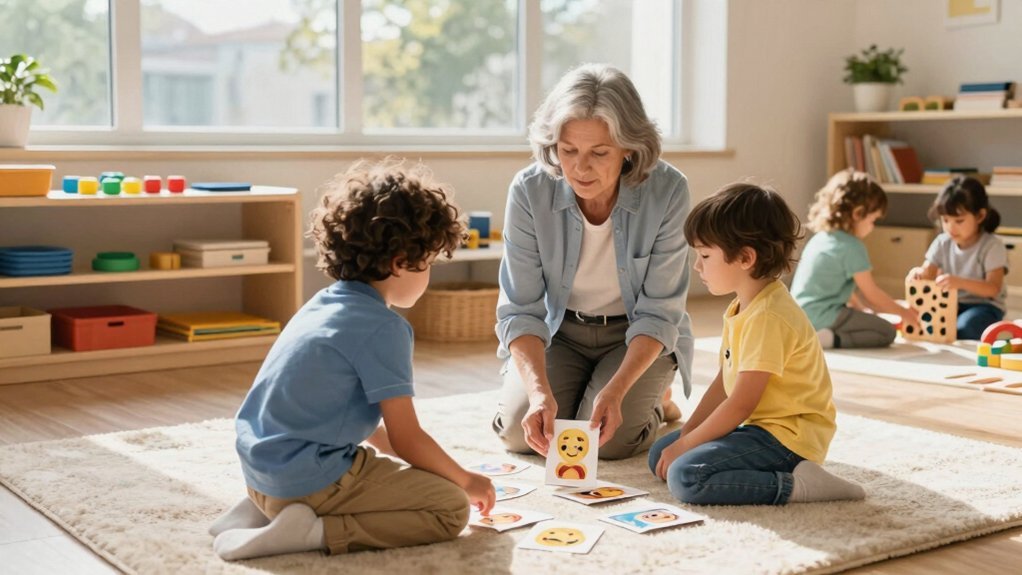
Building on role‑play stories that let children experience diverse perspectives, you can extend that empathy into real‑time interactions by assigning older students as peer mentors. In a Montessori classroom, you’ll see mentors verbalize thinking, name emotions, and suggest collaborative strategies, turning every conflict into a lesson in peaceful problem‑solving. Teachers place mentors deliberately, observe their model behavior, and reinforce reflective dialogue, so younger kids watch respectful communication in action.
- Structured placement – Position mentors near mixed‑age groups for spontaneous guidance.
- Guided routines – Teach mentors to listen first, restate concerns, and co‑create solutions using peace wheels.
- Mentor‑led circles – Run regular discussions where mentors model conflict‑resolution and celebrate the responsibility of guiding peers.
Extending Peace Education to the Home: Practical Tips for Parents
How can you bring the calm, respectful communication you model at school into everyday family life? Start by modeling calm speech and inviting your child to name feelings during disagreements; this builds emotional intelligence and sets a Peace tone. Use short peace circles or daily check‑ins where each person shares perspective and you brainstorm solutions together, turning conflict into a Problem‑solving lesson. Keep the home organized with clear routines and accessible Montessori materials, so friction drops and independence rises. When a dilemma arises, ask guiding prompts like “What steps could you take next?” rather than handing answers. Set up a peace corner and a solution wheel, and role‑play scenarios to reinforce the skills they practice at school.
Frequently Asked Questions
What Are the Peace Activities for Montessori?
You’ll join conflict‑resolution circles, use the peace wheel and solution wheel, practice grace‑and‑courtesy greetings, role‑play empathy scenarios, and follow teacher prompts that guide you to collaboratively find non‑violent solutions.
What Are the 4 C’s of Montessori?
You’ll find the four C’s are Collaboration, Communication, Cooperation, and Conflict resolution—each built into Montessori circles, shared tasks, peer mentoring, and daily peace‑wheel exercises that guide you in solving problems together.
What Is the Biggest Criticism of Montessori?
You’ll find most people argue that Montessori’s biggest criticism is its cost and in—expensive programs limit access, and without standardized testing or consistent teacher training, outcomes stay hard to compare.
What Are the Five Pedagogical Approaches in Montessori?
You’ll find five approaches: you prepare an environment, you let kids work at their own pace, you guide them gently, you give them freedom with responsibility, and you encourage collaborative, peer‑based learning.