Start with a firm “Stop!” to pause the scene, then model calm‑down strategies like deep breaths, a quiet corner, or a counting game. Teach I‑statements (“I feel upset when…”) for accountability and role‑play turn‑taking and apology phrases. Use a colorful daily conflict‑resolution wheel at child‑height, pointing to a slice each morning and spinning it when disputes arise. Play cooperative Lego, switch‑sides role‑play, puppet shows, and “What Could They Do?” cards to build empathy and problem‑solving skills. Keep visual charts, home reminder cards, and story circles consistent, and you’ll discover more tools ahead.
Introduce Simple Preschool Conflict‑Resolution Techniques
How can you turn a playground squabble into a teachable moment? You start with conflict resolution basics that fit preschool life. Introduce simple techniques like a firm “Stop!” to pause the scene, then model calm‑down strategies—deep breaths, a quiet corner, a counting game. Use I statements (“I feel upset when…”) to teach accountability. Role‑play scenarios with peers, letting each child practice turn‑taking and apology phrases. Guided practice reinforces these habits: a rock‑paper‑scissors decision‑making game, a story read‑aloud that illustrates empathy, and visual charts that label each step. Teachers and families collaborate, sending home reminder cards and sharing successes at school meetings. This integrated approach builds social‑emotional learning while keeping the process clear, active, and repeatable. Creating a safe and supportive environment, such as a Montessori-friendly step stool, can help children feel more independent during these learning moments.
Build a Daily Preschool Conflict‑Resolution Wheel
Ever wondered how a simple visual cue can turn a playground tiff into a self‑guided solution? You can create a daily wheel that lists conflict resolution steps—walk away, apologize, make a deal, or use “I” statements. Print a colorful circle, divide it into slices, and hang it at child‑height. Each morning you point to the wheel during classroom activities, reminding preschoolers to pick independent strategies. When a dispute arises, they spin, choose a slice, then practice calm communication and turn‑taking. Reinforce the choices with brief role‑play sessions that build emotional literacy. Over weeks the wheel becomes a trusted reference, reducing adult prompts and empowering kids to resolve peer conflicts confidently.
Teach 5 Play‑Based Games for Preschool Conflict Resolution
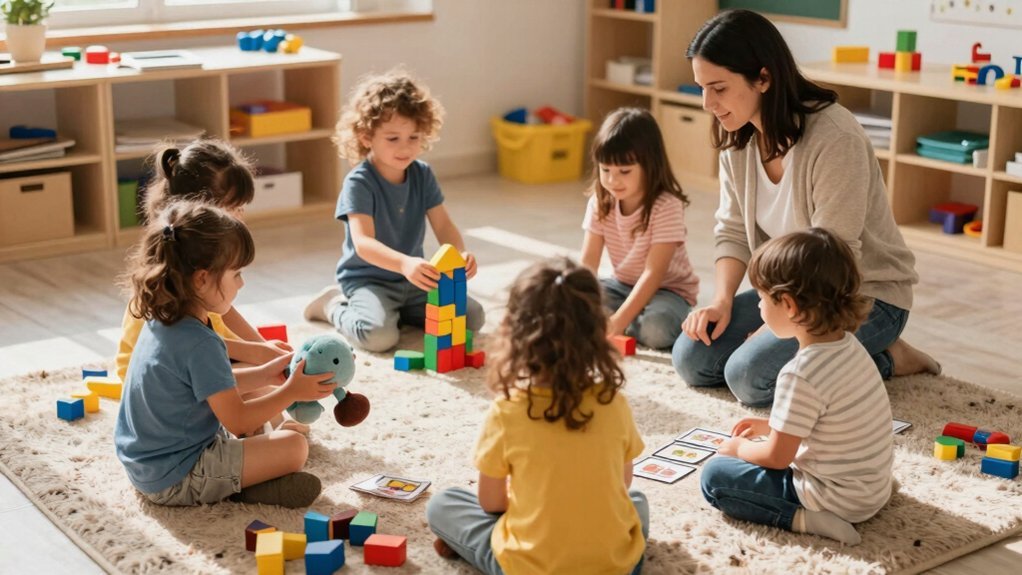
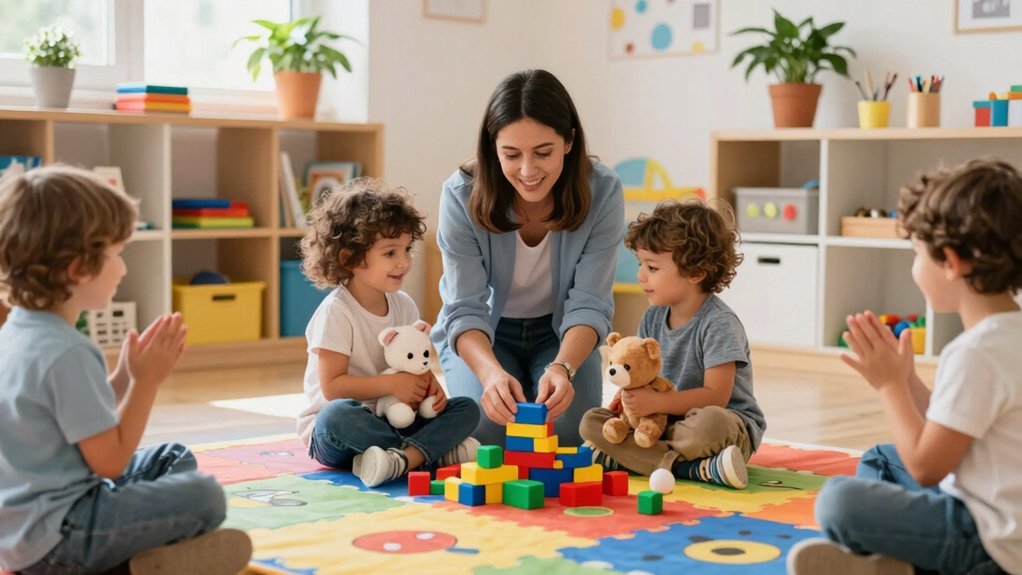
A handful of playful games can instantly turn everyday disagreements into teachable moments for preschoolers. You’ll start with a cooperative activity like Lego collaboration, where kids share pieces and negotiate tower height, reinforcing turn‑taking and classroom empathy.
Next, try Switch Sides role‑play: children argue a point, then swap positions and use I‑statements to express feelings.
Puppet Show lets them act out a conflict and model apologies, while Spin the Solution Wheel adds a chance element to pick a resolution strategy.
Guided activities such as What Could They Do? cards and Write It Out with popsicle sticks prompt kids to articulate steps and justify choices.
After each game, hold a brief debrief that highlights how listening, sharing, and asking for help lead to successful conflict resolution.
Incorporating play-based learning tools that promote social interaction can further support children’s emotional development during these activities.
Model Empathy With Storybooks and Role‑Play for Preschoolers
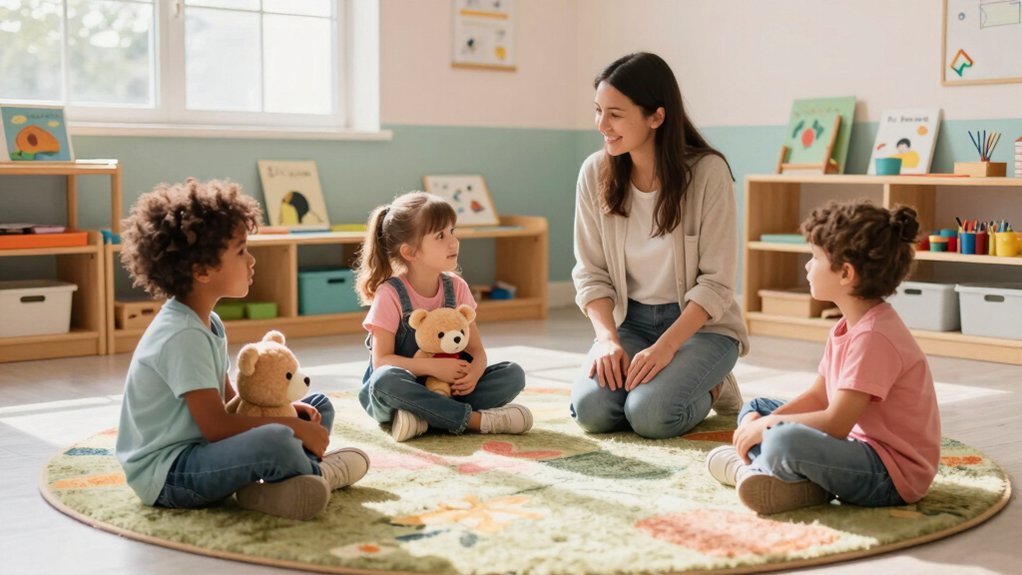
After the games turn disagreements into teachable moments, you can deepen that learning with storybooks and role‑play. Use storytelling circles where preschoolers add one sentence at a time, fostering empathy and perspective‑taking. Pair the narrative with puppets or stuffed animals to model healthy behaviors and I statements, then rehearse the scene in role‑play. Mirror emotions with facial expressions and body language to help kids name feelings and practice calm conflict resolution.
Storytelling circles, puppets, and mirror emotions turn play into empathy‑building, calm conflict‑resolution practice.
- Storytelling Circle: build a shared tale, encouraging each child to voice a different viewpoint.
- Puppet Role‑Play: act out a dispute, then switch sides to explore the other’s perspective.
- Switch Sides: reverse roles in a familiar conflict (e.g., soccer vs. basketball).
- Mirror Emotions: mimic expressions, guiding preschoolers to label emotions and use I statements.
Incorporating fine motor skill activities like spinning tops can provide a calming, screen-free break that complements emotional learning.
Send Home Conflict‑Resolution Cards for Preschool Families

How can you extend classroom calm‑down techniques into everyday life? Send home conflict‑resolution cards that mirror preschool SEL lessons, giving families a ready‑made tool for peer conflict and problem solving. Each card uses simple language, “I” statements, and calm‑down strategies, prompting role‑play and discussion at the kitchen table. Parents can read the scenario, identify emotions, and model constructive responses, reinforcing taking turns, listening, and seeking adult help. The cards create a bridge between school and home, ensuring consistent family involvement and home learning. By integrating these prompts into daily routines, you deepen the child’s skill set, turning classroom practice into lasting, real‑world peace‑building habits. Including tools like emotion flash cards alongside resolution cards can further support emotional identification and regulation at home.
Frequently Asked Questions
What Are the 5 C’s of Conflict Resolution?
You’ll find the 5 C’s are calmness, communication, collaboration, compromise, and closure—each guiding you to breathe, speak respectfully, work together, find middle ground, and end on a positive note.
What Are Some Conflict Resolution Activities?
You can try role‑play with puppets, “I” statements using a talking stick, Lego teamwork builds, “What Would You Do?” cards, spin‑the‑solution wheel, and guided visual‑aid discussions to practice calm, shared problem‑solving.
What Are the 3 C’s of Conflict Resolution?
You’ll teach them Calmness, Communication, and Compromise: help kids breathe or count to stay calm, use clear, respectful language and listen actively, then find middle‑ground solutions together.
What Is the 5 5 5 Method of Conflict?
You use the 5‑5‑5 method by first naming the problem, then stating your feeling with an “I” statement, and finally picking a solution within five seconds or five minutes, depending on the activity.