Start with a night‑before prep: lay out clothes, pack backpacks, and check homework so mornings run smoothly. Create a distraction‑free homework zone with ergonomic furniture and all supplies within reach, and set a simple hygiene routine—brush teeth, wash hands, and tidy personal items—using a visual chart. Assign age‑appropriate chores on a rotating chart, reward completion with tokens, and reflect on each day’s high, low, and “buffalo” moments at dinner. Keep the momentum going, and you’ll discover deeper strategies.
Identify the Core Responsibility Goal for Your Family

How can you define a clear, family‑wide responsibility goal that feels both meaningful and achievable? Start by pinpointing a core purpose—like fostering trust, decision‑making, and accountability—then translate it into concrete, age‑appropriate chores. Align each task with a child’s ability, so daily routines become stepping stones rather than burdens. Involve kids in choosing which chores fit their schedule; this boosts ownership and critical thinking. Pair tasks with simple financial cues—earning a modest allowance or contributing to a savings goal—to embed lifelong habits. Keep expectations predictable: morning bed‑making, after‑school snack prep, and weekend laundry each reinforce independence. Celebrate successes with positive feedback, reinforcing responsibility goals and strengthening family involvement. Selecting tools like the Comfy Cubs Step Stool can empower children by providing safe, independent access to kitchen counters, supporting their active participation in daily chores.
Set a Night‑Before Prep Routine to Teach Children Responsibility
When evening rolls in, a quick night‑before prep sets the tone for a smooth morning and teaches kids real responsibility. You’ll have the children lay out tomorrow’s outfit, pack their backpack, and double‑check homework and papers. This simple routine gives them a clear, tangible task, turning abstract responsibility into an everyday habit.
Keep the steps consistent: a designated spot for clothes, a checklist for school supplies, and a quick glance at the lunch box. Adjust the responsibilities to match each child’s age so they feel capable, not overwhelmed.
As they repeat the night‑before prep, they build accountability, reduce morning chaos, and develop a steady sense of responsibility that carries over into every part of their day. Using practical tools like adjustable straps on child-size aprons can further encourage independence and responsibility in daily tasks.
Create a Distraction‑Free Homework Zone for Independent Work

You’ll set up a quiet space where only essential supplies are within reach, keeping the TV and gadgets out of sight. By limiting distractions, you give your child the chance to focus and work independently.
Keep a snack and a simple folder system handy so they can shift seamlessly from homework to after‑school tasks. Using tools with ergonomic design can further support your child’s independence and fine motor skills during homework time.
Quiet Space Setup
Ever wondered why a quiet corner can turn a chaotic after‑school routine into focused, independent work? You can create a dedicated quiet space that doubles as a homework zone, keeping supplies in a bin or folder for easy access. Start by clearing clutter, then place a comfortable chair and a well‑lit desk where you can see the kitchen or living room, allowing a supportive adult to supervise without hovering.
Schedule the same start‑time each day so the routine becomes automatic, and turn off TVs and electronics during that window. Use simple organization tools—a labeled drawer for pencils, a tray for papers—to keep everything tidy. When the space feels predictable and orderly, your child will dive into work with confidence and fewer interruptions. Selecting furniture that is within the optimal height range for accessibility can further encourage independent use of the space.
Limited Distractions Allowed
A quiet corner sets the stage, but the real boost comes from eliminating distractions. You’ll turn off the TV, put phones on silent, and clear away toys so the homework routine stays focus‑free.
First, wash hands as you arrive home, then sort papers into labeled folders—this simple habit cuts clutter and signals it’s time to work.
Set up a small desk with only a notebook, pencils, and a timer; the caregiver sits nearby, ready to help without hovering.
By keeping the space tidy and electronics out of reach, you nurture sustained focus and independent study.
Consistently applying this routine builds responsibility, turning each session into a disciplined, distraction‑free learning experience.
Teach Independent Hygiene as a Daily Responsibility Habit
A consistent morning routine that includes brushing teeth, washing hands, and tidying personal items turns hygiene into a habit rather than a chore. You’ll notice kids pick up independent hygiene faster when you embed it in daily routines that feel predictable. Use a simple chart or a fun app to cue each step, so they know exactly when to brush, rinse, and dry. Let them arrange their toothbrush station and choose a clean towel; these tiny decisions reinforce responsibility and boost confidence. As they practice, they develop self‑management skills that spill over into schoolwork and play. Over time, the routine becomes automatic, supporting executive functioning and keeping delays at bay. Educational tools with self-checking features can enhance their learning autonomy during daily activities.
Assign Age‑Appropriate Chores With a Rotating Chart System
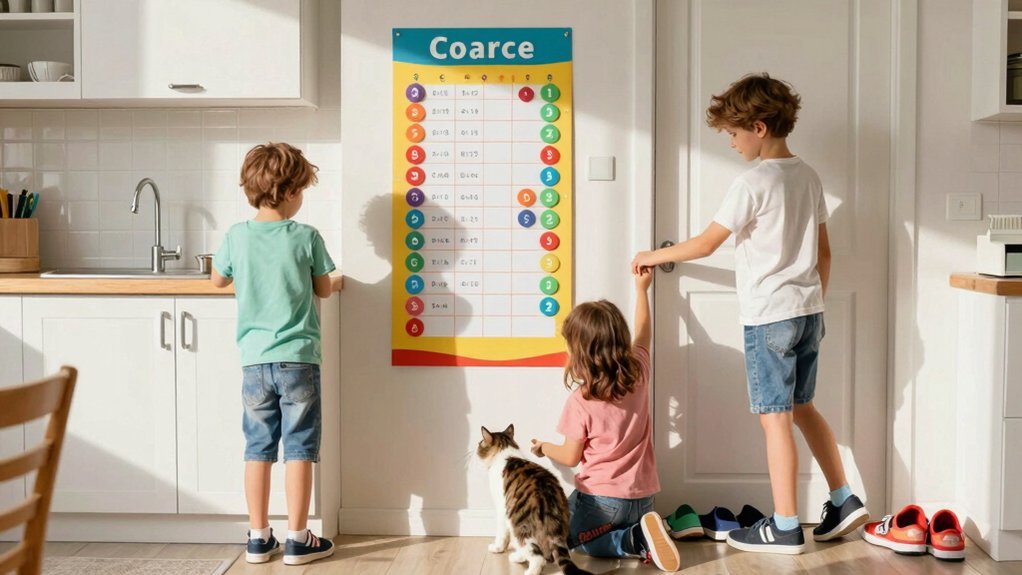
Building on a solid hygiene routine, you can now introduce age‑appropriate chores that reinforce responsibility through a rotating chart system. Start each morning routine with a quick glance at the chart, so kids know which task they own that day. Use a popsicle‑stick draw or a simple app to assign rotating chores, keeping the process fair and transparent. When a child completes an age‑appropriate task, praise them publicly and note it on the chart; this builds accountability and a sense of contribution. Over time, the variety prevents boredom and teaches teamwork, while the visual cue reminds everyone of their role in the household. Incorporating tools like the Wooden Sorting Tray Grid Organizer can further enhance organization and responsibility by providing designated spaces for each child’s supplies or completed chores.
Motivate Kids With a Weekly Fun Chore‑Time Block
Ever wonder how to turn chores into a highlight of the week? Set a weekly fun chore‑time block where the whole family picks a theme—like “music‑minute cleaning” or “speed‑sorting race.” Use a rotating chore chart so each child gets a fresh task, and pull a popsicle stick to decide who leads the activity, keeping the process unbiased and exciting. Display a simple visual schedule on the fridge; the clear expectations help kids see responsibility as a game, not a burden. Celebrate completed tasks with a quick family high‑five or a snack break, reinforcing involvement and making the daily routine feel like a shared adventure. This approach builds lasting responsibility while strengthening family bonds.
Turn Meal Prep Into a Family Responsibility Exercise
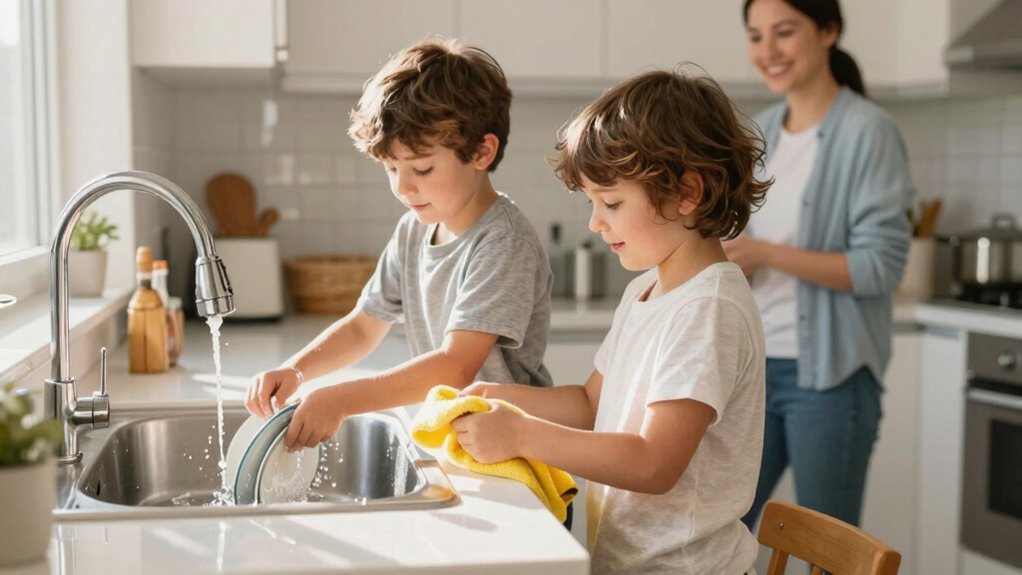
When you turn meal prep into a family responsibility exercise, you turn a daily necessity into a lively ritual that teaches kids teamwork and accountability. Assign age‑appropriate chores—like washing veggies, setting the table, or stirring a sauce—so each child feels useful and sees how their effort fits into the whole meal. Rotate tasks weekly with a popsicle‑stick chart, keeping things fair and fresh. Play upbeat music during designated chore‑time, turning the kitchen into a collaborative space where laughter and learning happen together. Using child-friendly tools like silicone mini tongs can enhance fine motor skill development while making food prep engaging and safe.
- Create a rotating chore chart – everyone knows their turn and the schedule stays fair.
- Set a weekly “meal‑prep hour” – a fixed slot with music to keep energy high.
- Celebrate completed dishes – praise teamwork and share a quick family toast after each meal.
Reflect on Daily Responsibility Wins at Dinner (High‑Low‑Buffalo)
How can a simple dinner conversation turn everyday chores into lasting lessons? You gather around the family dinner table and ask each child to share a high, a low, and a Buffalo for the day. This high‑low‑buffalo routine transforms a routine meal into a responsibility practice. When a child says, “I helped set the table,” you reinforce that effort, linking it to the broader daily routine. Listening to lows normalizes struggle, while the Buffalo—an extra observation—keeps the dialogue fresh and nuanced. You notice empathy grow as siblings compare perspectives, and you see responsibility become a shared value, not a solitary task. The habit builds communication skills, confidence, and a lasting sense of accountability.
Use Checklists and Tokens for Simple Accountability
Why not turn chores into a clear, visual plan that kids can actually follow? A simple checklist transforms everyday routines into a game of accountability. Kids see each task, tick it off, and earn tokens that become instant rewards. The visual cue reduces micromanagement and builds independence, while tokens reinforce responsible behavior and keep motivation high.
A visual checklist turns chores into a fun, accountable game, rewarding kids with instant tokens.
- Create a daily checklist – list morning tasks like making the bed, brushing teeth, and packing a lunch; let your child mark each as it’s done.
- Introduce tokens – assign a token for every completed item; tokens can be collected for a larger reward later.
- Review and adjust – weekly, look at the checklist patterns, tweak chores, and celebrate the earned rewards to strengthen routines and accountability.
Scale Responsibilities as Children Grow and Master New Skills
As children mature, you can expand their chores by moving from simple, age‑appropriate tasks—like making the bed or feeding a pet—to more complex responsibilities that match their growing confidence and skill set. Start with bedroom chores such as tidying toys, then add laundry folding or meal prep as they master earlier steps. Offer clear, achievable assignments and pair each with positive reinforcement so they see the link between effort and praise. Frame every task as a family contribution, not a punishment, to nurture trust and decision‑making. Involve them in choosing which chores to tackle, fostering ownership and critical thinking. When they’re ready, introduce a modest allowance and simple budgeting exercises, reinforcing long‑term responsibility while they continue scaling up.
Frequently Asked Questions
How to Handle Resistance When Kids Skip Night‑Before Prep?
When kids skip night‑before prep, stay calm, ask why, set a clear deadline, and offer a small incentive. Follow up consistently, and model the routine yourself so they see its value.
Can Siblings Share a Single Homework Zone Without Conflict?
Yes, they can share a single homework zone if you set clear boundaries, assign each child a specific spot, schedule short breaks, and enforce a rule that interruptions stop the timer.
What’s the Best Alarm Tone for Encouraging Punctuality?
You should pick a bright, upbeat chime—like a short melodic loop or a gentle x‑ray—because its clear, lively rhythm grabs your attention, nudges you awake, and reinforces punctual habits without startling you.
How Often Should the Chore Chart Rotate for Each Age Group?
You should rotate the chore chart every two weeks for toddlers, weekly for early elementary, and bi‑weekly for older kids, keeping tasks fresh, reinforcing responsibility, and preventing boredom.
Do Tokens Replace Intrinsic Motivation Over Time?
You’ll find that tokens can initially boost effort, but over time they often erode intrinsic motivation, leaving you relying on external rewards rather than personal satisfaction and curiosity.