
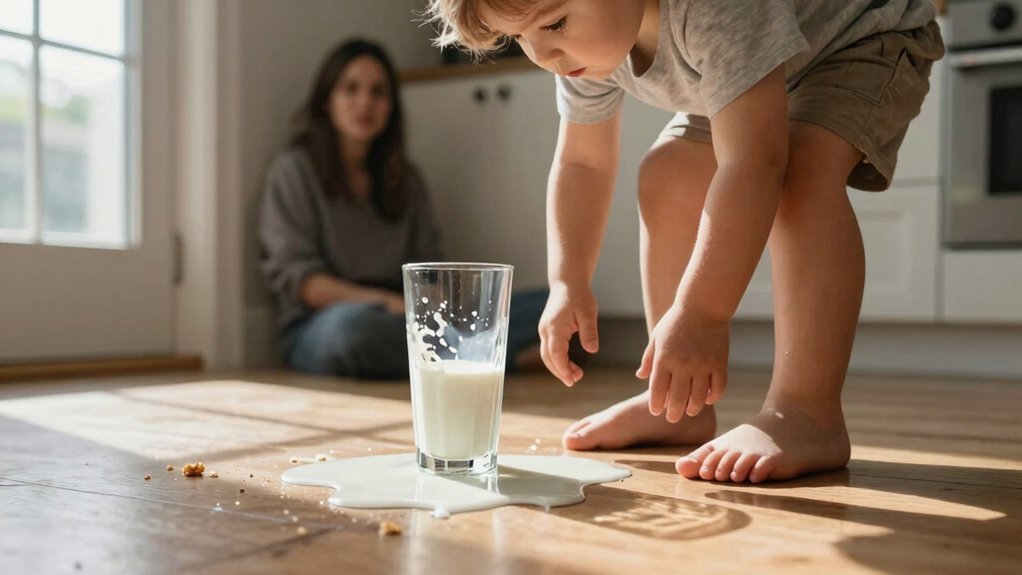
Natural consequences turn everyday mishaps into hands‑on lessons that teach your child ownership, responsibility, and problem‑solving without shaming or punishment. When a child spills a cup, they feel the mess and learn to handle it more carefully next time. By keeping the environment safe and using child‑size tools, you let the outcome unfold, then briefly debrief to connect the experience to future choices. If you keep exploring, you’ll discover more strategies for fostering independence and intrinsic motivation.
What Are Natural Consequences and Why Do Montessori Parents Use Them?
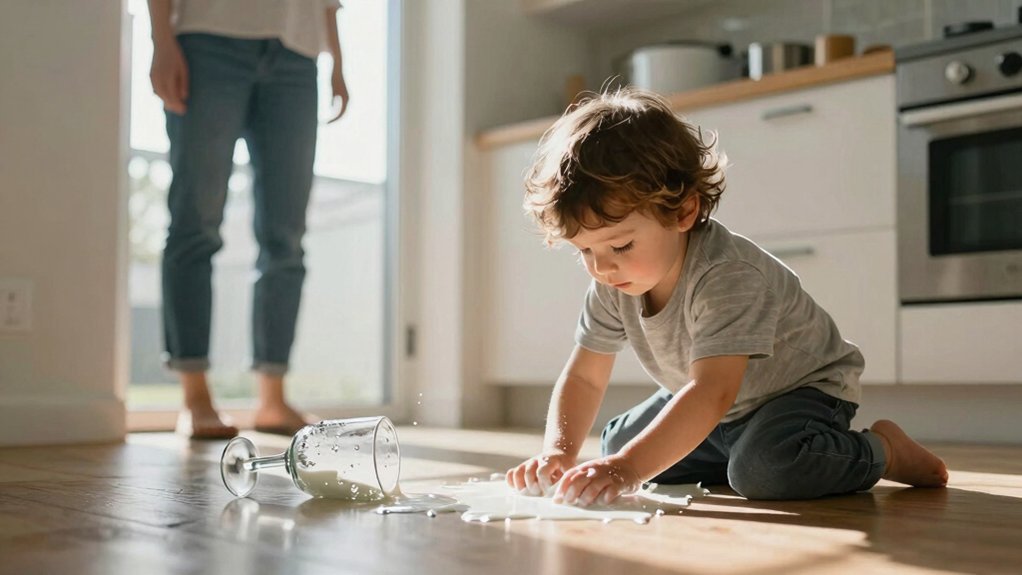
Why do natural consequences matter in a Montessori home? You see that when a child forgets their lunch, they learn cause and effect by borrowing food from a peer, feeling the real‑world result of their choice. Montessori parents use natural consequences because they turn everyday mishaps into lessons in ownership and responsibility. Instead of shaming, you let the child experience the outcome—like a wet umbrella leading to a soggy coat—so they see how actions shape results. This approach nurtures self‑regulation and intrinsic motivation, encouraging learning through mistakes without adult punishment. By selecting safe, age‑appropriate outcomes, you guide rather than rescue, building problem‑solving skills and a lasting sense of accountability. Choosing age-appropriate designs in toy storage also supports independence and safety during daily routines.
Create a Safe Environment for Natural Consequences to Unfold
How can you let a child feel the chill of a forgotten coat while keeping them safe? You create a safe environment by first removing hazardous elements—no icy sidewalks or open flames—so the natural consequence stays a learning moment, not a danger.
Create a safe, hazard‑free setting, then let the child feel the chill, learning responsibility gently.
Offer gentle guidance: notice their shiver, say “That must have been hard,” and ask what they think they’ll do next. Your empathy validates feelings and encourages accountability.
Model your own mistakes, repair them openly, and show how owning actions fuels growth.
Balance the experience with preventive coaching, like keeping extra coats nearby, so the child learns without injury. This non‑punitive framework builds confidence, responsibility, and lasting insight. Using tools like a Montessori step stool with safety rail promotes independence while keeping children secure as they learn from experience.
Step‑by‑Step Guide: Letting Children Experience Natural Consequences
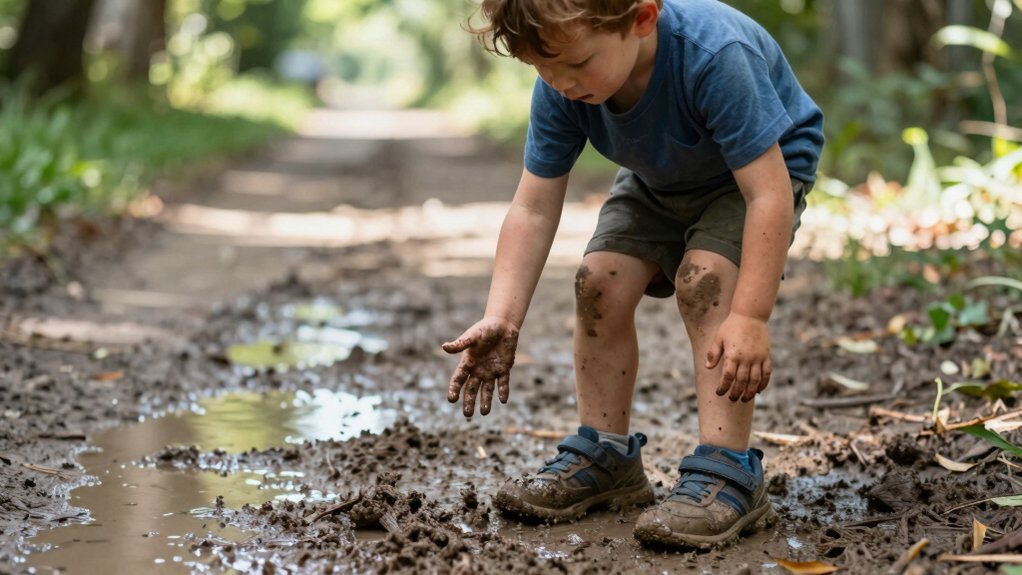
Ever wonder how to turn a child’s slip‑up into a genuine learning moment without risking harm? First, identify a safe, age‑appropriate scenario where the child’s choice will produce a natural consequence—like a spilled cup when they forget to hold it. Let the event unfold, then calmly intervene only if safety is threatened. After the outcome, sit down for a brief debrief: ask, child what they noticed, how the cause and effect unfolded, and what they’d do differently. Reinforce responsibility by linking the experience to future decisions. Repeat the cycle, always keeping the consequence safe and the conversation supportive. This routine transforms mistakes into powerful learning, building self‑management and resilience. Using tools like child-size tongs during these activities can enhance fine motor skills while keeping the learning hands-on and engaging.
Logical Limits for Safety: When to Intervene With Logical Consequences
When a child’s mistake could cause injury or damage, you step in with a logical consequence that’s brief, directly linked to the behavior, and safe. You intervene at the safety limits, offering a clear, calm choice that teaches the child why the action was risky and how to repair the situation. Keep the consequence proportional, remove the hazard, and explain the cause‑effect link without shaming. Pair the moment with guidance and a quick skill‑building talk so the child feels supported and learns child safety.
| Behavior | Logical Consequence | Repair Action |
|---|---|---|
| Running with scissors | Take scissors away for 5 min | Store safely together |
| Touching a hot stove | Turn off burner, cool down | Clean up spill together |
| Throwing a toy | Pause play, tidy up | Pick up and store toy |
| Climbing on furniture | Remove furniture access | Re‑arrange safe play area |
| Ignoring road safety | Stop walk, discuss crossing | Practice crossing with adult |
Natural‑Consequence Examples and a Quick Implementation Checklist
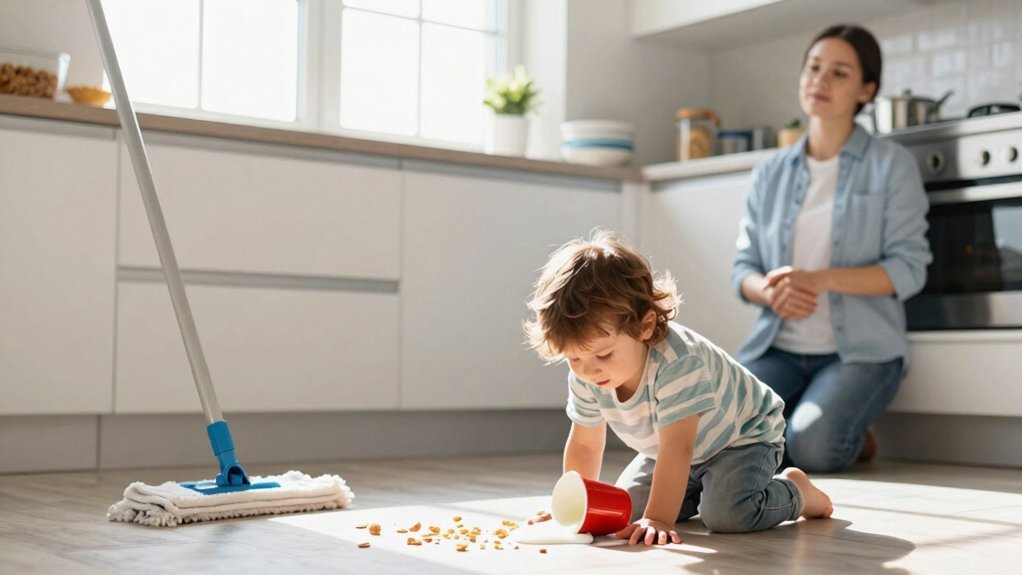
After you’ve shown how logical, brief consequences can keep a child safe, it’s time to let natural outcomes take the lead. Natural consequences turn mistakes into learning moments without compromising safety. When a child skips a snack, hunger reminds them of the choice; when they refuse a coat, rain makes them cold. You stay present, offer empathy, then debrief to cement responsibility. Use brief, non‑judgmental language and avoid “I told you so.” This approach builds resilience and self‑regulation.
Natural outcomes teach responsibility: hunger, cold, and empathy guide children toward self‑regulation and resilience.
- Identify the natural consequence, confirm it’s safe, and refrain from rescue.
- Allow the outcome to unfold, then debrief to discuss what happened.
- Use the implementation checklist to reinforce responsibility and learning.
Incorporating durable and age-appropriate products such as spill-proof sippy cups can further support children’s independence during everyday routines.
Frequently Asked Questions
How Do Natural Consequences Differ From Punishment?
You experience natural consequences when outcomes directly stem from your actions, while punishment is imposed externally, often unrelated to the behavior, to control you rather than teach cause‑and‑effect.
Can Natural Consequences Be Applied to Older Children?
Yes, you can apply natural consequences to older children by letting them experience the real‑world results of their choices—like missing a deadline leading to extra work—so they learn responsibility and problem‑solving.
What Role Does Cultural Background Play? Natural Consequences?
Your cultural background shapes how you interpret and accept natural consequences; it determines which outcomes you view as appropriate lessons, influencing whether you see them as guidance or punishment.
How Can Parents Balance Natural Consequences With Emotional Support?
You balance natural consequences and emotional support by letting kids feel the outcome, then offering empathy and guidance, reinforcing learning while reassuring them you’re there no matter what.
Do Natural Consequences Work for Children With Special Needs?
Yes, natural consequences can still help children with special needs, but you’ll need to tailor the outcomes, provide clear explanations, and offer additional scaffolding so they understand the link between actions and results.