

You can swap time‑outs for natural consequences that directly link behavior to its real‑world impact: leave a toy out and it becomes unavailable, skip a snack and you feel a dip in energy, miss a playdate and you lose the chance to connect, abandon a project and the task stays unfinished, forget a chore and family trust wavers, break a rule and you help design a fix, and ignore screen limits and you pause for a brief, calming break. Keep exploring to discover how each approach builds responsibility.
Natural Consequence of a Toy Left Out of Reach
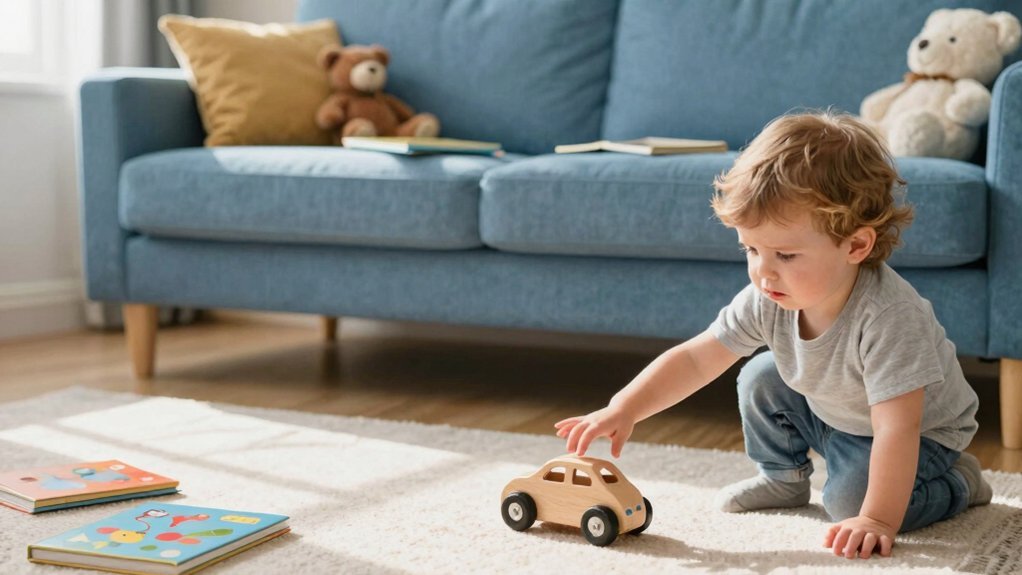
Ever wonder why a toy that’s left out of reach suddenly disappears? You see the natural consequences in action: the moment you walk away, the toy becomes unavailable until you tidy it up. This simple cause‑and‑effect teaches responsibility without a lecture, because you directly link leaving the toy out with losing access to it.
Consistency matters—every time the toy stays out, it stays out, reinforcing the habit of putting things away.
The approach also boosts toy safety, cutting clutter and preventing hazards that arise when items litter play areas.
Using thoughtfully designed Montessori floor beds with safety guardrails can similarly promote independence and safety in children’s environments.
Natural Consequence of Missing a Snack: Listening to Body Cues
When you skip a snack, you’ll notice a subtle dip in energy that nudges you to pay attention to your body’s hunger signals. This awareness helps you learn to self‑regulate, linking the feeling of emptiness with the decision to eat later. By responding to those cues, you build a habit of timely nourishment without any punishment. Teaching children about body cues and independence through activities like cooking with child-size cutting boards can further enhance self-regulation skills.
Recognizing Hunger Signals
Why ignore a growling stomach? When you notice hunger signals—stomach rumbling, a headache, or irritability—you’re getting a clear cue that your body needs fuel. Teaching kids to name those sensations and respond with a snack builds self‑regulation and prevents mood dips. You can turn this natural consequence into a habit by:
- Naming the cue: “My stomach feels empty.”
- Choosing a nutrient‑dense snack quickly.
- Confirming the effect: mood steadies, focus returns.
Using tools like food-grade stainless steel probes can help caregivers monitor safe cooking temperatures to ensure meals are both nutritious and safe.
Learning Self‑Regulation Skills
How does a missed snack become a teacher? When you skip a planned bite, your body sends a clear signal—growling stomach, low energy—that you can’t ignore. Those natural consequences push you to notice hunger and fullness cues, sharpening self‑regulation.
You’ll feel the urge to plan a healthier meal earlier, linking the physical sensation to the behavior of asking for food. By naming the hunger level and reflecting on the missed snack, you build emotional literacy, turning a simple omission into a learning moment.
This internal awareness replaces external discipline, fostering calmer transition s at mealtime and stronger self‑control. Over time, you’ll rely less on reminders and more on your own body’s guidance. Engaging with tools like auditory discrimination activities can further develop focused attention and self-regulation skills in young learners.
Natural Consequence of a Lost Playdate Spot for Social Boundaries

Ever wondered why missing a playdate can feel like a natural lesson in respect? When you ignore sharing or turn away peers, the playdate spot disappears, teaching you that social boundaries matter. You feel the loss instantly, and the experience ties the behavior to a real outcome without a time‑out. To make this work, set clear expectations beforehand and follow up with a calm debrief after the missed playdate. You’ll discuss what happened, restore the boundary, and invite re‑entry only when you show cooperative behavior.
Missing a playdate teaches respect instantly, linking behavior to real consequences without a time‑out.
- Explain the missed playdate and why it happened.
- Reflect on how respecting peers changes the outcome.
- Plan a new, respectful playdate together. Including toys with ergonomic grips designed for small hands can encourage cooperative play and fine motor skills development.
Natural Consequence of an Unfinished Project: Follow‑Through Skills
When you let a project sit unfinished, you feel the immediate gap it creates, prompting you to step in and finish it. That act of closing the loop builds confidence, showing you that you can follow through on your own terms.
With each completed task, you reinforce the habit of seeing things through, turning practice into a reliable skill. Using tools with ergonomic handles can support developing independence by making tasks easier and safer to complete.
Through Practice
Start by letting the child see the direct result of an unfinished project: the half‑built LEGO tower stays wobbly, the story ends abruptly, or the art piece lacks its final touches. Then guide them through practice that turns that natural consequence into a lesson in responsibility. Offer gentle prompts, set a short timer, and let them choose how to finish. When they succeed, praise the effort, not just the outcome.
- Identify the missing piece – point out exactly what’s unfinished.
- Model a quick step – demonstrate one way to add the final brick or paragraph.
- Let them try – give them space to complete it, stepping in only if safety is at risk.
This approach builds follow‑through skills without shaming. Incorporating activities with fine motor skills development, such as threading or beading, can further enhance a child’s ability to focus and complete tasks independently.
Confidence‑Building Completion
How can a child turn an unfinished LEGO tower into a confidence boost? You let the child see that the tower will stay wobbly until they finish it, so the natural consequence of incompletion sparks motivation. Set a clear expectation: the tower must be completed before playtime ends. When the child chooses to keep building, they practice responsibility and self‑regulation, learning to manage time and effort. Offer brief, timely feedback—“If you add the last piece, the tower will stand.” Celebrate the moment of completion, linking the achievement to the skill of follow‑through. Over time, the child associates finishing tasks with personal pride, not punishment, reinforcing persistence and future reliability. This approach builds confidence through genuine accomplishment.
Natural Consequence of a Forgotten Chore on Family Trust

Ever notice how a single missed chore can chip away at the trust you’ve built with your family? When you skip a task, the natural consequences surface: the household runs less smoothly, a shared privilege disappears, and everyone wonders if you’ll follow through again. Those outcomes reinforce accountability without a lecture, and they remind you that family trust hinges on reliability.
- Reassign the chore with a clear deadline.
- Publicly acknowledge the slip and the plan to fix it.
- Complete the task, then restore the lost privilege.
Natural Consequence of a Short‑Term “No‑Screen” Period for Self‑Regulation
Why not turn a brief screen‑free pause into a teachable moment for self‑regulation? When a child spikes into impulsive behavior, a no‑screen consequence ties directly to the misbehavior, pausing digital access just long enough for calm, cooperative behavior to surface. Choose an age‑appropriate length and end the pause once the child follows a quick calming plan or shows steadier emotions. This natural consequence reinforces self‑regulation without feeling like a blanket punishment, and you can swiftly shift back to regular activities with a short discussion or emotion‑coaching moment. Consistency across caregivers and settings ensures the no‑screen rule stays effective, turning a fleeting screen timeout into a powerful skill‑building opportunity.
Natural Consequence of a Broken Rule: Collaborative Problem‑Solving
A brief screen‑free pause teaches self‑regulation; when a rule is broken, a natural consequence can be shaped together with your child through collaborative problem‑solving. You first set clear expectations, then let the outcome mirror the misbehavior so the child feels the impact directly. By involving them in designing the response, you turn a mistake into a learning moment and keep the process fair and predictable.
- Identify the broken rule and its real‑world effect (e.g., losing a toy that caused the disruption).
- Ask your child how they could restore balance, encouraging ideas that are age‑appropriate and safe.
- Agree on a brief, concrete action that ties the consequence to the rule, then follow through consistently.
This collaborative problem‑solving approach reinforces natural consequences while nurturing responsibility.
Frequently Asked Questions
What Can I Do Instead of Timeout?
You can replace time‑outs with natural consequences: let the child lose the misused toy, clean up a mess they made, or pause a fun activity until they follow rules, reinforcing responsibility instantly.
What Is the 3-3-3 Rule for Children?
You’ll find the 3‑3‑3 rule means checking milestones at three months, three years, then three decades—often simplified to ages three, six, and nine—so you can adjust expectations as your child grows.
What Are Some Examples of Natural Consequences?
You’ll see natural consequences when a child refuses a snack and feels hungry later, breaks a toy and can’t play with it, or forgets a coat and gets cold, reinforcing responsibility.
What Is the 7 7 7 Rule in Parenting?
You follow the 7‑7‑7 rule by giving a child a time‑out lasting one minute per year of age—so a five‑year‑old gets five minutes—adjusting briefly if needed, especially for Fragile X.




Leave a Reply