
Grab a set of magnetic uppercase letters, a tray of tactile lowercase bead strings, a deck of sound‑card tiles, a story‑based play kit like the Talk & Teach Bus, and a cozy Montessori‑style reading nook with child‑sized furniture and soft lighting. These five tools let kids see, feel, and hear letters, practice phonemic awareness, and engage in interactive storytelling while building confidence. Keep exploring to discover how each piece fits into a balanced early‑literacy routine.
Early Literacy Materials: Essential Language‑Contrast Tools for Kids
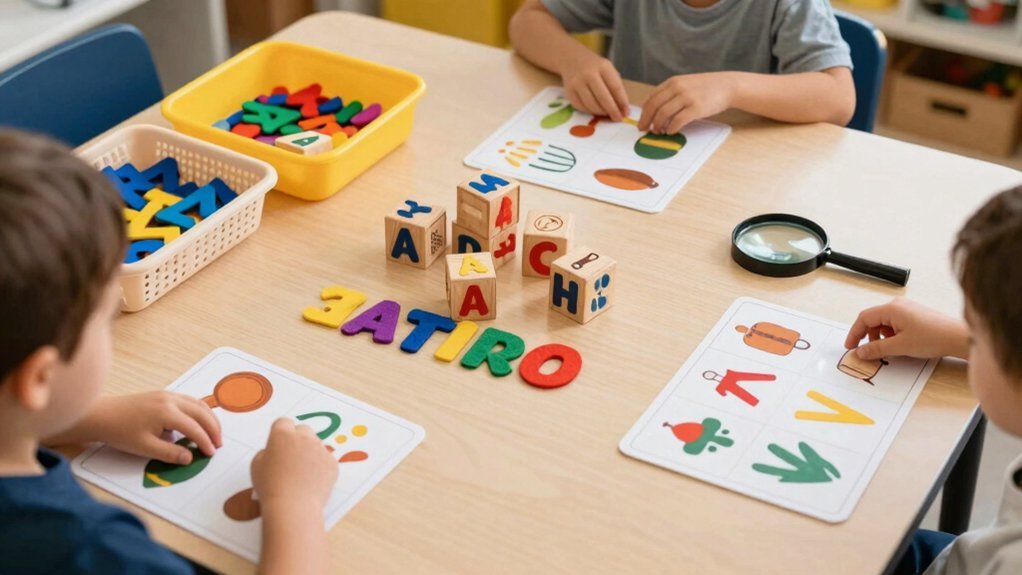
Early literacy thrives on hands‑on tools that let kids see, feel, and hear the difference between letters and sounds. You’ll find phonemic awareness drills paired with manipulatives like magnetic letters and bead strings, turning abstract sounds into concrete objects. These early literacy tools sharpen letter recognition and cement letter‑sound relationships, while phonics resources guide word‑building practice. During guided reading sessions, you can hand children a tactile set that mirrors the printed text, reinforcing multimodal literacy. Repeated use of tracing sheets and interactive apps links spoken language to its visual form, boosting confidence. By mixing tactile, visual, and auditory elements, you create a rich, engaging environment that accelerates decoding skills and nurtures a lifelong love of reading. Incorporating Montessori tools such as the Kitchen Step Stool for Kids with Safety Rail supports independence and safety during learning activities.
Choosing the Right Alphabet & Letter Sets for Home Use
Looking for the perfect alphabet set for your home? You’ll want tools that let early readers explore both uppercase letters and lowercase letters while you supervise hands‑on learning. Choose items that match age‑appropriateness, so toddlers can start with tactile beads and preschoolers can graduate to magnetic fishing games. The right alphabet sets boost confidence and keep play engaging.
- Translucent Uppercase Letters – bright, durable, ideal for wall displays.
- Lacing Lowercase Letter Beads & Chenille Stems – tactile, fine‑motor development for ages 4+.
- Giant Fishing A‑Z Uppercase – oversized, perfect for floor play and group activities.
- Alphabet Word Work Small Group Set – structured literacy kits with progressive levels for early readers.
These selections let you manipulate letters, reinforce recognition, and support literacy growth at home.
Must‑Have Phonemic‑Awareness Tools to Build Early Sound Skills
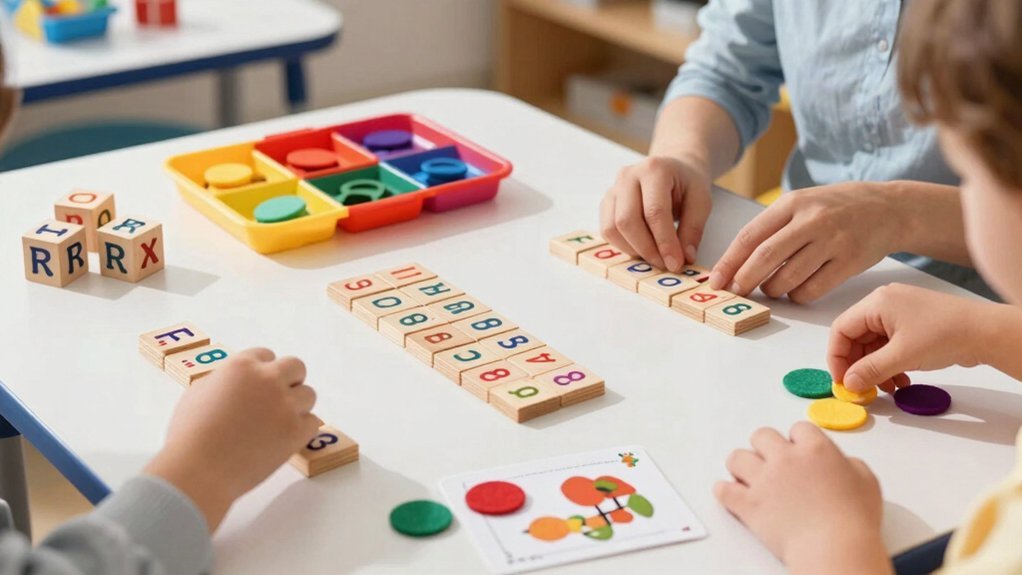
What tools truly sharpen a child’s phonemic awareness? You’ll find that explicit instruction paired with concrete manipulatives drives early literacy. Finger‑tapping, sound cards, and letter tiles let kids practice sound isolation, blending, segmentation, and manipulation while they engage in decoding practice. Progress checks keep tasks at the right challenge level, and a clear scope‑and‑sequence maps simple CVC patterns to complex clusters.
| Tool | Primary Skill |
|---|---|
| Sound cards | Sound isolation & segmentation |
| Letter tiles | Blending & manipulation |
| Bead strings | Decoding practice & phonemic awareness |
Use these resources daily, give immediate feedback, and watch phonemic mastery blossom. For classroom or home use, consider tools made with eco-friendly materials to promote sustainability alongside learning.
Interactive Play Materials That Turn Reading Practice Into Fun
When you blend storytelling with hands‑on play, reading practice becomes a joyful adventure. Interactive play ignites early literacy, letting early readers explore phonemic awareness and vocabulary development while they manipulate hands‑on materials. The Talk & Teach Bus, Farm and Tiny Friends Farm Animal Puppets turn scenes into role‑play, reinforcing letter recognition and emergent literacy. Meanwhile, Translucent Uppercase Letters, Bark Block Alphabet Letters, Lacing Beads with Chenille Stems, and Giant Fishing A‑Z Uppercase provide tactile pathways to reading practice, making abstract symbols concrete.
- Talk & Teach Bus & Farm – narrative‑driven vocabulary building
- Wildlife Finger Puppets – immersive oral language play
- Find Monty memory game – reinforces letter recognition through fun recall
- Magnetic Alphabet Fishing Game – hands‑on letter hunting for early readers
Creating a Montessori‑Inspired Reading Corner at Home
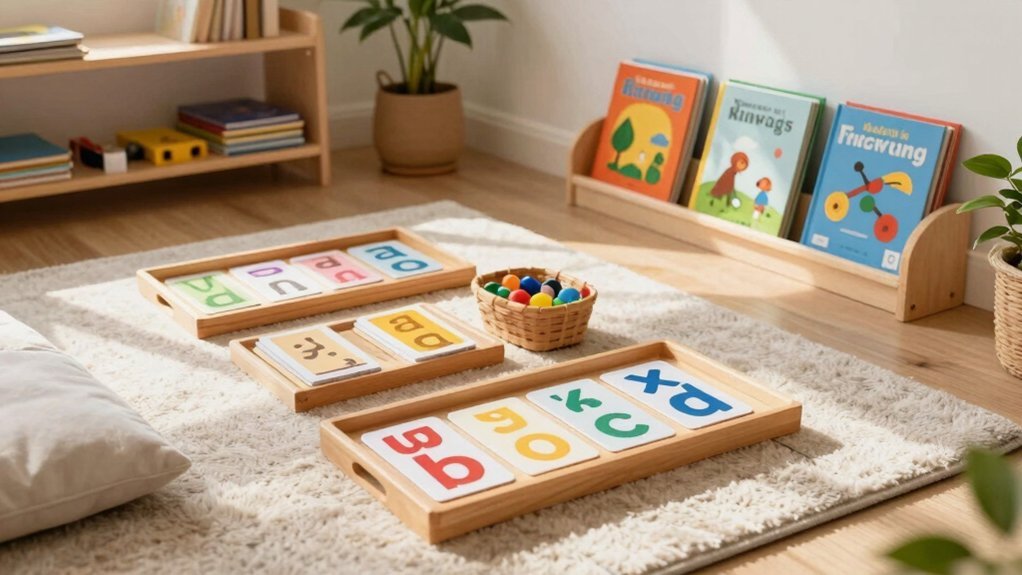
Ever wondered how a simple corner can spark a child’s love for reading? You can create a Montessori‑inspired reading corner that nurtures early literacy by using child‑sized furniture, soft lighting, cushions, and a rug for a calm, low‑distraction space. Keep real, age‑appropriate books within easy reach and label storage bins so the child can choose titles independently, fostering word recognition and elementary literacy. Add movable letters, word cards, and picture‑to‑word matching tools to support phonemic awareness and phonics practice. Arrange the corner so the child feels comfortable settling into independent reading, with minimal adult prompting. This setup encourages daily self‑directed sessions, builds confidence, and turns reading materials into a joyful, autonomous habit. Incorporating movable alphabet letters with color-coded vowels and consonants can further enhance phonics and word formation skills in young learners.
Frequently Asked Questions
How Often Should I Replace Worn‑Out Letter Cards?
You should replace worn‑out letter cards every few weeks, or whenever they start tearing or losing symbols; keeping them fresh maintains engagement, prevents frustration, and ensures effective learning for early readers.
Can Digital Apps Replace Physical Phonemic‑Awareness Tools?
You can use digital apps, but they shouldn’t fully replace physical phonemic‑awareness tools. Apps offer interactive feedback and portability, yet hands‑on cards reinforce tactile learning and maintain attention in ways screens often can’t.
What Age Is Appropriate for Introducing Sentence‑Building Games?
You can start sentence‑building games around five or six years old, once kids grasp basic word order and have a growing vocabulary. Keep tasks short, fun, and scaffolded so they stay engaged and confident.
How Many Books Should a Beginner Read Each Week?
You should aim for three to five books a week, depending on length and difficulty, because that pace builds fluency without overwhelming you, and it keeps motivation high while reinforcing comprehension skills.
Are Magnetic Boards Safe for Toddlers With Metal Allergies?
You should avoid magnetic boards for toddlers with metal allergies; the magnets can release tiny metal particles that might trigger reactions, so opt for non‑magnetic, allergen‑free alternatives instead.