

Aim for a 5‑10‑day rotation cadence with 8‑10 toys out at once. Start with a 2‑3‑week baseline, then swap weekly—preferably every 7 days—to keep novelty fresh without overwhelming cleanup. Let your child pick a couple of favorites to stay out, and label the rest for easy swaps. Watch for boredom cues; if a toy sits untouched for a few days, replace it sooner. Adjust the rhythm as attention spans grow, and you’ll discover deeper strategies ahead.
Determine Rotation Frequency for Your Toy Rotation Schedule
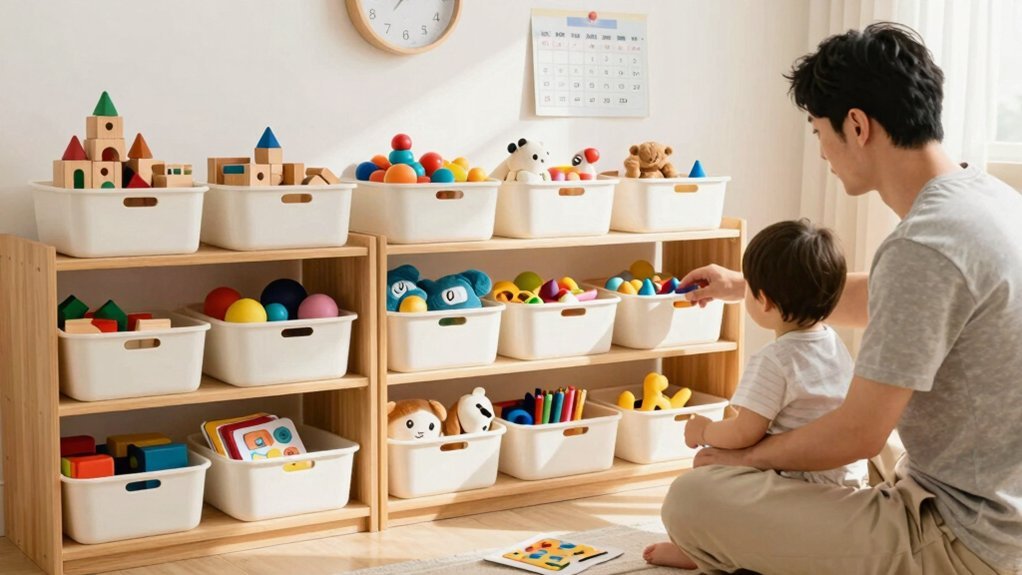
How often should you swap toys? You’ll find that a rotation frequency of every 5–10 days works well, with many parents preferring a weekly cadence. Start with a baseline of 2–3 weeks for the first rotation, then tweak the schedule based on engagement signals.
Keep 8–10 active toys out at a time and place the rest in labeled containers for storage rotation.
Watch for boredom cues—if a toy sits untouched or creates scattered clutter, it’s time to change the mix. Swap out underused toys sooner when they consistently underperform during a rotation.
Using child-sized furniture like a Montessori step stool can help create dedicated and accessible play spaces, encouraging independence during toy rotations.
Choose the Ideal Number of Toys for Each Rotation
You’ll want to keep about 8–10 engaging toys out at once, with a stash of 10 more ready to rotate in.
Choose items that match your child’s age and interests, mixing different types to spark curiosity.
Optimal Rotation Count
A sweet spot for most families is keeping 8–10 toys visible and within reach, while the rest wait in labeled bins for the next swap. You’ll notice that a modest number of active toys eases cleanup and supports clutter reduction. Set a rotation cycle of one week, then adjust if the child loses interest sooner or later. Keep track of each swap with a simple checklist so you know which toys have been out and when they return. Over time you’ll fine‑tune the number of toys per rotation, balancing variety with simplicity. Incorporating interactive art easels can further enrich playtime by blending creativity with developmental milestones.
| Cycle | Active Toys | Storage |
|---|---|---|
| 5 days | 8 | Bin A |
| 1 week | 9 | Bin B |
| 10 days | 10 | Bin C |
| 2 weeks | 8 | Bin D |
Age‑Appropriate Variety
Finding the right number of toys for each rotation hinges on your child’s age and attention span. An age‑appropriate variety means keeping 8–10 active toys in the play area while storing about 10 extras for later swaps. Pick a mix of fine motor, sensory, pretend, and gross‑motor items so the set feels fresh yet manageable. Your toy rotation schedule should follow a rotation cadence of five days to two weeks, with weekly changes working well for most kids. When you notice waning interest, adjust the count up or down—younger toddlers may need fewer items, while preschoolers can handle the full range. Use storage and refresh to rotate toys systematically, maintaining engagement without overwhelming your little one.
Create a Simple Toy Rotation Schedule That Really Works
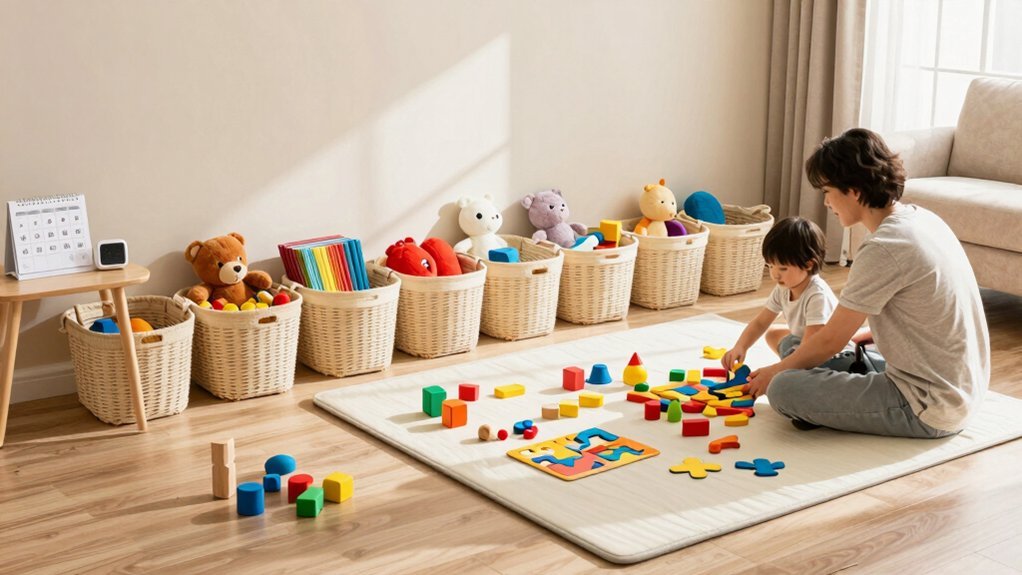
You’ll set a weekly rotation day and keep each set of toys out for about five to ten days before swapping.
This rhythm lets you spot boredom quickly and adjust the duration to match your child’s interest.
Including toys with open-ended design during rotation encourages creativity and problem-solving skills.
Weekly Rotation Frequency
Often, a weekly rotation works best: keep 8–10 toys out, then swap them out on a set day. You’ll notice a smooth rotation cadence when you stick to a weekly rotation, and the predictable rhythm helps kids anticipate new play. Use labeled bins or shelves for toy storage so you can pull the next set without hunting. When a toy sits untouched for a few days, trigger an engagement‑based swap; if they’re still playing, let it linger a bit longer. This flexible timing—every 5–10 days if needed—keeps novelty fresh while avoiding constant rearrangement. Tracking which items were out each week lets you fine‑tune the schedule, balancing variety with clutter reduction and keeping playtime exciting. Including toys with open-ended play configurations enriches development by encouraging creativity and motor skills during rotation.
Effective Rotation Duration
A well‑timed rotation keeps kids engaged without overwhelming them, so aim for a 5‑day‑to‑2‑week window and start with 8–10 toys out at once. You’ll notice boredom signals early, then adjust the rotation duration accordingly. Keep the active toy count steady, store the rest in labeled storage, and use weekly rotations to create rhythm.
- Set a baseline – Begin with a 2‑week cycle, monitor interest, then trim to 5‑day intervals if toys spark boredom.
- Watch for cues – When a child repeatedly asks for a different toy, that’s a boredom signal; swap it out immediately.
- Stay flexible – If cleanup becomes a hassle, shorten the cycle; if engagement stays high, extend it. Communicate that only the arrangement changes, not the total inventory, to ease transitions.
Involve Kids in Your Toy Rotation Process
Ever wonder how to turn toy rotation into a fun, collaborative routine? You can involve your child by letting them pick which toys stay out and which go into storage, using simple labels with words or pictures. On rotation days, ask for participation: they swap items, tidy the display, and help set the new arrangement. Explain that only the arrangement changes, not the total inventory, so the process feels like a game rather than a loss. Choose a rotation cadence that fits their attention span—typically every five to ten days or weekly—and adjust when interest wanes. Their engagement signals which pieces are underused, letting you tweak the set quickly and keep playtime fresh. Incorporating toys with age-appropriate safety standards can further reassure parents and enhance learning during play.
Manage Favorite and Never‑Out Toys in the Rotation
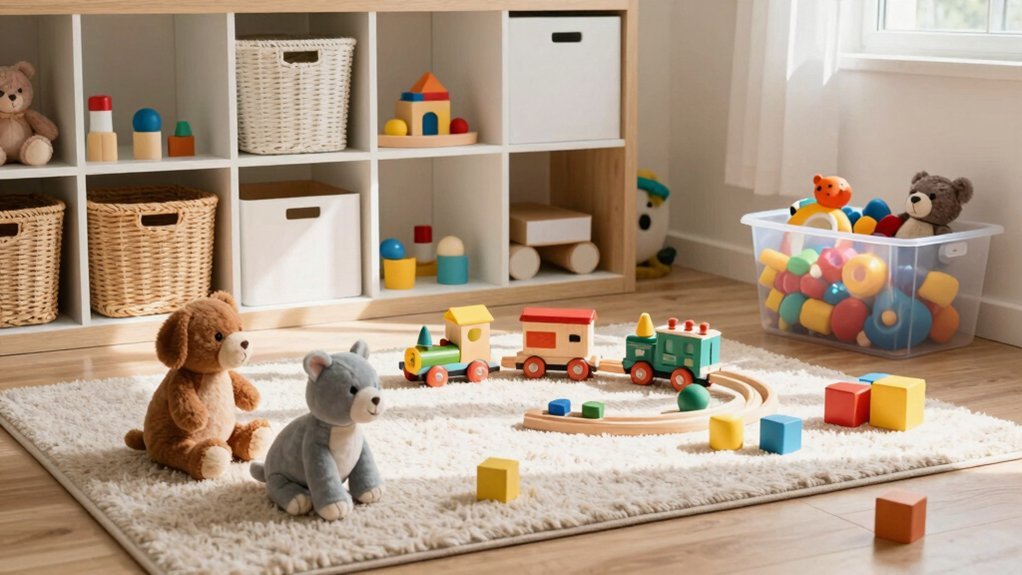
How do you keep your child’s beloved “never‑out” toys from drowning the rotation while still making space for fresh play? Balance is key: keep a core set of favorite toys visible, but let new items shine. Use a simple system to prevent never‑out toys from monopolizing the schedule.
Balance core toys, rotate fresh ones, and keep the schedule lively without overwhelm.
- Set a core count – Choose 2–3 favorite toys to stay in every rotation, and limit the rest to 8–10 active toys.
- Tag and rotate – Mark never‑out toys with a sticky note; swap one of the non‑core toys every 5–10 days.
- Monitor engagement – If a favorite loses interest, move it to the storage bin and replace it with a fresh toy.
This approach keeps the rotation lively, respects the child’s attachments, and maintains a manageable schedule. Additionally, consider including age-appropriate tools to encourage skill development while ensuring safe play.
Quick Fixes for a Toy Rotation Schedule That Falls Behind
Feeling stuck when your toy rotation lags? Set a concrete catch‑up target—swap 2–3 new pieces within the next 7 days—to kick‑start momentum. Trim the active set to 8–10 items and lock a weekly window for swaps, say every Sunday. Use a single labeled shelf or bin to streamline the process, then prioritize underused toys first so each category gets attention. Show the updated plan on a visual schedule—pictures on a calendar or a simple chart—so your child knows what’s coming and can stay engaged.
| Step | Action | Goal |
|---|---|---|
| 1 | Define 2‑3 new toys to add | Immediate catch‑up |
| 2 | Reduce active set to 8‑10 | Simplify swaps |
| 3 | Set swaps every 7 days | Consistent weekly window |
| 4 | Use labeled shelf/bin | Faster setup |
| 5 | Highlight underused toys | Balanced play |
Adjust Rotation Frequency as Your Child Grows
Starting with a 2‑3‑week rotation for toddlers and extending it to 3‑4 weeks as their attention span matures lets you match the schedule to their developmental pace. As your child grows, you’ll notice shifts in engagement that signal when to tweak the rotation frequency. Keep a flexible schedule: if a toy sparks sustained interest, let it stay longer; if it’s ignored, swap it out sooner within the same window. Pay attention to boredom cues, overstimulation, or repeated requests for a particular item, and adjust accordingly. Incorporating educational toys such as Montessori binomial and trinomial cubes can support developmental stages by providing hands-on exploration of algebraic concepts.
- Observe engagement signals each week.
- Extend or shorten the active set based on interest.
- Introduce spontaneous swaps after holidays or new arrivals.
This approach aligns toy rotation with child development and evolving attention span.
Frequently Asked Questions
How Often Should I Do a Toy Rotation?
You should rotate toys every 5‑10 days, aiming for a weekly cadence once you spot boredom. Keep 8‑10 items out, store the rest, and swap only the ones they’ve stopped using.
What Is the 10 Toy Rule?
You follow the 10‑toy rule by keeping eight to ten toys out for play while storing another ten for later swaps, rotating them every week or two based on your child’s interest and engagement.
What Is the 20 Toy Rule?
You follow the 20‑toy rule by keeping twenty toys accessible overall, rotating eight to ten at a time while storing the rest, swapping weekly or every five‑to‑ten days, and donating consistently ignored items.
How to Effectively Do a Toy Rotation?
You start by selecting 8‑10 toys, placing them on a low shelf, then weekly swapping 2‑3 with stored ones. Involve your child, label bins, and adjust the pace based on their interest.