

You’ll see that short bursts of movement flood the brain with oxygen and dopamine, sharpening attention and stabilizing mood. Quick dance parties, stretches, or hallway walks every 30–45 minutes reset focus and boost readiness for new material. Rhythm‑driven claps and beat‑based warm‑ups sync body and mind, while balance challenges and heavy‑work tasks fire vestibular and proprioceptive systems for sustained concentration. Obstacle courses that weave in counting or spelling turn learning into dynamic play, and calm‑then‑learn stretches lower cortisol before instruction. Keep exploring these strategies and you’ll uncover even more ways to keep kids engaged.
Why Movement Fuels Focus and Learning
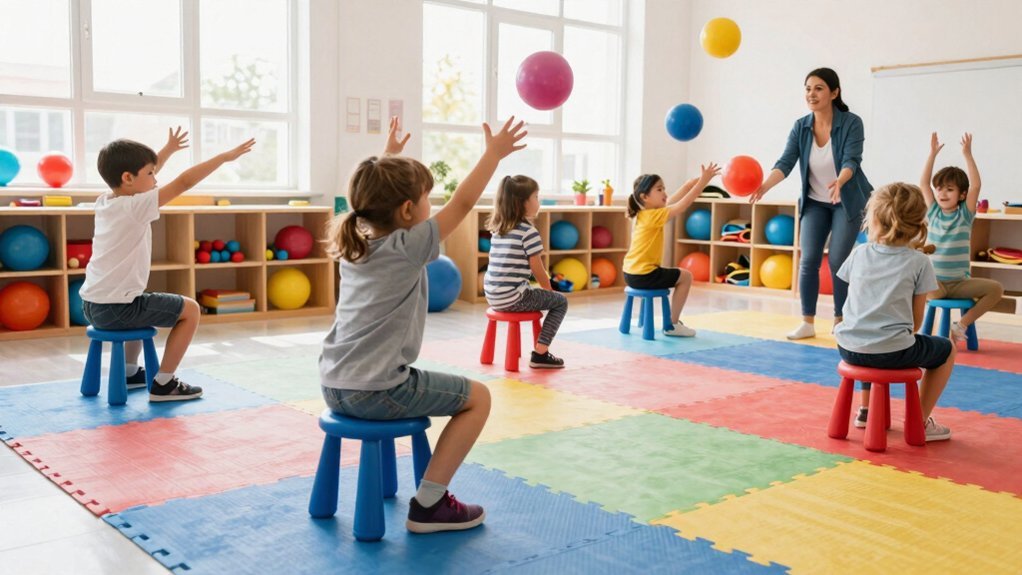
When kids move, their brains get a surge of blood and oxygen that fuels neural growth and sharpens attention. You’ll notice that a quick stretch or a short sprint spikes oxygen flow, delivering glucose and oxygen to the prefrontal cortex. This boost lights up attention‑related networks, sharpening focus for the next two hours.
Heavy work—pushing, pulling, or jumping—releases neurochemicals like dopamine and endorphins, which reinforce executive function and memory consolidation. By framing any activity as movement, you continuously refill the brain’s energy reservoir, keeping mood steady and alertness high.
The result is smoother concept grasp, longer‑term retention, and a classroom ready for learning, all rooted in enhanced brain development. Educational tools such as wooden balance scales engage children physically and cognitively, reinforcing these focus-enhancing principles through hands-on learning.
Start Brain‑Boosting Breaks to Reset Attention
After learning how movement fuels neural growth, you can harness that energy with short, purposeful breaks that reset attention. Schedule a 3‑minute dance party, a quick stretch, or a hallway walk every 30‑45 minutes. These movement bursts re‑energize the brain, sharpen focus, and smooth transitions between tasks. Kids notice the shift instantly, and off‑task behavior drops. Use a simple routine: signal the break, move, then return to work with renewed attention. Consistency builds sensory regulation, so each pause feels like a reset button for learning. Using tools like a foldable kid’s step stool can also encourage movement and engagement during breaks.
| Activity | Duration |
|---|---|
| Mini dance party | 3 min |
| Stretching series | 2 min |
| Short hallway walk | 4 min |
Rhythm‑Based Movement Activities to Keep Kids Focused on Learning
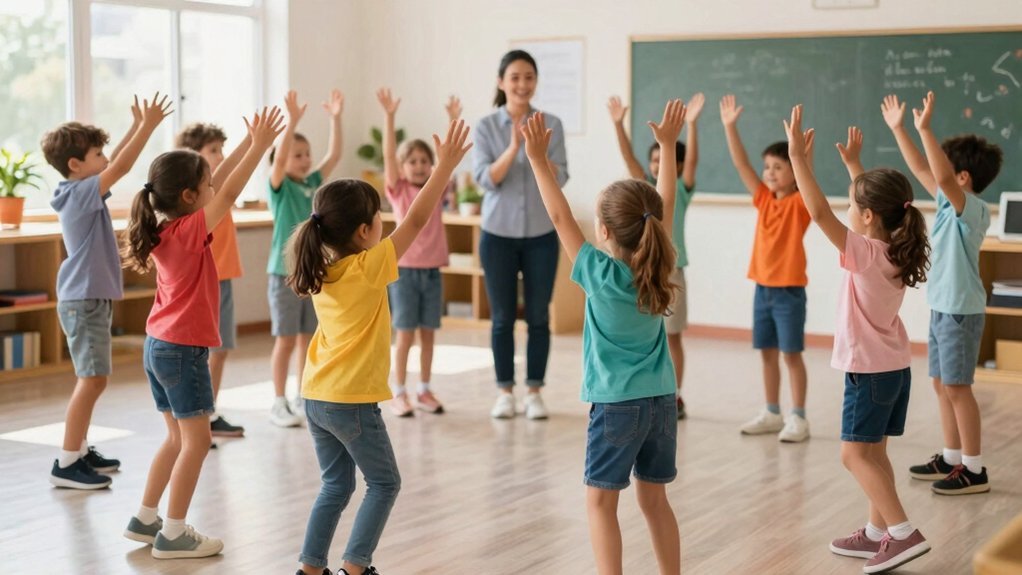
You can kick off a lesson with a beat‑driven warm‑up that gets hearts racing and minds sharp. Try musical pattern clapping games to turn abstract concepts into catchy, repeatable rhythms.
Set up rhythm‑based movement stations where kids sync steps or jumps to learning cues, keeping focus high and transitions smooth. Incorporating natural wood elements like those found in the ECR4Kids Dress-Up Center can create a calming environment that supports concentration.
Beat‑Driven Warm‑Ups
A beat‑driven warm‑up gets kids moving to a steady rhythm, instantly syncing their bodies and minds so they can transition from playtime to learning with sharper focus. You’ll notice that a 1‑3‑minute beat‑driven routine fires the vestibular and proprioceptive systems, sharpening body awareness and preparing them for the task ahead. As they step, clap, or sway on each pulse, dopamine and norepinephrine surge, boosting alertness and readiness. Use simple counting beats—like moving on every second pulse—to reinforce direction following and anticipatory planning. These short, periodic warm‑ups refresh cognitive resources, curb wandering attention, and improve on‑task behavior throughout the lesson. By embedding predictable beat patterns, you create a seamless transition that maximizes focus and engagement. Incorporating age-appropriate tools with ergonomic design and safety features can further enhance a child’s ability to stay engaged and confident during learning tasks.
Musical Pattern Clapping Games
Beat‑driven warm‑ups get the body ready, and musical pattern clapping games take that momentum straight into focused learning. When you lead kids through a simple rhythm, their brains sync to the beat, sharpening focus while the movement pumps blood and oxygen. Repeating patterns trains memory, so after a short clap break they recall concepts faster. Tempo changes and call‑and‑response cues teach them to follow directions, anticipate next steps, and transition smoothly between tasks—especially helpful for sensory‑regulation needs. Incorporating music-based activities such as the xylophone feature in wooden pounding toys can further enrich rhythm and melody recognition during movement play.
- Synchronize attention – clapping games link auditory cues to movement, keeping focus locked.
- Boost memory – repeated rhythmic patterns reinforce sequence recall.
- Enhance readiness – tempo shifts train direction‑following and smooth task transitions.
Rhythm‑Based Movement Stations
Creating rhythm‑based movement stations turns brief, tempo‑driven activities—like clap‑pause sequences or step‑tap ladders—into powerful focus boosters. You’ll set up short, timer‑based rounds, 60–90 seconds each, so kids stay engaged without mental fatigue. The repeating cadence syncs sensory input with instructional pacing, sharpening attention span and keeping bodies ready for learning.
When students plan a step or clap on beat, they practice motor timing that reinforces executive function, making transitions between tasks smoother.
The vestibular and proprioceptive feedback from rhythmic movement boosts body awareness, which in turn supports on‑task behavior and memory retention. By rotating stations, you give each child a fresh rhythm cue, reinforcing neural timing and coordination while maintaining high energy and focus.
Play Balance Games That Keep Kids Concentrated
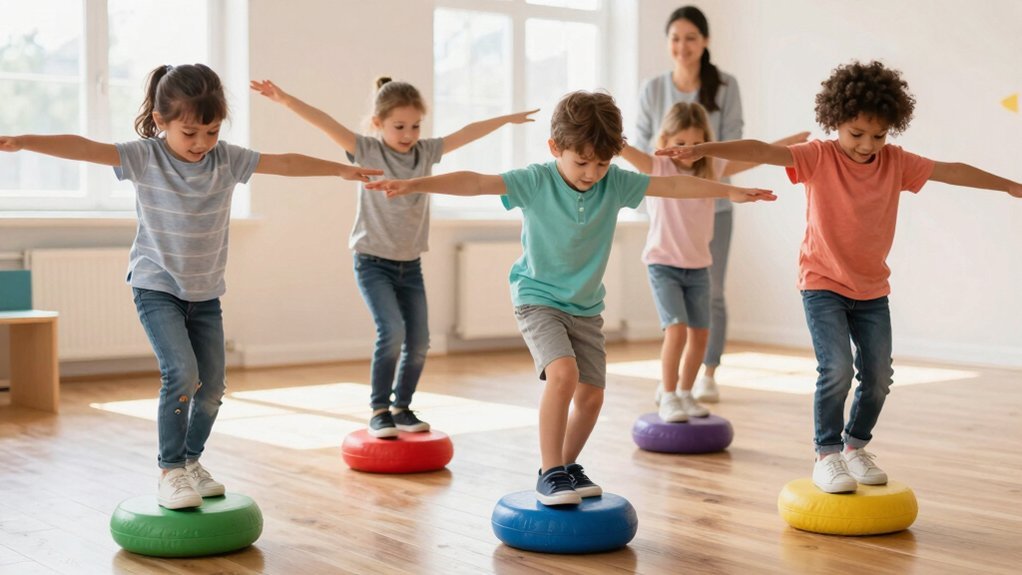
You’ll see how dynamic balance challenges keep kids’ bodies engaged while sharpening their attention.
By weaving interactive movement routines—like hopping obstacle courses or rhythm‑based balance tasks—into play, you boost concentration and make learning feel effortless.
These games blend physical effort with cognitive goals, so children stay on task and enjoy every step.
Incorporating activities that develop hand-eye coordination further strengthens children’s ability to focus and control their movements.
Dynamic Balance Challenges
Shifting weight on a beam or foam mat while reaching for targets fires the vestibular and proprioceptive systems, instantly sharpening your child’s attention. These dynamic balance activities act like a brain‑reset button, nudging executive function into gear. When you set up short, intense games—obstacle courses that demand steering, stopping, and turning—you give the nervous system a quick workout that translates into better focus for the next lesson. Adding variable surfaces or timed balancing tasks raises the cognitive load, encouraging faster transitions and stronger rule‑following. Pairing balance with counting or letter hunts binds movement to learning, reinforcing memory and sustaining attention throughout the day.
- Beam or mat weight shifts – boost vestibular input.
- Timed obstacle runs – heighten executive function.
- Balance‑while‑learning tasks – link movement to academic focus.
Interactive Movement Routines
Ever wonder how a quick game of “Statues” can turn a restless classroom into a focused learning hub? You can cue kids to freeze, then release into a short balance circuit—single‑leg stands or tandem walking—while you ask them to count or recite a fact. This movement interrupts monotony, spikes attention, and refreshes executive function for the next lesson.
Swap “Statues” for “Mirror the Teacher,” where they imitate posture and direction, reinforcing self‑regulation.
During transitions, set up a mini obstacle course that demands planning and problem‑solving; kids anticipate steps, adjust on the fly, and stay on task.
Pair academic prompts with hopping to numbers or balancing on a line, and you’ll see off‑task behavior drop while engagement and focus soar.
Heavy‑Work Tasks to Boost Body Awareness & Focus
Push a loaded backpack across the room, pull a grocery cart, or lift a laundry basket—these simple heavy‑work tasks give kids the proprioceptive input they need to ground their bodies and sharpen their attention. When you weave heavy work into everyday routines, you boost body awareness and support focus regulation. The physical effort sends strong signals to the nervous system, helping children settle, stay on task, and self‑regulate during learning. Pairing a short lift or push with a classroom activity turns a static lesson into a dynamic, movement‑based experience that renews engagement.
- Carry a weighted tote while delivering books – builds proprioceptive feedback.
- Push a loaded cart across the hallway – reinforces body awareness and focus regulation.
- Lift and move a laundry basket to another room – strengthens self‑regulation and attention.
- Incorporating realistic role-play costumes during playtime further enhances focus by stimulating imagination and cooperative engagement.
Sensory‑Rich Stations: Tactile and Vestibular Activities to Boost Engagement
After you’ve let kids feel the grounding power of heavy‑work, add tactile and vestibular stations to keep their bodies and minds fully engaged. You’ll set up tables with textured bins, weighted blankets, and wobble boards, then weave in spins, swings, or tilts that spark vestibular activities.
These stations promote sensory integration, letting children link touch and movement with academic tasks. When a child pushes a sandbag or rolls a foam roller, proprioceptive feedback fuels attention regulation, reducing distractibility.
Pair a jump‑to‑letter game with rhythmic claps, and the combined input boosts memory encoding. The result is smoother transitions, steadier posture, and higher participation—all while the classroom remains lively and focused.
Build Classroom Obstacle Courses That Reinforce Academic Concepts
How can a simple obstacle course become a dynamic classroom engine for learning? You design each station with a movement challenge that doubles as a math, spelling, or science task. Jump to numbered mats to practice addition, crawl through a tunnel while spelling a word, or lift a lightweight box to count fractions. Timed runs and clear progress markers sharpen sequencing, executive function, and focus. Heavy‑work elements boost body awareness, while varied modalities—balancing, hopping, crawling—stimulate vestibular and proprioceptive systems, keeping attention high. Pair each movement with data collection, tallying correct answers for instant feedback and concept mastery.
- Integrate academic prompts at every obstacle to turn physical effort into cognitive practice.
- Use timed challenges and visual progress cues to reinforce sequencing and sustain focus.
- Add heavy‑work stations to strengthen body awareness, supporting longer attention spans during learning.
Stretch to Calm the Nervous System Before Instruction
You can start each lesson with a gentle stretching routine that eases tension in the neck, shoulders, and hips. Pair those movements with deep breathing to activate the parasympathetic system and lower heart rate. This simple combo calms the nervous system, making kids ready to focus and engage.
Gentle Stretching Routine
Ever wonder how a brief, mindful stretch can quiet your nervous system before learning? You can start with a gentle routine that lowers cortisol, eases tension, and primes your brain for focus. By moving slowly and breathing naturally, you trigger parasympathetic activation, which sharpens attention and supports self‑regulation. A 1‑minute stretch of the neck, shoulders, and hamstrings can refresh the neural networks that handle executive function, making it easier to stay on task.
- Neck rolls – release upper‑body tension, improve circulation, and settle the nervous system.
- Shoulder shrugs – melt tightness, enhance posture, and boost focus.
- Hamstring stretch – lengthen the back, calm the mind, and reinforce self‑regulation.
Deep Breathing Integration
Ever wonder if a few mindful breaths can reset your nervous system before a lesson? You can start each class with a simple breathing routine that taps the parasympathetic system, lowering heart rate and cortisol within seconds. Guide children to inhale for four counts, fill the diaphragm, then exhale for six counts, stretching arms gently as they release tension. This slow, diaphragmatic breathing improves regulation, steadies emotions, and primes the brain for attention. When you repeat the pattern three times, you’ll notice smoother transitions into complex tasks and stronger executive function. Consistent use of breath‑to‑calm strategies builds a habit that sustains focus throughout the day, turning nervous energy into calm, purposeful learning.
Dance‑And‑Learn Sequences That Pair Music With Memory Retention
How can a simple dance routine turn a lesson into a memory‑boosting experience? When you pair music with learning, the rhythmic movement engages vestibular and proprioceptive systems, sharpening attention and reinforcing neural encoding. A short, structured dance-and-learn sequence acts as a movement break that refreshes the brain, so kids recall facts more accurately. By embedding counting, spelling, or math steps into choreography, you create multimodal encoding that boosts retrieval. The result is faster concept grasp and longer‑term memory retention.
- Rhythmic Repetition – Sync steps with a beat to cement information.
- Proprioceptive Cueing – Use body positions that mirror the material.
- Multimodal Integration – Combine counting, spelling, or math moves with music for deeper encoding.
Outdoor Walks That Use Movement to Sharpen Spatial Attention
When you move from a classroom dance routine to a brisk outdoor walk, the same principle of pairing motion with learning applies—only now the focus shifts to space. You’ll notice that outdoor movement that mixes direction changes, horizon scanning, and landmark hunts fires the brain’s navigation networks, sharpening spatial attention and boosting executive function for later desk work.
| Activity | Spatial Task | Benefit |
|---|---|---|
| Grid walk | Step to marked points | Improves proprioception |
| Landmark hunt | Identify trees, signs | Enhances posterior parietal activation |
| Step count | Count steps between clues | Strengthens attentional control |
| Speed shift | Alternate fast/slow paces | Refines vestibular input |
| Shape trace | Follow a circle or zig‑zag | Reinforces spatial memory |
These purposeful walks give children a movement‑rich break that translates into better focus, planning, and adaptability when they return to classroom tasks.
Frequently Asked Questions
How Much Movement Is Needed Daily for Optimal Focus?
You should aim for at least 60 minutes of moderate‑to‑vigorous movement each day—mixing play, structured exercise, and short activity breaks—to keep your child’s brain alert, reducing fatigue and boosting focus.
Can Movement Improve Focus for Children With ADHD?
Yes, movement can sharpen an ADHD child’s focus. You’ll notice quicker attention when they take short breaks, stretch, or do quick aerobic bursts, because physical activity boosts dopamine and reduces restlessness.
What Age‑Appropriate Movements Work Best for Early Learners?
You should try short, structured activities like jumping jacks, balance‑beam walks, and rhythmic clapping for ages three to five; these keep them engaged, improve coordination, and boost attention without overwhelming them.
How Do Cultural Differences Affect Movement‑Based Learning?
You’ll notice cultural norms shape movement‑based learning: some societies value stillness, limiting active drills, while others embrace rhythmic play, encouraging dynamic gestures that boost engagement and comprehension.
Are There Risks of Overstimulation From Excessive Classroom Movement?
You can risk overstimulation if you let movement dominate lessons; too much activity can fatigue kids, scatter attention, and reduce retention, so balance active breaks with quieter, focused periods.



Leave a Reply