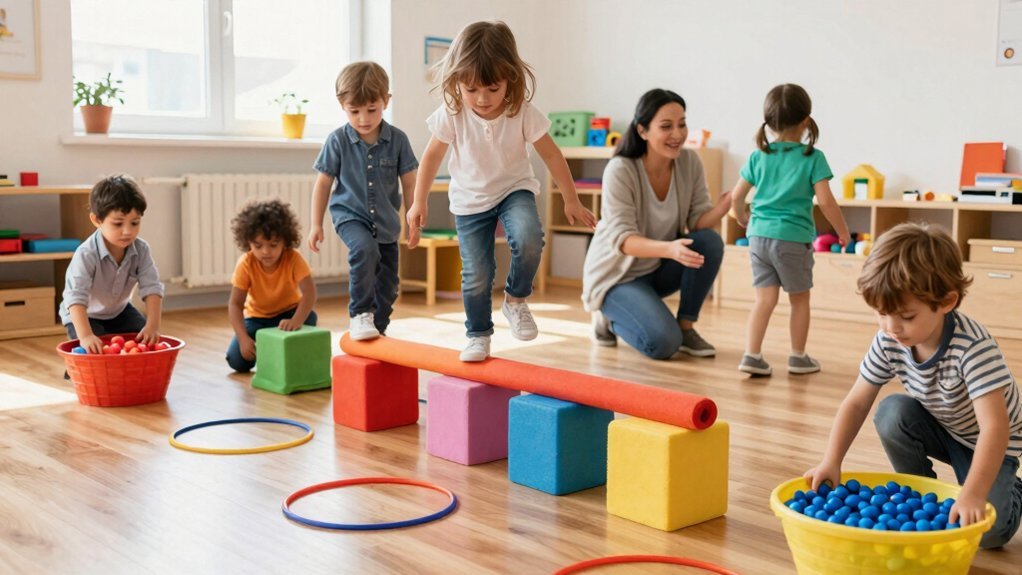
You’ll find that kinesthetic learning lets you master concepts by moving, touching, and manipulating objects, turning lessons into hands‑on play that boosts retention and confidence. It taps into your natural energy, using gestures, props, and movement breaks to keep focus sharp. You’ll thrive when you can act out stories, use manipulatives, and explore ideas physically. This approach fits the VARK model’s kinesthetic style and supports deeper understanding. Keep going to discover how to create kinesthetic‑friendly environments and assess progress.
What Is Kinesthetic Learning and Why It Matters?

Why does movement matter when you learn? You thrive when you can touch, lift, and shift objects while processing ideas. Kinesthetic learning taps that instinct, letting you absorb concepts through whole‑body engagement and tactile feedback. About a third of all learners—up to 40 % of school‑age children and 45 % of ESL students—prefer this style, so offering hands‑on, movement‑based activities boosts retention and confidence. When you manipulate manipulatives, you build mental models faster than listening to a lecture. These active experiences sharpen problem‑solving, reinforce memory, and spark enthusiasm. Montessori and brain‑based methods already emphasize such strategies, proving that when you move, you learn more efficiently and enjoyably. Many educational tools, like the wooden Montessori multiplication boards, combine tactile engagement and visual learning to enhance mastery of multiplication concepts.
Why Movement Is Essential for Young Learners
When children move, their brains fire up, priming neural pathways for new information and giving them the mental reset they need during stressful moments. You’ll notice that brief movement breaks boost focus, letting young learners stay on task longer. Kinesthetic activities match their natural energy, turning restless wiggles into purposeful learning moments. By letting hands manipulate objects, trace shapes, or act out concepts, you deepen memory and comprehension. Structured movement also builds classroom cohesion, physical fitness, and social‑emotional growth, echoing Montessori’s “what the hand does, the mind remembers” principle.
Movement ignites neural pathways, turning brief breaks into focused, memorable learning moments.
- Brain‑ready breaks improve attention.
- Hands‑on tasks reinforce memory.
- Movement aligns with kids’ energy levels.
- Physical activity supports social‑emotional development.
Including lightweight designs in learning materials makes it easier for children to engage in frequent movement and manipulation activities.
Core Characteristics of Kinesthetic Learners
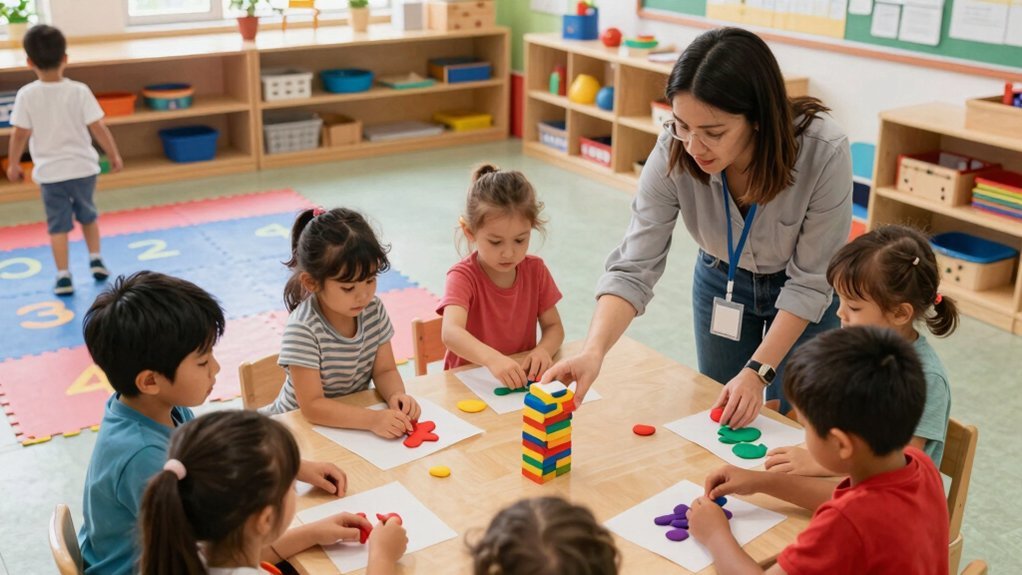
What sets kinesthetic learners apart is their instinctive drive to learn through movement and touch. You’ll notice they thrive on hands‑on tasks, constantly gesturing, tapping, or rearranging objects to stay focused. Their high energy fuels multisensory learning, so they absorb concepts best when you combine touch, action, and real‑world interaction. In math they might manipulate blocks; in art they’ll sculpt; in drama they’ll act out scenes. This active engagement sharpens hand‑eye coordination and reaction speed, turning everyday movement into powerful learning moments. Using materials designed for open-ended exploration encourages these learners to develop scientific thinking and fine motor skills.
| Trait | Example | Benefit |
|---|---|---|
| Tactile focus | Building models | Deepens understanding |
| Gesture‑rich speech | Using hand motions while explaining | Reinforces memory |
| High energy | Constantly moving during lessons | Sustains attention |
How the VARK Model Defines a Kinesthetic Preference
Ever wondered how the VARK model pinpoints a kinesthetic preference? It classifies you as a kinesthetic learner when you absorb info through movement and touch, not just sight or sound. Within VARK, this style sits alongside visual, auditory, and reading/writing preferences, allowing you to blend modalities. You thrive on hands‑on activities, manipulatives, and real‑world tasks that demand active engagement. The model also stresses multisensory experiences, so you benefit when lessons combine motion, texture, and sound.
- You learn best by doing, not listening.
- You need physical interaction to internalize concepts.
- You prefer authentic, movement‑rich tasks.
- You can integrate other VARK styles for richer understanding.
Step stools designed with Montessori principles encourage the physical interaction that kinesthetic learners need for optimal development.
Everyday Signs a Child Thrives on Hands‑On Learning

Usually you’ll spot a child thriving on hands‑on learning when they light up during activities that let them touch, move, and build—whether it’s stacking blocks, sorting objects, or dancing to a rhythm. You’ll notice them gesturing while speaking, staying engaged during interactive tasks, and recalling information faster when movement is part of the lesson. Kinesthetic learning shows up as quick problem‑solving, sustained attention after brief brain‑break movements, and excitement in learning centers that let them explore.
| Sign | Example | Why it matters |
|---|---|---|
| Bright focus | Joining a music circle and moving to beat | Reinforces memory through movement |
| Active gestures | Pointing, tapping while explaining | Shows multisensory processing |
| Rapid retention | Remembering steps after a hands‑on experiment | Links physical action to cognition |
Creating a Classroom That Welcomes Kinesthetic Learners
How can you transform a room into a kinetic learning hub? Start by arranging flexible zones that invite movement and tactile play. Offer clear, concise directions that lead to immediate, hands‑on activities. Keep energy high with short, frequent movement breaks so kids stay focused.
- Set up learning stations with manipulatives like blocks, sand, or textured letters.
- Provide a “move‑and‑learn” corner where children can stand, march, or pace while reciting facts.
- Use role‑play props that let kinesthetic learners act out stories or scientific processes.
- Schedule 3‑minute movement breaks every 15‑20 minutes to reset attention.
- Incorporate child-safe tools such as ergonomic wooden hammers to enhance fine motor skills through tactile play.
Simple Prop‑Based Activities for Kinesthetic Learning
Transforming those flexible zones into a kinetic hub naturally leads to hands‑on props that keep kids moving and thinking. You’ll give each child 3‑5 concrete materials—blocks, beads, or buttons—and ask them to sort, count, or label them while you narrate the task. As they manipulate the items, you reinforce vocabulary and concepts in real time. Rotate the props between stations so movement stays fresh and fatigue fades, matching short attention spans. Keep instructions clear and brief; the physical act of moving a block to match a numeral creates instant feedback that cements understanding. By pairing kinesthetic engagement with tangible, hands‑on tools, you boost retention and make learning feel like play. Toys like wooden spinning tops further support fine motor development and cause-and-effect learning through interactive play.
Interactive Storytime: Role‑Play and Acting Out Narratives
Kick off storytime by inviting kids to become the characters, letting them act out each scene with gestures, voices, and simple props. You’ll see kinesthetic learning spark as they embody plot twists and rehearse vocabulary through movement. Interactive storytime becomes a dynamic rehearsal space where each child contributes to the narrative flow. Role‑play also builds confidence and reinforces comprehension without a screen.
- Mime the climax – students use body language to convey tension.
- Gallery walk for poetry – kids walk around, reading verses aloud while striking poses.
- Charades for character traits – act out emotions or actions to solidify meaning.
- Prop‑swap dramatization – swap simple items to shift roles quickly, keeping energy high.
These steps turn stories into lived experiences, boosting memory and engagement.
Assessing Kinesthetic Storytime Activities
Ever wonder if your kinetic storytime truly boosts learning? You can gauge success by pairing kinesthetic activities with clear, movement‑based assessment tools. Observe whether children accurately retell plot points after acting out scenes or using props; note their ability to stay on task during structured movement breaks.
Use gallery walks to see if they discuss lines at each station and demonstrate understanding through gestures. Record how mime, charades, and dramatized readings reveal grasp of vocabulary, tone, and character motives. Create simple rubrics that score participation, accuracy, and enthusiasm during active storytelling. By tracking these metrics, you’ll pinpoint which activities reinforce recall and which need tweaking, ensuring your storytime remains both lively and educational. Including autonomous error correction features in activities can further support independent learning and engagement.
Multimodal Lesson Design: Visual, Auditory & Kinesthetic
After measuring how well kinesthetic storytime supports recall, you can broaden the approach by weaving visual and auditory cues into every lesson. You’ll notice that kinesthetic learning shines when you pair bright pictures, clear narration, and hands‑on tasks. A tight multimodal lesson design keeps children engaged and deepens understanding. Use movement breaks to reset focus and reinforce concepts through active participation.
- Show a vivid diagram, then let kids trace its shapes with their fingers.
- Play a short audio clip, then ask learners to act out the described action.
- Provide manipulatives for math, letting children count, sort, and move pieces.
- End with a brief movement break, encouraging a stretch or a quick dance before summarizing.
How to Measure Progress With Observational and Practical Assessments
Where can you see real growth in a kinesthetic learner? You’ll notice it when the child’s movement becomes purposeful, when they manipulate objects with intent, and when they stay on‑task during brain breaks. Use observational assessments to log engagement, frequency of movement, and gesture use. Pair that with practical assessments—hands‑on demonstrations like building, sorting, or manipulating items—to confirm understanding beyond words. Document specific behaviors and link them to concept mastery.
| Assessment Type | What to Watch | How to Record |
|---|---|---|
| Observational | Engagement, fidgeting, gestures | Checklists, notes |
| Practical | Hands‑on demonstrations, task completion | Rubrics, photos |
| Combined | Movement + mastery | Progress charts, anecdotes |
These tools give you a clear, concise picture of kinesthetic learning progress.
Parent‑Friendly Kinesthetic Learning Tips for Home
When you see a child’s movements becoming purposeful and stay‑on‑task, that same progress can be nurtured at home with simple, movement‑rich routines. You can turn everyday moments into kinesthetic learning experiences that keep kids engaged and reinforce concepts.
- Set timed movement breaks – every 15‑20 minutes, pause for a quick stretch or a dance‑around‑the‑room to reset attention.
- Create hands‑on activities – use blocks, sand, water, or puzzles to explore math, science, or language through tactile play.
- Integrate role‑play actions – act out a story’s characters, letting your child physically act out events while you narrate.
- Observe and adapt – note whether your child prefers quiet manipulation or active pretend play, then tailor tasks to those preferences.
These routines embed kinesthetic learning into daily life, making learning lively, concrete, and memorable.
Frequently Asked Questions
What Is Kinesthetic Learning for Kids?
You learn best when you move, touch, and manipulate things, so kinesthetic learning means you grasp concepts through hands‑on activities, gestures, and full‑body engagement that turn doing into understanding.
What Are Three Examples of Activities for Kinesthetic Learners?
You can try building block towers, acting out story scenes with props, and doing quick stretch‑and‑march brain breaks; each lets you move, touch, and explore concepts physically.
Are ADHD Kinesthetic Learners?
Yes, you’re a kinesthetic learner if you have ADHD; you thrive on movement, fidgeting, and hands‑on tasks, so incorporating active breaks and tactile activities will keep you engaged and focused.
What Is an Example of Kinaesthetic Learning?
You can have kids build a tower with blocks, then count each piece as they stack, feeling the weight and seeing the height rise, which reinforces counting and spatial concepts through active, tactile play.



Leave a Reply