
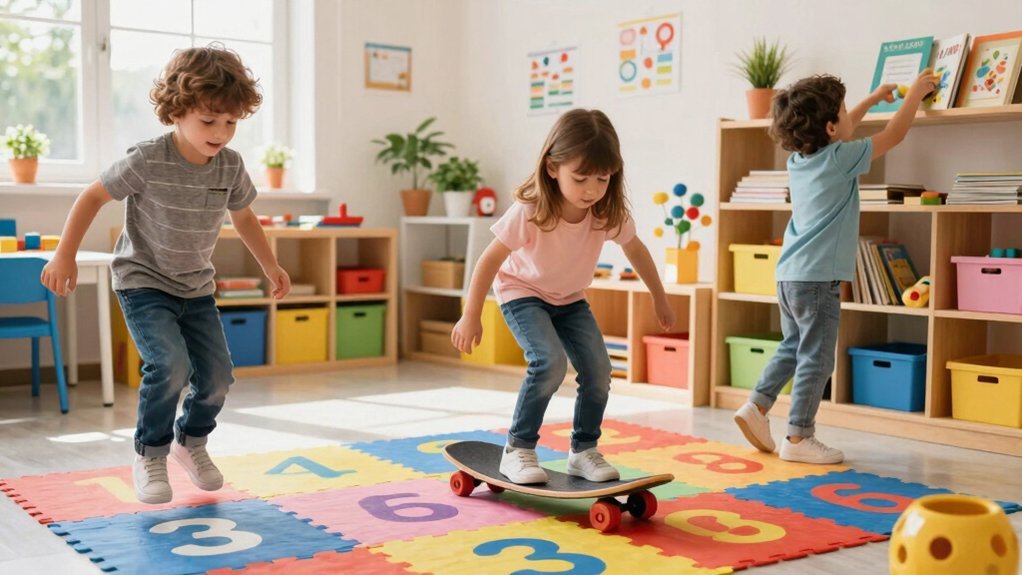
When you let kids move while they learn, their brains release dopamine, norepinephrine, and BDNF, which boost alertness, mood, and synaptic growth. Those chemicals also sharpen working memory and help them switch tasks more easily, so facts stick better. Plus, movement lifts mood, reduces stress, and improves social skills, creating a calmer classroom. Keep exploring to discover how to weave these benefits into everyday lessons.
How Movement Boosts Brain Chemistry for Learning

Ever wonder why a quick stretch can sharpen your focus? When you move, your brain releases dopamine, norepinephrine, and BDNF, sparking alertness and mood stability. Those chemicals boost working memory, letting you hold facts longer, and sharpen executive function, so you plan and switch tasks effortlessly. Embodied learning taps this chemistry: acting out ideas engages the whole body, forging stronger neural pathways. As you jump, stretch, or sway, BDNF nurtures synaptic growth, making new connections stick. The surge of dopamine fuels motivation, while norepinephrine heightens attention. Together, they reduce anxiety, keep disruptions low, and turn physical activity into a powerful catalyst for learning. Using Montessori-friendly tools like visual timers can further enhance focus and independence during learning activities.
How Movement Improves Attention and Memory Retention
When you keep moving, the dopamine, norepinephrine, and BDNF released don’t just lift your mood—they sharpen your focus and lock information into memory. You’ll notice that short, purposeful movement every 15‑20 minutes resets your attention, letting you dive back into learning with fresh focus. This embodied approach links physical actions to concepts, so children encode material more deeply and retrieve it faster.
- Micro‑breaks – brief stretches or jumps boost attention for the next task.
- Gesture‑based problem solving – acting out math or language cues strengthens memory pathways.
- Whole‑body enactments – moving through a story or scientific process creates lasting neural connections.
Incorporating musical instruments with age-appropriate safety standards encourages sensory engagement that complements physical movement and enhances cognitive development.
How Moving Your Body Enhances Mood, Social Skills, and Classroom Calm
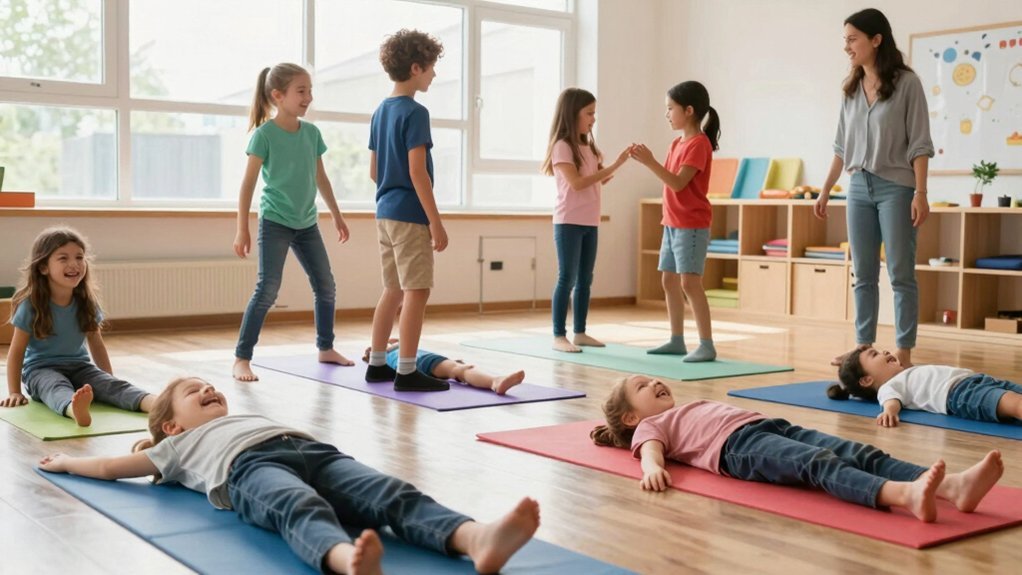
Curious how a quick stretch can lift your mood and smooth classroom dynamics? When you engage in physical activity, your brain releases endorphins and mood‑regulating chemicals, making you feel happier and more relaxed during peer interactions. A brief movement‑based learning break reduces stress, eases anxiety, and supports better sleep, which together foster classroom calm. You’ll notice sharper self‑regulation, fewer disruptions, and steadier focus as you shift between tasks. Acting out stories or doing kinesthetic math strengthens social skills, expands vocabulary, and encourages cooperative learning. By weaving micro‑movements into daily routines, you nurture mood, boost social skills, and create a calmer, more engaged classroom environment. Using mats with a non-slip surface technology can help create safe, defined spaces for movement breaks, minimizing distractions and promoting stability.
Frequently Asked Questions
Why Do Some Children Prefer Standing Over Sitting During Lessons?
You prefer standing because it boosts your focus, reduces restlessness, and lets you expend excess energy, making it easier to stay engaged and process information without feeling confined to a seat.
How Does Cultural Background Influence Movement‑Based Learning Preferences?
Your cultural background shapes how you view movement in learning; societies that value kinesthetic interaction encourage you to stand or fidget, while more lecture‑oriented cultures push you toward stillness and seated focus.
What Role Does Classroom Layout Play in Encouraging Physical Activity?
You’ll find that an open, flexible classroom layout encourages physical activity by giving you space to move, easily access stations, and rearrange furniture, which keeps you engaged and motivated to learn.
Can Movement During Learning Affect Language Acquisition Speed?
Yes, movement boosts language acquisition speed; you’ll notice kids retain words faster when they’re physically engaged, because kinetic activity stimulates brain regions tied to memory and speech processing.
Do Neurodivergent Students Benefit Differently From Movement in Class?
You’ll see neurodivergent students often thrive with movement, because it helps regulate sensory input, boosts focus, and supports executive‑function tasks, leading to clearer engagement and faster learning.