
Show each letter, say its name aloud, and have kids repeat it to lock in visual and auditory cues. Let them shape the letter with play‑dough while you name each stroke, then trace it with a finger as you chant the sound. Use textured cards for tactile identification and match each letter to a familiar object. Turn letters into movement cues—jump to “B,” spin for “S,” or hop to a foam letter on a mat. Keep stations simple, rotate groups, and add quick challenges for fast learners. Keep going and discover even more strategies.
5‑Step Multi‑Sensory Alphabet Routine for Preschoolers

A solid multi‑sensory routine starts by showing the letter, then you model its name aloud and have the child repeat it, cementing visual and auditory recognition. Next, you guide the child to form the letter with play‑dough or pipe cleaners, naming each stroke so they feel the shape while hearing the sound. After that, trace the character with a finger, saying the letter name or its phonemic cue, linking tactile motion to auditory input. Hand them a textured card; let them identify the letter by touch, reinforcing multisensory memory. Finish with a quick matching game that pairs the letter with a familiar object or initial sound, sharpening phonemic awareness and solidifying letter recognition. Incorporating tools like the Fisher-Price 4-in-1 Activity Table/Art Easel can enhance this routine by providing interactive learning stages tailored for young children.
Craft Multi‑Sensory Alphabet Letter Cards From Everyday Materials
Start with sturdy cardstock or index cards as the base, then drizzle colored glue into the shape of each lowercase letter, letting the glue dry completely before adding texture.
Start with sturdy cardstock, drizzle colored glue into each lowercase letter, let it dry, then add texture.
Once dry, sprinkle a pinch of salt or sand onto the raised glue to create tactile letters that feel rough and varied.
Cut each dried letter into its own card, keeping the alphabet set organized for quick access.
You can store the cards in a small box or clip them onto a ring for easy transport.
When kids trace the multisensory letters, they’ll engage sight, touch, and fine‑motor skills simultaneously.
Use these cards for matching games, word‑building challenges, or simple sorting activities that reinforce letter recognition while keeping play lively and hands‑on.
Incorporating movable hands practice can further enhance fine motor development alongside sensory letter tracing.
Make Letter Sounds Come Alive With Hands‑On Activities

After you’ve created tactile alphabet cards, turn them into sound‑making tools by letting kids feel each letter while they say its phoneme. You’ll see how a multisensory approach sharpens focus: first they look, then they speak, and finally they touch the raised shape. Pair each letter name with its sound during short, frequent hands‑on activities, so the phoneme sticks in memory. Sequence the steps—visual cue, vocalization, tactile reinforcement—then link the sound to a real object that starts with that letter, like “b” for ball. Keep sessions brief but lively, encouraging kids to manipulate the cards while vocalizing. This rhythm builds automaticity, deepening letter‑sound connections without overwhelming them. For an enhanced hands-on learning experience, consider using a Montessori step stool to foster independence during activities at kitchen counters or tables.
Play Multi‑Sensory Alphabet Movement Games to Boost Kinesthetic Learning
Ever wondered how a simple hop, spin, or stomp can turn alphabet practice into a kinetic adventure? You can turn each letter into a movement cue, letting kids walk to “B,” spin for “S,” or dino‑stomp to “D.” These multi‑sensory, kinesthetic learning activities link actions to sounds, so the brain forms a strong letter‑sound connection.
Spread foam letters across a play mat and have children jump to the right one, or set up a sidewalk‑chalk trace where they hop from A to Z. Printable scavenger‑hunt cards give quick prompts: “Find a red object that starts with ‘R’ and hop three times.” By embedding movement games into daily practice, you keep energy high, reinforce automaticity, and make alphabet mastery feel like play.
Adapt Multi‑Sensory Alphabet Activities for Small or Large Classrooms
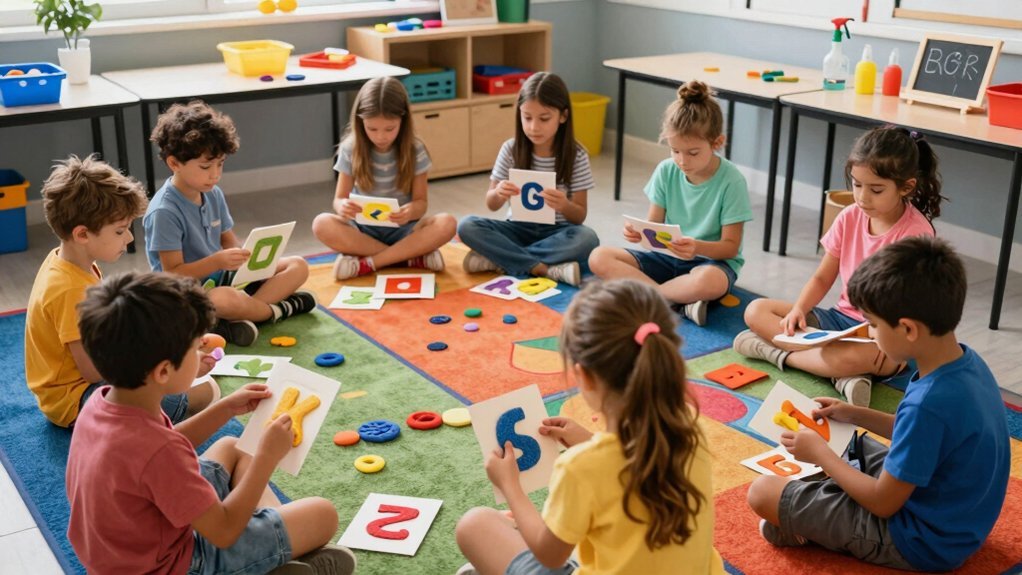
How can you tailor multi‑sensory alphabet activities to fit any class size without losing their impact? Start with a core progression that stays the same whether you have ten or a hundred learners.
In a small class, pair students for targeted multisensory letter work—hand them foam letters, have them match sounds, and give instant feedback. This one‑on‑one focus maximizes individualized practice.
In a large classroom, set up stations with identical, scalable activities: printable cards, shells of glue, or tactile tiles. Rotate groups on a clear schedule, keep instructions concise, and use simple timers to manage transition s.
Because the materials are inexpensive and modular, you can add or remove components without breaking the sequence. Offer extra challenges for fast masters, ensuring every child advances in letter learning.
Frequently Asked Questions
What Is a Multisensory Way to Learn Letters?
You’ll learn letters by seeing them, saying their sounds, and tracing them with your fingers or clay—combining visual, auditory, and tactile input so each form reinforces the others instantly.
What Are the Multi Sensory Teaching Strategies?
You’ll combine visual cues, spoken sounds, and tactile activities—show letters, say their names, trace them in sand, use magnetic letters, chant rhythms, and employ interactive apps for simultaneous sensory reinforcement.
Is It Normal for a 4 Year Old to Not Know ABCS?
Yes, it’s normal if you don’t know all the ABCs yet; most four‑year‑olds know only a few letters, and they’ll pick up the rest as you keep practicing and exploring.
What Are the Multisensory Activities for Letter Formation?
You can shape letters with Gel Bags, roll Wikki Stix, snap Geoboard pegs, press pattern blocks, trace sand‑covered cards, or mold salt‑sprinkled dough, all while naming each letter aloud.