
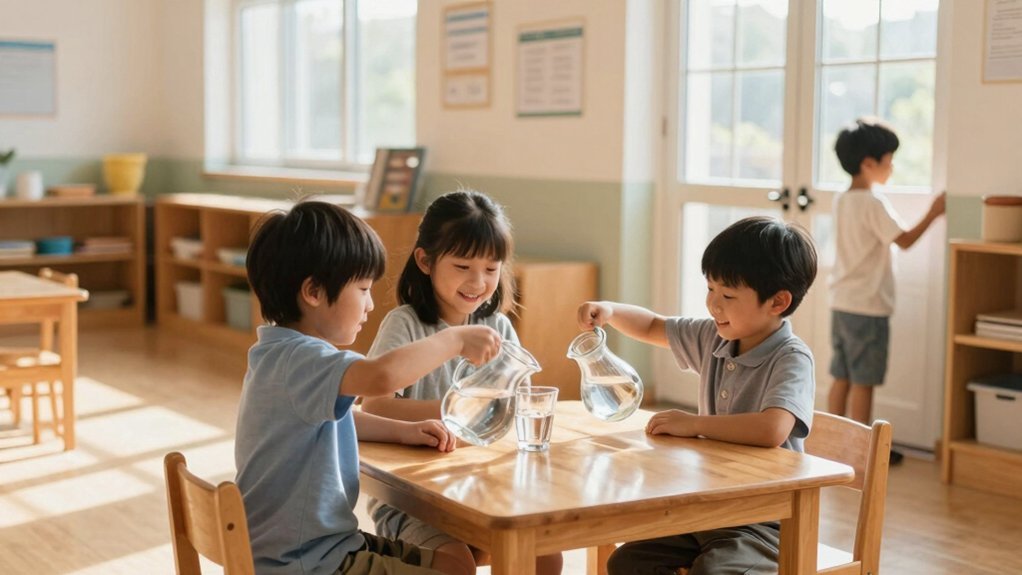
You’ll see that grace and courtesy lessons help kids notice others’ needs, which builds genuine empathy; they give children calm‑down tools and practice opportunities that boost self‑confidence; and they teach respectful greetings, listening, and caring for shared spaces, fostering lasting respect for people and the environment. Keep going to discover more about how these habits shape thriving learners.
Grace and Courtesy Lessons Build Empathy
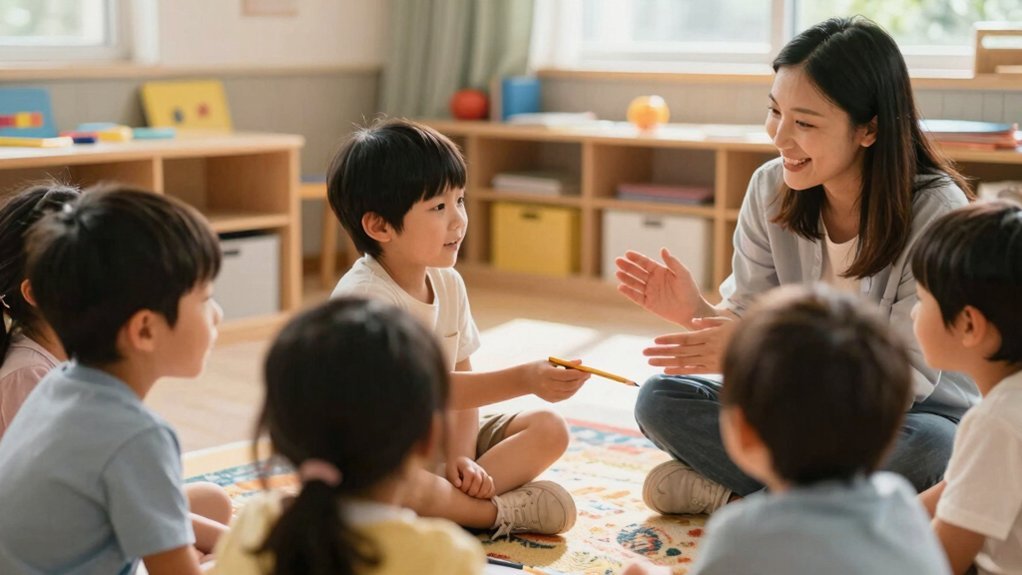
Grace and courtesy lessons spark empathy by urging you to notice others’ needs—whether it’s offering help or waiting your turn.
Grace and courtesy lessons spark empathy, urging you to notice others’ needs, from offering help to waiting your turn.
In a Montessori education setting, you see grace and courtesy woven into daily routines, modeling behavior that shows how to use polite language and eye contact.
When you practice active listening, you tune into peers’ feelings, which fuels empathy and prosocial behavior.
Those interactions shape social development, turning simple gestures into powerful tools for classroom harmony.
You learn to recognize when a classmate struggles and respond with kindness, reinforcing a shared sense of humanity.
Over time, these repeated experiences build a sturdy foundation for empathy, guiding you to act compassionately beyond the classroom.
Integrating calm-down corner tools into lessons further supports emotional regulation, helping children manage feelings and respond thoughtfully in social situations.
Grace and Courtesy Lessons Strengthen Self‑Confidence
When you move from feeling others’ emotions to acting on them, you also start noticing how your own abilities grow. Grace and Courtesy lessons give you structured chances to practice independence and social interactions, so your self‑confidence spikes. In a Montessori setting, Practical Life activities—like greeting peers, offering help, or waiting your turn—serve as modeling moments that turn into real‑life practice. Each successful communication builds self-esteem and shows you that you can contribute meaningfully. The environment minimizes embarrassment, encouraging safe risk‑taking and reinforcing your belief in your own competence. As you master these tasks, you feel more autonomous, and incremental successes in social navigation cement a lasting sense of self‑confidence. Tools designed with Montessori safety features help create a secure environment where children can practice new skills confidently.
Grace and Courtesy Lessons Foster Respect for Others and the Environment
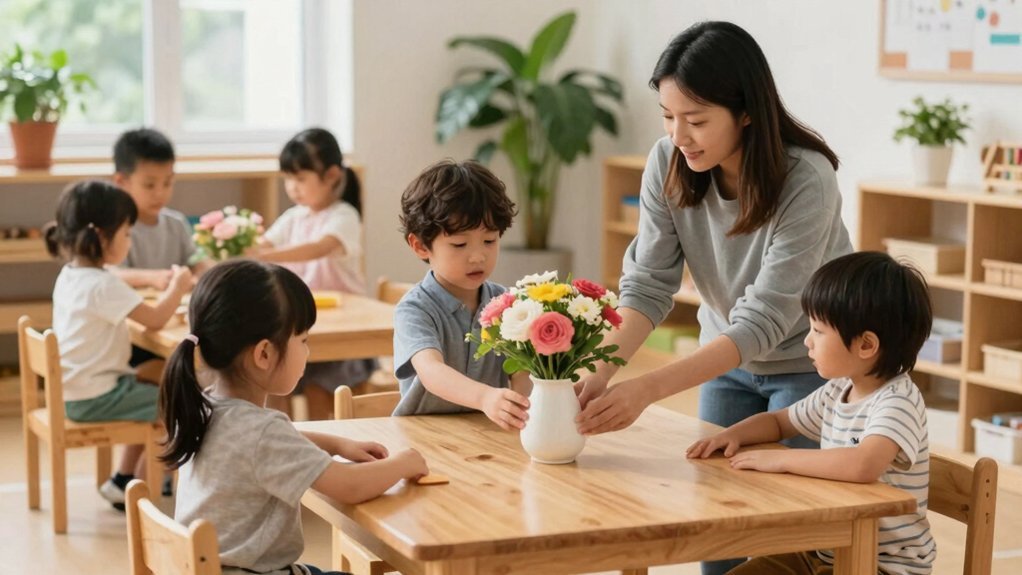
Ever notice how a simple “good morning” or a quiet listening ear can change a whole classroom atmosphere? When you teach grace and courtesy, you give kids a toolkit for respect for others and the environment. In a Montessori setting you model behavior daily—showing active listening, offering help, and tidying shared spaces. Children mimic those actions, turning polite greetings into social skills that reduce conflict and lift the classroom climate. They learn to care for materials, keep routines orderly, and protect the environment around them. By practicing real‑life scenarios like greeting visitors or waiting turns, they build empathy, responsibility, and a habit of stewardship that lasts beyond school walls. These environments often benefit from organized storage solutions that foster an orderly routine and respect for shared materials.
Frequently Asked Questions
What Are the Benefits of Grace and Courtesy in Montessori?
You’ll gain confidence, empathy, and self‑discipline; you’ll learn respectful communication, cooperation, and conflict resolution, plus lifelong social skills that help you navigate relationships and contribute thoughtfully to any community.
Why Is Courtesy Important for Children?
You need courtesy because it teaches you to respect others, listen, and communicate politely, which builds empathy, reduces conflicts, and helps you form strong, positive relationships at school and home.
Why Is Grace and Courtesy Important?
You’ll find grace and courtesy shape how you connect, teaching you empathy, self‑control, and respectful communication, so you navigate relationships smoothly, resolve conflicts calmly, and contribute positively to any community.
How Can You Incorporate Grace and Courtesy Lessons Into Daily Interactions?
You can weave grace and courtesy into daily life by greeting people warmly, using “please” and “thank you,” waiting your turn, offering help, modeling polite language, and reinforcing respectful behavior through consistent, gentle reminders.