

Start the night before by packing the lunchbox, laying out the uniform, and reviewing the next day’s schedule so the morning runs smoothly. Use a visual checklist on the fridge or bathroom mirror with simple icons for each step—choosing clothes, brushing teeth, packing the backpack, etc. Offer a few easy choices at each stage to boost ownership, and set a gentle timer with a soft cue to keep tasks on track. End with a quick hug or high‑five for positive reinforcement, and you’ll discover even more tips ahead.
Night‑Before Prep for a Successful Morning Routine

Ever wonder how a calm morning starts the night before? You can boost independence by doing morning routine prep after.
Begin with night‑before prep: pack the lunchbox, lay out the uniform, and pick an outfit unless you’re working from home. Review the next day’s schedule together, creating a predictable schedule that kids can follow. A visual checklist reinforces routine consistency and gives kids responsibility for checking items off.
Tidy the kitchen and clear the sink, so the morning environment feels orderly. These steps reduce morning stress, eliminate last‑minute decisions, and let children feel capable. When the evening actions are settled, the sunrise brings a smoother, more confident start for the whole family. Using durable and easy-to-maintain materials, like ceramic pots with kenzan pins, can similarly create an organized and dependable environment for flower arranging.
Create a Visual Checklist to Guide the Morning Routine
How can you turn a chaotic scramble into a smooth, confidence‑building start? Start by designing a visual checklist that maps each step of the morning routine. Use simple pictures for tasks like brushing teeth, getting dressed, and packing a snack. Place the checklist with pictures on the bathroom mirror or fridge so children see it instantly. Color‑code or add stickers to boost ownership and independence. As each child checks off a task, they feel progress and motivation.
A well-designed environment using Montessori-friendly tools, such as a step stool with safety rails, can further empower children’s independence during morning routines.
| Step | Icon | Action |
|---|---|---|
| 1 | 👕 | Choose clothes |
| 2 | 🦷 | Brushing teeth |
| 3 | 👖 | Put on pants |
| 4 | 🎒 | Pack backpack |
This layout creates a logical flow, keeps tasks visible, and turns daily chores into a self‑guided adventure.
Pick Easy, Choice‑Rich Tasks That Build Independence
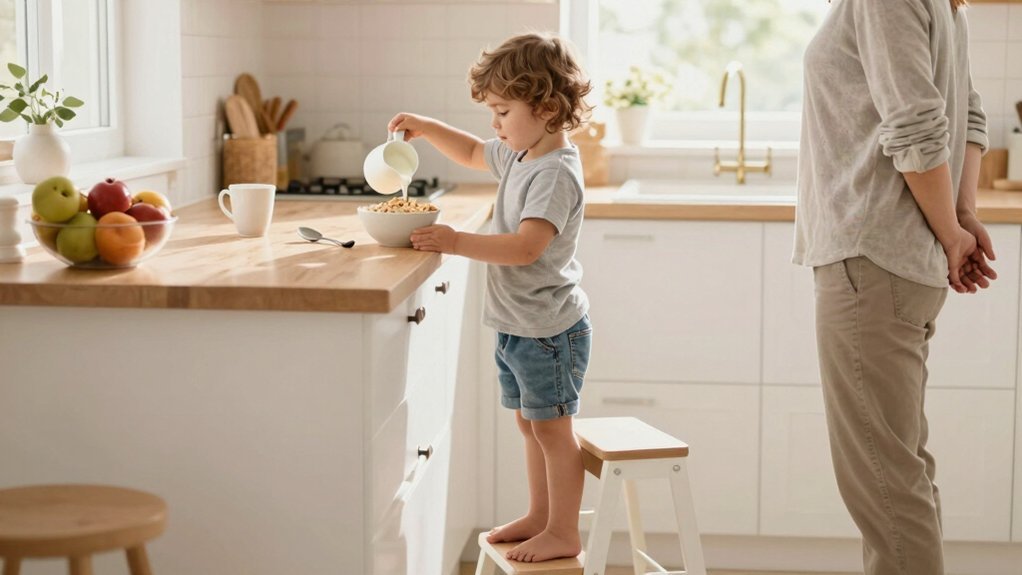
After the visual checklist is up, give kids a few simple choices that let them own each step. In a morning routine, let them pick a shirt, a snack, or a backpack item—each choice is a tiny decision that fuels independence. Use a predictable sequence—wake, wash hands, brush teeth, dress, pack—to reinforce self‑management. Choose age‑appropriate self‑help goals: a three‑year‑old can pull on socks, a five‑year‑old can zip a jacket. Keep tasks choice‑rich but simple, so the child feels capable rather than overwhelmed. The visual checklist shows progress, while the choices keep engagement high. Over time, these small freedoms build confidence and a habit of autonomous decision‑making. Incorporating age-appropriate design features in everyday items can further support a child’s growing independence.
Set Timers and Gentle Cues to Keep the Routine on Track
What if a simple timer could turn a chaotic morning into a smooth, predictable flow? You can embed age‑appropriate timers into the morning routine to give kids a clear sense of how long each task should take. Pair each timer with gentle cues—like a soft chime or a visual signal—so transitions between brushing teeth, dressing, and breakfast feel natural rather than abrupt. Place the timer where they see it, on the fridge or bathroom mirror, to reinforce predictability without nagging. Start with short intervals, then gradually extend them as independence grows. Track progress, celebrate successes, and adjust the timing if routines consistently run short or long. This strategy builds confidence and keeps the whole family on track. Incorporating play with Montessori-inspired features such as realistic knobs and faucets can further enhance children’s engagement and independence during daily routines.
Finish With a Quick, Positive Connection to Reinforce Success

A brief, warm hug or a kind word at the end of the morning routine does more than just say “good job”—it cements the child’s sense of achievement and builds emotional security. When you finish with warmth, you signal that their effort mattered, reinforcing independence and self‑help skills. This positive connection eases separation, lifts mood, and sparks motivation for the day ahead. By making the closing moment a consistent part of the routine, you create a reliable cue that the child can count on, strengthening routine consistency and emotional security. A quick hug, a high‑five, or a sincere compliment lets them know you noticed their progress, encouraging them to repeat the behavior tomorrow and keep building confidence.
Frequently Asked Questions
What Is the 10-10-10 Rule for Parenting?
You apply the 10‑10‑10 rule by giving feedback after ten minutes, revisiting the issue ten days later, and checking progress again ten weeks after, helping your child develop lasting self‑regulation.
What Is the 5 5 5 30 Morning Routine?
You follow a 5‑5‑5‑30 routine by spending five minutes waking up and moving, five minutes personal care, five minutes packing, then thirty minutes calmly transitioning, using visual cues to build independence.
What Is the 3 3 3 Rule for Toddlers?
You’ll follow three short activities, each lasting three minutes, three times a day. This keeps tasks bite‑sized, builds routine, and lets your toddler finish small steps independently before moving on.
What Is the 20 20 20 Rule for Morning Routine?
You follow the 20‑20‑20 rule by spending the first 20 minutes moving, the next 20 on focused tasks, and the final 20 preparing yourself, creating a balanced, low‑fatigue morning flow.