
Set up a clutter‑free corner with a comfy seat, adjustable light, and a shelf of tactile letters, sandpaper tiles, and sight‑word cards; use textured letters for phonemic practice and color‑coded tiles for visual cues. Turn daily chores—like scooping sand while cooking or air‑writing on the laundry door—into multisensory games that pair movement with spoken sounds. Finally, make DIY kits using sand, shaving cream, magnetic tiles, and sandpaper letters to let kids trace, chant, and build words. Keep reading to discover more tips.
Set Up a Sensory‑Rich Reading Corner for Home Reading
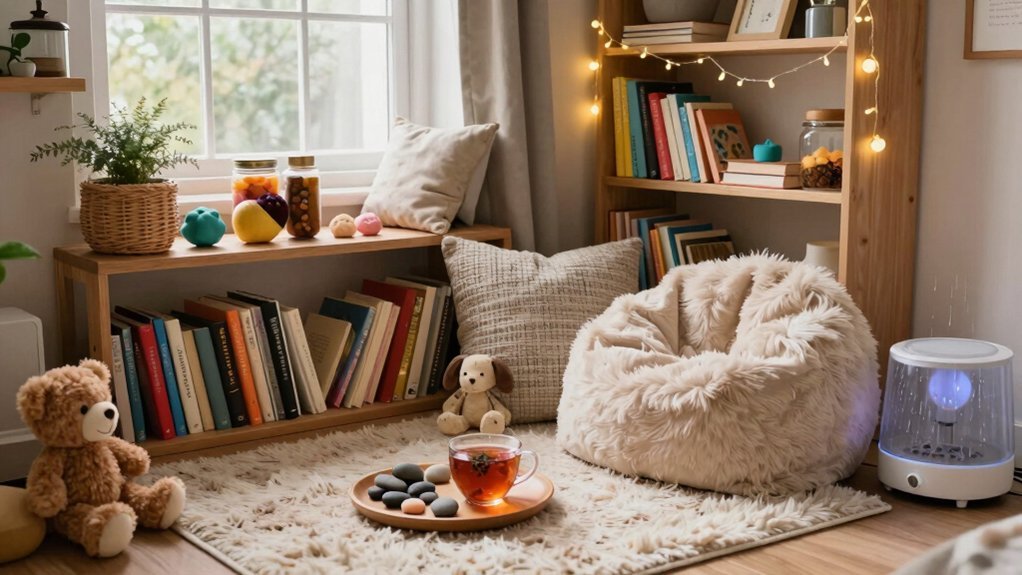
A well‑organized, sensory‑rich reading corner can turn home reading into an engaging, multisensory experience. You’ll want a clutter‑free zone with a small chair or mat, adjustable lighting, and a shelf that holds tactile letters, letter tiles, and sight word cards.
Choose textured letter options—sandpaper, shaving cream, sand—to let kids feel each shape while they practice phonemic awareness. Color‑coded letter tiles add visual cues, supporting hands‑on literacy and multisensory learning.
Post a simple schedule for structured routines and pair it with brief spoken prompts to reinforce instruction. Keep the space sensory‑friendly by limiting distractions and using digital resources only as printable supplements, ensuring the corner remains a focused, interactive hub.
Incorporating organized storage solutions helps maintain neatness and fosters independent cleanup, enhancing the overall sensory environment.
Turn Everyday Activities Into Multisensory Literacy Games
How can you turn ordinary moments into powerful, multisensory literacy games? Use sand writing while cooking dinner: each child scoops sand, traces a letter, and says its sound, blending sight, touch, and voice. During laundry, try air writing on the back of a door; finger tracing invisible letters while you vocalize each phoneme builds muscle memory for decoding and blended sounds. Set the table with magnetic letters and color‑coded tiles; kids rearrange them to form words, then read aloud, reinforcing word families. While folding laundry, have them trace letters on the fabric edge, feeling the texture as they say each sound. These home activities make literacy tactile, auditory, and visual, turning routine chores into engaging learning experiences. For added independence during these activities, consider using Montessori step stools to help children safely reach counters and tables.
Use Simple DIY Materials to Create Multisensory Reading Activities at Home

Simple DIY materials turn your kitchen or living room into a multisensory reading lab. You can spark at‑home learning with sand therapy, shaving cream letters, magnetic tiles, and sandpaper letters, letting kids feel each shape while you model letter‑sound practice. Pair tactile work with vocalizing sounds to boost phonemic awareness, then move to a Read It, Build It, Write It routine that reinforces decoding and spelling.
Turn everyday spaces into a multisensory reading lab with sand, shaving cream, magnetic tiles, and sandpaper letters.
- Sand therapy & shaving cream letters – trace letters in sand or foam, say the sound, repeat for blending.
- Magnetic tiles – arrange vowel‑consonant combos on a fridge board for color‑coded word building.
- Sandpaper letters – rub fingertips over raised shapes while chanting phonemes, then write the word on a worksheet.
These DIY materials create a dynamic, multisensory reading experience that’s fun and effective. Incorporating hands-on geometric solids like wooden shapes can further support tactile learning and spatial reasoning development alongside reading skills.
Frequently Asked Questions
How Can I Adapt Multisensory Reading for a Child With Visual Impairment?
You can adapt multisensory reading by using tactile books, audio narration, Braille labels, textured props, scented cues, and interactive apps that let the child explore stories through touch, sound, and smell.
What Age‑Appropriate Multisensory Activities Work for Preschoolers?
You’ll love using textured storybooks, scented markers, and sound‑effect apps; let kids trace letters with sand, match colors to words, and act out scenes with puppets while you narrate.
Can Multisensory Reading Techniques Help Struggling Adult Learners?
Yes, you’ll find multisensory reading boosts comprehension for struggling adults. By pairing text with audio, tactile cues, and visual highlights, you engage multiple pathways, reinforce memory, and accelerate learning speed.
How Do I Balance Screen Time With Tactile Reading Materials?
You balance screen time by scheduling short, focused sessions, then switching to tactile books or printed pages for longer periods, using breaks to stretch, and keeping a daily log to monitor total usage.
What Are Low‑Cost Alternatives to Commercial Multisensory Kits?
You can craft low‑cost multisensory kits by gathering colored paper, textured fabric scraps, scented markers, reusable stickers, and household items like beans or rice for tactile bins, plus free printable phonics cards.