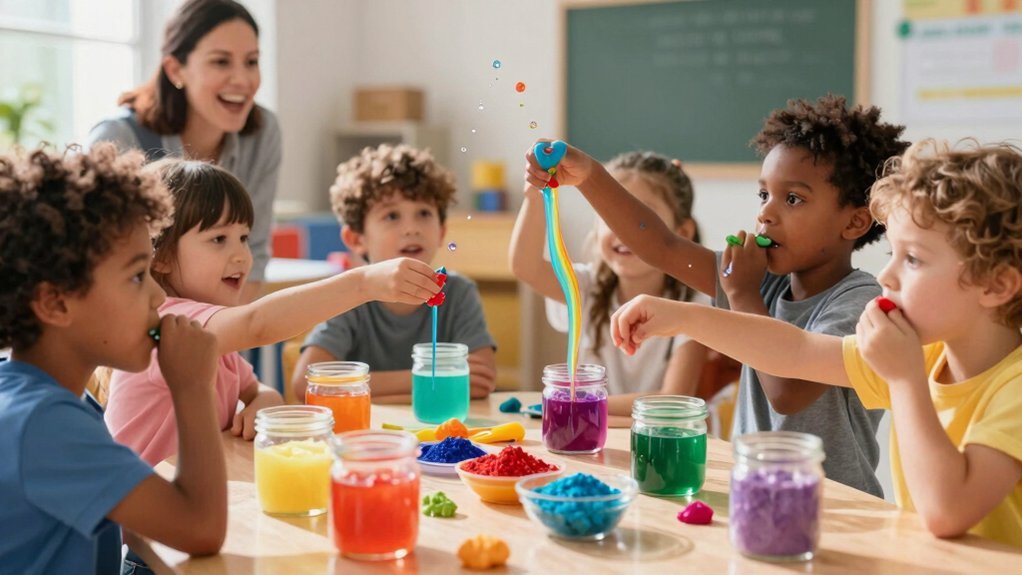
You can spark curiosity by turning everyday items into hands‑on, multi‑sensory experiments. Use glitter as “germs” to compare water, soap, and paper‑towel washing, letting kids see, touch, and count particles. Fill glass cups to different levels and tap them to hear pitch changes, linking water depth to sound. Play a mystery‑smell game with sealed containers, timing sniffing and rating confidence. Try a simple taste‑test to see if food coloring alters flavor. A guided nature walk that highlights sight, sound, smell, touch, and safe taste ties everything together, and the next sections will show you even more ideas.
What Are Multi‑Sensory Science Experiments?
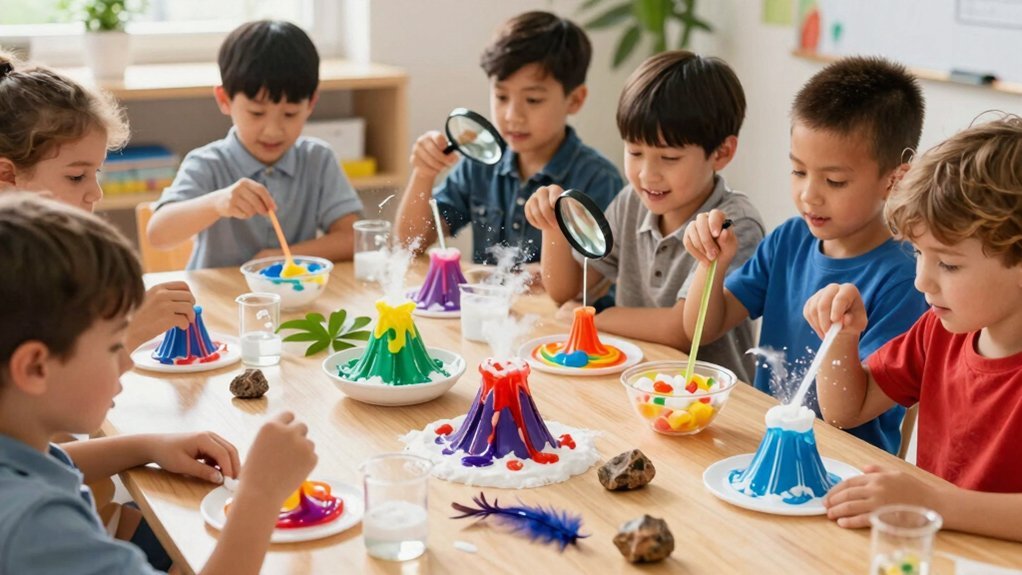
Multi‑sensory science experiments combine two or more senses in a single activity, letting you see, hear, touch, smell, or move while exploring a concept. You’ll notice that these multisensory experiments boost focus and memory because they tap into research linking sensory engagement to stronger learning outcomes. By pairing sight, sound, touch, smell, or movement with hands‑on exploration, you help students connect ideas through multiple pathways. You guide them to form hypotheses, observe results, and draw inferences across senses, reinforcing core scientific method practices. The activities stay simple, safe, and classroom‑friendly, fitting into daily routines with quick, repeatable steps. Applying this approach to science topics improves retention and deepens understanding. Using tools like visual timers can further enhance engagement by providing clear time cues during experiments.
Spark Curiosity With a Multi‑Sensory Glitter Germ Experiment
You’ll watch glitter germs cling to your hands, then try water, soap, and a paper towel to see which method clears them best.
Each trial lets you record what stays and what disappears, turning a simple wash into a real scientific test.
This experiment is a great way to develop fine motor skills and observational abilities in young learners.
Glitter Germ Observation
A handful of glitter can become your classroom’s “germs,” letting kids see how particles spread and how effective different washing methods are. You guide a multisensory observation where children sprinkle glitter on their palms, then explore how it clings to skin and surfaces. As they rub, they notice glitter particles migrating, turning an invisible concept into a vivid visual cue. You ask them to record how much glitter remains after each hand‑washing trial—water only, soap, or a dry paper towel—so they can compare effectiveness. The tactile act of rubbing pairs with the visual evidence, reinforcing the scientific method. Non‑toxic glitter keeps the activity safe, while supervision ensures all learners can participate confidently. Using tools with ergonomic handle design can also support young learners’ motor skills during such activities.
Hand‑Washing Techniques
After sprinkling glitter on their palms, kids can test how different hand‑washing techniques—water alone, hand soap, dish soap, or a dry paper towel—remove the “germs.” By rubbing, rinsing, and drying, they watch the glitter disappear or cling, then count the remaining particles to see which method works best. You guide them to notice how texture, temperature, and pressure affect removal, turning sight, touch, and even sound into data. The multisensory hand‑washing activity lets them predict outcomes, record counts, and compare results, reinforcing hygiene habits through vivid observation. As a science experiment, it makes invisible germs tangible, encourages careful measurement, and sparks curiosity about everyday health practices. Using child-friendly, ergonomic tools like the Mini Avocado Masher can further engage young learners by incorporating practical food prep experiments.
Science Method Integration
Integrating the glitter‑germ activity with the scientific method turns a playful clean‑up into a structured investigation. You start by declaring a hypothesis about which washing method removes the most glitter, then you set up four conditions—water only, hand soap, dish soap, dry paper towels. As you conduct sensory play, you record what you see, turning visual cues into data for observation‑based science. Each trial lets you compare variables, note controls, and measure outcomes, reinforcing multisensory learning. After testing, you analyze the glitter residues, draw conclusions, and discuss why certain soaps work better. This science method integration gives kids a tangible, repeatable experiment that links curiosity to rigorous inquiry, making abstract concepts concrete and memorable. Using tools designed for fine motor challenges can support young learners in carefully manipulating materials during experiments, enhancing their engagement and precision.
Tune Into Physics With a Multi‑Sensory Musical Water Glasses
You’ll discover how a simple row of glass cups becomes a hands‑on physics lesson when you fill each one to a different height and tap them. This multi‑sensory setup lets you see water glasses, hear sound waves, and feel vibrations, linking visual and auditory cues to the pitch each cup produces. As you raise the water level, the pitch drops, illustrating how liquid depth alters frequency. Have students record each pitch, compare higher and lower tones, and note the exact water amounts. The activity blends science, math, and art while reinforcing data‑collection skills. Supervise the glass handling, use non‑toxic water, and label each cup for safety and clarity. Using spill prevention technology on the cups can help minimize accidents during active learning sessions.
Explore Mystery Smells With a Sensory Identification Game

Ever wondered how far your nose can take you? You can turn a simple classroom into a multisensory lab by staging a mystery‑smell identification game. Place four sealed containers—cleaning spray, citrus fruit, fresh mud, and a scented candle—inside paper bags. Students sniff each bag, then record which item they think it is, noting confidence levels. This olfactory exploration highlights how scent strength and familiarity shape identification accuracy, while safety checks keep irritants at bay.
- Prep: Label bags, keep items out of reach.
- Smell: Give each child a turn, limit exposure to 10 seconds.
- Guess: Write down the guessed item and confidence rating.
- Discuss: Compare guesses, reveal answers, and talk about why some smells fooled the group.
The activity sharpens observational reasoning and shows how powerful—or limited—our sense of smell can be. Using a well-structured environment, such as the ECR4Kids Dress-Up Center, can further enhance sensory learning experiences by providing engaging storage and display options.
Set Up a Simple Taste‑Test: Does Food Coloring Affect Flavor?
A quick taste‑test can reveal whether the color of a drink tricks the palate. You’ll need two identical cups of apple juice, one plain and one with a few drops of food coloring. First, ask participants to sip the clear juice and note sweetness, acidity, and overall flavor. Then, show them the colored sample and have them repeat the rating. Compare the two sets of observations to see if the hue sways their judgments. This simple multisensory experiment highlights cross‑modal perception: visual cues can bias gustatory reports even when the liquid is unchanged. Keep the colors food‑safe and use a control cup for a reliable taste‑test that sparks curiosity and discussion.
Blend All Senses With a Multi‑Sensory Nature Walk

Five senses come alive on a nature walk when you pause to notice the bright petals, the rustle of leaves, the earthy aroma, the bark’s texture, and even a safe bite of a wild berry. You turn a simple stroll into a multisensory exploration, letting sight, hearing, smell, touch, and taste reinforce each other. Guiding kids with quick checks—like matching a leaf’s color to a chart—helps them label observations and build language links.
A nature walk transforms into a vivid, multisensory adventure, engaging sight, sound, scent, touch, and taste.
- Spot vivid colors and note them.
- Listen for birdsong and rustling.
- Smell soil, pine, and blossoms.
- Touch bark, moss, and smooth stones.
Safety means supervision, allergy awareness, and non‑toxic samples, ensuring every step stays engaging and inclusive.
Frequently Asked Questions
What Are Some Multi-Sensory Activities?
You can try glitter germ tracking, musical water glasses, mystery smells, colored‑juice taste tests, and blind‑touch brain boxes—each blends sight, sound, smell, taste, or touch to spark curiosity and learning.
What Are Some Simple Science Experiments for Kids?
You can try a glitter‑germ wash, musical water glasses, mystery smells, colored‑juice taste tests, or a brain‑box tactile‑and‑visual discovery. Each uses sight, sound, touch, or smell to spark curiosity.
What Are 5 Examples of Sensory Social Routines?
You can try nature‑walk talk‑throughs, scented‑bottle turn‑taking, collaborative sensory bins, group story‑stop stations, and tactile‑sound matching circles—each blends sight, sound, smell, and touch for inclusive, engaging routines.
What Type of Experiment Do You Feel Is Appropriate for a Three Year Old Child to Conduct?
You should try a simple temperature‑change test: fill two cups with warm and cold water, let the child dip their hand, then describe the feeling, keeping it safe, quick, and mess‑free.