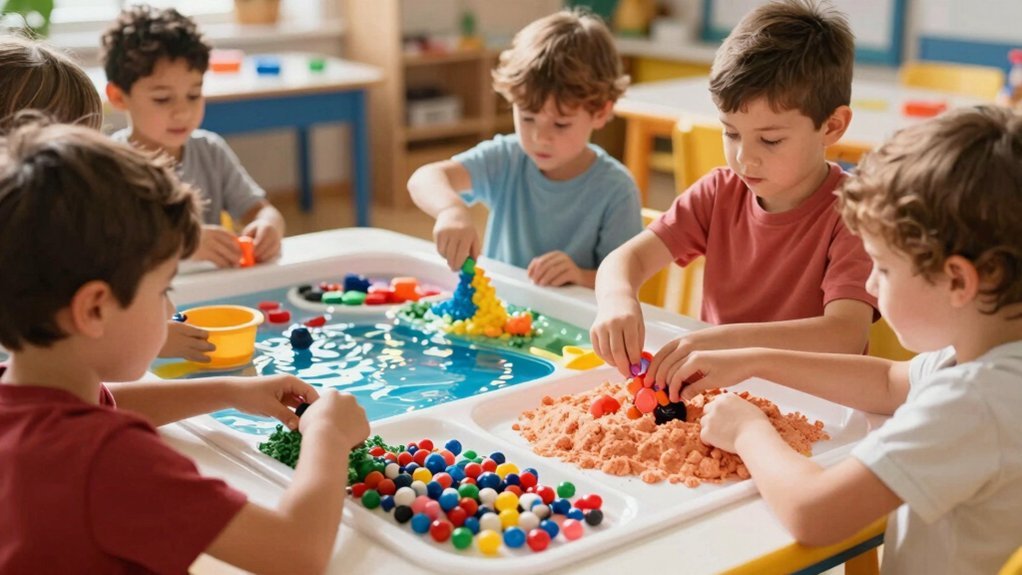
You’ll see that a sensory table turns simple tactile play into powerful learning. The basin of sand, water, beans, or kinetic material lets kids scoop, pinch, and pour, sharpening fine‑motor control and hand‑eye coordination. Sorting, measuring, and labeling textures builds early math concepts and expands descriptive vocabulary. As children share tools and negotiate turns, they practice cooperation and self‑regulation. The open‑ended, mess‑contained setup keeps them engaged, and the next sections show how to design themes, rotate materials, and keep the table safe and effective.
What Is a Sensory Table and Why It Matters for Early Learning?

Ever wondered what a sensory table actually is and why it matters for early learning? You’ll find a sturdy basin filled with sand, water, beans or other tactile materials, offering a safe, mess‑contained space for hands‑on learning. As you scoop, pinch, and pour, you strengthen fine motor skills, while measuring and sorting nurture cognitive development. You’ll notice language development blossom when you name textures, actions, and outcomes, and educators sprinkle in descriptive vocabulary. The open‑ended play sparks creativity, social interaction, and self‑regulation, linking sensory experiences to broader curricular goals. By engaging multiple senses, the sensory table becomes a powerful catalyst that transforms everyday exploration into meaningful early learning. Complementing these experiences with well-designed classroom seating cushions enhances comfort and focus during play and learning time.
Science of Sensory Table Play in Montessori Settings
When you introduce a sensory table in a Montessori classroom, you instantly give children a concrete platform for exploring abstract concepts such as volume, texture, and buoyancy. The hands‑on discovery approach lets them manipulate water, sand, beans, and magnets, turning vague ideas into tactile experiences. Because Montessori encourages child‑directed choice, kids self‑correct and experiment, which sharpens cognitive development through classification, sequencing, and pattern recognition. As they scoop, pour, and pinch, they also practice precise language, labeling materials, actions, and outcomes. This purposeful conversation fuels language growth, while the varied textures and natural materials keep curiosity alive. In short, sensory tables become a scientific bridge linking sensory input to higher‑order thinking in Montessori settings. Providing furniture like the Comfy Cubs Kids Step Stool Montessori Tower supports children’s independence and enhances their sensory table play by allowing easy access and safe engagement.
How Sensory Tables Build Fine Motor Skills Through Tactile Exploration

A single scoop of kinetic sand or a pinch of beans can instantly engage a child’s hand muscles, turning play into targeted fine‑motor practice. On sensory tables you’ll notice them gripping, scooping, pinching, and using manipulatives like tweezers and spoons. Each action refines hand–eye coordination and builds the finger strength needed for writing and drawing. When you introduce varied textures, children practice precise pickup and controlled release, boosting dexterity. Tongs and funnels add regulated grips, encouraging stronger, more coordinated hand movements. The contained, hands‑on environment makes repetitive practice enjoyable, so kids stay motivated and naturally develop fine motor skills through tactile exploration. Integrating sensory tables with an organized utensil caddy encourages children to enhance fine motor skills while learning sorting and categorization.
Developing Cognitive Foundations With Measurement and Sorting Activities
Fine‑motor practice on sensory tables naturally leads to the next step: using those hands to explore measurement and sorting. You’ll scoop water, pour it into cups, and compare volumes, turning abstract concepts into concrete experiences.
When you group rocks by size or sort beads by color, you’re building early math skills while honing spatial reasoning. The tools—rulers, scoops, scales—invite data collection, so you estimate, record, and verify amounts.
Repeating these tasks on sensory tables strengthens cognitive development, encouraging pattern recognition and problem‑solving. By arranging objects for buoyancy or capacity, you develop logical thinking that transfers to classroom math. Each hands‑on session deepens your understanding of quantitative relationships and prepares you for more complex analytical challenges.
Using child-safe tools, such as those made with silicone-coated whisks, can enhance tactile engagement during these sensory activities.
Boosting Language Growth Using Descriptive Vocabulary at the Table

Ever wonder how a simple sensory table can turn everyday play into a language‑building adventure? You’ll notice kids instantly label textures—gritty, smooth, slippery—and materials like sand, beans, or water. When you prompt them with open‑ended play questions, they expand descriptive vocabulary, saying things such as “I’ve got a pink fish” or “The water is blue.” These spontaneous statements fuel language growth and vocabulary development in early learning. Incorporating Montessori materials like wooden stacking toys further enhances descriptive language by engaging children in tactile and visual learning experiences.
Encouraging Social Cooperation and Emotional Regulation Through Shared Play
How does shared sensory play turn a simple table into a social classroom? You’ll notice kids swapping tools, negotiating space, and laughing together as they explore textures. This sensory play sparks social cooperation because each child must listen, share, and respect boundaries. Turn‑taking becomes natural when a youngster says, “You leave my fish alone!” and another replies, “Okay, I’ll move it.” As they coordinate actions, they engage in collaborative learning, building language and problem‑solving skills. The calming rhythm of water, sand, or beans supports emotional regulation, helping children manage frustration or excitement without adult prompting. By fostering these interactions, you create a supportive environment where empathy, patience, and teamwork flourish. Incorporating open, low shelves nearby encourages independent material selection, further enhancing cooperative learning among children.
Fun, Curriculum‑Friendly Themes to Keep Your Sensory Table Fresh
You can spark curiosity by swapping in seasonal nature‑inspired themes like autumn leaves, winter snow, or spring soil. Pair each theme with curriculum‑aligned activities—sorting acorns for math, measuring water for science, or storytelling with bugs for language arts. Rotate the bins quickly using simple labels and a weekly schedule so the table stays fresh and engaging. Using dishwasher-safe components in sensory materials also helps maintain hygiene and ease of cleaning.
Seasonal Nature-Inspired Themes
Why not let the changing seasons guide your sensory‑table setup? By swapping fall leaves, acorns, and gourds for fake snow and tiny figurines, you create seasonal themes that feel fresh and purposeful. Nature‑inspired materials invite toddlers to touch, smell, and sort, turning simple play into early learning moments that spark cognitive development. Each rotation introduces new textures and scents, keeping curiosity high and encouraging language growth as kids label “crunchy,” “fluffy,” or “sprouting.”
Organize the bin with a clear focus—Arctic, Construction, or Garden—to support structured exploration while staying aligned with classroom observations. This rhythmic change not only sustains engagement but also deepens connections between the table and the world outside.
Curriculum‑Aligned Activity Ideas
A well‑planned sensory table can seamlessly blend play with curriculum goals, turning everyday materials into powerful learning tools. You can create seasonal themed sensory bins—like dried leaves and acorns for fall or fake snow for winter—to spark early learning while meeting observation standards. Water play with floating toys and measuring cups introduces volume and buoyancy, supporting math and science concepts through hands‑on exploration. Use rice, beans, or kinetic sand for texture exploration, enhancing descriptive vocabulary and sensory discrimination. STEM‑focused setups with gears, scales, and magnets encourage hypothesis formation and experimentation, reinforcing development skills. By aligning each activity with curriculum‑aligned activities, you keep the sensory table fresh, engaging, and purposeful for every learner.
Easy Rotation Strategies
Curriculum‑aligned activities give you a solid base, now it’s time to keep the sensory table lively with easy rotation strategies. You’ll rotate themes every few weeks, matching seasons and curriculum units so the sensory experience stays fresh and relevant. Let children vote on new materials; this democratic selection boosts engagement and gives them ownership. Tie each rotation to specific learning goals—counting shells for math, colored water for science, story‑related objects for language—so play reinforces early childhood concepts across subjects. Mix dry and wet items to vary texture while managing mess and safety. Track how long kids stay engaged and note which materials spark the most curiosity. Use that data to fine‑tune future rotations, keeping the table a dynamic hub of exploration.
Tips to Set Up, Rotate, and Maintain Your Sensory Table
Ever wonder how a well‑organized sensory table can keep kids engaged day after day? You’ll find that a tidy setup, fresh themes, and easy access to tools turn the table into a hub for open‑ended play and child‑led exploration. Keep the space inviting by arranging bins within reach and labeling them clearly, so kids can practice independent cleanup and you spend less time re‑stocking.
- Theme rotation – swap dry beans for water beads, add seasonal items, and blend wet and dry elements to spark curiosity.
- Tool station – place scoops, tongs, and containers on a low shelf; label each for quick grab‑and‑go.
- Texture mix – combine smooth rice, crunchy sand, and slime to nurture fine‑motor skills and language development.
Frequently Asked Questions
How Can Sensory Tables Support Children With Sensory Processing Challenges?
You can let sensory tables give you tactile, visual, and auditory input that you control, helping you self‑regulate, build tolerance, and engage in play that eases sensory‑processing challenges.
What Safety Precautions Are Needed for Water‑Based Sensory Table Activities?
You’ll need to supervise kids closely, keep water shallow, use non‑slip mats, check temperature, secure electrical cords, store chemicals out of reach, and ensure all containers are clean and stable.
Can Sensory Tables Be Adapted for Outdoor or Non‑Classroom Environments?
You can adapt sensory tables outdoors by using sturdy, waterproof containers, securing them on stable surfaces, filling them with sand, soil, or water, and adding weather‑proof tools, ensuring easy cleanup and safety.
How Do Sensory Tables Align With Early Childhood Assessment Frameworks?
You’ll find sensory tables match assessment frameworks by letting you observe children’s fine‑motor, language, and social skills during play, providing concrete evidence for developmental checklists and competency rubrics.
What Are Effective Ways to Involve Families in Sensory Table Extensions?
Invite families to co‑create extensions, share materials, document observations, and join reflection circles. Provide simple guides, ask for cultural contributions, and celebrate their ideas during classroom showcases.