

Create a calm, child‑height space with low natural wood furniture, open shelves, and simple picture labels so your toddler can reach, choose, and tidy up alone. Use a floor bed or low‑profile mattress on a non‑slip rug, and place a low table and chairs for meals and crafts. Anchor all pieces, cover outlets, and keep switches at toddler height. Rotate 8–12 toys or books every few weeks and group similar items in baskets. Follow these steps and you’ll discover even more ways to nurture independence.
Core Montessori Principles for a Toddler Bedroom
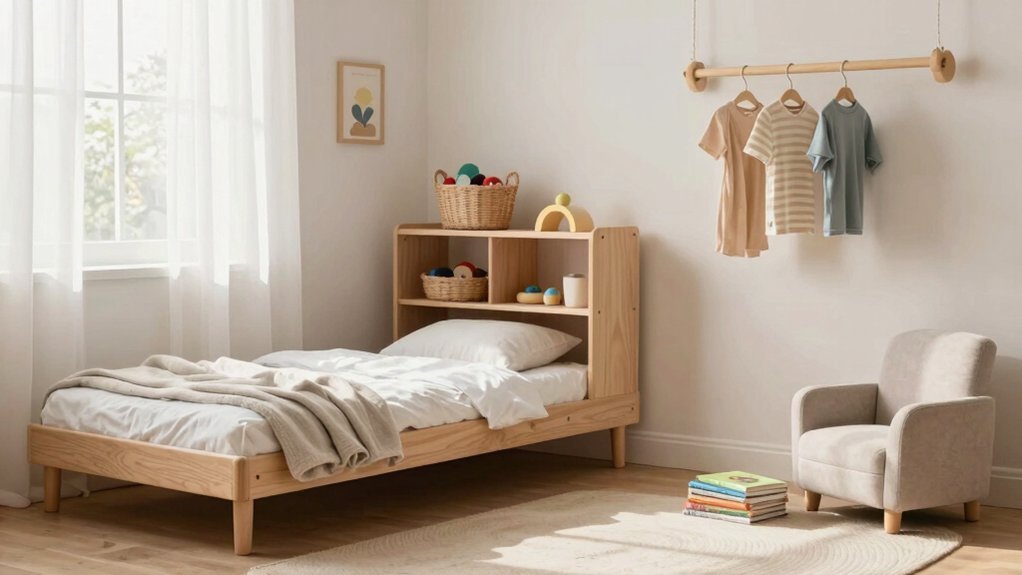
A toddler’s bedroom should reflect Montessori’s core ideas: follow the child, nurture independence, and keep the space orderly with a few high‑quality, natural pieces. You’ll apply Montessori principles by letting your child choose activities from low, open shelves, and by placing everything at reachable height.
Keep the room uncluttered; a simple color palette of calm neutrals with occasional bright accents supports focus and serenity. Use natural wood and non‑toxic finishes, and anchor furniture to ensure safety while preserving freedom of movement.
Designate clear spots for toys, clothes, and books, rotating items regularly to avoid overwhelm. A cozy nook invites quiet reading, reinforcing the sense of order and personal responsibility that Montessori principles champion.
Consider incorporating a Montessori kitchen step stool with safety features to empower your toddler’s independence and facilitate hands-on learning within their bedroom or adjacent spaces.
Choose Child‑Sized Beds, Shelves, and Tables
After setting up the room’s overall order, pick furniture that lets your toddler move freely. Choose a child‑sized bed that sits low or on the floor so they can climb in and out without help, a core Montessori idea. Pair it with open shelves and baskets at their height, making clothes and toys reachable for self‑care. Add a low table and child‑size chairs so meals, crafts, and play stay within arm’s reach. Anchor every piece securely, use non‑toxic finishes, and keep the layout uncluttered to encourage independent choices and safety. Selecting shelves within the optimal 24 to 48 inches tall range ensures easy access and encourages your toddler’s independence.
| Item | Height | Purpose |
|---|---|---|
| Bed | Floor‑level | Easy in‑and‑out |
| Shelves | Toddler‑height | Accessible storage |
| Table & Chairs | Low | Independent activities |
Set Up a Floor Bed Safely in a Montessori Bedroom
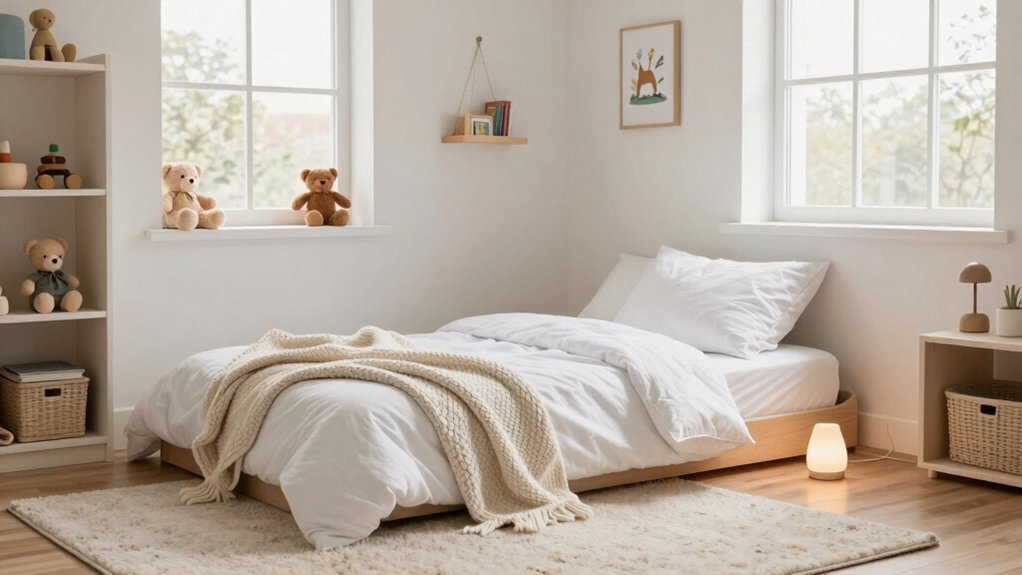
Wondering how to keep your toddler’s floor bed both inviting and safe? Start by choosing a low‑profile mattress that lets your child climb in and out without assistance. Place a thick, non‑slip rug around the perimeter to create a soft fall zone, cushioning any tumble on hard floors. If you like a sense of enclosure, add a simple frame, but remember it’s optional—Montessori favors an open, uncluttered space. Keep the area clear of cords, toys, and heavy furniture; only include age‑appropriate items that support independent use. Position the floor bed away from windows and heating vents, and check that the mattress stays flat and breathable. By maintaining a tidy, accessible sleep zone, you nurture confidence and self‑reliance in your toddler. Including Montessori geometry aids in the bedroom can further enhance independent learning and fine motor skills.
Design Accessible Storage for Independent Play
With the floor bed safely set up, the next step is to give your toddler easy access to the things they need for play and self‑care. Use low, open shelving and small baskets placed at child height so they can see, reach, and return items independently. Designate clear spots for toys, books, and clothing, aligning each zone with daily routines to nurture self‑help skills. Keep only functional or frequently used items visible; hide extras to reduce clutter and simplify choices. Add picture labels or simple icons to each basket, creating visual cues that guide quick identification and cleanup. Rotate the selection every few weeks to keep options fresh without overwhelming your little one. This Montessori at home approach builds confidence and fosters autonomous play. Incorporating visual schedules can further support your child’s independence by providing clear, sequential cues to follow in their daily routines.
Organize Toys by Skill Using One‑Item‑Per‑Shelf
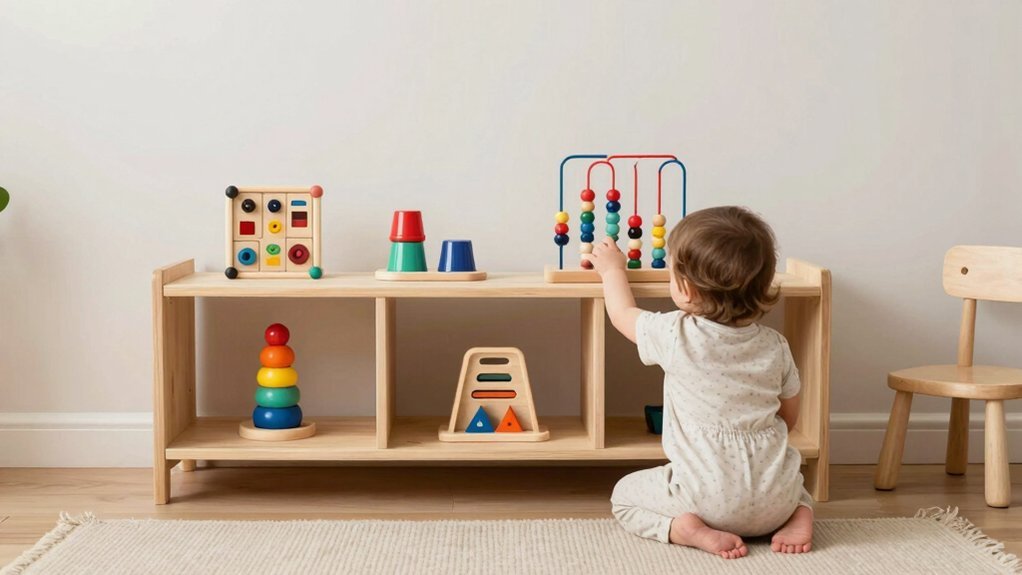
A low, open shelf that holds just one toy per level lets your toddler focus on a single skill at a time, keeping the display tidy and the choices clear. Arrange 8–12 items total, rotating them every few weeks so new challenges appear without overwhelming your child. Use labeled baskets or trays on each shelf, grouping similar toys—blocks for stacking, puzzles for problem‑solving, beads for fine‑motor work—to reinforce categorization and independent retrieval. Keep only functional, frequently used pieces in each container, discarding clutter that distracts. Assign a consistent spot for each skill set; this routine spot cleanup and strengthens your toddler’s sense of belonging, echoing Montessori principles of order and self‑directed learning. Incorporating color-coded designs in toys can enhance visual discrimination and provide immediate feedback to support learning during independent play.
Enable Dressing Independence With Low Clothing Racks
Place the rack at your child’s height so they can pull out outfits without help. Choose a few coordinated pieces and keep them on open shelves with easy‑grip handles for quick, independent selection. Simple, low‑level storage reduces clutter and lets your toddler dress themselves confidently. Using an adjustable rod with a low adjustable height range ensures the rack fits perfectly within your child’s reach for maximum accessibility.
Low Rack Placement
Ever wondered how a simple low rack can turn dressing into a solo adventure for your toddler? Place the rack at their height, keeping it open for easy access and embodying Montessori accessibility. Use small baskets or bins on the rack to sort tops, bottoms, and underwear, so your child can grab what they need without rummaging. Anchor the unit securely to a wall or sturdy furniture, and choose non‑toxic materials to prevent tipping. Keep the selection limited to age‑appropriate pieces and rotate outfits seasonally to avoid clutter. Position the rack near the dressing area and a child‑height mirror, creating a dedicated, child‑friendly zone where your toddler practices independent dressing confidently. For storing small belongings or keepsakes, consider adding small wooden treasure boxes that encourage organization and add charm to the space.
Simple Outfit Choices
Why not let your toddler pick from a handful of ready‑made outfits displayed at their eye level? Low, accessible racks let them see and reach each option, turning dressing into a quick, confidence‑building routine.
Keep the rotation small—two or three coordinated sets—so choices stay simple and clutter‑free. Use open shelves or baskets that align with daily habits; when a shirt is chosen, they can place the pants in the same bin, reinforcing Montessori independence.
Encourage them to pull the outfit they like, then lay it out on a nearby chair or hook. This visual cue supports decision‑making, while the limited selection prevents overwhelm.
Easy Access Handles
After letting your toddler choose an outfit, give them a low‑height clothing rack with easy‑grip handles so they can reach shirts, pants, and jackets without help. The handles should be rounded, sturdy, and positioned at a comfortable height to let tiny hands pull and slide garments. Place open shelves or baskets within reach, and keep each category—tops, bottoms, outerwear—in its own spot. This clear layout teaches your child where to find and return items, reinforcing Montessori independence.
Use non‑toxic, durable wood or coated metal to stay safe as they grow. Pair the rack with a simple routine: wake, dress, tidy. Consistent use builds confidence and turns dressing into a daily, self‑directed activity.
Control Light for Little Hands: Switches & Nightlights
You’ll want switches at your toddler’s height so they can flip the lights without help, and choose low‑profile nightlights that glow softly all night.
Simple power‑strip controls let them turn on a lamp or charger with a single press, reinforcing independence.
Keep the bulbs warm‑toned and non‑dazzling, and revisit the placement as your child grows and their reach changes.
Child‑Friendly Switch Placement
Ever wondered how a simple switch can give your toddler a sense of independence? Install child‑friendly switch placement at a height they can reach without a stool—typically 30‑36 inches from the floor.
Use rocker or toggle switches that are large enough for tiny fingers and label them with bright, pictograms so they know which light they control.
Keep the switch on a wall that runs along their natural path, like beside the bed or near the play area, so they can flip it while moving around.
Add a short, cord‑free extension if the fixture sits higher, and cover any nearby outlets with safety plates.
This setup lets them turn lights on or off safely, fostering confidence and self‑reliance during bedtime or play.
Low‑Height Nightlight Options
Placing a nightlight within arm’s reach lets your toddler control the glow without adult help, extending the independence you built with the low‑height switch. Choose a low‑profile, plug‑in nightlight that sits on the nightstand or a low shelf, so your child can press the button or slide a dimmer with ease.
Opt for warm‑colored, non‑toxic LEDs that emit a soft, calming glow—perfect for a fall‑zone near the floor bed. Look for models with a tactile, oversized switch that stays on the same level as the child’s height, and make sure any cords are short and secured to avoid tripping hazards.
When the nightlight is both safe and reachable, your toddler gains confidence, mastering bedtime routines independently while you enjoy a peaceful, well‑lit room.
Simple Power Strip Controls
Where can a toddler safely flip a switch without adult help? You can mount a child‑accessible power strip at low, reachable height, using clearly labeled on/off toggles for each device. Choose a strip with a dedicated nightlight that emits warm, low‑intensity LED light (2700K–3000K) to soothe bedtime routines. Position the strip and outlets at or below eye level, securing cords to prevent pulling or tangling. Opt for switch extensions or plug‑in adapters so your child can turn lights on without climbing furniture. Ensure all fixtures and nightlights are indoor‑rated, non‑toxic, and have cool‑touch housings. This setup reinforces Montessori independence, letting your little one control illumination confidently and safely.
Pick a Neutral Palette + Fun Color Pop
What if your toddler’s room felt both soothing and inviting without overwhelming their focus? Choose a base of neutral colors—soft beiges, gentle greys, warm wood tones—to create a calm backdrop that supports Montessori’s emphasis on order. Keep walls, larger furniture, and storage in these muted shades so the space feels spacious and uncluttered. Then add a fun color pop in purposeful, low‑profile items: a bright pillow on the bed, a patterned rug in the play zone, or a framed artwork at eye level. These small bursts of hue draw attention to specific learning areas without creating visual noise. By limiting bold colors to accessories, you preserve focus, encourage independence, and maintain a serene, inviting environment.
Make the Room Safe: Anchor Furniture & Cover Outlets
Ever wondered how a simple safety tweak can turn a toddler’s bedroom into a secure, independent playground? You can create a Montessori Toddler space that feels safe and inviting by anchoring heavy furniture to wall walls and covering every outlet with child‑proof caps. Keep shelves, dressers, and bins at a low height so your child can reach them without assistance. Use non‑toxic, durable materials to ensure long‑lasting stability while maintaining a clean, uncluttered look. These steps let your little one explore confidently and make choices independently.
- Secure bookcases and dressers with wall straps
- Install tamper‑proof outlet covers in all wall sockets
- Position storage bins and cubbies at child height
- Choose non‑toxic, sturdy finishes for all furniture
Rotate Toys & Books to Keep Learning Fresh
How can you keep a toddler’s curiosity alive without drowning them in clutter? Set up a simple rotation system: every few weeks, swap out 8–12 toys and books on low, open shelves. Group items in baskets or trays by similarity—blocks together, picture books together—so your child can see all options at a glance. Use picture labels and a marked spot for each basket to reinforce visual order and support executive function. Rotate seasonally, adding spring seeds and insects or winter pinecones, aligning play with nature and keeping learning fresh. Involve your toddler in the process; let them decide which items go into storage and which come out. This routine nurtures Montessori independence, reduces overwhelm, and sustains engagement.
Add Montessori‑Aligned Personal Touches at Eye Level
You’ll see your child’s confidence grow when you hang their artwork at eye level, turning the walls into a personal gallery.
Placing favorite photos and choice items within easy reach invites them to explore and decide what feels right for them.
Eye‑Level Artwork Displays
Why not turn your toddler’s bedroom into a gallery they can explore on their own? Placing eye level art at a height they can reach invites pride and self‑directed discovery. Simple frames or clip‑on displays let you swap pieces as interests shift, keeping the space fresh without clutter. Pair each artwork with a related book or object nearby, so the child can make connections and linger longer. Rotate the collection every few weeks or with the seasons, using natural materials and calm colors to preserve Montessori order and beauty.
- Low‑profile wooden frames on the wall, within arm’s reach
- Clip‑on rails holding rotating drawings or photos
- Small shelf beside each piece holding a matching storybook
- Soft, neutral backdrop that highlights the art without distraction
Accessible Personal Choice Items
After the walls showcase your child’s creations, bring the same sense of ownership to the floor by placing clothing, toys, and learning materials at eye level on open shelves. Open shelves let your toddler reach for a shirt, a puzzle piece, or a storybook without adult assistance, reinforcing independence.
Pair the shelves with low baskets or bins that have clear, picture‑based labels so items stay purposeful and easy to return. Add Montessori‑aligned personal touches—family photos, child‑made art, themed décor—right at eye level to make the space feel uniquely theirs. Keep light switches and a small lamp within reach, and rotate a curated selection of books, toys, and materials weekly to sustain curiosity without overwhelming them. This setup empowers your toddler to choose, organize, and learn autonomously.
Frequently Asked Questions
How Often Should I Rotate Toys to Maintain Interest?
You should rotate toys every two to three weeks. This keeps them fresh, sparks curiosity, and prevents boredom. Short, regular swaps maintain engagement while giving your toddler fresh choices without overwhelming them.
Can I Use a Low‑Height Mirror for Self‑Recognition?
Yes, you can use a low‑height mirror for self‑recognition. Place it at eye level, secure it safely, and let your toddler explore their reflection during play, fostering confidence and early self‑awareness.
What’s the Best Way to Label Storage Without Text?
You’ll use picture symbols, color‑coded stickers, or simple shapes on each bin. Attach durable magnetic or Velcro tags, so your toddler matches items by visual cues, not words.
Should I Include a Small Art Easel for Creative Independence?
Yes, you should add a small art easel; it gives your toddler a dedicated space to explore, boosts confidence, and encourages independent creativity while fitting neatly into a tidy, child‑friendly room.
How Can I Involve My Toddler in Choosing Room Colors?
Let your toddler pick paint swatches, let them hold and compare colors, ask which feels happy or calm, then narrow choices together, and let them vote on the final palette before you order.