
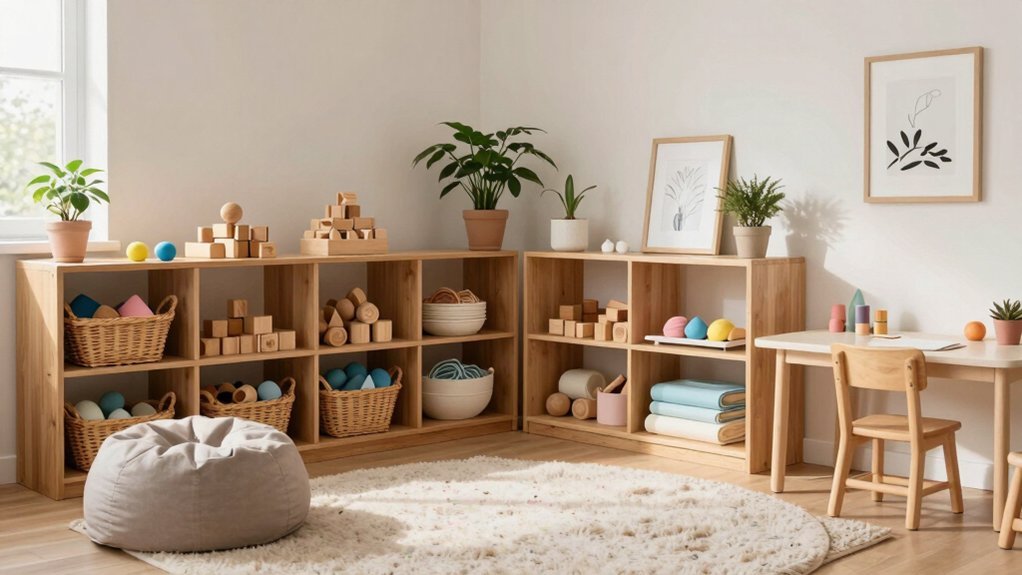
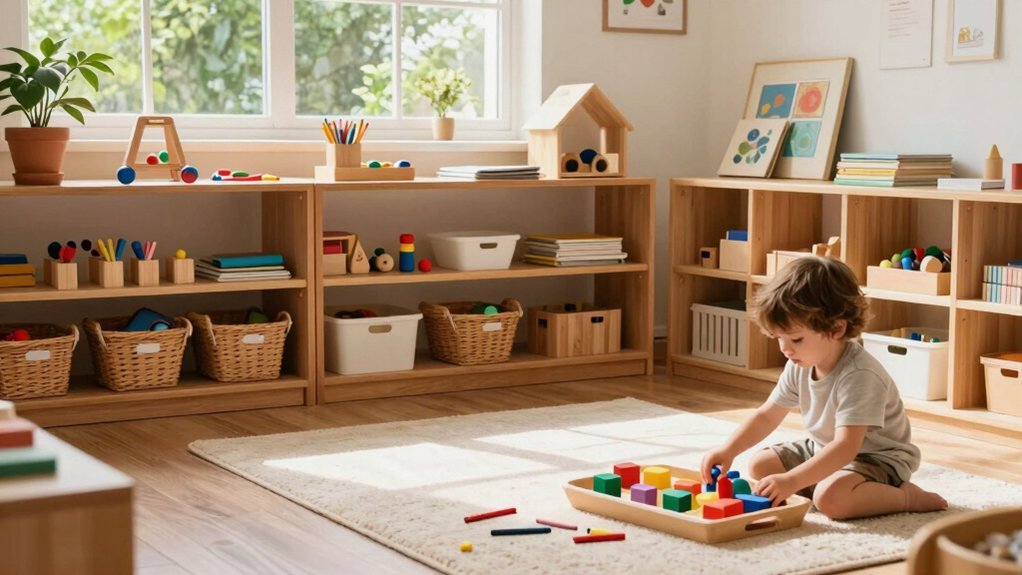
Pick child‑height, natural‑material shelves and a low table so your child can reach, pick up, and return items independently. Keep only 8‑10 activities visible on each shelf, labeling them with simple words or pictures, and rotate the rest every 2‑3 weeks to stay fresh. Create clear zones—creative, construction, reading—each with its own labeled bins, and add low‑height artwork, plants, and fabric‑wrapped pots for calm sensory input. Follow a short daily reset routine, and you’ll see the space stay organized and inviting.
What Core Montessori Principles Shape a Playroom?
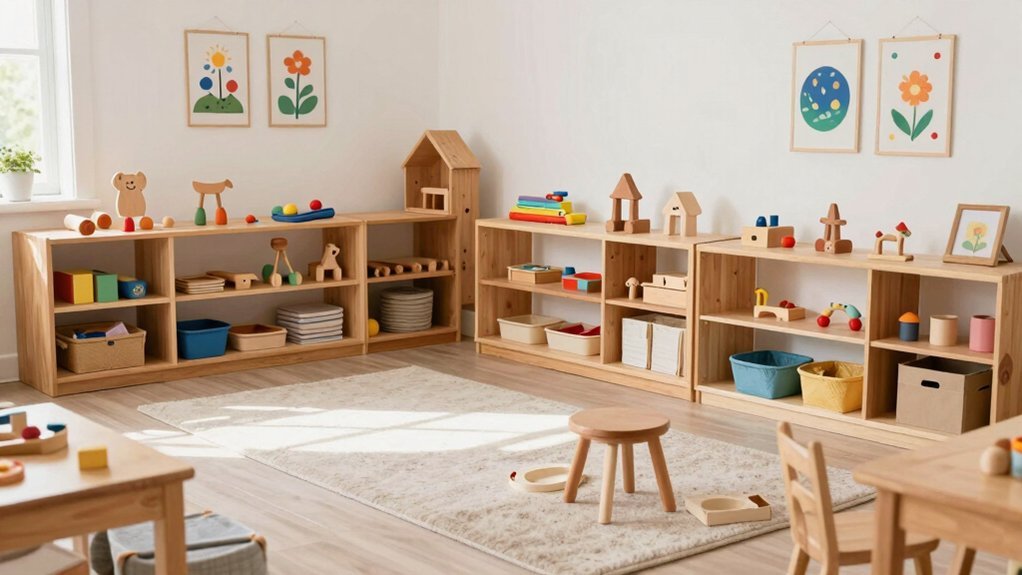
How do core Montessori principles shape a playroom? You prioritize independence by placing low shelves within easy reach, letting kids select and return items without adult help. Each shelf holds a limited set of activities—about eight to ten—to avoid overwhelm and sharpen focus. You arrange materials in a clear, orderly fashion, assigning a specific spot for every toy, book, or tool, so cleanup becomes automatic. Natural wood, cotton, metal, and glass replace plastic, offering tactile richness that supports sensory development. The layout evolves gradually, adding new bins or work areas as the child grows, rather than filling the room all at once. This intentional design cultivates concentration, self‑direction, and a calm, organized atmosphere that invites purposeful play. Integrating low step-in storage solutions further enhances accessibility and safety, making it easier for children to manage their play space independently.
Choose Child‑Height Furniture for a Montessori Playroom
After arranging low, orderly shelves, the next step is picking furniture that matches a child’s height. Choose child-sized furniture that sits at eye-level access, so kids can reach, select, and return items without adult help. A low wooden table paired with a sturdy chair invites crafts, puzzles, and snacks while keeping the space grounded and calm.
Position storage bins and cubbies at the same height as the table; this layout encourages independent cleanup and reinforces the habit of putting things back where they belong.
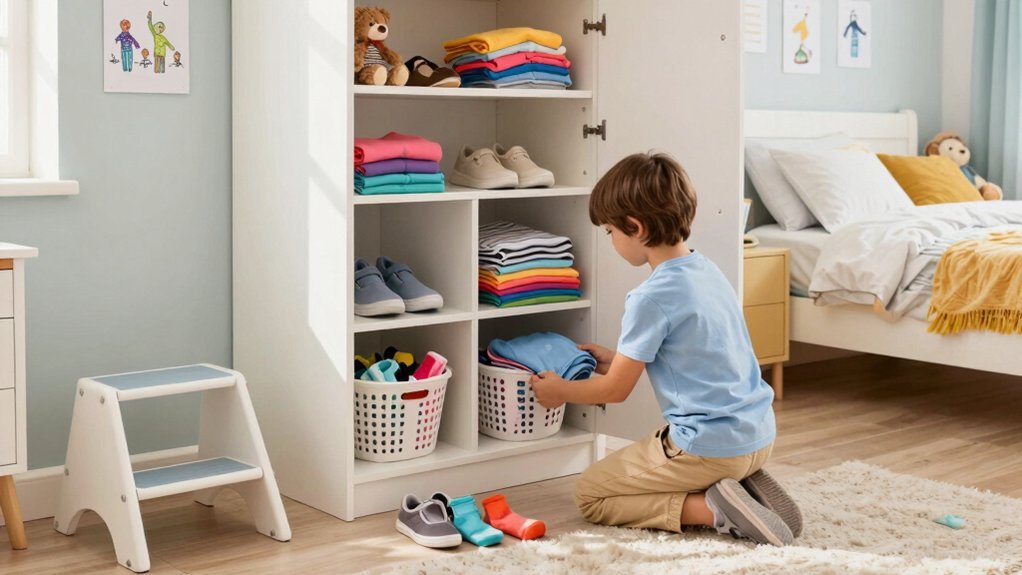
Opt for durable, natural materials that age gracefully and blend with the room’s aesthetic. By arranging the room so everything is within a child’s reach, you empower self‑directed play and foster confidence. Consider using a COSYLAND Toddler Step Stool as a long-term, Montessori-friendly piece that grows with the child, supporting their independence from toddlerhood to elementary years.
Limit & Rotate Toys in a Montessori Playroom
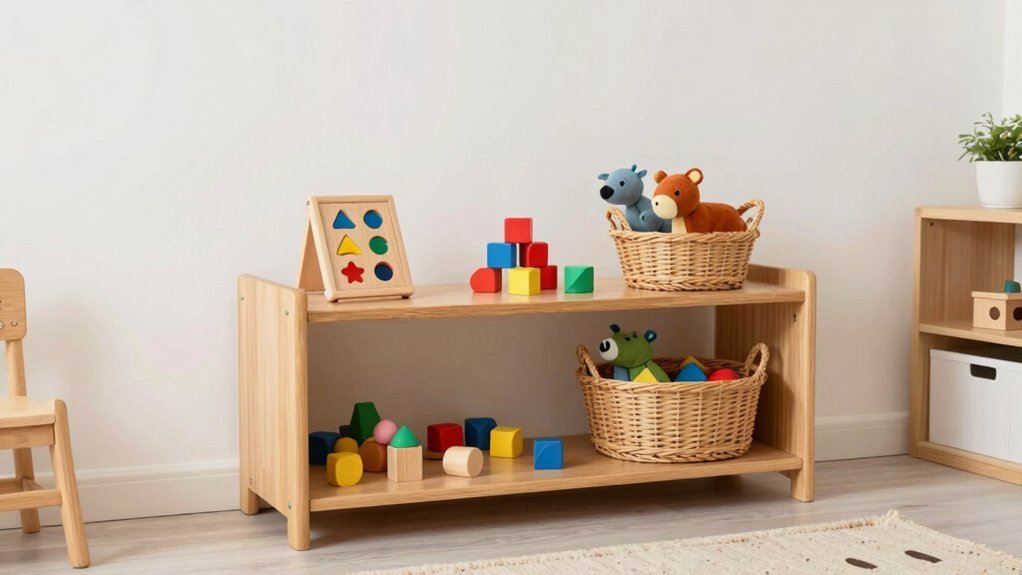
You’ll keep just 8‑10 activities visible on low shelves, letting your child focus while still offering variety.
Every week you swap out the majority of toys, rotating the rest every 2‑3 weeks based on what holds their interest.
This rhythm maintains engagement, reduces clutter, and aligns the playroom with developmental goals.
For optimal organization, consider incorporating a low closet rod to effectively utilize vertical space and keep items accessible.
Optimal Toy Count
| Category | Visible Count | Rotated Out |
|---|---|---|
| Practical Life | 2 | 3 |
| Sensorial | 2 | 3 |
| Language | 2 | 3 |
Using natural materials like natural jute fiber in playroom design promotes eco-friendliness and durability.
Weekly Rotation Strategy
How often should you reshuffle the playroom to keep curiosity alive? You should aim for a rotation every two to three weeks, or sooner if interest wanes. Keep eight to ten visible activities at any time, placing the remaining 80 % on low shelves or in a modern, child‑accessible storage unit. During each rotation, pull out broken or duplicate items and donate them, then replace the displayed set with fresh puzzles, practical‑life tools, language cards, books, or musical instruments. Observe daily play to spot consistently used items and move seldom‑played ones to storage. Explain the process to your child, modeling how to take down and return each piece. This systematic organization maintains focus, reduces clutter, and sustains engagement in your Montessori playroom. Consider incorporating a foldable low work table to provide a versatile activity surface that can be easily stored when not in use.
Create Dedicated Zones in a Montessori Playroom
You’ll set up child‑height shelving in each zone so kids can grab what they need without help. The open‑movement area in the center lets them stretch, run, and transition smoothly between activities. By keeping zones distinct yet connected, you foster independence and focus. Selecting materials with self-correcting features encourages children’s independent learning and error identification.
Child‑Height Shelving
Wondering how to make a playroom truly child‑centered? Install child‑height shelving that offers independent access. Low open shelves let toddlers see and choose 8–10 items at eye level, encouraging self‑directed play. Choose cube shelves or Wavy Wall Shelves so everything faces forward. Group toys by category, use neutral bins, and keep plants or artwork at the same height for visual balance.
Choosing storage options with modularity and configurability can help the organization grow with your child’s needs.
| Zone | Example |
|---|---|
| Creative | Crayons, paper, scissors |
| Construction | Blocks, magnetic tiles |
| Reading | Books, story cards |
Each zone has a dedicated spot, so children know exactly where to return items, reinforcing tidy habits and confidence.
Open‑Movement Zones
After placing child‑height shelves that let toddlers pick and return items independently, turn your attention to the central open‑movement zone. This space should be large, uncluttered, and visually defined without walls, letting children glide from play to rest and back again.
Add a Pikler triangle, climbing arch, or other gross‑motor equipment that you can swap as they grow, keeping the area functional and inviting.
Position practical‑life, reading, and art zones around the perimeter on low, accessible shelves so supplies stay within reach while kids move. Keep the floor level consistent and avoid heavy furniture in the middle; this preserves safe navigation and supports the Montessori philosophy of freedom within a well‑structured organization.
Select Natural Materials for a Montessori Playroom
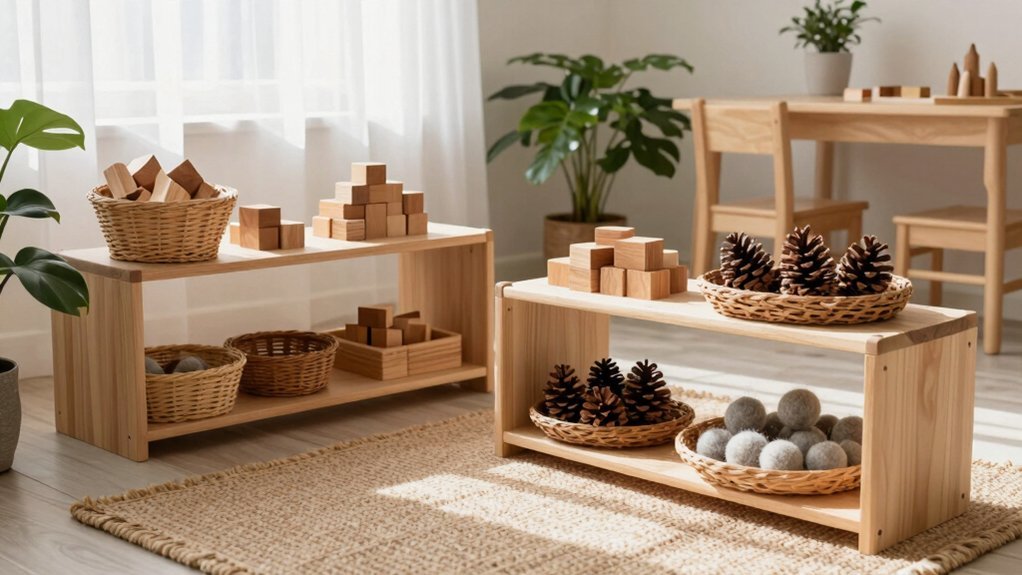
Which natural materials should you prioritize when shaping a Montessori playroom? Focus on wood, cotton, metal, and minimal plastic. Choose sturdy wooden toys that invite tactile exploration and blend with the room’s calm aesthetic. Opt for unfinished plywood shelves and low, child‑friendly storage units that keep everything at eye level and visible. Incorporate natural cotton cushions or rugs for soft sensory input, and use simple metal hooks for hanging items without visual clutter. DIY upcycled shelves or a repurposed play kitchen can preserve a neutral look while staying budget‑friendly. By selecting these natural materials, you create a serene, functional space that encourages independent play and easy access.
Label & Group Items by Category in a Montessori Playroom
Choosing the right natural materials sets the stage for a well‑organized playroom, and the next step is to label and group items by category. You’ll create clearly defined zones—puzzles, practical life, books, art supplies—on child‑height shelves so the child can reach and return each piece independently. Use small, neutral‑colored bins or trays, and apply labeling with both words and simple pictures; this visual cue reinforces grouping and speeds up daily cleanup. Limit the display to 8–10 activities, then rotate them, moving items back into their category bins each time.
A quick 5–10‑minute check each day cements the organization habit, keeping the space tidy and the child confident in their ability to manage it.
Add Nature & Artwork at Child Height for Calm
When you place artwork and natural elements at your child’s eye level, the space instantly feels inviting and soothing. Low shelves become mini‑galleries where bright artwork and fresh herbs sit within easy reach, encouraging independent viewing and gentle selection. Natural materials like wooden frames and fabric‑wrapped pots add warmth, while abundant light highlights leaves and colors, fostering calm focus. By arranging nature and artwork at child‑height, you create a serene zone that invites observation, care, and quiet play.
| Element | Placement | Benefit |
|---|---|---|
| Artwork | Low wall or shelf | Independent visual exploration |
| Plant | Accessible windowsill | Hands‑on care and calm |
| Wooden frame | Child‑height display | Warm, tactile cue |
| Fabric‑wrapped pot | Near play area | Soft texture, soothing |
| Herb garden | Shelf at eye level | Sensory learning, tranquility |
| Natural light | Near windows | Enhances mood, observation |
| Shadow play area | Low floor | Encourages curiosity |
| Outdoor view | Adjacent window | Connects indoor calm to nature |
Set a Daily Reset Routine for Independent Cleanup
Ever wonder how a brief, structured cleanup can turn chaos into calm? You can set a daily reset routine that builds independence and keeps the Montessori playroom orderly. Start each session with a clear demonstration: show how to place blocks in the bin, puzzles on the shelf, and art supplies in the labeled basket. Limit the area to 8–10 visible activities at eye level, so only those items need returning. Follow a simple sequence—tidy the workspace, put items back in their category‑based storage, then clear the central space before moving on. Model the steps, praise effort, and gradually let the child take more responsibility. This consistent cleanup routine reinforces order, fosters autonomy, and creates a calm transition to the next activity.
Troubleshoot Common Organization Issues in a Montessori Playroom
What’s tripping you up in a Montessori playroom? You might see clutter on low shelves, toys scattered, or kids struggling to find their spot. Keep only 8–10 visible activities at a time, arranging them at child height with labeled places. When interest fades, rotate the set every 2–3 weeks, pulling 80 % of toys into storage and showcasing the remaining 20 % on modern shelves. A single work zone—table and chair—plus a separate movement area cuts interruptions and supports the Montessori blend of work and play. Prioritize natural wood and fabric, ditch broken or duplicate items, and maintain a clean, purposeful selection. This focused organization and regular rotation keep the space inviting and functional.
Frequently Asked Questions
How Often Should I Change the Toy Rotation Schedule?
You should rotate toys every two weeks, or sooner if kids lose interest. Keep the schedule flexible, watching for boredom cues, and adjust based on seasonal themes or new materials you introduce.
Can I Incorporate Technology Without Breaking Montessori Principles?
Yes, you can use simple, open‑ended digital tools that support exploration—like tactile tablets or coding kits—while keeping activities child‑driven, low‑stimulus, and focused on hands‑on learning. This respects Montessori principles.
What Lighting Level Is Optimal for a Montessori Playroom?
You’ll want soft, natural light—about 300–500 lux—so kids can see clearly without glare. Use sheer curtains or diffused LED panels, and keep lighting adjustable for different activities and times of day.
How Do I Handle Sibling Rivalry Over Shared Play Items?
You set clear, simple rules, rotate items so each child gets exclusive time, and praise cooperation. Offer identical alternatives, let them negotiate, and intervene only when conflict escalates.
Should I Use Scent or Aromatherapy in the Play Space?
You can use subtle scent or aromatherapy, but keep it mild and natural; choose calming lavender or citrus, ensure it’s non‑allergenic, and limit diffusion time so the environment stays soothing and distraction‑free.

Leave a Reply