When kids can pick out their own clothes from a kid‑friendly minimalist closet, they feel calmer and more in control because the space is low, labeled, and visually uncluttered. Simple low rods and bright, picture‑coded bins let them find outfits quickly, cutting frustration and boosting self‑efficacy. Predictable routines and clear choices nurture independence, while affordable, adjustable shelving grows with them. Keep exploring to discover how these tricks turn daily dressing into a confidence‑building habit.
Why a Kid‑Friendly Minimalist Closet Improves Emotional Wellness

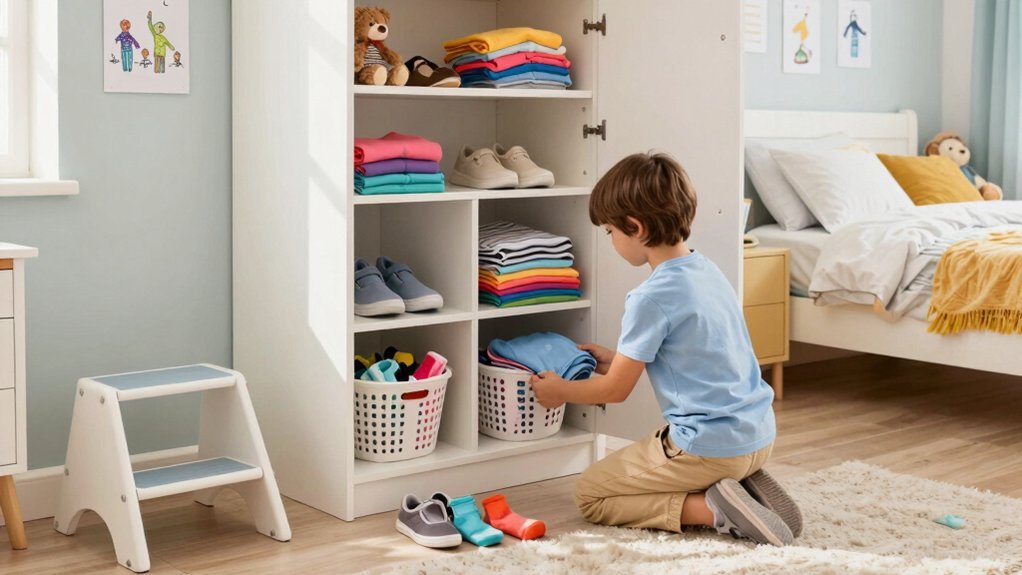
Why does a kid‑friendly minimalist closet boost emotional wellness? You’ll notice that a kid‑friendly closet with low‑access rods, labeled bins, and generous white space invites independent dressing. The minimalist design cuts visual clutter, letting your child see a clear, organized wardrobe. That visual clutter reduction eases sensory overload, so they feel calmer and more secure. When they can pick an outfit without hunting, the daily routine becomes predictable, lowering frustration for both of you. Each successful choice builds self‑efficacy, reinforcing a sense of control and ownership. Over time, the organized wardrobe supports emotional wellness, fostering steadier moods and sharper focus throughout the day. Providing age-appropriate tools like a step stool with safety features can further encourage independence and confidence during daily routines.
How a Kid‑Friendly Minimalist Closet Simplifies Your Child’s Daily Routine
A kid‑friendly minimalist closet turns morning dressing into a quick, low‑stress routine. You’ll see kids reach for low‑hanging shirts, socks, and loveys, because the closet’s organization places essentials at child height. Clear visual cues—color‑coded bins and labeled drawers—guide them to the right compartment without hesitation, cutting decision fatigue. A single basket for small items and a simple storage system for hanging shirts let children sort and retrieve outfits independently, reinforcing daily routine independence. Elevating out‑of‑season pieces on the highest shelf keeps the wardrobe tidy and prevents clutter from overwhelming them. By limiting choices to well‑organized, accessible pieces, you create a predictable, streamlined dressing process that saves time and builds confidence. Incorporating low step-in storage solutions ensures that children can easily access their belongings while maintaining safety and promoting independent cleanup.
Simple, Smart, Affordable Design Tips for a Kid‑Friendly Minimalist Closet

Ever wondered how you can turn a chaotic kid’s closet into a sleek, functional space without breaking the bank? Start with a minimalist design: a few open shelves, a single basket per child, and generous white space that lets you see everything at a glance.
Install low‑hanging rods and a mirror at eye level so kids can reach clothes and practice daily dressing independently.
Use labeled bins in bright colors for socks, undergarments, and loveys; the visual cues boost accessibility and confidence.
Choose DIY shelving or inexpensive modular units, keeping total cost under $100.
Add adjustable storage components that grow with your child, ensuring the wardrobe stays organized and functional from toddler years through early school.
How to Label and Organize Bins for Gratitude and Ownership
How can you make a child’s closet feel like a personal treasure chest while teaching independence? Start by turning each bin into a visual cue for ownership. Use clear, bold words for early readers and pair them with picture labels so kids know exactly where socks, seasonal gear, or loveys belong. Color‑coded labels speed up daily routines and reduce rummaging, letting children see their space and feel gratitude for what they own. Regularly refresh the labels as they grow; this keeps the system fresh and reinforces independent organization.
- Choose bright colors for each category and attach matching picture tags.
- Label bins with simple words and icons for early readers.
- Rotate seasonal gear labels each quarter to maintain relevance.
Building Long‑Term Independence With a Kid‑Friendly Minimalist Closet

Why not transform your child’s closet into a sleek, kid‑friendly minimalist space that grows with them? You’ll see independence blossom when easy‑to‑reach storage replaces hidden drawers, and adjustable shelves keep pace with height. Labeled bins teach organization skills while daily routine becomes a smooth decision‑making practice. The minimalist closet limits choices, so your kid learns to pick outfits confidently, reinforcing environmental awareness by reusing pieces. A simple, orderly layout mirrors Montessori principles, turning space management into lifelong problem‑solving. Integrating Montessori-inspired features enhances real-world imitation and supports authentic learning experiences.
| Feature | Benefit |
|---|---|
| Adjustable shelves | Grows with child, sustains independence |
| Labeled bins | Clarifies storage, boosts organization skills |
| Easy‑to‑reach storage | Cuts search time, supports daily routine |
| Minimalist design | Limits options, encourages decision‑making and environmental awareness |
Frequently Asked Questions
What Is the 3-3-3 Rule for Clothes?
The 3‑3‑3 rule means you keep three types of garments per category, three outfits available each day, and three seasons’ worth of clothing within easy reach, helping kids dress independently and quickly.
What Is the 10-10-10 Rule for Kids?
You evaluate each item by asking, “Will I use it for ten minutes, cost ten dollars, or last ten days?” If it fails any test, you donate or discard it, keeping your wardrobe lean.
When Should a Child Be Able to Dress Themselves Independently?
You’ll see kids dressing alone around ages three to four, and by five they usually manage most outfits without help, especially if you’ve set up low, labeled, and visual‑cue‑rich storage.
What Is the 9 Minute Rule for Kids?
You follow the 9‑minute rule by giving kids a nine‑minute window to pick an outfit, dress, and tidy their clothes, encouraging quick decisions, independence, and reduced morning stress.