
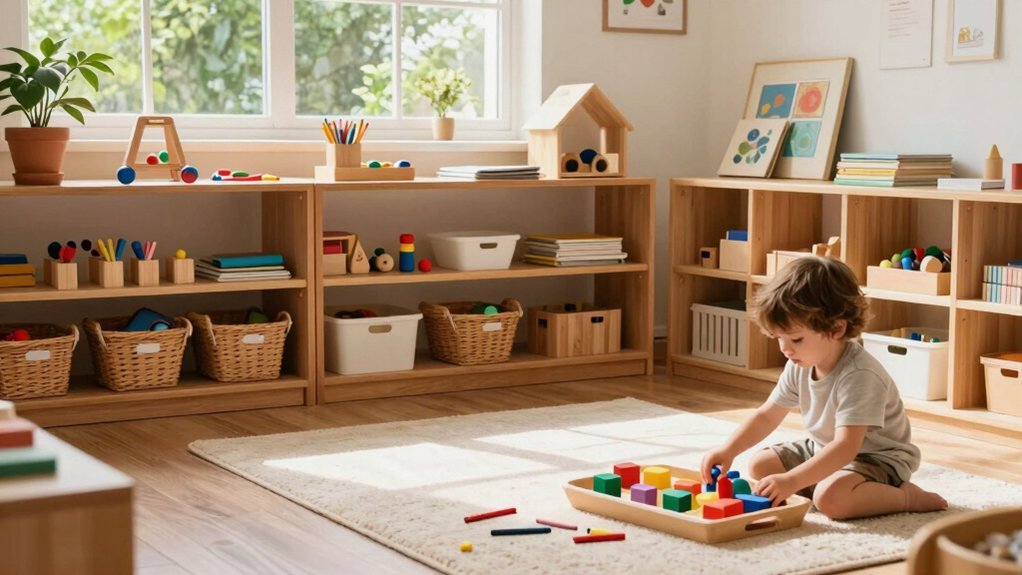
Design child‑height zones with low shelves, labeled bins, and consistent placement so kids can reach, use, and return items without help. Keep a few toys out at a time, rotate the rest, and use picture labels to cue where everything belongs. Add a visual routine chart for bedtime, meals, and cleanup, and involve them in creating and updating it. Maintain the same layout for weeks, then make tiny, predictable tweaks when needed. Keep following for more practical steps.
Why Kids Thrive When Their World Is Ordered

A stable, well‑organized environment gives kids the external framework they need to build internal order, turning everyday routines into reliable cues that support learning and growth. When you set up a consistent order, you’re giving their brain a predictable map that it can use to practice attention, memory, and planning.
The first six years are a sprint of neural growth, and repeated sensory experiences—like seeing the same block shelf or following the same bedtime sequence—cue the brain to strengthen pathways. Disruptions to routine scramble those pathways, making task initiation and working memory harder. Montessori-friendly tools like the Kitchen Step Stool for Kids with Safety Rail help foster independence within a safe, orderly environment.
Identify Core Spaces That Support Order for Children
Where does order begin in a child’s world? It starts in the spaces you shape for them—places that invite independence and calm. By arranging a consistent environment, you give kids a clear map for their actions, turning everyday routines into learning moments. The pantry of shelves, the child‑sized table, and the dedicated art corner each become anchors of order that nurture confidence and focus.
- Shelving at child height – Keeps materials in the same spot, reinforcing classification and self‑correction.
- Child‑sized furniture – Removes barriers, letting kids sit, work, and return items without adult help.
- Designated activity zones – Segments play, reading, and crafts, so the environment signals what’s expected, supporting independence.
These core spaces create a predictable rhythm, linking outer order to inner growth. Incorporating low step-in toy storage solutions enhances accessibility, promoting independent cleanup and sustained organization habits.
Create a Stable Bedroom Layout

You’ll notice how fixing the bed, dresser, and shelves at the same heights instantly creates a visual anchor for your child. Pair that with consistent storage—labeled baskets and trays at reachable levels—so they always know where to put things. Together these stable choices turn the room into a calm, orderly space that supports independent routines. Using child-safe items with spill prevention technology helps maintain that order by reducing messes and encouraging responsibility.
Fixed Furniture Placement
Ever wonder how a steady bedroom layout can boost a child’s confidence? When you fix furniture in the same spots, you give the room a sense of order, permanence, and a calm environment. The child learns where everything belongs, which builds independence and reduces anxiety.
- Position beds, dressers, and shelves at child height so they can reach and return items without help.
- Assign each piece a dedicated, identical spot—use matching nightstands or bins to keep visual clutter low.
- Keep the layout unchanged for weeks, only adjusting gradually if needed, so the child’s mental map stays reliable.
Consistent Storage Solutions
When the furniture stays put, the next step is giving everything a home that never moves. You’ll notice that consistent storage solutions make a huge difference for children’s routine.
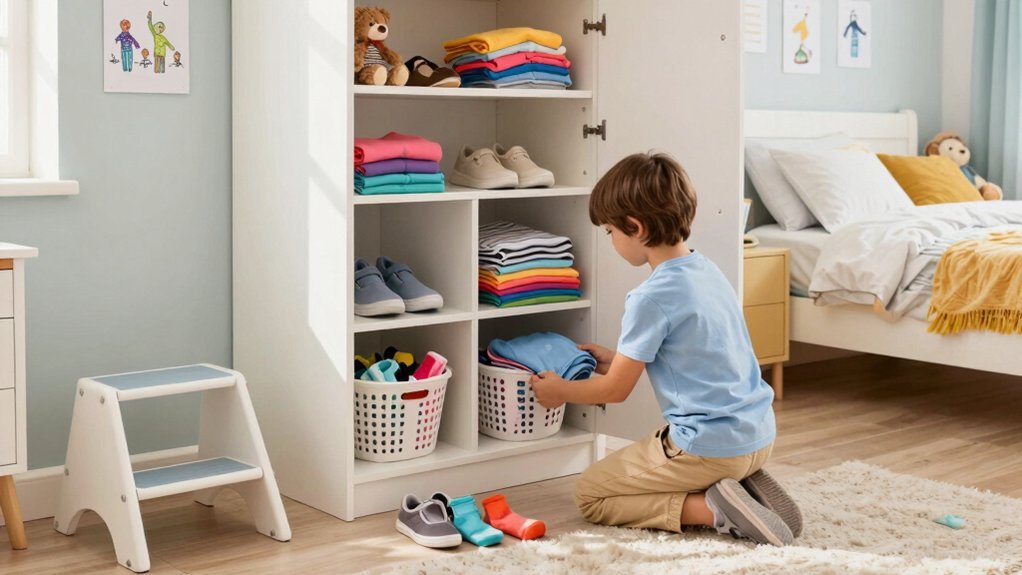
Place low, labeled shelves at child height so they can grab a book or a shirt without help, reinforcing independence.
Use trays and baskets to group related items—puzzles in one bin, art supplies in another—so each activity ends with returning it to its spot.
Arrange the bedroom into clear zones: a sleep corner, a play area, and a dressing space, each with its own storage.
Keep only a few toys accessible at a time and rotate the rest to avoid overwhelm.
Maintaining this layout and routine builds spatial memory and a calm, orderly environment.
Additionally, choosing age-appropriate tools and toys with verified CPSIA certification ensures a safe and consistent play experience.
Organize Play Zones to Strengthen Order
How can you turn a chaotic playroom into a calm, focused learning space? By shaping distinct play zones, you embed order and organization into everyday fun. Place each zone—art, blocks, sensory—at eye level and keep related supplies nearby, so kids can classify and retrieve items without confusion. Use child‑sized shelves and trays, and limit the toys in each zone, rotating sets to sustain interest and progressive complexity. End every activity with a quick clean‑up, reinforcing habit and higher‑level thinking.
Shape distinct play zones at eye level, using child‑sized shelves, to create calm, organized learning spaces.
- Define clear categories – assign a specific area for each type of play, minimizing overlap.
- Standardize storage – keep materials in the same spot daily, using low shelves and trays.
- Rotate and limit – offer a manageable number of toys per zone, swapping them out regularly.
Create a Visual Routine Chart for Orderly Daily Tasks
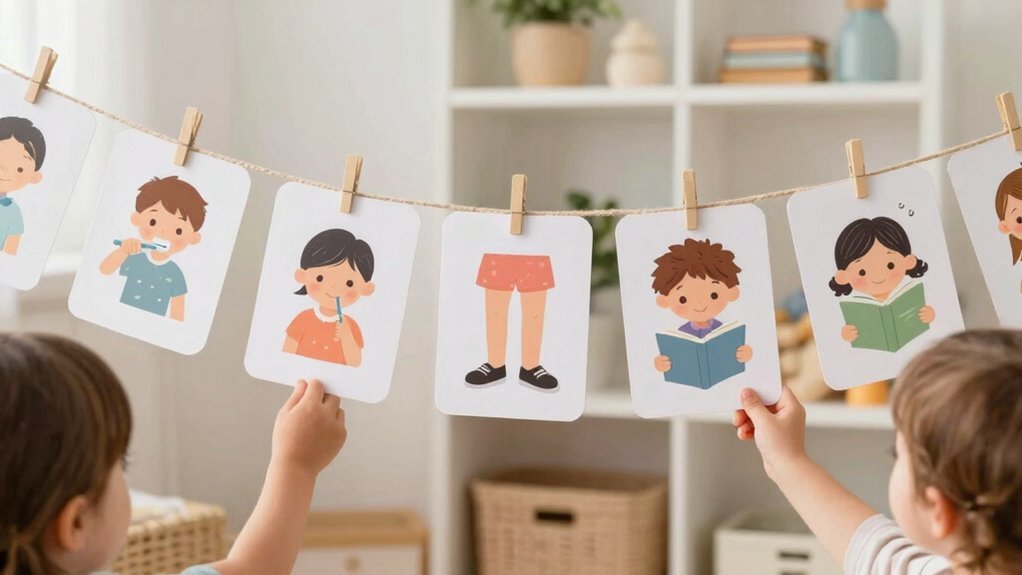
After setting up distinct play zones, the next step is to give your child a clear visual guide for daily tasks. Start by defining the goals of your visual routine: which orderly tasks you need completed each evening. Choose age‑appropriate responsibilities and snap real pictures of each bedtime step—brushing teeth, putting on pajamas, reading a book. Involve your child in listing these activities, then arrange the photos in a logical sequence on a board. Decorate the routine chart, paste the images, and hang it at eye level so the child can follow independently. As the chart stays consistent, expect gradual independence and pride, reinforcing steady bedtime behavior without extra prompts. Using natural wooden animal figures can also enrich the routine by incorporating tactile and imaginative elements that engage young children in following daily tasks.
Use Child‑Sized Storage to Encourage Independent Cleanup
You’ll find that low‑sized shelving puts everything within arm’s reach, so kids can grab and store items without help.
When each toy always returns to the same spot, the routine becomes second nature and tidy‑up feels automatic.
Adding clear visual labels—like color‑coded bins—gives children instant cues, boosting their confidence to clean up independently.
Including storage solutions such as muslin bags and trays helps keep sorting toys and craft materials organized and easy to manage.
Low‑Sized Shelving for Accessibility
Ever wonder why kids tidy up faster when everything’s within reach? Low shelves give them the power to grab, use, and return items without stretching or asking for help. By placing trays and child‑sized tools at their eye level, you boost accessibility and turn cleanup into a natural habit. Organized zones on each shelf keep toys, books, and art supplies in defined spots, so search time drops and returning items becomes second nature.
- Install evenly spaced low shelves that align with the floor level.
- Group items by category and label each zone for quick identification.
- Keep the shelves close to play areas and seating to maintain flow and reinforce independent organization.
- Choosing shelves with rounded edges and non-toxic finishes ensures safety and durability for active play areas.
Consistent Placement Reinforces Routine
Why does a child thrive when everything they need lives in the same spot every day? You create a mental map that guides them effortlessly, turning chaos into order. By placing crayons, blocks, and books on child‑sized shelves at eye level, you give them reachable tools that feel doable. Each activity gets a dedicated shelf, and you keep the items in a consistent order—pencils first, then paper, then stickers. When the activity ends, you cue the child to return each piece to its spot, reinforcing the routine and making cleanup a natural step.
This predictable placement transforms the environment, reducing hesitation and building confidence, so the child learns to maintain order without prompting.
Visual Labels Promote Independence
How can a child clean up without constant prompting? You’ll find that visual cues and child‑sized storage turn cleanup into a game of independence. By placing low shelves and trays at their height, you give them reach and choice. When every bin bears a pictorial label—like a puzzle piece, a crayon, or a car silhouette—your child instantly knows where each item belongs, fostering independent cleanup. Involve them in creating and rotating those labels so the system stays clear as their collection grows.
- Use durable, picture‑based labels on every storage unit.
- Keep the same spot for each category daily.
- Let kids help refresh labels to match new toys and skills.
Build a Predictable Meal‑and‑Snack Order
What if you could turn every mealtime into a calm, confidence‑boosting ritual? You can create order by establishing a predictable routine: wash hands, set the table, serve food, eat together, then clear dishes.
Stick to set meal times—breakfast at 7:30, lunch at 12:00, dinner at 6:00—so your child learns rhythm and feels secure.
Set regular meal times—7:30 am, 12:00 pm, 6:00 pm—to teach rhythm and foster security.
Organize foods by location and label containers for vegetables, grains, and snacks; this speeds retrieval and encourages independence.
Offer a short, rotating snack selection—one fruit, one protein, one treat—to limit choices and cut decision fatigue.
Finish each meal with the same tidy steps: clear plates, wipe the table, and wash hands again.
Consistency reinforces predictability, builds confidence, and keeps the household smoothly flowing.
Map a Calm Bedtime Routine
Creating a calm bedtime routine starts with a simple chart that visualizes each step, from brushing teeth to lights out. You begin by setting goals for the chart, then pick age‑appropriate tasks and collect real pictures from home. Involve your child in naming typical bedtime activities, arrange the images in a logical order, and hang the board where both of you can see it. The sequence—teeth brushing, pajamas, story, quiet time, lights out—creates a sense of order and mirrors Montessori‑inspired routines. As you sit together to glue the pictures, you’ll notice growing independence and a smoother transition to sleep.
- Choose clear, visual cues for each step.
- Keep the list short and child‑driven.
- Reinforce the order daily for consistency.
Introduce Responsibility Charts to Reinforce Order
A few simple steps can turn a responsibility chart into a powerful tool for order and independence. Start by sitting with your child and listing age‑appropriate duties—making,,,, and chores chores. chores, simple the Include This, the chart so they feel ownership and motivation. Use bright stickers or magnets to mark completed tasks, giving instant visual feedback that reinforces order. Keep the list short; too many items overwhelm and dilute consistency. Offer gentle reminders and praise when they follow the chart, building confidence and independence. Review the chart together weekly, adjusting tasks as they grow. This routine lets children see expectations clearly, manage their time, and develop self‑reliance while maintaining a calm, organized environment.
Balance Flexibility and Consistency When Changes Occur
When a routine faces an unexpected shift, you’ll first set up a contingency plan that outlines quick alternatives while keeping the core structure intact. You’ll keep the main sequence of activities the same, so the child still recognizes the familiar pattern.
Then you’ll introduce small, age‑appropriate tweaks that let the child adapt without feeling destabilized.
Prepare Routine Contingency
Ever wonder how a simple, visible routine can keep a child grounded even when the day throws a curveball? You can turn a routine into a safety net by weaving a contingency that preserves predictability. First, lay out the core sequence—wake, wash, breakfast, learning—while keeping supplies in the same spot. Then, give a brief heads‑up in child language before any shift, so the child knows what’s coming. Finally, have a short, repeatable fallback activity, like a quiet Montessori task, ready to fill gaps. When the disruption passes, restore the original flow immediately and let the child help re‑order the steps, reinforcing ownership and calm.
- Visible core sequence with fixed material locations
- Advance framing using simple, age‑appropriate language
- Ready‑to‑use fallback activity to bridge gaps
Maintain Core Structure
After you’ve set up a fallback activity for disruptions, keep the day’s backbone steady by preserving the core sequence—wash, eat, play, sleep—while letting small, predictable tweaks slide in. You’ll notice that consistency builds trust; each child learns that the same steps repeat, even if a snack swaps places with a story.
Store toys, books, and art supplies in the same spots, so the environment cues the next move without a mental reset. When a schedule shift looms, give a gentle heads‑up and a visual cue, then adjust only one element at a time.
Involve the whole family in these routines, letting adults tweak timing or location while protecting the underlying order that nurtures calm and confidence.
Teach Accountability to Strengthen Everyday Order
How can you turn everyday chores into lessons in responsibility? You set a responsibility chart that lists each child’s duties, making accountability visible and fair. Let them design a routine board, adding stickers or drawings; the act of creation fuels independence and reinforces the daily sequence. Offer gentle reminders and praise, never shaming, so the routine feels supportive, not punitive. After a task, ask reflective questions—what happened, who was affected, how can you fix it?—to deepen their sense of ownership and repair.
Turn chores into responsibility lessons with visual charts, creative boards, gentle reminders, and reflective questions.
- Create a visual chart with clear tasks.
- Involve kids in decorating the routine board.
- Use reflective questions to cement accountability.
Troubleshoot Common Obstacles to Maintaining Order
Why do routines crumble the day a toy disappears or a schedule shifts? You can stop that by tightening external order. Keep the toy collection small and rotate items so children learn to return things to a consistent spot. Label bins and set a fixed activity sequence; the act of putting away becomes a classification exercise that reinforces mental order. Post a simple chart showing bedtime and daily steps, and assign age‑appropriate tasks to nurture predictability.
When disruptions happen, involve your child in planning the change—ask how they’d like the new routine to look. This collaboration eases anxiety, preserves inner calm, and lets the family bounce back quickly, keeping routines smooth and the home organized.
Celebrate Progress and Reinforce the Love of Order
Ever notice how a simple “great job!” can turn a tidy‑up into a celebration? You can reinforce the love of order by praising tiny wins—like putting a puzzle piece back on the shelf—so the child feels progress in every routine. Use a colorful chart or checklist to make each step visible; watching the bars rise builds confidence and shows how far they’ve come. Keep feedback short, linking neatness to calm, secure feelings, and celebrate milestones such as a weekly cleanup to keep motivation high.
- Highlight effort, not perfection, to nurture intrinsic order.
- Tie celebrations to specific milestones for lasting progress.
- Use visual trackers that connect routines to visible growth.
Frequently Asked Questions
What Is the 3-3-3 Rule for Children?
You’ll find the 3‑3‑3 rule means offering three toys, three daily tasks, and three clear steps for each activity, so kids stay focused, feel in control, and develop self‑regulation.
What Is the 10-10-10 Rule for Kids?
You apply the 10‑10‑10 rule by pausing, then weighing how a choice feels now, how it shapes habits over ten months, and what lasting impact it leaves ten years later.
What Is Order in Montessori?
You see order in Montessori as a consistent, self‑correcting environment where every material has a fixed place, routines repeat, and children return items, fostering independence, focus, and internal discipline.
How to Create Structure for Your Child?
You set clear, age‑appropriate routines, place materials at child height, use a visual chart you design together, and consistently return items to their spot, fostering independence and steady structure.

Leave a Reply