
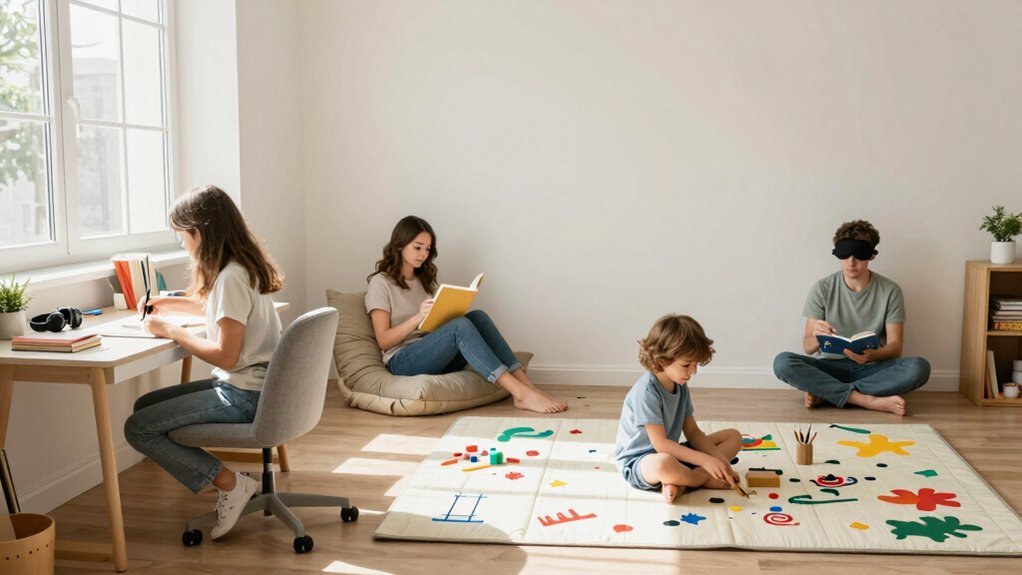
Create a dedicated study space that signals focus, and keep it clutter‑free and personalized. Turn off your phone, silence notifications, and close unrelated tabs to block digital distractions. Stick to a consistent daily schedule with 25‑50‑minute study blocks and short breaks, using a visual timer or cue. Set clear time limits for each task and use noise‑cancelling headphones or a quiet corner to control sound. Communicate these rules and hours to your family so they respect your study time, and you’ll discover even more strategies ahead.
Establish a Dedicated Study Space for Home Learning
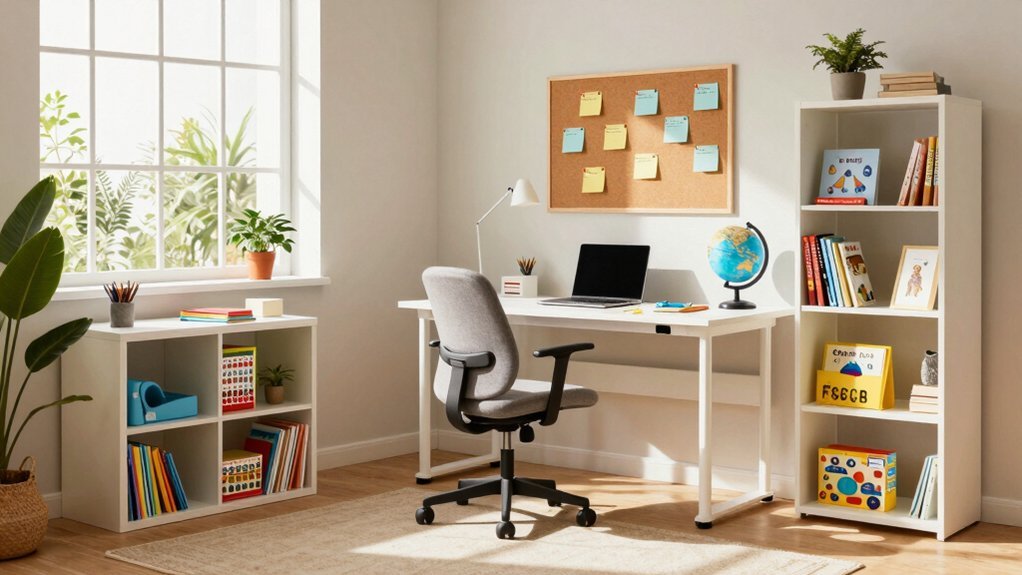
Where can you focus best? You carve out a study space that’s a dedicated area solely for home learning, turning a corner or desk into a mental cue for focus. By reserving that spot for studying, you reinforce boundaries between academic work and everyday chores. Keep distractions at bay: silence the phone, close unnecessary tabs, and let family know your hours. Personalize the zone with a motivational quote, a plant, or soft lighting to make it inviting without breaking concentration. Natural light and comfortable decor boost enjoyment, while the clear separation supports consistent study habits. This distraction minimization strategy lets you immerse yourself in tasks, knowing the environment is built for productive learning. Choosing furniture with proper safety guardrails can also enhance focus by providing a secure and comfortable setting.
Minimize Digital Distractions (Phone, Tabs, Social Media) to Strengthen Home Learning Boundaries
Ever wonder how much smoother your study sessions could be if digital interruptions vanished? Turn off your phone, silence notifications, and close extra tabs. Tell your family when you’re in “focus mode” so they respect your boundaries. If a ping pops up, hit a 2‑minute reset timer and refocus. A quiet space and noise‑canceling headphones keep ambient noise from stealing attention, turning your home learning area into a distraction‑free zone. Using tools like a foldable step stool can also create a versatile and organized learning space for children.
| Action | Tool | Benefit |
|---|---|---|
| Silence phone | Do Not Disturb | Eliminates call and message alerts |
| Close tabs | Browser manager | Reduces visual clutter |
| Notify family | Shared calendar | Reinforces boundaries |
| Reset timer | 2‑minute alarm | Restores focus quickly |
These steps sharpen focus management and protect your study environment.
Create a Consistent Daily Schedule for Home Learning With Built‑In Breaks

How can you turn a chaotic home into a classroom that runs like clockwork? Start by mapping a daily schedule that mirrors a school day: set a fixed start time, a clear end time, and block out focused study periods of 25‑50 minutes. Insert short, structured breaks between each block to keep energy high and prevent burnout. Communicate this plan to family members so they respect your boundaries and limit interruptions. Use a simple visual cue—like a colored timer or a printable chart—to signal when it’s study time and when a break begins. Align each break with task transitions, allowing a quick stretch, snack, or breath exercise. Consistency reinforces habits, and the built‑in breaks keep your mind sharp throughout home learning. Incorporating activities like fine motor skill development through threading and beading can provide effective hands-on breaks that also support learning growth.
Set Time Limits for Tasks and Block Out Noise When You Study
Why let a single assignment dominate your day? Set clear study boundaries by assigning time limits to each task. You’ll30 study blocks, 30‑45 minutes long, then switch subjects or take a brief pause. This pacing keeps attention fresh and prevents burnout.
For noise reduction, choose a quiet corner, silence your phone, and close unrelated tabs. If outside sounds creep in, pop on noise‑canceling headphones or move to a calmer spot like a library.
Consistently block out the same window in your schedule, aligning it with your peak energy. Effective distraction management means you control the environment, not the other way around, so you stay on track and finish more work in less time. Using a low easel for creative tasks can also enhance focus by keeping materials at an ergonomic and accessible level.
Communicate Study‑Time Expectations With Family

Do you know how much smoother your day runs when everyone knows exactly when you’re studying? Set clear study-time expectations and share them early. Use family communication to explain your home study boundaries, the designated study area, and the study schedule you’ll follow. Keep the message brief and repeat it when plans shift.
- Exact hours – State start and end times, plus allowed breaks.
- Location – Point out the desk or corner that marks your designated study area.
- Behavior rules – List quiet periods, device limits, and non‑study tasks that aren’t allowed.
- Change protocol – Explain how you’ll notify the family of illness, appointments, or timing adjustments.
Including tools with quick response times can help maintain focus and make study sessions more efficient.
Frequently Asked Questions
How Do I Handle Family Emergencies During Scheduled Study Time?
When a family emergency hits during study time, pause instantly, inform anyone relying on you, and shift focus to the crisis. Once resolved, reassess your schedule, adjust tasks, and resume studying.
What Steps Should I Take if a Child Asks for Personal Advice?
Tell the child you’ll listen, ask clarifying questions, and then offer age‑appropriate guidance. Keep the advice supportive, avoid over‑sharing personal details, and follow up later to ensure they understand.
Can I Share My Home Learning Plan With Extended Family Members?
Yes, you can share your home learning plan with extended family members, but keep personal details private, set clear expectations, and ensure they respect your child’s schedule, boundaries, and learning goals.
How Do I Set Boundaries When a Sibling Repeatedly Interrupts?
You tell your sibling, “I need quiet for my study; please stop interrupting for the next hour.” Set a timer, close the door, and remind them gently when the timer ends.
What Is the Protocol for Reporting a Breach of Confidentiality?
You should immediately notify your supervisor or designated privacy officer, document the incident in writing, and follow your organization’s breach‑response checklist, which typically includes containment, assessment, and notifying affected parties.




Leave a Reply