
You set clear, positive house rules and let each child choose within those limits, so toddlers can pick a snack from a low shelf while older siblings decide activity order. Use Montessori‑style low shelves, labeled zones, and natural consequences like spilled water to teach responsibility. Teach consent by asking before hugs and model boundaries daily. Older siblings model decision‑making, and you adjust choices as kids grow. Keep routines flexible, and you’ll discover deeper strategies for fostering autonomy and safety.
Our Recommended Product on Amazon

As an Amazon Associate we earn from qualifying purchases.
Freedom Within Limits: Define the Concept for Multi‑Age Siblings

How can you balance autonomy and safety when kids of different ages share a home? You define “freedom within limits” by giving each child age‑appropriate choices that respect shared boundaries. Think Montessori: let toddlers pick a toy from a low shelf while older kids decide the activity order, all within clear, consistent house rules. Explain the rules in positive language, then use natural consequences—like a gentle redirection when a younger sibling reaches for a hazardous object—to reinforce boundaries without hovering. Encourage independence by letting each sibling handle self‑care tasks, such as dressing or snack selection, inside the agreed guidelines. When expectations stay the same across rooms and routines, every child knows what’s allowed, fostering security for the young and autonomy for the older. Providing tools like Montessori-friendly step stools that suit different ages can also support safe independence in shared spaces.
Freedom Within Limits: Age‑Appropriate Choice Menus for Shared Spaces
You can set up simple choice menus on low shelves, offering two snack options for the younger child and a few more varied picks for the older sibling, so each feels a sense of autonomy. By labeling the areas and keeping the selections within a defined zone—like the kitchen counter or play table—you prevent wandering and keep the space orderly.
The boundaries stay consistent, yet you frame them as possibilities, such as “pick a plate and decide when to start cleaning,” reinforcing responsibility while preserving harmony. Using Montessori kitchen helpers can further encourage independence and safe participation in shared spaces.
Shared Choice Menus
Ever wondered why a simple list of options can keep siblings calm and engaged? You’ll find that shared choices work best when they sit inside clear boundaries. By limiting toys, activities, foods, and seating to a curated set, you cut decision fatigue and prevent overstimulation. Consistent language and routines across rooms teach kids what’s expected, so they navigate shared spaces with confidence.
- Pre‑selected options – a short menu of age‑appropriate items.
- Ordered sequences – activities follow a set order, not random choice.
- Adult‑guided autonomy – supervision without hovering, letting natural consequences teach responsibility.
Incorporating age-appropriate developmental stages in selecting toys and activities ensures each child remains engaged and challenged within their capabilities.
Use this structure to create a safe, trustworthy environment where each child feels heard and the household runs smoothly.
Age‑Tailored Boundaries
What if you could give each child a menu that feels just right for their age while keeping the whole space orderly? You can set up low, clearly labeled shelves where toddlers grab two snack choices and older kids pick from a short activity list. Use the same calm language and consequences for all, but adjust expectations—shorter attention spans for the little ones, longer task goals for the older sibling. Let them decide the order of routine steps, preserving autonomy while the core activity stays safe. Designate personal boundaries for body autonomy and space, modeling consent by asking before hugs or sharing items. This consistent, age‑tailored framework keeps the shared area smooth and respectful. Incorporating low bookcases with front-facing storage can further encourage independent selection and organization, tailor-made for children’s developmental stages.
Freedom Within Limits: Designing Flexible Routines That Respect Autonomy
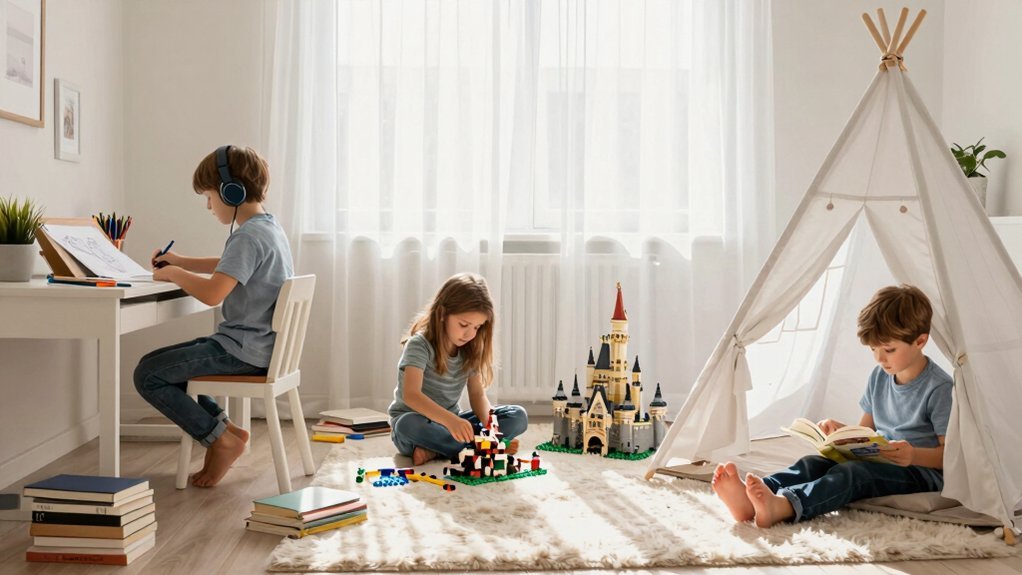
How can you create a routine that feels both structured and liberating for every child in a multi‑age household? Start by mapping out core activities—wake‑up, meals, learning, play—then embed choice points that honor autonomy while keeping safety and fairness intact. Use clear, concise language and repeat limits so each child knows what’s expected. Regular check‑ins let you adjust freedom levels as siblings grow, reinforcing trust and consistency.
- Choice menus – let kids pick the order of tasks or seating, but keep the overall schedule visible.
- Movement slots – schedule short indoor movement breaks and age‑appropriate outdoor time to prevent distraction.
- Progression checkpoints – set transparent goals; once a child masters a step, grant a new option, expanding autonomy within the established routines.
Freedom Within Limits: Low Shelves and Curated Materials for Decision‑Making
Low shelves stocked with a handful of carefully chosen, age‑appropriate toys give toddlers the freedom to pick, while keeping the environment tidy and safe. You place only a few items within reach, so each choice feels meaningful and not overwhelming. When a child shows readiness, you add a new, curated material, expanding options just enough to stretch decision‑making skills without clutter.
The shelving blocks disruptive pathways, encouraging independent grabbing at child height. Siblings share the same curated set, reinforcing house rules and consistency across ages. By limiting options to a manageable number, you help children practice evaluating, selecting, and enjoying their picks, fostering confidence and cooperative play in a structured yet flexible environment. Including educational materials like the Montessori Binomial Cube can further develop spatial reasoning and fine motor skills while nurturing early algebraic thinking.
Freedom Within Limits: Safe Kitchen Access and Clean‑Up Roles

You’ll let them sip water from a low pitcher while you keep a watchful eye, so spills stay rare.
Provide kid‑friendly sponges and bins that they can reach, turning clean‑up into a quick, independent task.
Offer a small, pre‑chosen snack shelf so they decide what to eat without reaching for anything unsafe.
Using kitchen tools with BPA-free, food-grade materials ensures safety while allowing children to participate in food prep.
Safe Water Access
Ever wonder how a child can splash water safely while learning responsibility? You can give them freedom within limits by letting them use the sink under supervision. Set clear boundaries: water stays in the basin, spills are wiped immediately, and tools stay within reach but monitored. This builds safe water access and nurtures independence.
- Define the zone – keep the faucet, bowl, and towel in a low‑height area so the child can see and control the flow.
- Teach the process – demonstrate pouring, rinsing, and drying, then let the child repeat with your eyes on them.
- Reinforce cleanup – after each splash, ask the child to mop up, reinforcing responsibility and keeping the kitchen orderly.
Incorporating Montessori tools like high-contrast, durable cards can help reinforce learning through visual clarity and hands-on engagement.
Simple Clean‑Up Tools
After mastering safe water use at the sink, the next step is introducing simple clean‑up tools that let kids take ownership of messes. You place low‑risk cleaning tools—soft cloths, sponges, a child‑size broom—within easy reach but store them safely when not in use. Let each child choose a tool, wipe a spill, or stack a dish, reinforcing independence and routine. Keep boundaries clear: “water stays in the sink,” and supervise only enough to ensure safety, not to take over the task. Rotate tasks so older siblings model proper technique while younger ones copy, building confidence step by step. Consistent expectations and accessible tools turn clean‑up into a shared, manageable responsibility.
Guided Snack Choices
Where do you start when you want kids to feel independent in the kitchen while staying safe? Offer a low cabinet stocked with a few pre‑selected snacks, then let them decide the order of the steps that follow. This gives them freedom within clear boundaries and builds confidence.
- Hand‑wash first – a simple sink station reminds them hygiene matters.
- Open containers – age‑appropriate jars or boxes stay within reach, so they practice fine motor skills.
- Clean up – a designated tray for crumbs and a small brush let them tidy their space.
Use a real plate with several healthy foods but no extra options, so they learn decision‑making. The snack area stays organized, reinforcing responsibility and safe kitchen practices.
Freedom Within Limits: Simple House Rules With Natural Consequences
How do you keep daily life smooth while still giving kids space to explore? You set clear house rules with your partner before the day starts, framing them positively so kids hear possibilities, not prohibitions. Think Montessori, where boundaries guide freedom. A rule like “water stays in the sink” or “plates stay on the table” stays simple, safety‑focused, and reinforced with natural consequences—spilled water means a quick mop, a tipped plate invites a clean‑up. You stay nearby, supervising without hovering, offering consistent reminders and gentle redirection before problems grow.
When a rule breaks, you remind, separate safely if needed, and let the child try again. Siblings echo these rules, reinforcing boundaries and turning daily exploration into shared learning.
Freedom Within Limits: Teaching Consent and Personal Boundaries Daily
Ever wonder how everyday moments become teachable for consent? You can turn a morning hug into a lesson by asking, “Can I give you a hug?” If the answer is no, offer a high‑five or a wave. Consistently modeling this behavior shows your child that consent and boundaries are normal parts of daily life.
- Ask before physical comfort – pause, ask, respect the answer.
- Offer safe alternatives – high‑five, wave, or a verbal check‑in.
- Incorporate language into routines – “Do you want help with this?” before assisting.
When you discuss discomfort openly, you reinforce boundaries without drama. Positive redirection and letting kids choose acceptable activities keep the focus on respect and connection, making consent a habit rather than a rule.
Freedom Within Limits: Older Siblings as Guides Within Consistent Limits
What if your older child could become the family’s everyday guide, turning routine choices into teachable moments while keeping limits crystal‑clear? You’ll see older siblings model decision‑making in a Montessori‑inspired setting, offering pre‑selected toys, snacks, or routines and staying within clearly defined boundaries. Their presence reinforces consistent limits through predictable language, gentle reminders, and natural consequences, so younger kids learn safe, respectful behavior. By asking before hugs or help, they practice consent and body autonomy, turning peer‑led interactions into shared accountability. You’ll notice younger siblings confidently choosing activity sequences, accepting boundary‑tested situations as learning opportunities, while the whole family benefits from a steady, supportive rhythm of guidance and limits.
Freedom Within Limits: Regular Check‑Ins and Adjusting Boundaries as Kids Grow
Ever wonder why a simple weekly check‑in can keep your family’s boundaries feeling fresh and fair? You’ll see that regular check‑ins let you tweak limits as kids grow, keeping rules developmentally appropriate and aligned with new autonomy. They also create a space for honest dialogue, so you can replace outdated limits with expectations that match fresh skills and responsibilities.
- Schedule a brief, consistent meeting each week.
- Review each child’s recent successes and challenges.
- Adjust boundaries together, documenting changes for transparency.
Frequently Asked Questions
What Is the 3 3 3 Rule for Kids?
You limit screens to three hours daily, ensure three hours of non‑screen activities, and aim for three hours of outdoor or physical play, adjusting as needed for each child’s age and needs.
What Is the 7 7 7 Rule for Parents?
You’re the 7‑7‑7 rule means you give your child seven clear options, let them decide within seven minutes, and structure the activity in seven steps, keeping choices simple, timely, and manageable.
What Was Maria Montessori’s Famous Quote?
You recall Montessori’s famous line: “The child is the father of the adult,” meaning you nurture early self‑directed work because it shapes the person you’ll become later.
Which Sibling Is Usually the Favorite?
You’ll find that the middle child often gets labeled the favorite, but it really shifts with attention, temperament, and recent interactions, so no single sibling consistently holds that spot.