

You set clear, age‑appropriate boundaries and let kids make simple choices within them. In the morning they pick one of two weather‑appropriate outfits, then serve a measured breakfast from a low shelf. At snack time they choose between two pre‑portioned options in a child‑height cabinet. Materials appear only when readiness shows, and movement paths are defined by low shelves and guided routes. This routine balances autonomy with safety, and the next sections show how to expand it.
Understanding the “Freedom Within Limits” Concept

Ever wonder how structure can feel like freedom? You’ll notice that freedom within limits isn’t about loosening rules; it’s about giving you age‑appropriate choices inside clear, consistent boundaries. In a Montessori‑aligned room, you pick from thoughtfully arranged materials, knowing the limits are lovingly enforced and predictable. Those choices sharpen your decision‑making and impulse control, helping you regulate emotions as your brain matures.
Boundaries prevent overwhelm, steering you toward specific skills while preserving autonomy. You’ll experience self‑directed work cycles, smooth transitions, and adult guidance that keeps safety and purpose front‑and‑center. By balancing structure with choice, you develop self‑mastery and confidence, proving that true freedom thrives when it’s thoughtfully bounded. Practical tools like the Kitchen Step Stool for Kids with Safety Rail support this balance by fostering independence within safe limits.
Freedom Within Limits: Setting Physical Boundaries for Exploration
You’ll notice that defined exploration zones give you clear limits while still letting you roam freely. Low‑level accessible materials let you interact safely without constant adult intervention. Guided movement pathways help you navigate the space confidently, balancing autonomy with security. Incorporating Montessori-inspired features in the environment supports authentic pretend play and promotes independence in children.
Defined Exploration Zones
How can a child explore confidently while staying safe? You create defined exploration zones that blend freedom with clear limits. Use wooden shelves and low cabinets to set physical boundaries, placing age‑appropriate toys and tools within easy reach. These Montessori exploration zones invite independent investigation while preventing chaotic wandering. Teach the child how to use each space, establishing routines that signal when to transition or ask for help. Plan movement areas that minimize distractions, and integrate short outdoor bursts and supervised indoor shifts to broaden horizons safely. Consistent expectations and simple, child‑sized doors reinforce confidence, letting the child choose activities without risking injury. This balance of structure and autonomy nurtures curiosity and self‑regulation. Additionally, incorporating precision-cut wooden materials like Montessori Blue Triangles can enhance guided learning within these zones.
Low‑Level Accessible Materials
Wondering how to give a toddler real choices without creating chaos? You keep a limited, age‑appropriate shelf of low‑level accessible materials within reach. Store safe dishes, cups, and simple tools on low shelves near a designated play zone so your child can pick, use, and return items independently. Offer two or three clearly labeled options at a time—perhaps two puzzle pieces or two drawing tools—to balance freedom with focus. This routine encourages Montessori independence: the child selects an object, engages with it, then puts it back before choosing another. By keeping the selection set small and the items functional, you reinforce boundaries, foster self‑regulation, and prevent overwhelm while nurturing practical exploration. Introducing child-size tools such as mini broom and dustpan sets can also help toddlers practice real tasks within these boundaries.
Guided Movement Pathways
Where do you draw the line between free movement and chaotic wandering? You notice wooden shelves and fixed routes that shape your daily flow, creating Montessori movement paths that guide you without stifling curiosity.
Narrow corridors keep running at bay, while designated indoor stations invite purposeful play.
You step outside at scheduled times, exploring under watchful eyes that intervene only when safety demands it.
The layout teaches you how to use space and materials responsibly, balancing autonomy with supervision.
You learn to navigate clear boundaries, feeling secure enough to experiment and confident enough to respect limits.
Each pathway reinforces independent exploration while preserving order, turning the classroom into a structured playground.
In this environment, low step-in storage options ensure that materials are easily accessible without encouraging climbing or stretching, promoting safety and independence.
Freedom Within Limits at Morning: Two‑Choice Outfit Selection
You pick between two weather‑appropriate outfits before breakfast, keeping the decision simple and quick.
This tiny choice lets you feel empowered while still fitting the morning schedule.
Creating a routine that balances comfort and consistency can help maintain focus throughout the day.
Weather‑Appropriate Choices
How do you keep mornings simple yet empowering? You let your child pick between two outfits, a choice that respects autonomy while staying within a clear limit: the weather. First, you check the forecast together, then present a rain‑coat or a light sweater, each matched to the day’s temperature and precipitation. The child sees the constraint, understands why one option fits, and feels competent for making a safe decision.
This two‑choice system cuts decision fatigue, yet reinforces independence by pairing self‑selection with practical safety. The routine mirrors Montessori’s freedom‑within‑limits philosophy, turning weather‑appropriate choices into a daily lesson in self‑regulation and confidence.
Simple Decision Process
Ever wonder how a simple two‑choice system can turn a chaotic morning into a confidence‑building ritual? You present the child with two weather‑appropriate outfits, then let them pick before breakfast. The limited set curbs decision fatigue while still honoring personal preference, turning a routine task into a powerful decision‑making moment. By following the predictable sequence—choose, dress, then eat—you reinforce self‑help skills and keep the schedule orderly.
- Two outfits match the day’s weather.
- Choices happen before breakfast, preserving structure.
- The binary option reduces overwhelm, boosting confidence.
- Each selection strengthens decision‑making and autonomy.
This Montessori‑aligned approach balances freedom with clear limits, making mornings smoother and more empowering. Incorporating tools designed for small hands, like a Mini Avocado Masher, can further encourage independence during food preparation.
Empowered Morning Routine
What if mornings could feel both structured and empowering? You wake up, see two weather‑appropriate outfits laid out, and you get to pick one. That simple two‑choice selection gives you freedom within limits, letting you express personal style while respecting safety and climate. You dress before breakfast, so the sequence stays predictable and the day starts smoothly.
The routine mirrors Montessori ideas: you decide, yet the framework guides you, preventing chaos. By choosing an outfit first, you practice decision‑making and confidence, then you enjoy a calm, orderly breakfast.
This balanced approach turns a routine task into a moment of autonomy, reinforcing independence within a supportive, structured environment.
Freedom Within Limits at Breakfast: Self‑Serve With Portion Rules
Imagine your child standing at the breakfast table, a small plate and child‑sized utensils before them, ready to serve themselves. You place a modest scoop of oatmeal, a few berries, and a slice of toast—enough to start but not overwhelm. When they finish, you offer a second serving, reinforcing self‑regulation and portion awareness while keeping choices within the pre‑selected menu.
A child‑sized breakfast routine teaches portion control, independence, and confidence through measured servings and familiar, healthy choices.
- Offer a single, measured portion first.
- Allow a second serving only after the first is cleared.
- Keep food options limited to familiar, healthy items.
- Use child‑sized tools to promote independence and control.
This routine creates a predictable structure, lets your child practice decision‑making, and prevents excess, all while nurturing confidence at the start of the day.
Freedom Within Limits at Snack Time: Low Cabinets & Limited Options
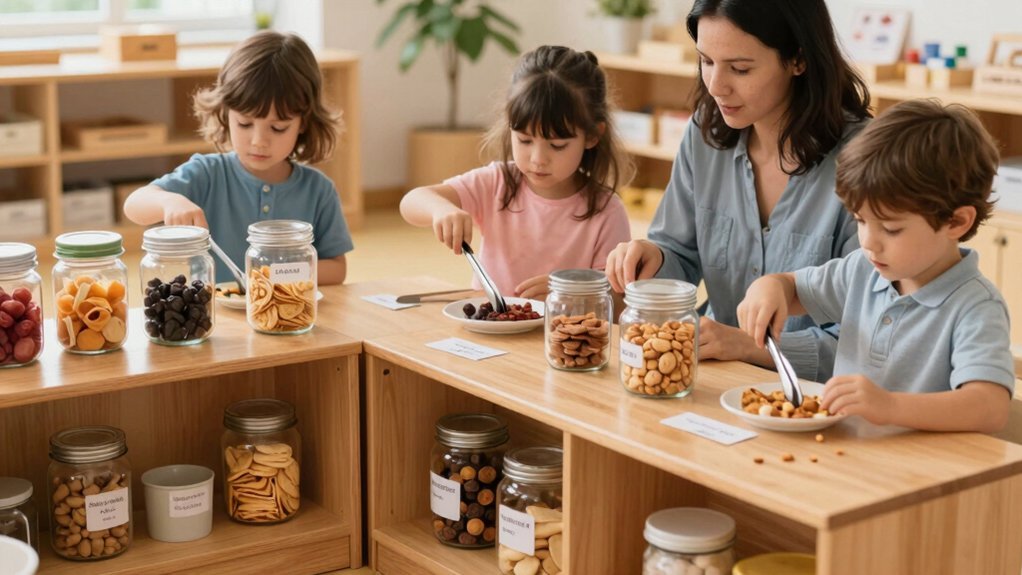
You’ll find a low cabinet holding just two snack choices, so you can let your child self‑serve while keeping portions in check. The limited selection cuts down decision fatigue and reinforces the daily routine without sacrificing nutrition.
When a snack’s finished, the next step follows the same two‑choice framework, maintaining clear boundaries and autonomy.
Cabinets, Two Choices
When low cabinets hold just two snack options, children can quickly pick what they want without feeling overwhelmed. You’ll notice they act with confidence, knowing the choice set is small yet meaningful. The two‑item limit trims decision fatigue, letting them focus on taste and satisfaction while you keep safety and portion control intact. This simple structure gives them autonomy within clear boundaries, reinforcing self‑regulation each snack time.
- Two approved snacks sit at eye level, inviting independent selection.
- The limited menu reduces hesitation and accelerates the snack routine.
- Supervised access ensures portions stay appropriate and safe.
- Children practice decision‑making skills without feeling pressured.
Self‑Serve Portion Control
Ever wondered how a child can safely serve themselves snack without turning snack time into a mess? You place the snacks in a low, easy‑to‑reach cabinet with just two clearly labeled choices. The child grabs a small, pre‑measured portion, then puts it on a plate and reaches for water, all within safe limits. This setup gives them autonomy while you stay nearby, ready to step in if a spill or over‑indulgence occurs. Because the options are limited, they learn to self‑choose without feeling overwhelmed, and the predictable portion size keeps nutrition on track.
The simple shelf design encourages independence, yet adult supervision remains unobtrusive, reinforcing boundaries without stifling the child’s confidence.
Routine Reinforcement Through Choice
- Offer exactly two snack options to focus decision‑making.
- Keep the cabinet low so the child can reach independently.
- Use the same plates and utensils each day for structural continuity.
- Involve the child in clean‑up to reinforce accountability.
These steps turn a routine snack into a powerful lesson in autonomy within limits.
Freedom Within Limits for Dress‑Up & Shoe Choices (Weather‑Appropriate)

How can you give a child real choice while keeping them safe and comfortable? You let them pick between two weather‑appropriate outfits and two pairs of shoes, a simple exercise in Montessori autonomy that builds decision‑making skills. The clothes are pre‑selected each night, so the child chooses before breakfast, then follows through, adjusting if the forecast shifts or activities demand it. This routine balances freedom with clear limits, keeping them warm, dry, and ready for play.
| Choice | Options |
|---|---|
| Outfit | Light jacket + t‑shirt or sweater + long‑sleeve |
| Shoes | Sneakers or waterproof boots |
| Time | Before breakfast or after morning snack |
Freedom Within Limits in the Kitchen: Safe Water & Cleanup Rules
When water splashes onto the floor, you’ll calmly remind your child that the kitchen’s rules are non‑negotiable: only a small, supervised basin is allowed, and spills must be wiped up immediately. You let them pour, stir, and rinse within those limits, reinforcing Montessori independence while you watch for safety cues. The routine becomes a lesson in responsibility, turning clean‑up into a confidence‑building ritual.
- Use a low, shallow basin that fits their reach.
- Provide child‑sized, non‑sharp utensils and pre‑measured water.
- Require them to wipe any spill with a cloth right after it happens.
- Praise the effort, then gently correct any unsafe handling.
Consistent, clear expectations keep the kitchen safe and nurture self‑sufficiency.
Freedom Within Limits at Bedtime: Story Choice & Calm‑Down Routine
After the kitchen’s splash‑and‑wipe routine, the evening shifts to a quieter arena where the child’s voice still matters. You invite the child to pick one story from a pre‑selected duo, showing that freedom within limits can coexist with bedtime. You acknowledge how they feel, then guide them to a cozy spot, keeping a supportive adult nearby. The limited choice signals that sleep time is approaching, yet the child’s autonomy is respected. If a few minutes remain after the story, you may read a second page or short vignette, offering a flexible but bounded wind‑down. This calm‑down routine blends structure with choice, reinforcing that bedtime is both a restful ritual and a space for the child’s emotional expression.
Offer Multiple Winning Options to Reduce Decision Overwhelm
Ever feel like the sheer number of choices overwhelms your child? Offer a handful of winning options to keep autonomy alive while easing decision fatigue. By narrowing the menu to two or three clear choices, you preserve freedom and prevent overwhelm. Pair each option with a natural consequence and a supportive cue so the child learns cause‑and‑effect without feeling trapped.
- Two outfit selections, then a “pick one” rule
- One or two open‑ended toys on a low shelf, with a “return before new” cue
- Simple routine goals like “water stays in the sink” and “plate stays on the table”
- Let the child decide task order while the overall activity stays fixed
These strategies let kids exercise autonomy, stay focused, and enjoy daily freedom within limits.
Guiding the Conversation: Discussing Rules, Consequences & Freedom
Choosing a few clear options is only half the battle; the next step is shaping the conversation around the rules that guide those choices. You discuss rules and consequences with partners before play, framing them as possibilities, not prohibitions. Use natural consequences and a single “try again” to reinforce learning, staying close without hovering. Give children autonomy within boundaries—let them pick one or two items, return them, then choose more. Validate feelings during discipline, guiding self‑regulation and problem‑solving. Consistent routines across ages pair freedom with age‑appropriate limits, like selecting a bedtime story from a short list or keeping water in the sink.
| Element | Example |
|---|---|
| Rule discussion | Set expectations together |
| Consequence | Natural outcome, “try again” |
| Autonomy | Choose 1‑2 items, then swap |
| Validation | Acknowledge feelings |
| Routine | Consistent bedtime story selection |
Applying Freedom Within Limits in the Classroom (Optional Extension)
You can weave freedom within limits into everyday classroom life by letting students pick their work, seats, and partners while you keep the structure clear and supportive. Offer a prepared environment where materials shine and become available only when readiness shows, so choices feel purposeful rather than chaotic. Set clear boundaries for self‑care tasks—eating, restroom use, movement—then gradually expand responsibility as students demonstrate competence. This balance nurtures independence while guiding skill development.
- Let students select a task from a curated set that matches current readiness.
- Allow seat and partner choices within a rotating schedule to avoid cliques.
- Provide visual cues for acceptable behavior and self‑care routines.
- Review choices weekly, adjusting limits as competence grows.
Next Steps: Building Consistent Freedom‑Within‑Limits Routines at Home
How can you turn everyday choices into a reliable framework that still feels empowering? Start by defining two outfit options and two snack choices each morning, keeping them safe and practical. Pair autonomy with a set order—outfit before breakfast, screen time before homework—so the day flows predictably. Apply a “one more chance” rule: if a child returns a borrowed item, they earn the next pick; if a boundary is crossed, redirect them gently. Schedule short, daily check‑ins to tweak options based on mood, progress, and safety. Involve kids in weekly planning of dinner and activities, giving them ownership while aligning limits with family goals. This structure builds consistent, empowering routines at home.
Frequently Asked Questions
What Is the Concept of Freedom Within Limits in the Montessori Method?
You see freedom within limits in Montessori as letting kids choose activities from prepared, age‑appropriate options while you set clear, consistent boundaries that guide their choices, promote responsibility, and support self‑directed learning.
What Is the Biggest Criticism of Montessori?
You’ll hear that the biggest criticism of Montessori is it often under‑emphasizes structured academic instruction, risking gaps in core knowledge if teachers don’t rigorously assure balanced, standardized learning outcomes.
Did Mark Zuckerberg Attend Montessori?
You won’t find any record that Mark Zuckerberg attended Montessori; he went to private New York schools, then Phillips Exeter, and later Harvard, where he launched Facebook.
What Was Maria Montessori’s Famous Quote?
You’ll hear Montessori saying, “Where the child is, there is the focus,” reminding you that learning thrives when you center attention on the child’s present interests, needs, and choices.