You create a limits‑based environment by keeping one‑of‑each Montessori material on each shelf, laying a single mat to define a walking path, and using child‑sized tools that fit their hands. Set clear, visible boundaries that don’t feel oppressive, and guide children with calm explanations instead of strict control. Predictable routines—arrival, meals, play, cleanup—anchor the day and free cognitive space for decision‑making. When you explain the why behind each limit, kids learn waiting, turn‑taking, and self‑regulation, and the next sections will show how to expand these strategies as they grow.
What Is a Limits‑Based Environment?
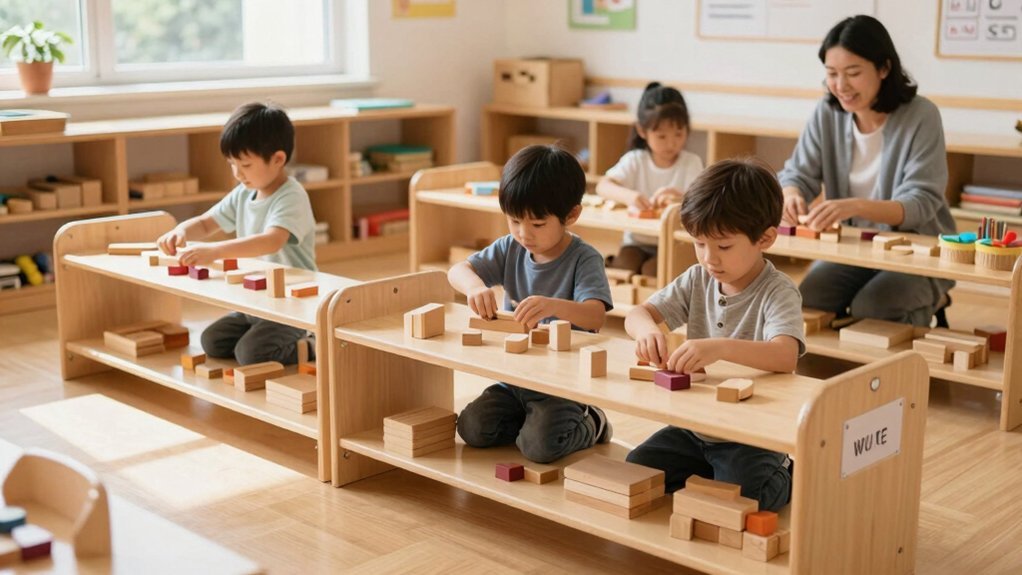
What exactly makes a limits‑based environment? You walk into a room where every shelf holds one of each Montessori material, where a mat defines a walking path, and where order feels natural, not forced. Those built‑in boundaries give you freedom within structure, letting you choose a block or a puzzle while respecting the one‑item rule. The adult steps back, offering guidance instead of control, so you learn self‑discipline by deciding when to pick up a tool or wait your turn. Movement is unrestricted until it threatens a peer’s focus, teaching impulse control. The setting’s beauty and predictability keep you oriented, turning limits into a playground for independent decision‑making. Using tools like child-sized Montessori materials designed with safety and appropriate size helps reinforce these limits in a practical way.
How Predictable Routines Build Self‑Discipline
Why do predictable routines feel like a safety net for kids? You notice that when you set up daily sequences—arrival, meals, play, cleanup—children know what comes next, so anxiety drops and they can focus on self‑control. Those environment limits give them a clear framework, letting self‑discipline grow. Consistency lets them anticipate boundaries, while subtle variations keep them flexible.
- Advance notice – Predictable routines free cognitive resources for decision‑making.
- Clear expectations – Age‑appropriate rules reduce outbursts and speed transitions.
- Emotion‑coaching moments – Stable contexts let you label feelings and practice problem‑solving.
- Incorporating child-safety features into routines can further enhance a secure environment that supports self-discipline development.
Designing a Limits‑Based Physical Space
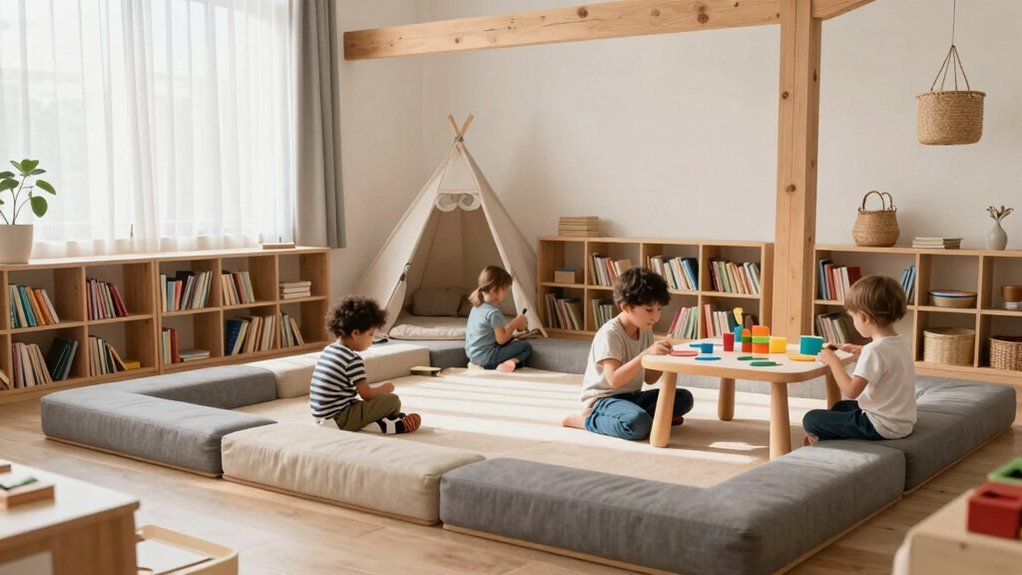
How can a room become a quiet‑training ground for self‑discipline? You turn a space into a limits‑based environment by mapping clear pathways, placing a single mat for walking, and arranging one‑of‑each toys within reach. This prepared environment lets children see intrinsic boundaries—no bumping into chairs, no grabbing multiple items at once. When they choose a toy, they wait their turn, practicing self‑control and self‑discipline. You keep safety constraints visible but not oppressive, so kids can move freely while respecting limits. Your role shifts to guiding: you model rule‑following, explain why a line exists, and encourage planning. By offering independence within defined borders, you help children internalize boundaries and regulate behavior autonomously. Incorporating child-appropriate tools like child-size watering cans can further support their growing sense of responsibility and independence within a structured space.
Choosing Materials That Teach Waiting
Ever notice how a single, carefully chosen material can turn a bustling playroom into a lesson in patience? When you limit Montessori supplies to one of each, you create a natural waiting system. Children learn to pause, scan the environment, and decide what to do next, building self‑discipline without a lecture. The scarcity forces purposeful selection, turning idle moments into opportunities for executive‑function practice. Sharing emerges organically as kids wait for their turn, reducing impulsive grabbing and reinforcing turn‑taking.
Limited Montessori supplies create natural waiting, fostering patience, strategic choice, and turn‑taking without lectures.
- One‑of‑a‑kind puzzle – encourages queueing and strategic play.
- Limited sensory bin tools – prompts alternative activities while waiting.
- Single‑use art set – fosters deliberate choice and patience.
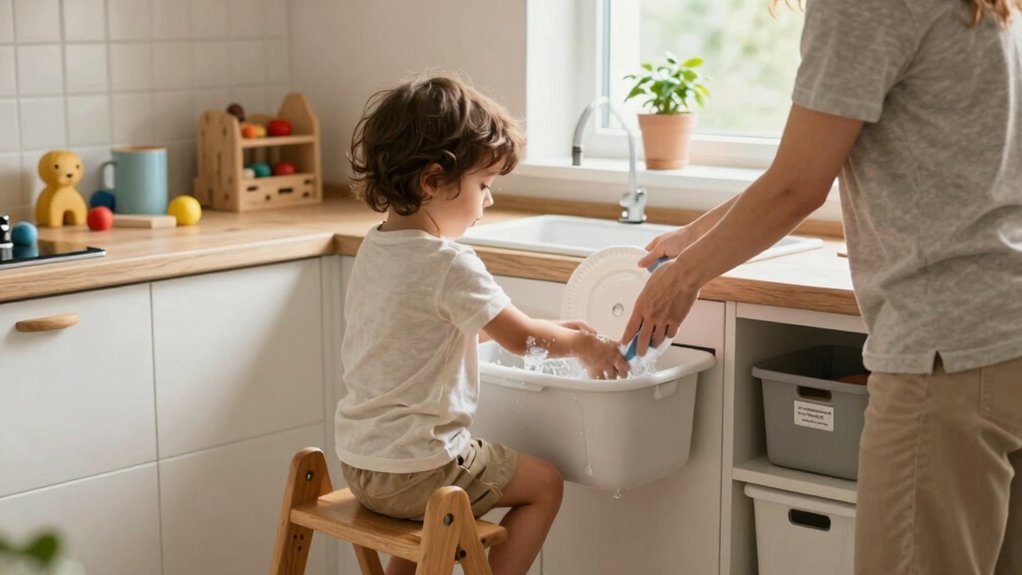
Incorporating thoughtfully designed Montessori tools, like a step stool with safety railings, can also teach children patience through shared use and independent exploration.
Explaining “Why” Behind Every Limit
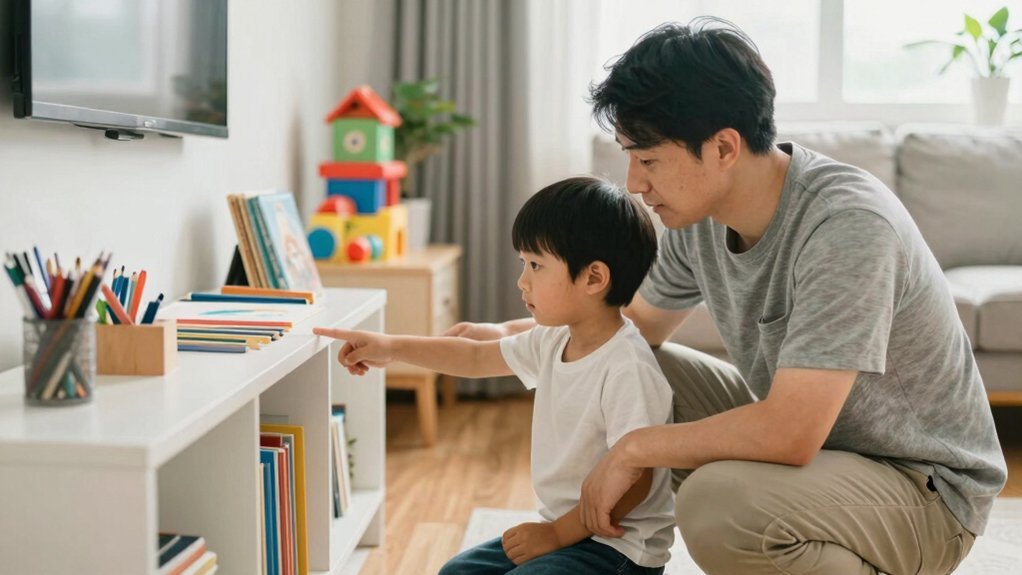
Three simple steps can turn any rule into a learning moment: name the limit, explain its purpose, and link it to the child’s own safety or the group’s well‑being. When you tell a child, “You can’t run in the hallway because you might bump into someone,” you give the limit a clear rationale. This connection shows that rules aren’t random but protect everyone, which encourages self‑discipline. Use age‑appropriate language; a five‑year‑old understands “hot stoves can burn you,” while a nine‑year‑old grasps “quiet voices help the class focus.” By consistently tying explanations to real consequences, you reinforce security and help the child internalize the why, turning compliance into a habit rather than a chore. Providing tools and toys with age-appropriate size selection can also foster self-discipline by matching rules to the child’s developmental stage.
Role‑Playing Scenarios to Practice Empathy
Understanding why limits exist sets the stage for children to practice empathy, and role‑playing gives them a safe space to act out those lessons. You’ll see that a well‑structured role play not only builds empathy but also tightens self‑discipline. By setting clear, simple rules—taking turns, using “I” statements—kids learn to control impulses while feeling for others.
- Open‑ended prompts – Ask, “What could you do if your friend wants the same toy?” to explore multiple empathetic strategies.
- Emotion briefings – Name feelings before and after the scene (“You might feel disappointed”) to reinforce emotion‑coaching.
- Rotating roles – Switch between child, peer, and observer so each child practices perspective‑taking and equal participation.
These steps link empathy with self‑discipline, turning abstract limits into concrete, practiced behavior.
Offering Age‑Appropriate Choices Without Overwhelm
How can you give kids choices that feel empowering rather than paralyzing? Offer age‑appropriate choices within a framework of limited materials so they see a clear set of options instead of a chaotic spread. Place just one of each item on a low shelf, then ask, “Do you want the blue block or the red one?” This structured freedom lets them move, explore, and decide without feeling overwhelmed. Use predictable routines—clean‑up time, rotation of activities—to reinforce the idea that choices are bounded yet meaningful. When a child must wait for a turn or pick from the available set, they practice patience and self‑control. Keep the environment tidy, the options simple, and the boundaries consistent to nurture disciplined decision‑making. Creating defined spaces with non-slip surface technology can also help children focus and make clear choices within their environment.
Adjusting Boundaries as Children Grow
Why should you rethink limits as your child matures? As your child’s self‑regulation improves, the boundaries you set must match their development. Rigid rules that worked at 12 months can trigger tantrums when cognitive and motor skills advance. Adjustments keep expectations realistic, prevent boundary‑cracking, and foster internal discipline. Clear, age‑appropriate explanations help your child understand why limits exist and how they evolve.
Rethink limits as your child matures; adapt boundaries to match evolving self‑regulation and development.
- Gradual freedom – expand choices and lengthen task sequences as independence grows.
- Skill‑based updates – align rules with current cognitive and motor milestones.
- Consistent communication – explain new boundaries and their purpose to reinforce self‑regulation.
Incorporating developmental milestones into your approach ensures boundaries support your child’s growing abilities effectively.
Modeling Self‑Discipline for a Calm Atmosphere
You can model calm by keeping your tone steady and your actions predictable, showing kids that self‑discipline looks natural. Use clear, consistent cues—like a gentle reminder before a transition—to reinforce routines without overwhelming them. When you consistently demonstrate patience and measured responses, children pick up those habits and the atmosphere stays focused.
Calm Modeling Strategies
Ever notice how a calm adult can instantly steady a room’s mood? When you pause before replying, you model self‑regulation that kids mimic. Your steady tone and emotion coaching—labeling feelings (“I see you’re upset”)—show them how to handle frustration without outburbursts. Consistent, non‑punitive responses teach that disciplined choices lead to predictable, safe outcomes, while clear routines and quiet activities reinforce those lessons.
- Label and validate – name emotions calmly, then guide problem‑solving.
- Pause before reacting – take a breath, think, then respond to model thoughtfulness.
- Maintain predictable limits – use visible cues and steady routines to support self‑control.
Consistent Tone Demonstrations
How does a steady voice shape a child’s ability to stay calm? When you speak in a calm tone, you model predictability that children latch onto. Your steady, non‑reactive language during transitions teaches them to regulate impulses and stay focused. Repeating consistent cues—like “Let’s breathe together” or “We wait our turn”—shows them how self-discipline looks in action.
A calm environment with clear, communal norms lowers the urge to test boundaries, so kids internalize rules faster. By using the same tone across home, school, and public spaces, you reinforce those cues and help the child transfer self‑discipline from one setting to another. This modeling builds confidence, reduces emotional escalations, and creates a reliably peaceful atmosphere.
Predictable Routine Cues
What happens when a child knows exactly what comes next? You’ll see anxiety melt away as predictable routines turn uncertainty into confidence. By modeling self‑discipline through on‑time arrivals, orderly classroom setups, and repeated task sequences, you give them clear environment cues that signal what to expect. This steady rhythm lets them regulate impulses, focus attention, and delay gratification without frantic guesswork.
- Fixed snack and hand‑washing times – anchor the day, reinforcing self‑discipline.
- Visual schedules with countdowns – cue transitions, helping kids pace themselves.
- Consistent cleanup procedures – link actions to outcomes, cementing calm, disciplined behavior.
When you embed these cues into every moment, the environment itself becomes a teacher, guiding children toward lasting self‑control.
Frequently Asked Questions
What Is the 7 7 7 Rule in Parenting?
You give your child seven chances to try a behavior, spend seven minutes guiding them, and watch for seven days of consistent effort before you assess progress. This builds self‑discipline through repeated, manageable practice.
What Are the 5 C’s of Self-Discipline?
You’ll find the 5 C’s of self‑discipline are Consistency, Clarity, Communication, Consequences, and Cooperation—each shaping predictable limits, clear expectations, open dialogue, meaningful feedback, and collaborative problem‑solving.
What Are the 8 Environmental Factors That Influence Child Development?
You’ll notice eight key factors: safe spaces, predictable routines, limited but purposeful materials, clear boundaries, adult role models, noise control, balanced independence, and consistent emotional coaching.
What Is the 10-10-10 Rule for Kids?
You teach kids to pause, then ask them: “What happens in 10 minutes, 10 months, and 10 years if you do this?” Their answers guide choices, linking short‑term urges to long‑term outcomes.