Start with calm narration of everyday grace, modeling respectful behavior and naming each act—like “We greet friends with a smile and a hello.” Invite cooperation through simple, choice‑based requests, offering two clear options and a brief Montessori rationale. Role‑play interruptions and permission requests, emphasizing a calm tone and clear phrasing. Practice mealtime manners on a pretend stage using cue cards for “please,” “thank you,” and “may I?” Finally, reinforce success with specific praise and gentle reminders, and you’ll discover even more strategies ahead.
Start With Calm Narration of Everyday Grace‑And‑Courtesy Actions
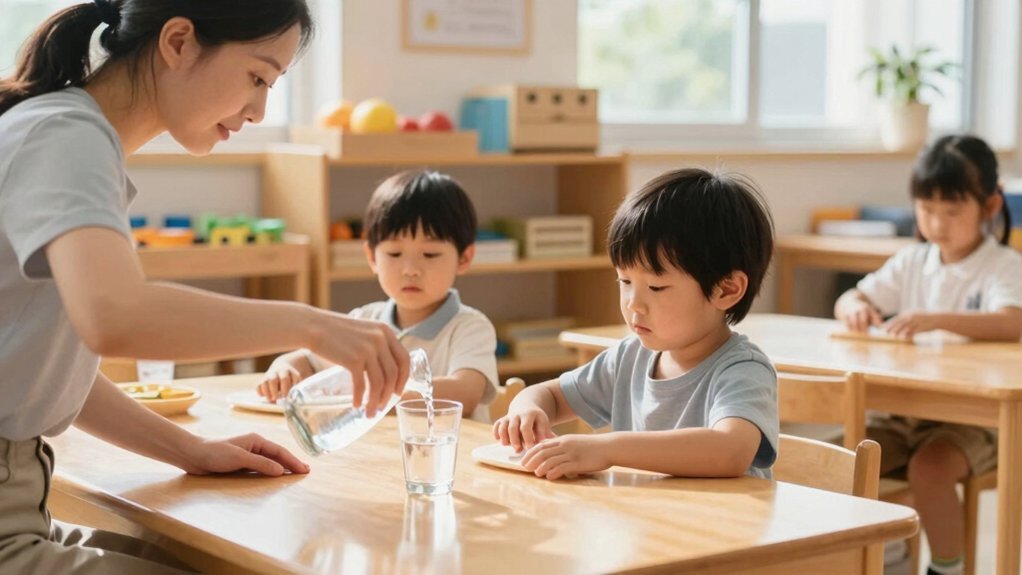
How can you turn everyday moments into quiet lessons in courtesy? You start with calm narration, letting grace and courtesy flow naturally as you describe everyday actions. When you say, “I’m walking by so you can finish your work,” you model respectful behavior without correcting strong‑willed children directly.
Use brief, clear statements during routines—“Please wait your turn; I’ll listen when you’ve finished”—to reinforce self‑control and flexible turn‑taking.
Mirror the Montessori approach by naming each act: “We greet friends with a smile and a hello.”
Offer cooperative invitations like, “You may join us when you’re ready,” to cut resistance and encourage voluntary participation.
Pair narration with gentle prompts for remembering grace, such as, “We say thank you after receiving help, right?”
In Montessori settings, incorporating tools like the Kitchen Step Stool for Kids with Safety Rail can encourage independence and respectful participation in daily routines.
Invite Cooperation Using Simple, Choice‑Based Requests
After narrating everyday grace, you can deepen cooperation by offering simple, choice‑based requests. Use calm, clear language and give two distinct options, such as “Would you like to help with the setting or the folding?” Pair each request with a brief Montessori rationale—“We need to move this chair so everyone can work safely.” Mirror the guide’s practice: narrate actions, then invite participation with “You may join when you’re ready; would you like to start with A or observe first?” Avoid pressure; if there’s no response, pause, remind later, and acknowledge any cooperative behavior. Offering choices in this way promotes open-ended exploration and supports the development of problem-solving skills.
| Request | Option A | Option B |
|---|---|---|
| Setting the table | Place plates | Arrange napkins |
| Folding laundry | Sort socks | Fold shirts |
| Organizing books | Stack by size | Arrange by color |
Grace‑And‑Courtesy Role‑Play: Interruptions & Permission Requests

Ever wondered how a simple “May I join you?” can transform a chaotic classroom into a respectful community? You can teach grace and courtesy through role‑play that targets interruptions and permission requests. Start with a calm demonstration: a child says, “May I join you?” while others pause. Then split the group into small pairs and let strong‑willed children practice the script, swapping roles to experience both asking and listening. Emphasize a calm tone and clear phrasing, and follow each round with a brief discussion that generates alternative polite actions. Use observational learning—older peers model correct responses, and everyone imitates. Repeated, guided practice paired with reflection reinforces respectful persistence and reduces impulsive interjections. Incorporating classroom magnetic money tools during role-play can help children develop attention and social skills in a structured environment.
Playful Practice for Tricky Social Situations (e.g., Mealtime Manners)
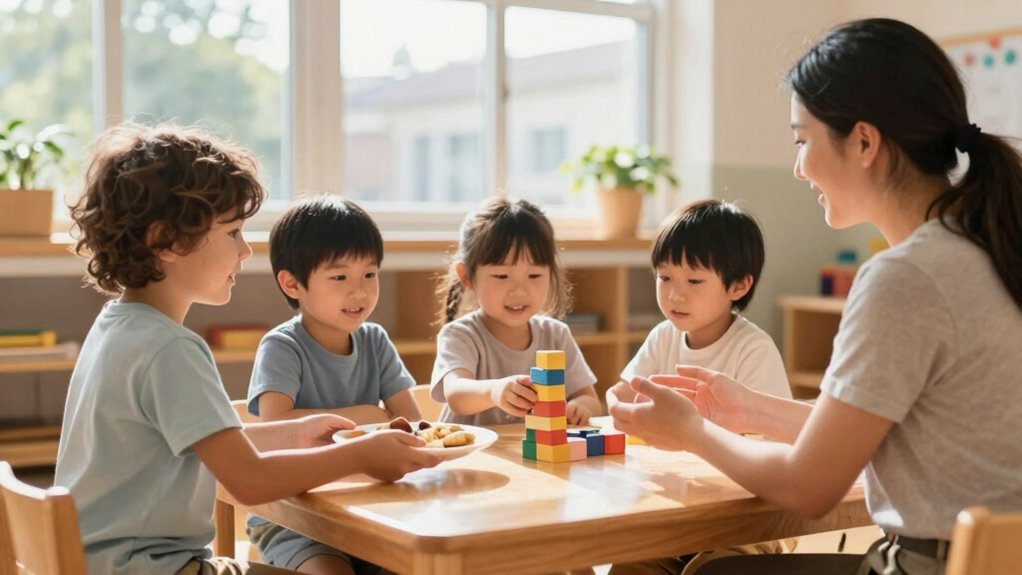
Ever wonder how a quick, playful role‑play can turn a chaotic dinner into a smooth, courteous experience? You can start with a low‑pressure scenario: you and your child pretend the table is a stage, and each turn passing dishes is a cue. Use a gentle prompt like a cue card that lists “please,” “thank you,” and “may I?” before reaching for food. Narrate actions in real time—“I’ll pass the salt now”—to model clear communication without nagging. Demonstrate how to invite a sibling to join the meal and how to respond graciously if the invitation is declined. These playful role‑plays build social skills, reinforce mealtime manners, and nurture grace and courtesy in strong‑willed children. Incorporating self-directed learning techniques can further empower children to develop these skills independently during everyday interactions.
Reinforce Success With Specific Praise and Gentle Reminders

When the role‑play ends, the next step is to lock in the behavior with specific praise and gentle reminders. In a Montessori classroom you can say, “Your calm greeting helped everyone feel welcome,” then add, “Nice job asking to join, now please wait your turn.” This blend of grace and courtesy reinforces self‑regulation.
Highlight effort: “I noticed you offered a chair to your friend—thank you for caring.” Keep language brief and calm, and repeat the praised action in future situations. Pair each specific praise with a gentle reminder that points to the next step, so the child internalizes the pattern without resistance, building lasting courteous habits. Using tools like Montessori color sorting toys can also help children develop patience and focus during these activities.
Frequently Asked Questions
How Can I Handle Sibling Rivalry When Teaching Courtesy?
You set clear, shared expectations, model respectful language, and praise cooperative moments. When disputes arise, intervene calmly, ask each child to express feelings, then guide them toward a compromise that honors courtesy.
What if My Child Refuses to Say “Please” During Playdates?
You should model polite language, set a clear expectation that “please” is required, and gently correct them each time they forget, rewarding the word with praise or a small privilege.
Can I Use Video Modeling for Teaching Polite Greetings?
Yes, you can use video modeling to teach polite greetings. Show short clips of peers saying “hello,” “please,” and “thank you,” then have your child imitate the gestures and words repeatedly.
How Do I Transition From Role‑Play to Real‑World Situations?
You’ll shift from role‑play to real life by setting brief, familiar scenarios, prompting them to act, then gently correcting and reinforcing polite behavior, gradually increasing complexity and independence.
What if My Child Forgets Apologies After an Accident?
If your child forgets to apologize after an accident, gently remind them of the impact, model the apology yourself, and practice role‑playing scenarios until they internalize the habit.