
Model calm, quiet entry by placing one hand on the knob and the other on a hand‑print cue, then listen for the latch click before stepping through. Teach kids to knock, pause, and ask “May I come in?” before entering, and to close the door gently using the same hand‑on routine. Reinforce the behavior with role‑play, observation cards, and praise. Follow these steps and you’ll discover more strategies to embed grace and courtesy throughout your classroom.
Explain Why Door Etiquette Matters in Montessori
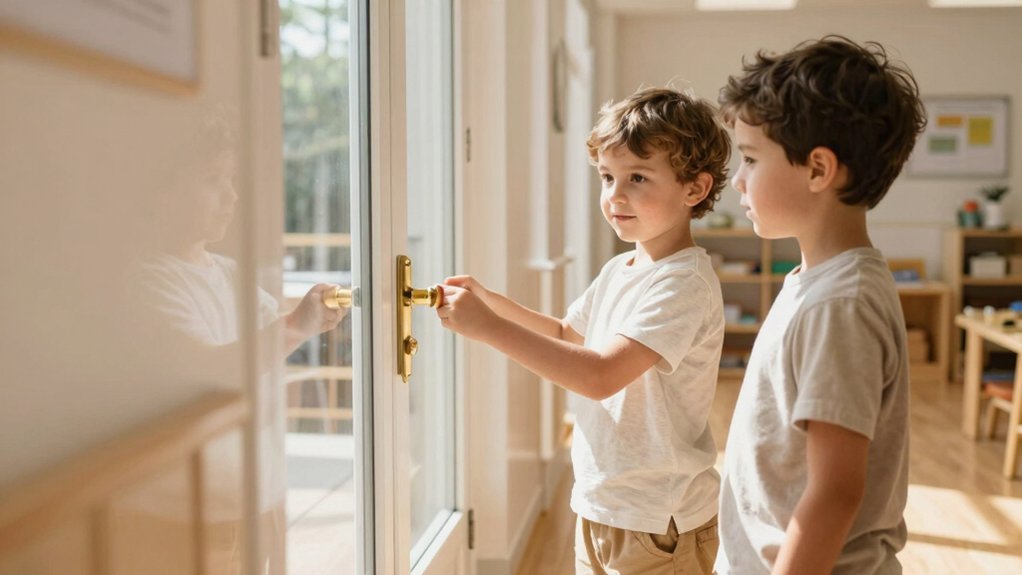
A well‑practiced door routine is a cornerstone of Montessori life because it teaches you to move through the environment with minimal disruption, fostering coordination, concentration, independence, and social awareness. When you practice door etiquette, you learn to place one hand on the knob and the other on a handprint, guiding a smooth, controlled motion that respects others nearby. Demonstrations and role‑play let you experience holding doors for peers, then discuss courteous ways to share access, reinforcing self‑discipline and composure. This exercise builds coordination and concentration while quietly opening and closing, preventing hands from getting caught or doors from slamming. By modeling calm, patient behavior, you develop social skills and a habit of polite, mindful interaction. Providing children with items like the Kitchen Step Stool for Kids with Safety Rail helps support their independence and safety during daily routines.
Gather Materials for the Door Etiquette Lesson
Pick a door that’s easy to see and safe to use, then set up a simple demo area with a chair or mat for the learner to pause. Show how to hold the latch gently while you open, and let the child practice stepping through without disturbing anyone. Keep the space organized so you can quickly correct any slip‑ups and reinforce polite entry. Using tools with kid-friendly grip design can help maintain the child’s focus and ease during learning.
Choose Appropriate Door
Which door will let you clearly show the latch, edge, and hand‑print indicator all at once? Pick a door whose latch is fully visible and whose edge aligns with the child‑safe print placard. Make sure the door sits at wheelchair‑accessible height so every learner can reach the knob and the hand‑print without strain. Clear the surrounding area of chairs and carts to avoid collisions. You’ll need a functional latch, a labeled hand‑print sign, and a cue card that reads “Enter Quietly.” Arrange a short script assigning roles—holder, knocker, entrant—to illustrate courteous entry. Include safety reminders: keep feet away from hinges, watch the latch click shut, and turn away after opening to give space to others. For safety and accessibility, consider including features such as anti-slip padding to ensure stability during the lesson.
Demonstrate Gentle Handling
Now that the right door is set up, gather the tools that let kids practice gentle handling. Choose a door with a latch and a knob, a doormat, a wall chart of quiet‑entry steps, and a bell or chime to signal the start. Print a placard showing the sequence: approach, hand on knob, hand on latch, ease open, listen for click. Do a safety check—secure latch, clear path. Prepare a role‑play script where one child holds the door, greets, and cues entry. Keep observation cards handy for teachers to note moments of Grace, timing, and gentle opening. Incorporating durable materials with smooth edges can enhance safety and longevity in classroom setups.
| Item | Purpose |
|---|---|
| Latch & knob | Teach controlled grip |
| Doormat | Signal calm arrival |
| Wall chart | Visual guide for Grace |
| Observation cards | Record successes |
Practice Polite Entry
How can you turn a simple doorway into a classroom for grace? Gather a sturdy knob, a printable hand‑print sheet, and a quiet space where the child can focus. You’ll guide them to place one hand on the knob and the other on the hand print, watching the latch click and listening for the soft thud of a closed door. This hands‑on routine builds coordination, impulse control, and independence—all core goals of Grace and Courtesy Lessons. By practicing entry without slamming, they learn respect for shared spaces and develop social skills that extend beyond the doorway. Incorporating lightweight and comfortable wear from role play costumes can further enhance children’s engagement and enjoyment during these lessons.
- Observe latch movement and click sound.
- Emphasize quiet opening and closing.
- Reinforce gentle handling for independence.
Demonstrate Door Etiquette: Opening a Door Calmly
You’ll show kids how to grip the knob gently while keeping the other hand on the frame, then turn smoothly so the latch clicks quietly. Encourage them to listen for that soft click, using it as a cue that the door is secured before they step through. By practicing this calm, controlled motion, they’ll build coordination and respect for others sharing the space. Teaching these skills alongside tools that promote fine motor development can enhance children’s coordination and attention to detail.
Gentle Door Handling
Ever notice how a calm, steady hand on a door can turn a simple act into a lesson in courtesy? You model door etiquette by standing to the side, using one hand on the knob and the other to guide the swing while the child watches the latch click. Invite them to bring an ear close, hearing the soft sound before you move. Pause, ask, “What’s polite?” then open slowly, hold for others, and close gently. If a slam occurs, pause, repeat, and correct grip timing.
- Demonstrate at eye level, side‑by‑side with the child.
- Emphasize the pause‑open‑hold‑close sequence.
- Use a quick error‑control plan to reinforce smooth handling.
Quiet Latch Release
After showing the steady‑hand technique for gentle door handling, move to the quiet latch release, where the child learns to open a door silently. You guide the child to place one hand on the knob and the other on the handprint cue near the frame, listening for the faint click as the latch eases. Encourage them to coordinate the motions, easing the latch without slamming, and to keep fingers clear of the hinge side.
Explain that this practice builds concentration, independence, and social awareness—key elements of Grace and Courtesy with Doors. Model polite language, asking, “What’s the polite and friendly thing to do?” and let the child repeat the demonstration until the silent opening feels natural. These skills align closely with the cognitive and motor skills development encouraged by Montessori-inspired educational toys.
Guide Door Etiquette Role‑Play: Greet, Pause, Close Silently
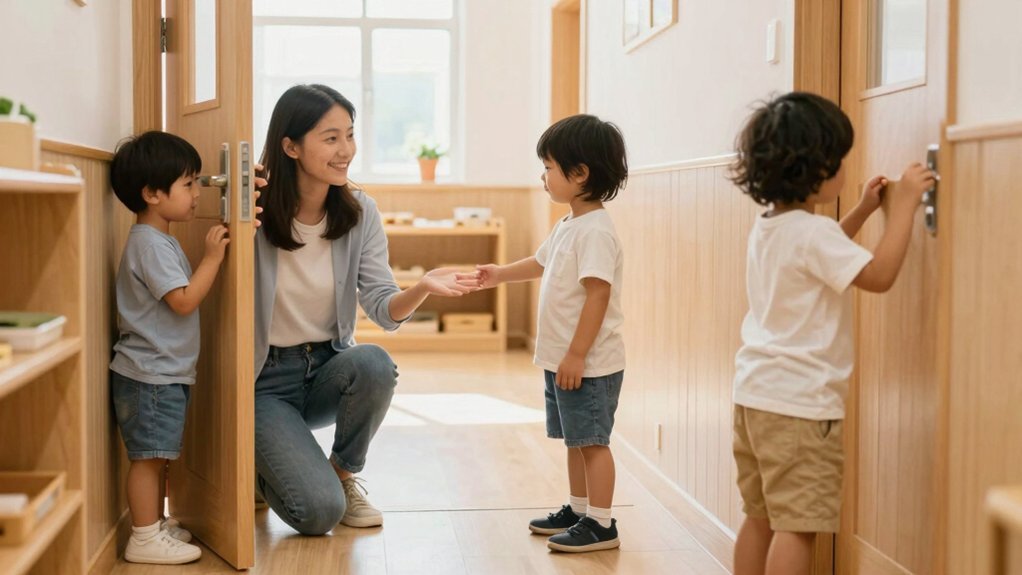
Ever notice how a simple greeting, a brief pause, and a silent door close can teach coordination, concentration, and kindness all at once? You start by saying “Hello” as you approach, then pause to listen for the latch click, and finally close the door silently. This role‑play builds grace and courtesy while sharpening fine motor skills and social awareness.
- Place one hand on the knob, the other on a handprint; feel the latch move.
- Bring your ear close to hear the click, confirming the door is secured.
- Praise the effort with a specific compliment, reinforcing the polite habit.
Spot Common Door Etiquette Mistakes and Fix Them
You’ll notice that many kids forget to hold the door for others, skip the polite knock, and slam it shut when they leave. By pointing out each slip—holding the door, knocking before entering, and closing quietly—you can guide them to correct the habit on the spot. Quick, hands‑on demonstrations reinforce the right actions and turn mistakes into courteous routines.
Holding the Door
Ever noticed how a simple door can become a lesson in coordination and courtesy? When you hold a door, you’re practicing door etiquette that builds concentration and social awareness. Place one hand on the knob, the other on the handprint, and listen for the latch click—this signals a secure, quiet closure. Avoid slamming or catching a finger; those mistakes break the rhythm and can hurt others. By pausing for the right moment, you respect the space of those around you and reinforce self‑control.
- Keep the motion smooth and quiet.
- Use the handprint as a guide, not the knob.
- Wait for the latch click before releasing.
Knocking Before Entering
How can a simple knock become a powerful lesson in respect? You teach children to knock clearly, pause, then listen for permission before entering. Spotting mistakes—like barging in, peeking without knocking, or interrupting—helps you correct them. Use role‑plays: knock, pause, ask “May I come in?” and wait. Show them how to place one hand on the knob and the other on a frame cue, staying calm and ready. Observe outcomes: the latch stays untouched, work inside isn’t disturbed, and the child waits quietly.
| Mistake | Why it’s wrong | Fix |
|---|---|---|
| Entering without consent | Disrespects privacy | Knock, pause, ask |
| Peeking before knocking | Invades space | Knock first, then listen |
| Interrupting activity | Breaks focus | Knock, wait for acknowledgment |
Closing Quietly After Exit
After mastering the knock‑and‑wait routine, you can guide kids to finish their exit quietly. Teach them to place one hand on the knob and the other on the door edge, then slowly guide the door to latch while listening for the click. Spot the common slip‑ups—slamming, fidgeting with the latch, or swinging the door into someone—and correct them with a calm demonstration and immediate feedback. Role‑play the “close‑quietly‑then‑wait” step, reinforcing concentration and independence. This practice builds coordination, social awareness, and a respectful environment at home or in class.
- Hold the knob with a firm, gentle grip.
- Guide the door edge slowly toward the frame.
- Listen for the latch click before stepping away.
Build Coordination, Independence, and Social Awareness Through Door Etiquette
Why not turn a simple doorway into a daily lesson in coordination, independence, and social awareness? In Montessori Lessons you can start with a hand‑on exercise: one hand on the knob, the other on a printed hand print, listening for the latch click. This tiny cue teaches the child to pause, gauge timing, and move smoothly without startling peers. As they practice opening and closing doors, they sharpen concentration and develop fine‑motor control.
Role‑play adds social nuance—holding the door for a classmate, stepping back until the latch secures. By consistently reinforcing these actions, you build confidence, reduce mishaps like slammed doors or caught fingers, and nurture respectful, self‑controlled interaction in a mixed‑age setting.
Promote Quiet Movement and Respect for Shared Space With Door Etiquette
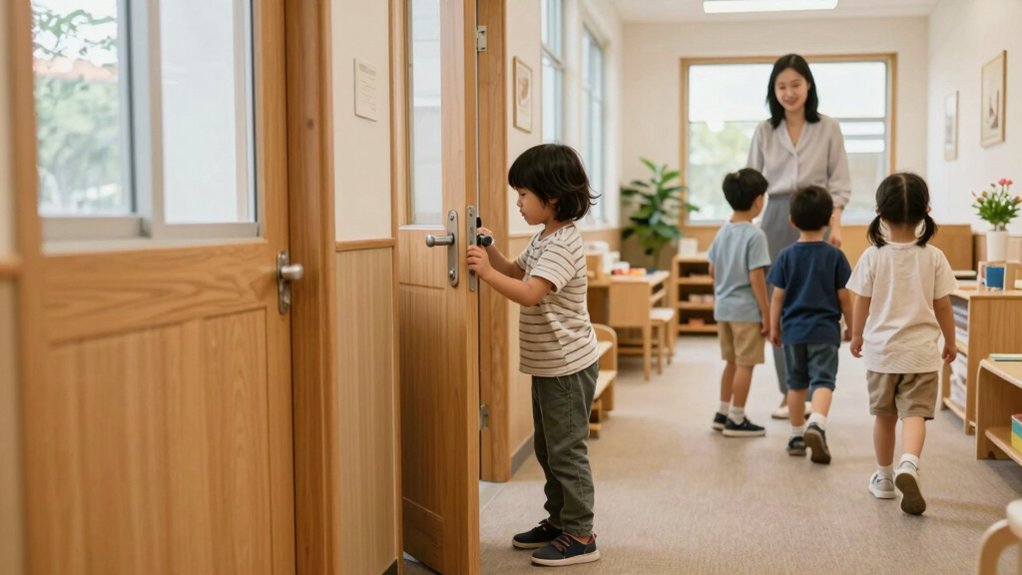
Ever wondered how a simple doorway can become a quiet, shared‑space lesson? You can turn every entrance into a practice of calm movement and respect by modeling gentle actions and listening for the latch click.
When you pause, place one hand on the knob and the other on the handprint, then let the soft click cue you to enter silently. Speak a brief, polite phrase like “May I come in?” before stepping through, and release the door slowly to keep the flow smooth. Encourage students to observe and comment on each other’s grace, reinforcing the habit of holding doors for peers.
- Slow opening and closing to minimize noise
- Soft latch‑click cue for attentive entry
- Polite verbal permission before entering
Apply Door Etiquette to Other Montessori Daily Tasks
You’ve already seen how a mindful doorway teaches calm movement and respect; now you can transfer that same etiquette to other Montessori routines. When children open a cabinet, pour water, or clean a table, ask them to place one hand on the handle and the other on a visual cue, listen for the click, and pause before acting. This mirrors door practice, sharpening coordination, concentration, and social skills while preventing spills, noise, or accidents. You’ll notice smoother transitions and a quieter classroom as they apply the same polite, deliberate mindset to every task.
| Task | Door‑like cue |
|---|---|
| Cabinet | Hand‑print marker |
| Water pitcher | Latch‑click sound |
| Shelf | Gentle push‑pause |
| Cleaning tool | Ear‑to‑handle check |
| Toy box | Slow‑open gesture |
Offer Home Practice Ideas to Reinforce Door Etiquette
A simple way to bring door etiquette into daily home life is to turn ordinary moments—like greeting a guest or entering a room—into mindful practice. You can model politeness by holding the door, using short phrases, and encouraging kids to notice latch clicks. By embedding these tiny rituals, you turn a simple doorway into a classroom for courtesy.
Turn everyday door moments into mindful etiquette, turning simple gestures into lasting courtesy lessons.
- Guest greeting drill – Have a family member arrive, greet them, then hold the door open while saying,After you” or “Please come in.”
- Latch‑awareness game – One child places a hand on the knob, the other on a printed latch; they listen for the click before entering.
- Quiet entry role‑play – Kids enter without interrupting, then discuss what they did well and how to improve.
Repeat these steps daily, and politeness becomes automatic.
Observe Progress and Praise Door Etiquette Success in the Classroom
Tracking students’ door‑etiquette progress lets you celebrate successes and correct missteps in real time. You watch for the “What is the polite and friendly thing to do?” response, noting when older learners answer correctly and when they simply hold the door. Use the latch click as a cue; when the sound rings, you confirm timing and coordination. Record errors—hands caught, slamming, or opening into a peer—so you can give immediate, constructive feedback. Highlight greetings and handshakes as extensions of Grace and Courtesy, reinforcing the broader etiquette habit. When you see a student consistently holding the door and offering a friendly greeting, praise them publicly, linking the behavior to classroom culture and encouraging peers to emulate the same courteous standard.
Frequently Asked Questions
How to Teach Grace and Courtesy?
You model grace by modeling courteous actions, giving clear steps, and letting kids practice with feedback. Celebrate polite attempts, correct mistakes gently, and reinforce consistency across home and school settings.
What Are the 4 C’s of Montessori?
You’ll find the four C’s are concentration, coordination, control of error, and courtesy. They guide children to focus, move smoothly, self‑correct, and interact politely while mastering everyday tasks.
What Are the 3 D’s of Montessori?
You’ll find Montessori’s 3 D’s are Development, Design, and Discipline; they guide you to nurture growth, craft purposeful environments, and foster self‑regulation through modeling, routines, and respectful interaction.
What Is the Biggest Criticism of Montessori?
You’ll hear that Montessori’s biggest criticism is its lack of standardized outcomes; critics say self‑directed, mixed‑age learning creates uneven academic pacing, limited test readiness, and costly, inequitable resources.