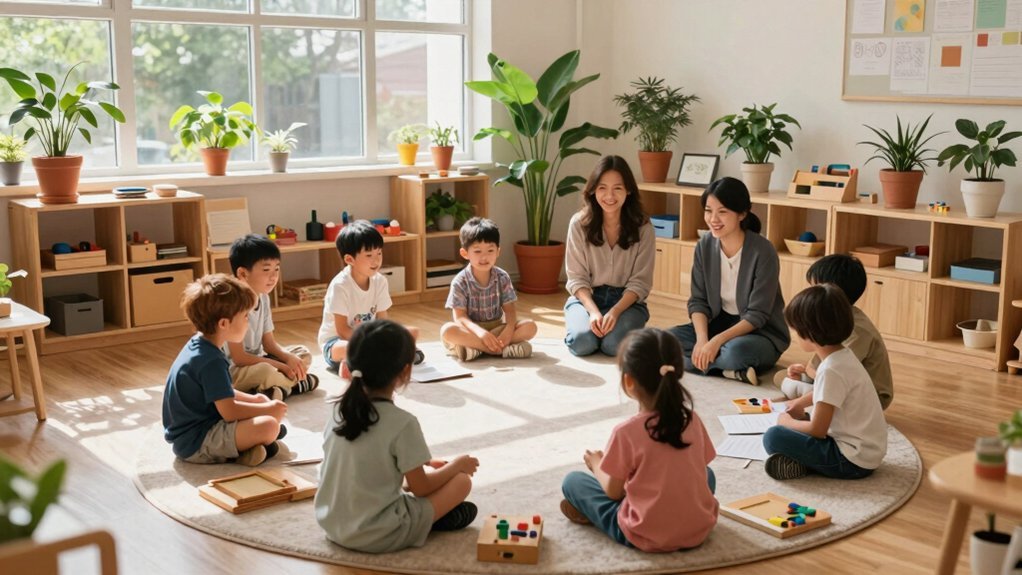
You’ll thrive when you create a calm, orderly Montessori space with child‑sized furniture, clear visual cues, and a dedicated peace table. Keep the lighting soft and the materials organized so kids can focus, practice turn‑taking, and use polite language like “please” and “thank you.” Guides model respectful behavior, and I‑Statement cards guide non‑punitive conflict resolution. This environment builds self‑regulation and empathy, and it’ll discover deeper strategies for nurturing grace and courtesy.
What Is Grace & Courtesy in Montessori and Why It Matters?
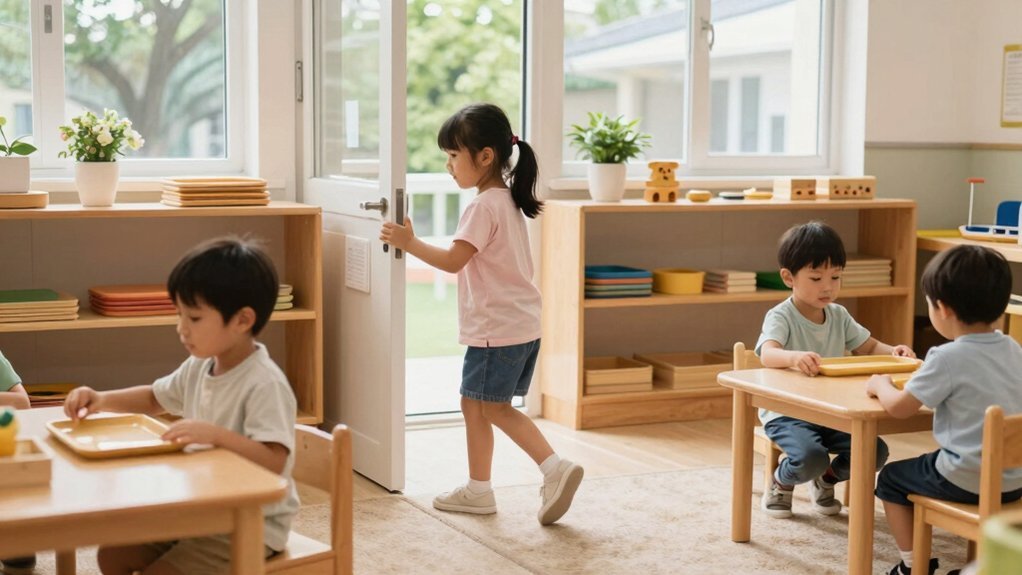
Ever wondered why “please,” “thank you,” and waiting your turn are more than just manners in a Montessori classroom? You’ll see that grace and courtesy are daily practices that embody respect for self, peers, and the environment. Teachers model these behaviors, weaving them into routines like greeting visitors or sharing materials, so you internalize them naturally. Through this modeling, you develop empathy and social‑emotional learning, building confidence and independence. The classroom environment becomes a safe, peaceful space where conflicts drop and positive connections flourish. By consistently practicing grace and courtesy, you contribute responsibly to the whole community, reinforcing the Montessori philosophy that nurtures the whole child. Designing a space with low step-in toy storage encourages independent cleanup and helps maintain this peaceful environment.
How Calm, Orderly Spaces Set the Stage for Grace & Courtesy
Why does a calm, orderly space matter for teaching grace and courtesy? In a calm environment you notice fewer distractions, so children can focus on waiting their turn and using respectful language.
A calm, orderly space reduces distractions, allowing children to focus on waiting turns and using respectful language.
An orderly space with child‑sized furniture and organized materials invites independence and self‑regulation, while visual cues and routines signal expectations clearly.
When you model graceful and courteous behavior, you provide role modeling that children imitate.
I‑statements and a peaceful setting guide conflict resolution, turning disagreements into respectful communication.
Consistent adult presence reinforces the same standards, making it easy for kids to respond with appropriate manners throughout the day.
This structure builds a foundation where grace and courtesy thrive naturally.
Incorporating Montessori-inspired features such as child-sized furniture and purposeful play areas further supports developmental skills essential to grace and courtesy.
Grace & Courtesy Modeling With Guides and the Peace Table
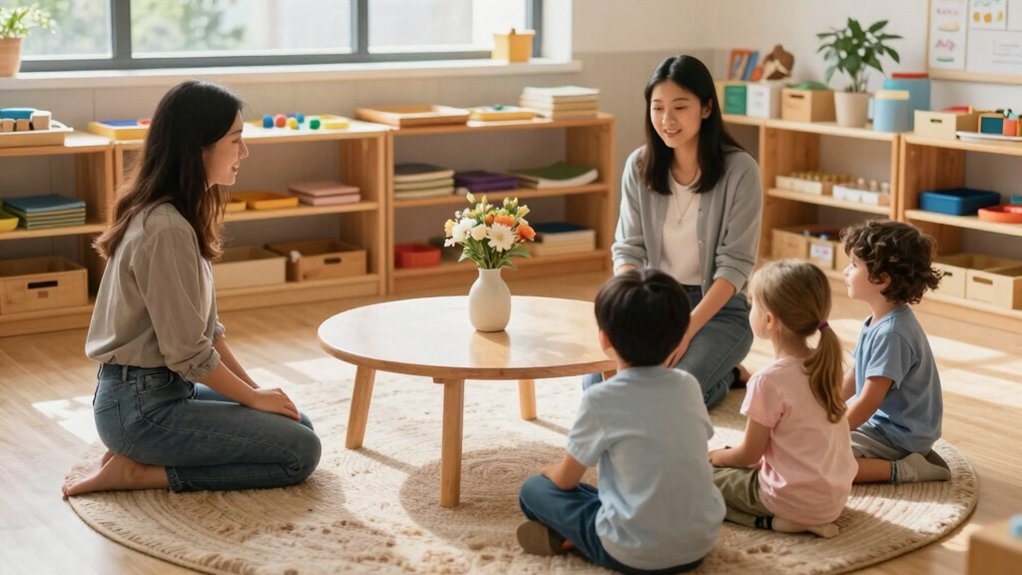
When guides step into the peace table, they model the exact language and demeanor you want children to emulate, turning abstract ideas of grace and courtesy into concrete, observable actions.
You watch Montessori guides use I‑Statement cards and a timer to frame structured dialogue, showing how non‑punitive dialogue resolves conflict.
The peace table’s cushions and soft lighting act as environmental cues that calm nerves and invite respectful discourse.
By guiding each turn, they embed social‑emotional learning into everyday interaction, demonstrating grace and courtesy modeling that children can copy in real‑life situations.
This setting turns conflict resolution into a practiced skill, reinforcing calm, cooperative behavior throughout the classroom. The use of tools designed with safety features encourages children to engage confidently in their environment, knowing they are secure as they learn.
Montessori‑Style Home Activities to Strengthen Grace & Courtesy
Curious about how to bring classroom grace into your living room? You can create a calm space with a tiny peace table where kids practice turn‑taking and I‑statements, building social skills before they even speak. Model greetings, please, thank you, and asking for help during meals, dressing, and chores—these everyday moments become Montessori‑style activities that reinforce grace and courtesy. Set up role‑play scenarios like asking to join a game or offering assistance, then pause to reflect on words and actions. Use practical life tasks to teach boundary setting, and give specific praise as positive reinforcement when they demonstrate respectful choices. Over time, the home transforms into a gentle training ground for lasting courtesy.
Frequently Asked Questions
How Does the Environment Support Learning?
You’re immersed in a calm, structured space where guides model polite language, tools like the Peace Table and timers prompt reflection, and daily routines let you practice greeting, sharing, and respectful material handling.
What Is Creating a Prepared Environment and Using Grace and Courtesy Are Features Of?
You’re creating a prepared environment that uses grace and courtesy as features of social‑emotional learning, fostering respectful interactions, self‑regulation, and collaborative skills through structured spaces, routines, and modeled behavior.
What Is the Importance of Grace and Courtesy Lessons in Montessori?
You’ll see grace and courtesy lessons nurture empathy, confidence, and cooperation, helping you navigate social situations, respect others, and contribute positively to the classroom and beyond, fostering lifelong emotional intelligence.
What Is the Environment Like in a Montessori Classroom?
You walk into a child‑sized room where low shelves, neat work mats, and a peace table invite you to choose materials, work independently, and practice greetings, sharing, and waiting calmly.